

♥ Wishlist
Compare 20 verified Bosch Cordless Multi Tools products in United Kingdom. Reviews, ratings, pros, cons and buying advice updated for November 2026.


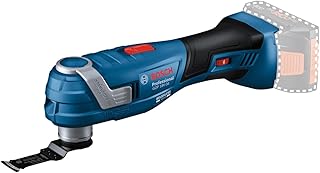


A cordless multi-tool can be one of the most versatile tools in a workshop, particularly when a job involves cutting, scraping, sanding or trimming in places where a conventional saw or sander is difficult to use. Bosch has a broad cordless tool range, making its multi-tools an option worth considering for DIY users, tradespeople, installers, maintenance workers and professionals who already use compatible Bosch batteries.
The right model, however, is not simply the one with the highest specification. Oscillating multi-tools differ in power delivery, oscillation characteristics, ergonomics, accessory compatibility, battery system, vibration control and overall suitability for different workloads. This guide explains the important differences so you can compare Bosch cordless multi-tools more intelligently and identify the specification that best matches the work you actually intend to do.
When comparing products, consider the complete tool rather than focusing on a single headline feature. Battery capacity, accessory quality, cutting material, working position and frequency of use can all affect the practical experience. It is also worth checking the latest manufacturer specifications, retailer information and verified customer reviews before making a purchase because model configurations and included accessories can vary.
A cordless multi-tool, commonly called an oscillating multi-tool, uses a rapidly oscillating attachment rather than a continuously rotating blade. The small movement of the accessory allows the tool to perform a surprisingly wide range of tasks while maintaining a relatively compact working envelope.
Depending on the attachment, an oscillating multi-tool can be used for tasks such as cutting timber, trimming plastic, making plunge cuts, removing old grout, scraping adhesives, sanding small areas and completing detail work around existing structures.
This makes a multi-tool particularly useful where access is more important than the raw cutting speed of a larger saw. For example, a multi-tool can be useful when trimming the bottom of a door frame, cutting an opening in a section of board already installed, removing a damaged piece of flooring or working around pipes and other obstructions.
Bosch is an established power-tool manufacturer with product ranges covering DIY, maintenance and professional applications. Its cordless multi-tools are particularly relevant to buyers who value battery-powered convenience or already have compatible Bosch batteries and chargers.
A cordless design removes the need to position a mains cable near the work area. This can be valuable when working outdoors, moving between rooms, working from a ladder or carrying out installation tasks where a power socket is inconvenient.
The strongest reason to choose a cordless Bosch model is often the wider battery ecosystem rather than the multi-tool itself. If you already own compatible cordless tools, sharing batteries and chargers can reduce the amount of equipment required for a job. Before purchasing, check the exact battery platform and compatibility information for the particular model.
The oscillation rate determines how rapidly the accessory moves through its small arc. A higher oscillation rate can be useful for certain cutting and sanding applications, but speed alone does not determine performance.
The material being cut, blade design, accessory sharpness, pressure applied by the user and available power all influence the result. A tool that appears impressive on paper may not necessarily be the best choice for a particular task.
For buyers comparing Bosch models, look at oscillation characteristics alongside the intended application rather than treating the maximum figure as the only performance indicator.
The oscillation angle describes how far the accessory moves from side to side during operation. It affects how aggressively the accessory interacts with the workpiece and can influence cutting speed, control and handling.
A useful comparison should therefore consider both oscillation rate and oscillation angle. Two tools with different combinations of these characteristics may feel noticeably different even when they are both designed for similar applications.
Battery compatibility is one of the most important considerations when choosing a cordless multi-tool. Bosch has different cordless tool families, so buyers should never assume that every Bosch battery fits every Bosch cordless product.
Check the exact battery platform specified for the model before ordering. If you already own compatible Bosch cordless tools, choosing a tool from the same battery family can be more convenient than starting a completely separate battery system.
Battery capacity affects potential runtime, although actual runtime depends heavily on workload. Cutting dense material continuously will generally place different demands on the battery than occasional light sanding or trimming.
A larger battery may provide longer working time but can also increase the overall weight of the tool. For overhead work, detailed installation or extended one-handed use, ergonomics may matter more than maximum battery capacity.
Variable speed control gives the user greater flexibility when working with different materials and accessories. Delicate surfaces and controlled sanding can benefit from a lower setting, while suitable cutting applications may call for greater speed.
Speed adjustment is particularly useful for users who expect one multi-tool to cover a broad range of applications rather than performing a single repetitive task.
Accessory changing is an important part of multi-tool usability because these tools are frequently used for several different operations during the same project.
A convenient accessory-change system can reduce interruptions and make it easier to move between cutting, scraping and sanding. When comparing products, examine how the mechanism works and whether the accessories you intend to use are compatible with it.
An integrated LED can be useful when the working area is poorly illuminated. Multi-tools are often used in confined spaces, inside cupboards, beneath worktops and close to floor-level installations, where ambient lighting may be limited.
A work light is not essential for every user, but it can be a worthwhile convenience feature for maintenance and installation work.
Because a multi-tool oscillates rapidly, vibration and handling characteristics deserve attention. A comfortable grip, sensible weight distribution and effective vibration management can make a meaningful difference during longer jobs.
Do not assess ergonomics solely from photographs. Look at the dimensions, weight, grip design and battery position, and consider how the tool will be held for the applications you perform most frequently.
With an appropriate wood-cutting blade, an oscillating multi-tool can handle many trimming and detail-cutting tasks. It is particularly useful when access is restricted or when a conventional saw would be awkward to position.
Typical jobs include trimming timber, cutting sections of skirting, modifying installed boards and making plunge cuts where appropriate.
Suitable accessories can be used for certain plastic-cutting applications. The correct blade and speed setting are important because excessive heat or an unsuitable accessory can affect the quality of the cut.
With a suitable metal-cutting accessory, a multi-tool can be useful for smaller metal-cutting jobs, including trimming certain fixings or working around installed components.
Metal cutting places different demands on the tool and accessory than timber cutting. Use an attachment specifically intended for the material and follow the manufacturer's operating guidance.
Grout-removal accessories are one of the most useful specialist attachments for an oscillating multi-tool. The compact movement allows users to work between tiles with considerably more control than many larger tools.
Care is essential around ceramic and other tile surfaces. The accessory should be selected for the specific grout-removal application and operated with controlled pressure.
Scraper blades can be used for removing certain adhesives, residues, sealants and other unwanted materials. This is particularly useful during renovation work when preparing a surface for a new installation.
Scraping effectiveness depends heavily on the blade geometry and the material being removed. A sharp, appropriate accessory is usually more important than simply increasing tool speed.
With a sanding pad and suitable abrasive paper, an oscillating multi-tool can handle detail sanding and small repair areas. It is especially useful around corners and other locations where a conventional random-orbit or finishing sander cannot easily reach.
It is not necessarily the most efficient choice for sanding large flat surfaces. A dedicated sander is usually better suited to extensive sanding, while a multi-tool excels at accessibility and versatility.
The accessory can have as much influence on the result as the tool itself. A multi-tool is effectively a platform that becomes a different tool depending on the attachment installed.
Common accessory categories include:
Always verify compatibility before purchasing accessories. The mounting interface, blade dimensions and intended application can differ between systems, and not every accessory is appropriate for every material.
Bosch has used the Starlock accessory system across relevant oscillating multi-tool ranges. The system is designed around a defined mounting interface and accessory geometry, but buyers should still check the exact compatibility requirements for their selected tool.
Accessory compatibility should be considered before purchasing a multi-tool because the cost and availability of blades and sanding attachments can influence the long-term value of the tool.
For frequent users, it can be sensible to compare not only the initial tool specification but also the accessory ecosystem available for the jobs they expect to undertake.
Bosch products can appear across different market segments, so buyers should understand the intended audience rather than assuming that every model is designed for identical workloads.
Professional users may prioritise durability, sustained performance, ergonomics, battery compatibility and rapid accessory changes because the tool may be used regularly as part of a working day.
DIY users may place greater emphasis on versatility, ease of use, overall value and the ability to complete occasional repair and renovation tasks without maintaining a large collection of specialist tools.
The best choice therefore depends on frequency and application. A tradesperson who uses a multi-tool daily has different requirements from someone who needs one for occasional home renovation.
When comparing two or more Bosch models, use a consistent set of criteria rather than jumping between unrelated specifications.
This approach gives a more meaningful comparison than simply asking which model has the largest number or highest advertised specification.
Bosch is not the only manufacturer worth considering. Buyers may also encounter cordless oscillating multi-tools from brands such as Makita, DeWalt, Milwaukee, Ryobi and other established power-tool manufacturers.
The most useful comparison is usually the battery ecosystem. If you already own several compatible cordless tools, remaining within that platform can reduce the need for additional batteries and chargers.
For a buyer starting from scratch, compare the tool specifications, accessory ecosystem, ergonomics and range of compatible products rather than selecting a brand based solely on reputation.
Bosch and Makita both offer extensive cordless tool ecosystems. The better choice depends heavily on which battery platform fits the user's existing tools and which manufacturer's multi-tool configuration best matches the intended workload.
DeWalt is another major cordless power-tool brand frequently considered by professional and serious DIY users. Compare battery compatibility, tool dimensions, accessory systems and the specific specifications of the models being considered.
Milwaukee has a substantial cordless professional-tool ecosystem. For users already invested in Milwaukee batteries, its multi-tool range may be an obvious comparison. Bosch remains particularly relevant where its own compatible battery ecosystem and tool range better match the user's requirements.
Ryobi is widely associated with its broad cordless DIY and home-improvement ecosystem. Buyers should compare the intended workload and product segment carefully because a tool designed primarily for occasional household projects may target a different user from a professional-grade product.
Buying a bare tool can make sense if you already own compatible batteries. A kit containing a battery and charger can be more appropriate for users entering a cordless platform for the first time.
Before choosing, establish how frequently the multi-tool will be used and whether you expect to purchase other cordless tools from the same platform. A battery system can become a long-term purchasing decision, so compatibility deserves attention beyond the immediate product.
There is no universal battery size that is best for every user. Runtime depends on the material, accessory, pressure, speed setting and workload.
For short jobs, a compact battery may be preferable because it can reduce weight. For longer cutting or renovation sessions, additional battery capacity or spare batteries can be more convenient.
If you regularly work overhead or in confined areas, consider the combined weight of the tool and battery rather than evaluating the bare tool alone.
Renovation work often involves several unrelated tasks during the same project. This is where the versatility of an oscillating multi-tool becomes especially valuable.
A useful renovation-oriented setup might include suitable wood-cutting blades, a scraper, sanding accessories and an attachment appropriate for grout removal. This combination can reduce the need to switch between several larger tools for small jobs.
Renovation users should also consider battery runtime, accessory storage and ease of changing attachments because a tool may be used repeatedly throughout a project.
Tradespeople generally need to look beyond basic versatility. Frequent use places greater importance on handling, durability, battery management, accessory changes and compatibility with existing equipment.
For installers, electricians, plumbers, carpenters and maintenance professionals, access can be particularly important. A compact oscillating tool can perform certain cuts in locations where a larger saw cannot be positioned effectively.
Professional buyers should assess the tool as part of their complete working system rather than as an isolated purchase.
A higher headline specification does not automatically make a tool better for every application. A compact, well-balanced model can be preferable when access and handling are more important than maximum output.
One of the easiest mistakes is purchasing a tool without checking which battery system it requires. Always verify compatibility with batteries you already own.
The initial tool purchase is only part of the ownership equation. Frequent users will eventually need replacement blades, sanding sheets and specialist accessories.
Different materials require different accessories. A blade intended for one application should not automatically be treated as suitable for another.
Versatility is the major advantage of an oscillating multi-tool, but it does not mean the tool is the fastest or most suitable option for every task. Dedicated saws, sanders and other specialist tools remain preferable for many repetitive or high-volume jobs.
A tool can appear attractive on paper but become tiring if it is used for extended periods, particularly with a larger battery installed. Weight and balance should form part of the comparison.
Two apparently similar listings may include different accessories or may be supplied as different tool-only or kit configurations. Check exactly what is included before comparing the overall value.
For general DIY, versatility and ease of use are usually more important than maximum performance. Consider the types of projects you actually undertake, such as trimming timber, removing old adhesive, sanding corners, cutting plastic or making small renovation cuts.
If you already have Bosch cordless tools with a compatible battery platform, a bare multi-tool can be a logical addition. If you are new to the platform, compare complete kits and the future cost of batteries and chargers.
Professional buyers should first identify the most frequent applications. A carpenter may place greater emphasis on cutting performance and blade selection, while a flooring installer may prioritise flush cutting and accessibility. A maintenance professional may value a broad accessory selection and compact handling.
Consider how often the tool will be used, how long it will be operated during a typical day and whether batteries are already available. The best professional choice is the model that supports the workflow rather than the model with the most impressive specification sheet.
Prioritise compatible wood-cutting accessories and consider the thickness and type of timber you expect to cut. For occasional trimming, versatility may matter more than maximum cutting capability.
Use accessories specifically designed for the relevant metal application. Cutting technique, accessory condition and tool speed all affect results.
Look for compatible grout-removal accessories and prioritise controlled handling. Avoid unnecessary pressure and take care around surrounding tiles.
A suitable scraper accessory can be extremely useful. The condition and geometry of the scraper are important because forcing a blunt attachment can increase effort and reduce control.
Choose a model that feels comfortable for precise work and check the availability of compatible sanding pads and abrasive sheets.
Sanding and cutting can create dust and debris. Where compatible dust-extraction accessories or systems are available, they may help reduce airborne material and improve visibility around the work area.
Dust management is particularly relevant when sanding indoors. Follow the manufacturer's instructions for compatible extraction equipment and always use suitable personal protective equipment for the material and task.
An oscillating multi-tool may look less intimidating than a circular saw or grinder, but it is still a powered cutting and sanding tool capable of causing injury.
Regular maintenance can help keep a multi-tool operating consistently. Remove dust and debris from accessible areas after use and keep ventilation openings clear according to the manufacturer's instructions.
Inspect accessories regularly. A damaged, excessively worn or unsuitable blade should be replaced rather than forced through the material.
Battery contacts should be kept clean and handled carefully. Store batteries and tools according to the manufacturer's recommendations, particularly when the equipment will not be used for an extended period.
Good technique can make a substantial difference. Let the accessory do the work rather than applying excessive force. Excessive pressure can reduce control, increase heat and place unnecessary stress on the tool and attachment.
Choose the correct blade for the material, establish a stable working position and avoid twisting the accessory unnecessarily during a cut.
For plunge cuts, mark the intended opening carefully and check for concealed hazards before starting. When flush cutting, position the accessory appropriately and work with controlled movement.
Use the appropriate abrasive grade for the material and stage of the job. Coarser abrasives can remove material more rapidly, while finer grades can be used for finishing where appropriate.
Avoid excessive downward pressure. The oscillating movement and abrasive surface should perform the work, while the operator maintains control and guides the tool.
Blade life depends on the material, cutting technique, accessory quality, pressure and workload. Using the correct blade for the material is one of the most important steps.
Do not force a blade that is struggling to cut. Check whether the accessory is suitable, whether it has become worn and whether the tool is being used at an appropriate speed.
A tool-only package can be attractive for users who already own compatible batteries and chargers. It avoids buying duplicate charging equipment.
A complete kit can be more convenient for someone entering the battery platform for the first time. However, compare the included battery capacity, charger, case and accessories because kit contents can vary.
Product specifications should be read as a group rather than individually. Start with the battery system, then consider oscillation characteristics, weight, accessory compatibility and control features.
After that, check the included equipment and intended applications. This process helps separate genuinely useful features from specifications that may have little relevance to your work.
For users who regularly perform small cutting, trimming, scraping or sanding jobs, a cordless multi-tool can be an extremely useful addition to a workshop. Its greatest advantage is versatility and accessibility rather than replacing specialist tools in every application.
A cordless model is especially attractive where portability matters or where the user already owns compatible batteries. For occasional DIY work, the value depends on how many of its applications you are likely to use.
A multi-tool is not necessarily the right solution for every job. If you need to cut large quantities of timber quickly, a dedicated saw will generally be more appropriate. For extensive sanding, a dedicated sander may provide greater productivity. For heavy grinding or substantial metal work, a specialist tool may be more suitable.
The value of an oscillating multi-tool comes from the combination of applications it can perform, especially where accessibility and precision matter.
Rather than choosing a product simply because it appears near the top of a list, build a shortlist around your actual requirements. Start with the battery platform, eliminate models that are incompatible with your existing equipment, then compare performance characteristics, weight, ergonomics, accessory compatibility and kit contents.
Next, consider the type of work you perform most frequently. If most projects involve timber trimming, prioritise suitable cutting accessories and handling. If renovation work is the main requirement, a broad accessory ecosystem may be more valuable. If the tool will be used professionally every day, durability, ergonomics and battery management deserve greater emphasis.
The cheapest tool is not always the lowest-cost option over its working life. Consider batteries, chargers, replacement blades, sanding accessories and specialist attachments when comparing the overall value.
For someone already invested in a compatible Bosch battery system, a tool-only model may offer a different value proposition from a complete kit. Conversely, a new cordless-tool user needs to account for the additional battery and charger investment.
When comparing current offers, check today's price, the exact model number, included accessories and battery configuration rather than comparing headline prices alone.
Verified customer reviews can provide useful information about everyday handling, battery experience, accessory convenience and perceived usability. However, reviews should be interpreted alongside technical specifications and the user's own requirements.
A review from someone using a multi-tool occasionally for home repairs may not reflect the requirements of a professional who uses the tool throughout a working day.
Look for recurring observations rather than relying on a single positive or negative comment. Reviews are most useful when they explain the application, workload and circumstances in which the product was used.
There is no single best model for every buyer. The right Bosch cordless multi-tool depends on your battery platform, intended applications, workload, preferred ergonomics, accessory requirements and budget. Compare current models against those criteria rather than selecting solely on headline specifications.
They can be very useful for DIY because an oscillating multi-tool can handle a wide range of cutting, scraping and sanding tasks. It is particularly useful for renovation, repair and detail work where access is restricted.
Yes, with a suitable wood-cutting accessory. The appropriate blade should be selected according to the type and thickness of material and the intended cutting application.
Suitable Bosch multi-tools can be used for certain metal-cutting applications when fitted with an appropriate accessory. Always check the manufacturer's specifications and use an attachment intended for the material.
Yes, compatible grout-removal accessories are available for suitable oscillating multi-tools. Careful technique is important when working close to surrounding tiles.
Yes. With a compatible sanding pad and abrasive sheet, an oscillating multi-tool can perform detail sanding, particularly in corners and confined areas. It is generally less efficient than a dedicated sander for large surfaces.
No. Bosch cordless tools use different battery platforms and compatibility must be checked for the exact model. Do not assume that a battery from one Bosch range will automatically fit another.
If you already have a compatible battery and charger, a bare tool can be practical. If you are new to the relevant battery platform, a complete kit may be more convenient. Compare the total contents and long-term battery requirements before deciding.
Neither is universally better. Cordless models offer portability and avoid the need for a mains cable, while corded tools can be useful when continuous mains power is readily available. For mobile work and users already invested in a compatible battery platform, cordless convenience can be particularly valuable.
Start with accessories that match your main applications. For general renovation, this may mean a suitable wood-cutting blade, scraper, sanding pad and other attachments relevant to the materials you regularly encounter. Avoid buying a large accessory collection until you know which applications you actually use.
Some Bosch cordless multi-tools are designed with professional applications in mind. Professional buyers should examine the exact model, intended workload, battery system, ergonomics, accessory compatibility and manufacturer specifications rather than assuming that every model is intended for intensive trade use.
Battery capacity affects potential runtime, but larger batteries also add weight. The best balance depends on how long the tool is used, the intensity of the workload and whether portability or runtime is more important.
Check the exact model number, battery platform, included accessories, charger and battery configuration, oscillation specifications, weight, accessory compatibility and intended application. Also compare current retailer information and verified customer reviews before making a final decision.
The best Bosch cordless multi-tool is the one that fits the user's working system rather than simply the one with the longest feature list. Start with the jobs you need to complete, identify the accessories required and then compare compatible models for performance, handling, battery requirements and overall value.
For existing Bosch cordless-tool owners, battery compatibility can be one of the strongest reasons to choose a particular model. For new buyers, the wider cordless ecosystem should be considered because today's battery and charger purchase may influence future tool choices.
Above all, remember that an oscillating multi-tool is a specialist versatility tool. Its strength lies in performing many small and awkward jobs with one compact machine. The right blade, correct speed, sensible technique and appropriate safety equipment are just as important as the tool itself.
Before purchasing, compare the latest Bosch specifications, exact kit contents, compatible accessories, verified customer reviews and current retailer prices. This gives you a more reliable basis for choosing a cordless multi-tool that suits your workload, budget and long-term tool collection.