

♥ Wishlist
Compare 20 verified Cordless Die Grinders products in United Kingdom. Reviews, ratings, pros, cons and buying advice updated for November 2026.
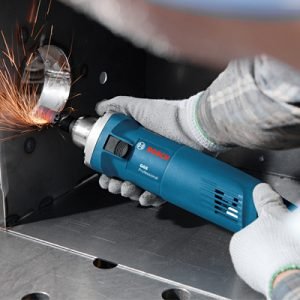
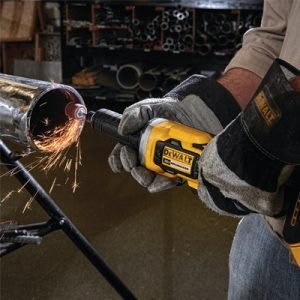
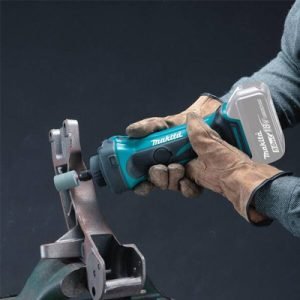
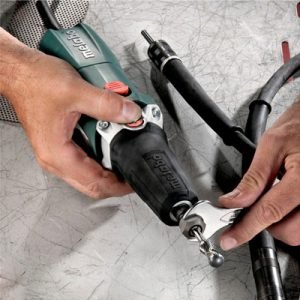


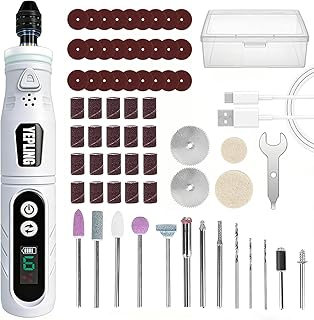


A cordless die grinder is a compact, high-speed rotary tool designed for detailed grinding, deburring, polishing, cleaning, shaping and finishing work where a conventional angle grinder is too large or difficult to control. Battery-powered models are particularly useful in workshops, fabrication environments, garages, maintenance applications and on-site jobs because they remove the need for a mains cable or air compressor.
The best cordless die grinder is not necessarily the fastest or most powerful model. The right choice depends on the type of abrasive or accessory being used, required speed range, collet size, battery platform, runtime, handling, vibration, heat management and the amount of material that needs to be removed. For occasional deburring, a compact machine may be preferable, whereas fabrication and heavy-duty metalworking can justify a more powerful professional model.
This guide explains the important specifications and buying considerations to examine when comparing cordless die grinders in the UK. It also covers common mistakes, accessory compatibility, battery systems, safety considerations, maintenance and the differences between straight and angle die grinders.
A cordless die grinder is a battery-powered rotary power tool that drives small grinding wheels, carbide burrs, mounted points, sanding accessories, polishing tools, wire brushes and other compatible rotary attachments at high speed.
Unlike a typical cordless angle grinder, which is designed around a larger disc and usually operates with the accessory positioned at a 90-degree angle to the motor, a straight die grinder generally has the collet positioned along the axis of the motor. This makes it useful for reaching inside holes, recesses, channels, castings and other confined areas.
Angle-head cordless die grinders are another option. They combine the compact accessory size of a die grinder with a head configuration that can make access around corners and awkward workpieces easier.
Typical applications include:
Cordless die grinders make the most sense for users who regularly perform small-area grinding, finishing or preparation work and want the freedom of a battery platform.
They can be particularly useful for:
If the majority of your work involves cutting large sections of steel or removing substantial amounts of material, a cordless angle grinder may be a more appropriate primary tool. A die grinder is generally better viewed as a precision and access tool rather than a replacement for every type of grinder.
Speed is one of the most important specifications on a die grinder. These tools commonly operate at substantially higher rotational speeds than many conventional angle grinders, allowing small accessories to work effectively.
However, a higher maximum RPM does not automatically make a grinder better. Different accessories and materials require different operating speeds. Using an unsuitable accessory at excessive speed can create unnecessary heat, accelerate accessory wear and increase safety risks.
A variable-speed model can therefore be considerably more versatile than a single-speed machine. It allows the user to reduce speed for suitable polishing, finishing or delicate operations while retaining higher speeds when appropriate for compatible grinding accessories.
Variable speed is particularly valuable when one tool is expected to handle several different applications. Grinding, sanding, polishing, cleaning and deburring can each benefit from different operating speeds.
When comparing models, look beyond the phrase "variable speed". Check how the control is implemented and whether the speed range is appropriate for the accessories you intend to use.
A useful comparison should consider:
The collet is the clamping component that holds the accessory shaft. Collet compatibility is critical because accessories must match the tool's specified capacity.
In the UK market, 6 mm accessories are particularly common for many professional die-grinding applications, while smaller and alternative collet sizes can be available depending on the tool and manufacturer.
Do not assume that every rotary accessory will fit every cordless die grinder. Always check the manufacturer's specifications for the permitted shank diameter and accessory type.
Brushless motors are now common in professional cordless power tools and are worth considering when a die grinder will be used regularly.
A brushless design can offer advantages in efficiency, electronic control, durability and maintenance requirements because it does not rely on conventional motor brushes that wear during operation.
For occasional DIY use, motor technology may be less important than overall value and battery compatibility. For frequent professional work, however, a well-designed brushless machine can be a sensible long-term investment.
Battery voltage should not be considered in isolation. A higher nominal voltage does not automatically mean that one die grinder will outperform another in every application.
The battery platform is often more important for existing cordless-tool users. If you already own compatible batteries and chargers from a major system, buying a bare-tool die grinder can significantly reduce duplication.
Popular professional cordless platforms include systems from Bosch Professional, DeWalt, Makita, Milwaukee and HiKOKI. Ryobi is also relevant for users who are building around a broad DIY and home-maintenance battery ecosystem.
When comparing battery-powered die grinders, consider the complete system rather than only the tool:
Battery capacity is normally expressed in ampere-hours, but runtime cannot be predicted from capacity alone. The actual duration depends on the battery, motor efficiency, accessory, material, pressure applied and working cycle.
A larger battery can provide more operating time but may increase the overall weight of the tool. For overhead or detailed work, a smaller battery may produce better handling even if it requires more frequent changes.
For workshop users who work continuously, owning more than one compatible battery can be more useful than choosing the largest available battery for every job.
Professional cordless grinders can incorporate electronic systems designed to manage overload, overheating, battery discharge and other operating conditions. The exact protection features vary between manufacturers and models.
Look for clearly stated protection systems rather than assuming that all cordless die grinders provide identical electronic safeguards.
Restart protection is an important safety-oriented feature on many modern power tools. Its purpose is to help prevent unintended restarting after an interruption to the power supply.
For battery-powered tools, the exact implementation varies, so check the manufacturer's documentation rather than assuming every model behaves in the same way.
Changing accessories should be straightforward without compromising secure clamping. Some models provide a spindle-lock arrangement or a dedicated method for holding the spindle while loosening the collet nut.
Consider how frequently you expect to change accessories. A convenient accessory-change system can save considerable time in applications involving grinding, deburring, sanding and polishing in succession.
The choice between a straight and angle-head cordless die grinder depends largely on access and working position.
A straight die grinder has the collet and accessory aligned with the body of the machine. This configuration is particularly useful for reaching into openings and working along the same axis as the tool.
It can be a strong choice for:
An angle-head design positions the accessory differently, making it easier to approach certain surfaces from the side.
This can be useful where the straight configuration creates awkward wrist positioning or where surrounding material restricts access.
Neither design is universally better. The correct configuration depends on the workpiece.
A corded die grinder can remain attractive for fixed workshop use because it avoids battery charging and can be ready whenever a mains socket is available.
A cordless model provides much greater freedom of movement and is particularly convenient when working outdoors, inside vehicles, on construction sites or in locations where trailing cables would be inconvenient.
Pneumatic die grinders remain popular in professional workshops because compressed air can provide continuous operation when an appropriately sized compressor and air system are available.
The cordless alternative eliminates the need for an air hose and compressor, making it considerably easier to use away from a fixed workshop.
For a busy fabrication shop that already has suitable compressed air infrastructure, a pneumatic die grinder may still be highly practical. For mobile maintenance, construction and mixed-location work, cordless technology can be more convenient.
Prioritise controllable speed, good visibility around the accessory, comfortable handling and compatibility with suitable burrs or abrasive accessories.
Look for a durable professional machine with effective speed control, robust construction, suitable battery capacity and strong accessory compatibility. The ability to work efficiently around welds and confined areas is more important than simply selecting the highest advertised RPM.
Compact dimensions and access can be especially important around engine bays, suspension components, brackets and other restricted spaces. An angle-head design may be advantageous for some jobs.
Accessory compatibility becomes particularly important. Wire brushes and other surface-preparation accessories must be suitable for the tool's rated speed and intended application.
Speed control becomes especially useful. A grinder designed primarily for high-speed material removal may not be the ideal choice for every polishing application.
There is little reason to pay for every professional feature if the tool will only be used occasionally. A compatible battery system, manageable size and appropriate speed range may matter more than maximum power.
The versatility of a die grinder comes largely from its accessories. However, accessory selection must always be based on compatibility and the manufacturer's specified operating limits.
Mounted points are designed for controlled grinding and finishing in areas where larger grinding wheels cannot reach. Their shape and abrasive material should be selected according to the workpiece and intended application.
Carbide burrs are commonly used for material removal, shaping and deburring of suitable metals. Different profiles provide different cutting characteristics.
Common shapes include:
Sanding drums, abrasive sleeves and other compatible accessories can be useful for smoothing and finishing, provided their rated speed and shaft dimensions are appropriate.
Wire brushes can help remove rust, scale, contamination and loose surface material. They must be selected carefully because wire shedding and excessive operating speed can create serious hazards.
Felt, polishing and finishing accessories can be used for suitable applications. Always follow the accessory manufacturer's instructions for speed, material compatibility and safe operation.
Do not choose a die grinder solely on the assumption that it can safely process every material. The tool, accessory and workpiece must all be compatible.
Common materials encountered in die-grinding applications include:
Different materials produce different amounts of heat, dust and debris. Aluminium, for example, requires appropriate accessory selection and working practices rather than simply applying the same approach used for steel.
When comparing several models, create a simple specification checklist rather than focusing on one headline number.
A die grinder may look compact, but prolonged use can place considerable strain on the hand and wrist. Battery weight can significantly affect the balance of the complete tool.
Compare the weight of the complete working configuration rather than considering the bare tool alone. A lightweight body paired with a large high-capacity battery may feel very different from the same tool fitted with a compact battery.
For detailed finishing work, balance can be just as important as raw power because controlled movement affects both productivity and the quality of the finished surface.
A well-designed die grinder should be comfortable to hold and control during repeated operations. Look for a shape that permits a secure grip without requiring excessive hand pressure.
Important ergonomic considerations include:
High-speed rotary tools can generate significant noise and vibration depending on the accessory, material and operating conditions.
Vibration can also change considerably with different accessories. An improperly fitted, damaged or unsuitable accessory can create excessive vibration and should not be used.
For frequent professional use, user comfort should form part of the purchasing decision rather than being treated as an afterthought.
If you already own cordless tools, staying within the same battery ecosystem can be one of the strongest reasons to choose a particular die grinder.
For example, a user already invested in a Bosch Professional, Makita, DeWalt, Milwaukee or HiKOKI system may prefer a compatible die grinder even if another brand offers a different specification.
This can reduce the need to purchase another charger and additional batteries. It can also make it easier to rotate batteries between tools during a working day.
Many professional cordless power tools are sold in both bare-tool and kit formats.
A bare tool can make sense when you already own compatible batteries and a charger. A complete kit may be more appropriate when starting a new battery platform.
When comparing prices, make sure you are comparing like-for-like packages. A lower headline price may represent a bare tool, while another listing may include batteries, a charger, accessories and a case.
Maximum speed is only useful when it matches the accessories and application. Always check accessory speed ratings before operation.
Buying into a completely new battery platform can be expensive if you already own several compatible cordless tools from another manufacturer.
The battery can significantly change the balance and handling characteristics. Consider the complete setup.
Collet sizes and accessory shanks are not universally interchangeable. Confirm the manufacturer's specified compatibility.
A die grinder is designed for a different class of work from a large angle grinder. For extensive material removal or large cutting tasks, selecting the correct tool type is more important than attempting to maximise the performance of a smaller grinder.
The quality, balance, construction and suitability of the accessory can have a major effect on the result. A premium grinder cannot compensate for an unsuitable or damaged accessory.
High-speed rotary grinding should always be treated as potentially hazardous work. Follow the tool manufacturer's instructions and the accessory manufacturer's operating requirements.
Grinding can produce sparks, fragments and airborne particles. The appropriate protective equipment depends on the material and application, so users should follow the relevant workplace requirements as well as the manufacturer's instructions.
Grinding and surface preparation can generate airborne particles. The risk depends heavily on the material being processed and the accessory being used.
Good ventilation, suitable extraction where practical and appropriate respiratory protection can help control exposure. Particular care is required when working on coatings, unknown materials or substances that may contain hazardous compounds.
Efficient grinding is not simply a matter of applying more pressure. The accessory, speed, contact angle, material and movement all influence the result.
Use controlled movements and avoid forcing the motor into a heavy load. Excessive pressure can increase heat, reduce battery runtime, accelerate accessory wear and make the tool more difficult to control.
For finishing work, several light passes can often provide better control than trying to remove all the material in one aggressive operation.
Regular maintenance can help preserve performance and reduce avoidable problems.
Metal dust and debris can accumulate around ventilation openings and other areas of the tool. Clean the machine according to the manufacturer's instructions and avoid methods that could force contamination deeper into the housing.
Keep the collet and clamping area clean. Inspect the components for signs of damage or abnormal wear and replace parts when required by the manufacturer.
Before each use, check grinding points, burrs, brushes, sanding accessories and other attachments for cracks, damage, excessive wear or other defects.
Use the manufacturer's approved charging equipment and follow the battery manufacturer's storage and handling recommendations. Avoid exposing batteries to inappropriate temperatures or conditions.
There is no universal lifespan because durability depends on build quality, workload, operating conditions, maintenance and frequency of use.
A professional tool used every working day faces substantially greater demands than a DIY model used a few times each year.
When comparing models for long-term ownership, consider the manufacturer's position within the professional power-tool market, availability of replacement components, battery ecosystem and the tool's intended duty level rather than relying on a single durability claim.
Several established manufacturers offer cordless systems that can be relevant when shopping for a die grinder in the UK.
Brand recognition alone should not determine the purchase. Compare the exact model, specifications, intended application, battery compatibility and accessory requirements.
A useful buying decision starts with the job rather than the brand.
Customer reviews can provide useful information, but they should be interpreted alongside specifications rather than treated as a substitute for them.
Look for recurring comments about:
It is also useful to distinguish reviews based on occasional DIY use from reviews written by people using the tool professionally. A model that works perfectly well for intermittent tasks may not be the right choice for intensive daily fabrication.
A strong cordless die grinder combines an appropriate speed range, reliable motor performance, good accessory compatibility, manageable weight, useful battery life and comfortable handling.
For professional users, durability and battery-platform compatibility can be particularly important. For occasional users, affordability and simplicity may provide greater value.
The most suitable machine is therefore the one that matches the workload rather than the one with the longest specification sheet.
The best cordless die grinder depends on the intended application, battery platform, required speed range, collet size, workload and budget. Professional users may prioritise durability and battery ecosystem compatibility, while occasional DIY users may prefer a lighter and simpler option.
Modern professional cordless die grinders can be suitable for many fabrication, maintenance, automotive and workshop applications. The important consideration is matching the tool to the workload and avoiding applications that are better suited to larger grinders or other specialist equipment.
Brushless designs can offer efficiency, electronic control and reduced brush-related maintenance, making them attractive for regular use. However, the overall design and intended application matter more than the motor label alone.
Choose a collet that matches the accessories you intend to use and the specifications of the tool. Do not assume that an accessory with a similar-looking shaft is automatically compatible.
Not completely. A die grinder is excellent for detailed grinding, deburring and access work, whereas an angle grinder is generally better suited to larger grinding, cutting and surface-preparation tasks involving larger discs.
Neither is universally better. Straight models are useful for axial access and internal work, while angle-head models can provide better access around corners and obstructions.
Some are suitable for compatible polishing accessories, particularly when they offer useful variable-speed control. Always check the tool and accessory manufacturer's requirements before using a polishing attachment.
No. The burr's shank must match the tool's collet, and its maximum permitted operating speed must be suitable for the grinder. Always check compatibility before use.
No. Maximum RPM is only one specification. Speed control, accessory compatibility, motor performance, ergonomics, battery life and intended application can be equally important.
Running cost depends on battery use, accessory consumption, workload and the battery platform. Users who already own compatible batteries can often avoid buying additional chargers and starter batteries.
A bare tool can make sense if you already own compatible batteries and a charger. If you are entering a new battery ecosystem, compare the cost of the complete kit before deciding.
Battery capacity affects potential runtime but also influences weight and balance. The best battery is not always the largest one; compact batteries can be preferable for detailed work where handling matters.
Suitable cordless die grinders can be used for appropriate stainless-steel applications when paired with compatible accessories and operated according to the manufacturer's instructions. Accessory selection is particularly important when avoiding contamination and achieving the desired finish.
Check its condition, shaft compatibility, rated operating speed and suitability for the material and tool. Never use an accessory that is damaged, incorrectly fitted or unsuitable for the grinder.
Bosch Professional, DeWalt, Makita, Milwaukee, HiKOKI, Metabo and Ryobi are among the established brands worth investigating, depending on whether your priority is professional performance, workshop use, DIY applications or compatibility with an existing battery platform.
The best cordless die grinder for one buyer may be a poor choice for another. Start by identifying the material, accessory, working environment and frequency of use. Then compare speed range, collet compatibility, battery platform, motor technology, weight, ergonomics and protection features.
For professional users, battery-platform compatibility and long-term durability can make a major difference to ownership value. For occasional users, a compact machine that shares batteries with existing tools may be the more sensible purchase.
Most importantly, do not judge a cordless die grinder on maximum RPM or brand name alone. The best buying decision comes from matching the complete tool-and-accessory system to the work you actually perform.
Before purchasing, compare the latest manufacturer specifications, confirm battery and accessory compatibility, read verified customer reviews, check the complete kit contents and compare current retailer prices. Specifications, packages and availability can change, so the exact model information should always be checked before placing an order.