

♥ Wishlist
Compare 39 verified DeWalt Cordless Plunge Saws products in United Kingdom. Reviews, ratings, pros, cons and buying advice updated for November 2026.


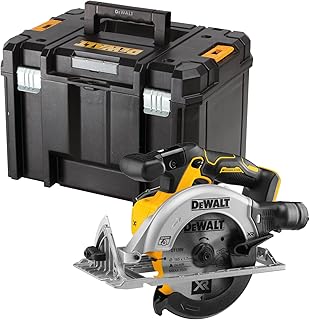


Choosing a cordless plunge saw involves more than comparing cutting depth or battery voltage. The right model needs to suit the materials you work with, the type of cuts you make, the guide-rail system you intend to use, the battery platform already available in your workshop and the level of precision expected from the finished cut. DeWALT's cordless plunge-saw range is particularly relevant to tradespeople and serious DIY users who want the freedom of battery power without giving up the controlled cutting approach associated with a plunge saw.
This guide provides additional buying information to help compare DeWALT cordless plunge saws on practical criteria rather than relying on a single headline specification. It covers cutting performance, plunge action, guide-rail compatibility, battery considerations, blade selection, dust management, ergonomics, safety, maintenance and the differences between a cordless plunge saw and other types of circular saw.
A plunge saw is a circular saw designed so that the blade can enter the workpiece from above rather than requiring the operator to begin at an exposed edge. The blade is normally enclosed within a housing and lowered into the material in a controlled movement. This makes the tool particularly useful for accurate internal cuts, sheet-material work and applications where a clean, repeatable cut is more important than simply removing material as quickly as possible.
A cordless plunge saw replaces the mains power connection with a rechargeable battery. This can make a significant practical difference on building sites, renovation projects and workshops where cables are inconvenient or where the cutting location is away from a convenient power socket.
Unlike a conventional circular saw, a plunge saw is commonly used with a guide rail. The rail establishes a straight reference line and helps the operator achieve consistent cuts across large boards and panels. The combination of plunge action and guided travel is one of the main reasons these saws are popular for cabinetmaking, flooring, doors, worktops, furniture components and sheet goods.
DeWALT is an established power-tool brand with a broad cordless ecosystem, so the attraction of a cordless plunge saw may extend beyond the saw itself. For users who already own compatible DeWALT batteries and chargers, platform compatibility can be an important part of the buying decision.
However, brand recognition should not be the only reason to select a particular model. A good purchase still depends on the exact specifications, intended workload, accessories, battery requirements and guide-rail arrangement.
When comparing different cordless plunge saws, look beyond the model name. Two tools can appear similar but offer different cutting capacities, speeds, battery requirements, included accessories or guide-rail arrangements.
Cutting depth determines the thickness of material the saw can handle in a particular configuration. When assessing specifications, check whether the stated depth applies with or without a guide rail and whether the figure changes when cutting at an angle.
For sheet materials such as plywood, MDF and timber panels, maximum depth may not be the most important specification. A saw that provides sufficient capacity for the materials you routinely cut can be more useful than choosing the model with the largest headline figure.
Also consider whether you frequently cut thicker timber, laminated worktops or other substantial materials. In those applications, available cutting depth becomes a more important part of the comparison.
Many plunge-saw applications involve square cuts, but bevel capability can be valuable for specialist joinery, furniture construction and angled work. Compare the available bevel range and, importantly, how easily the adjustment can be made.
A useful bevel mechanism should allow the angle to be set consistently and locked securely. If you frequently switch between square and bevel cuts, accessible controls can make a noticeable difference to workflow.
No-load speed describes how quickly the blade rotates when the saw is running without cutting material. It can provide useful information about the character of a tool, but it should not be treated as a direct measurement of cutting performance.
Actual cutting behaviour also depends on blade design, material density, feed rate, battery condition and the condition of the blade. A higher nominal speed does not automatically mean that one saw will produce a better result in every material.
The blade dimensions determine which replacement blades are suitable. Always check the manufacturer's specified blade diameter and bore before purchasing accessories.
Blade compatibility is particularly important for plunge saws because the blade needs to work correctly with the saw's guard, cutting mechanism and available depth. Do not assume that any circular-saw blade of a similar size is appropriate.
Guide-rail compatibility is one of the most important points to investigate before buying a plunge saw. If accurate long cuts are part of your work, the rail is effectively part of the cutting system rather than an optional accessory that can be ignored.
Check whether the saw is supplied with a rail, whether the appropriate rail must be purchased separately and which rail system is supported. Also consider rail length. A shorter rail may be convenient for transport, while longer rails can be more practical when cutting large panels.
If you already own guide rails, verify compatibility rather than assuming that all plunge saws and rails use the same connection system.
Battery selection can influence both convenience and working time. A cordless plunge saw can draw substantial power during demanding cuts, particularly when working through thick or dense material. The most suitable battery therefore depends on the workload rather than simply choosing the smallest or largest available option.
Battery capacity is normally expressed in ampere-hours. A higher-capacity battery can generally provide more stored energy than a lower-capacity battery of the same voltage platform, although actual runtime varies according to the tool, material, blade, cutting technique and operating conditions.
For occasional short cuts, a compact battery may prioritise lower overall tool weight. For repeated panel cutting, a higher-capacity battery may be more practical if the additional weight is acceptable.
Battery capacity is not the only consideration. A larger battery can add weight to the tool and may alter how it feels during prolonged use. When comparing cordless plunge saws, consider the complete tool with the battery attached rather than looking only at the bare-tool weight.
Good balance matters because plunge cutting requires controlled movement. A tool that feels predictable in the hands can be easier to position accurately, particularly when making repeated cuts.
Some cordless power tools are sold as bare units, while others may be supplied with batteries, chargers, cases or additional accessories. Check the exact contents of the package before comparing prices.
A bare tool can be attractive to an existing DeWALT cordless user who already has compatible batteries and charging equipment. A complete kit may make more sense for someone entering the battery platform for the first time.
A plunge saw reaches its full potential when it is used with a suitable guide rail. The rail provides a straight reference surface, reducing the need to mark a long cut and manually maintain the blade along a line.
Guide rails are especially useful for:
The appropriate rail length depends on the size of the workpiece. A rail should provide enough travel for the intended cut without creating unnecessary handling difficulties.
For large panels, longer rails can reduce the need to reposition the guide. For smaller jobs, a shorter rail may be easier to transport and store. Users who routinely work with different panel sizes may prefer a system that allows multiple rails to be joined or used in different configurations, provided the relevant system supports this.
A guide rail is only useful if it remains stable during cutting. Depending on the workpiece and rail system, additional clamps or anti-slip features may be appropriate. The surface should be clean and the material should be adequately supported.
Never assume that a rail will remain stationary simply because it has been placed on a board. Follow the manufacturer's instructions for securing and positioning the rail.
The blade is one of the most influential components in determining the quality of a cut. A plunge saw with excellent mechanical performance can still produce poor results if the blade is unsuitable, blunt or damaged.
Blade tooth count should be matched to the material and desired finish. A blade with fewer teeth can be suited to faster material removal, while a higher-tooth-count blade may be preferable when a cleaner finish is the priority.
There is no single tooth count that is ideal for every application. Consider whether the task involves rough construction cuts, cabinetmaking, decorative panels, laminated boards or other materials where edge quality is important.
Use blades designed for the intended material and compatible with the saw. Manufacturers such as DeWALT offer blades for different cutting applications, while other established blade manufacturers may also provide compatible options.
When evaluating replacement blades, consider tooth geometry, kerf, material compatibility, maximum permitted speed and the manufacturer's recommendations.
A blade does not necessarily need to be visibly damaged before replacement becomes appropriate. Signs of a blade that may need attention can include worsening cut quality, increased resistance during cutting, excessive burning, unusual vibration or a noticeably different cutting sound.
Do not continue using a blade that is damaged, cracked, bent or otherwise unsuitable.
The exact materials a particular saw and blade combination can cut should always be checked against the manufacturer's instructions. In general, plunge saws are particularly associated with sheet and panel materials.
Plywood is a common application because long, straight cuts are often required when preparing panels for construction, cabinetry and furniture. Blade selection is important because different plywood constructions can behave differently during cutting.
MDF can generate significant fine dust, making dust extraction and appropriate respiratory protection especially important. A sharp, suitable blade can help produce a cleaner edge and reduce unnecessary resistance.
Melamine-faced and other laminated boards require particular attention to blade choice and cutting technique because the decorative surface can be vulnerable to chipping.
For high-quality visible edges, use a blade appropriate for the material and maintain controlled feed pressure rather than forcing the saw through the board.
Some plunge saws can be used for timber applications within their specified cutting capacity. However, solid timber can place different demands on a saw compared with sheet materials. Check the saw's specifications, blade suitability and intended application before using it on thicker timber.
Dust management is an important part of using a plunge saw. Cutting MDF, plywood, timber and similar materials can create airborne dust, while certain materials may create particularly fine particles.
A compatible dust extractor can help collect debris at the cutting point and improve visibility. Effective extraction can also reduce the amount of dust settling on the workpiece and surrounding area.
Dust extraction should not be treated as a substitute for appropriate personal protective equipment or suitable workplace ventilation. Follow the manufacturer's safety instructions and the requirements applicable to the material being cut.
Technical specifications tell only part of the story. A plunge saw is a hand-held tool, so control and ergonomics matter whenever several cuts are required.
Look for controls that can be reached naturally without changing your grip unnecessarily. The plunge mechanism should feel predictable, while the cutting position should allow the operator to see the intended reference point clearly.
Also consider the battery position, overall weight and grip arrangement. A tool can be technically capable but less suitable for a particular user if its balance or controls make repeated cutting uncomfortable.
A plunge saw should be treated as a high-powered cutting tool regardless of whether it is cordless. Battery operation does not reduce the need for careful preparation.
Voltage can indicate the general battery platform, but it does not tell you everything about a plunge saw's cutting capability. Motor design, electronics, blade specifications, cutting capacity and the complete system all matter.
A plunge saw can be an excellent choice for precision panel cutting, but the complete system may require rails, connectors, clamps and other accessories. Include these items when calculating the real cost of ownership.
A general-purpose blade may not deliver the finish required for laminated boards or fine joinery. Match the blade to the material and application.
Do not assume that every DeWALT battery is compatible with every cordless tool. Check the exact battery platform and manufacturer's compatibility information for the model under consideration.
Always compare like with like. A bare saw and a kit containing batteries, charger and accessories are not directly equivalent purchases.
Maximum depth can be useful, but many buyers will gain more from considering guide-rail compatibility, bevel adjustment, blade options, ergonomics, dust extraction and battery requirements.
The fundamental cutting principles are similar, but the power source changes the practical experience.
The best choice depends on the working environment. A tradesperson already invested in a DeWALT cordless system may value battery compatibility highly, whereas a workshop user with reliable mains power may place greater emphasis on uninterrupted operation.
Although both tools use a circular blade, they serve different purposes.
A conventional circular saw is often chosen for general construction cutting, framing and fast material breakdown. A plunge saw is more specialised towards controlled, accurate cuts, particularly when combined with a guide rail.
Choose a plunge saw when straight, guided panel cuts and controlled plunge entry are important. Choose a conventional circular saw when versatility, portability and general-purpose construction cutting are the primary requirements.
The terms plunge saw and track saw are sometimes used interchangeably in everyday discussions. In practice, buyers should focus on the specific design and guide-rail system offered by the manufacturer.
When comparing products, investigate whether the saw is designed to work with a particular track, whether the track is included, how the saw connects to it and whether accessories from your existing system are compatible.
A DeWALT cordless plunge saw can be worth considering if you regularly perform accurate straight cuts in sheet materials and value cordless portability.
A plunge saw is not automatically the best circular saw for every application. If most of your work involves rough timber framing, rapid construction cuts or small pieces that do not require a guide rail, a conventional circular saw may be more appropriate.
Likewise, if your work consists mainly of repetitive production cuts in a permanent workshop, a table saw, panel saw or another stationary cutting system may offer a better workflow depending on the material and required accuracy.
When several models appear suitable, create a comparison based on your actual requirements rather than ranking them by one specification.
Cabinetmaking places a strong emphasis on repeatability and edge quality. For this type of work, prioritise a suitable guide-rail system, accurate cutting control and blade availability rather than simply choosing the most powerful-looking model.
The blade should be selected according to the board material and desired finish. Laminated surfaces may require a blade designed to minimise chipping, while rough internal cuts can have different requirements.
Dust extraction is also valuable in a cabinetmaking environment because MDF and other engineered boards can generate substantial dust during cutting.
For mobile tradespeople, portability and battery compatibility become especially important. Consider how often you will transport the tool, whether you already have suitable batteries and how much rail equipment you need to carry.
A cordless plunge saw can be particularly convenient when working inside unfinished buildings, on renovation sites or in areas where routing a mains cable would be inconvenient.
DIY users should first identify how frequently the tool will be used and what materials are involved. If the main requirement is occasional straight cutting of plywood or furniture panels, an elaborate professional setup may offer capabilities that are rarely used.
On the other hand, someone undertaking a major renovation or building multiple furniture projects may benefit from investing in a proper guide-rail system and suitable blades.
Regular care can help keep a plunge saw operating consistently. Maintenance requirements vary by model, so the manufacturer's instructions should always take priority.
Remove accumulated dust from accessible areas after use. Pay particular attention to areas around the blade housing, ventilation openings and guide mechanisms where dust could interfere with movement.
Check the blade regularly for damage, excessive wear or contamination. Replace unsuitable blades rather than attempting to continue using them.
Keep the rail clean and inspect it for damage. Dust or debris beneath a rail can affect positioning and stability, while damage to the rail can compromise accurate cutting.
Use and store batteries according to the manufacturer's instructions. Avoid exposing batteries to unsuitable temperatures, moisture or physical damage, and use the specified charger.
Clean cuts depend on the interaction between the blade, saw, guide rail, workpiece and cutting technique.
Setting blade depth correctly is important for both performance and safety. The blade should be adjusted according to the thickness and characteristics of the workpiece and the manufacturer's instructions.
Setting the blade excessively deep can increase unnecessary blade exposure below the workpiece. Setting it too shallow can interfere with the intended cut. The correct setting should therefore be treated as part of preparing the saw rather than an adjustment to ignore.
When making bevel cuts, small errors in angle can become more noticeable over a long cut. Buyers who frequently work with mitred or angled components should therefore pay attention to the design and usability of the bevel adjustment.
After setting an angle, ensure the mechanism is properly locked before beginning the cut. For critical joinery, verify the resulting cut rather than assuming the scale alone guarantees perfect accuracy.
Brushless motor technology is common in modern cordless power tools. A brushless motor uses electronic commutation rather than traditional mechanical brushes.
For buyers, the important point is not simply the word “brushless” but how the complete tool performs in the intended application. Brushless designs can offer advantages in efficiency, durability and electronic control, but other components of the saw remain important.
Modern cordless tools can incorporate electronic systems designed to manage motor operation, battery use and load conditions. Depending on the model, these systems can influence how the saw responds during cutting.
When comparing models, treat electronic features as supporting characteristics rather than assuming that a particular electronic label guarantees superior results. Cutting performance still depends heavily on the blade, material, technique and complete tool design.
If you are unsure how to prioritise specifications, start with the job rather than the product.
The purchase price of a cordless plunge saw does not always represent the complete cost of ownership. A buyer may also need batteries, a charger, guide rails, clamps, connectors, replacement blades and dust-extraction equipment.
For an existing DeWALT user, the calculation may be different because compatible batteries and charging equipment may already be available. A new cordless-tool user should consider the broader platform investment.
When comparing current products, check the exact retailer package, included accessories and specification sheet rather than relying on a product photograph or abbreviated listing.
DeWALT is not the only manufacturer worth considering when shopping for a cordless plunge saw. Depending on the application, buyers may also encounter systems from brands such as Makita, Festool, Bosch Professional and Milwaukee.
Brand comparison should focus on the complete ecosystem. Consider battery availability, guide-rail compatibility, accessory choice, blade availability, tool ergonomics, dust extraction and the other cordless equipment you expect to use.
For an existing cordless-tool owner, staying within the same compatible battery platform can be particularly convenient. For someone starting from scratch, it may be worth comparing the wider ecosystem rather than judging one saw in isolation.
When comparing DeWALT and Makita, do not rely solely on brand reputation. Examine the exact models and compare cutting capacity, guide-rail systems, battery platform, blade specifications, included equipment, weight and ergonomics.
The better option is the model that fits your working system. A buyer already invested in one compatible battery platform may gain more practical value from remaining within that ecosystem.
Festool has a strong presence in precision woodworking and integrated dust-extraction systems. A comparison with DeWALT should therefore look beyond the saw itself and consider the entire workflow, including rails, dust extraction, accessories and workshop requirements.
For a professional woodworker, the best system may depend on the level of precision, repeatability and integration required. For a mobile tradesperson, cordless convenience and battery compatibility may carry greater weight.
Bosch Professional is another established power-tool brand with a broad professional range. When comparing it with DeWALT, investigate the precise guide-rail arrangements, battery systems, cutting specifications and accessory compatibility.
Do not assume that rails, batteries or accessories from one brand will work with another simply because the tools appear similar.
Buying a specialist tool for a job it is not intended to perform can be inefficient. If your work mainly involves small cuts, rough framing or general construction timber, a conventional circular saw may be simpler.
If you need extremely repetitive production cutting in a workshop, a stationary machine may be more suitable. If you mainly need curved cuts, a jigsaw or another specialised cutting tool may be the better choice.
The advantage of a plunge saw becomes most apparent when accurate, controlled and usually guided straight cuts are central to the job.
Product listings can present specifications in different formats, so compare equivalent information wherever possible.
Check whether cutting depth is stated for 90-degree or bevel cutting. Confirm whether weight refers to the bare tool or includes a battery. Check whether a rail, battery or charger is included. Verify blade dimensions and battery compatibility from the manufacturer's documentation.
Specifications are most useful when interpreted together. A single impressive number should not outweigh several practical limitations.
For August 2026 purchasing decisions, buyers should verify the latest model specifications, package contents, compatible accessories and retailer information before ordering. Product ranges can change, and listings may differ depending on whether a tool is supplied as a bare unit or complete kit.
It is also sensible to compare verified customer reviews for the exact model rather than reviews attached to a broader category or a visually similar product. Reviews can provide useful information about day-to-day usability, but technical claims should be checked against the manufacturer's published specifications.
Customer feedback can be useful when investigating a cordless plunge saw, but review quality matters. Look for comments that describe the actual application rather than vague statements about whether a product is “good” or “bad”.
The best model depends on the user's materials, required cutting depth, guide-rail needs, battery platform, working environment and budget. Rather than choosing solely by model popularity, compare the specifications against your normal applications.
DeWALT produces power tools aimed at professional and demanding users, but suitability depends on the exact model and workload. Professional buyers should assess cutting capacity, battery requirements, guide-rail compatibility, ergonomics, dust extraction and accessory availability.
Plunge saws are commonly used for sheet materials such as plywood when the saw and blade are suitable for the application. Select an appropriate blade, support the sheet correctly and follow the manufacturer's instructions.
A suitable plunge saw and blade can be used for MDF applications within the manufacturer's specified capabilities. MDF produces fine dust, so appropriate dust extraction and personal protective equipment are particularly important.
A plunge saw can perform plunge cuts without relying on a long guide rail, but a guide rail is extremely useful for accurate straight cuts across large panels. If precision panel cutting is your primary reason for buying the tool, the rail system should be considered an essential part of the purchase.
Compatibility depends on the exact saw and rail design. Do not assume that rails from different manufacturers are interchangeable. Check the manufacturer's compatibility information before using another brand's rail.
Not necessarily. Battery choice depends on the workload. Higher-capacity batteries can provide greater stored energy but can also add weight. Occasional users may prefer a lighter battery, while users performing repeated cuts may prioritise longer operating time.
Brushless motor technology can offer advantages in efficiency, durability and electronic control, but the motor type should not be the only purchasing criterion. The complete saw, blade, guide system and intended application should be considered.
Neither is universally better. A plunge saw is particularly useful for controlled, accurate and guided cuts, especially in sheet materials. A conventional circular saw can be more versatile for general construction cutting and rapid material breakdown.
For some sheet-cutting tasks, a plunge saw and guide rail can provide a practical alternative to a table saw. However, the machines are designed around different workflows, so a plunge saw should not automatically be considered a complete replacement for every table-saw application.
Blade quality is highly important. The blade affects cutting speed, edge finish, resistance, noise and the suitability of the saw for different materials. Always choose a compatible blade designed for the intended application.
There is no universal replacement interval because blade life depends on material, cutting frequency, blade quality and working conditions. Replace or service the blade when performance deteriorates or when it becomes damaged or unsuitable.
Check cutting depth, bevel capacity, blade specifications, guide-rail compatibility, battery requirements, bare-tool or kit contents, weight, dust extraction, included accessories and the materials you intend to cut.
A useful independent buying guide should not treat every buyer as having identical requirements. Professional installers, cabinetmakers, renovation contractors, workshop users and occasional DIY users can have very different priorities.
For that reason, comparison should consider practical factors such as cutting capacity, guide-rail functionality, battery compatibility, blade choice, dust management, ergonomics, portability and the accessories required to create a useful working system.
Always verify current specifications and package contents before making a purchase, particularly when comparing different versions of a similar tool. Product names can look almost identical while the included equipment differs.
A DeWALT cordless plunge saw is best viewed as part of a complete cutting system rather than simply a battery-powered circular saw. The saw, blade, guide rail, battery, dust extraction and workpiece support all contribute to the final result.
For buyers who regularly make accurate straight cuts in sheet materials, the plunge mechanism and guide-rail approach can offer substantial practical advantages. The most suitable model, however, depends on the required cutting capacity, battery platform, working environment, material types and accessories needed.
Before buying, compare the exact specifications, confirm compatibility with your existing equipment, consider the total system cost and check current retailer information and verified customer reviews. That approach is more reliable than choosing a model based on one headline feature alone.