

♥ Wishlist
Compare 47 verified Einhell Battery and Charger products in United Kingdom. Reviews, ratings, pros, cons and buying advice updated for November 2026.


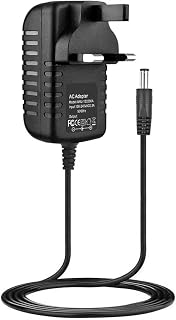


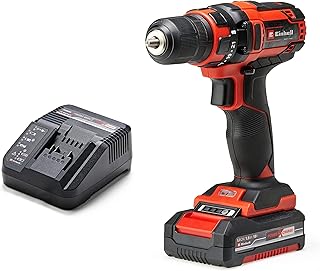


Choosing the right Einhell battery and charger is about more than simply selecting the highest capacity available. The most suitable combination depends on the tools you already own, how frequently you work, the amount of power you need, charging time, battery weight and whether you want to build a wider cordless tool collection around the same battery platform.
Einhell's Power X-Change system is particularly relevant for buyers who want one battery platform across multiple cordless tools. Depending on the equipment, the same battery family can be used across garden machinery, DIY tools, workshop equipment and other compatible Einhell products. This can make a carefully chosen battery and charger combination more useful over time than buying an isolated battery for every individual tool.
This guide explains what to look for when comparing Einhell batteries and chargers in the UK, including battery capacity, charging technology, compatibility, runtime, charging speed, battery weight, storage, maintenance and the differences between compact batteries and higher-capacity options.
When comparing Einhell battery and charger products, start with compatibility rather than price. A battery that offers excellent capacity is of little practical value if it is unsuitable for the tool you intend to use. The same principle applies to chargers: the correct charger should match the battery system and your preferred charging routine.
The Power X-Change concept is designed around a shared cordless battery platform. Instead of purchasing a dedicated battery and charger for every tool, compatible products can use batteries from the same system. This is one of the main reasons the platform can appeal to DIY users, gardeners and home workshops.
For a buyer starting from scratch, the battery should therefore be viewed as part of a wider tool ecosystem rather than as an accessory for one machine. A suitable battery purchased today could potentially be useful with another compatible Einhell tool in the future.
However, compatibility should never be assumed solely because two products carry the Einhell name. Check the individual tool and battery specifications before buying. Different generations, capacities and equipment requirements can affect the suitability of a particular combination.
A shared battery platform can reduce the number of chargers and battery types required in a home workshop. It can also simplify storage because compatible cordless tools can be organised around the same battery family.
For occasional DIY, this may be mainly a convenience. For frequent users, it can become a significant part of the purchasing decision because spare batteries can be rotated between tools while another battery is charging.
For drills, impact drivers, sanders, saws and other handheld equipment, battery selection should balance runtime against handling. A very large battery may provide useful additional runtime, but the extra mass can be noticeable when a tool is held above shoulder height or used for detailed work.
Compact batteries can therefore be attractive for lighter tasks, while higher-capacity packs may be better suited to jobs where stopping to recharge would be inconvenient.
Garden equipment creates different demands. Cordless lawn mowers, grass trimmers, hedge trimmers, leaf blowers and similar machinery can consume considerably more energy than a small drill during demanding operation.
When comparing batteries for garden equipment, consider the tool's recommended battery configuration as well as the capacity of each pack. Some equipment may use a single battery, while other products are designed around multiple batteries working together.
Amp-hour capacity, commonly abbreviated to Ah, is one of the most important specifications when comparing rechargeable batteries. In simple terms, a higher Ah rating represents greater electrical energy storage when comparing batteries within the same voltage family and under appropriate conditions.
This does not mean that the highest Ah battery is automatically the best choice. A larger battery normally makes more sense when long runtime is more important than minimum weight and compact handling.
Lower-capacity packs can be useful for lightweight cordless tools and short jobs. They can help keep a handheld tool relatively easy to manoeuvre and may be preferable when the task involves repeated lifting, overhead work or detailed positioning.
For occasional drilling, screwdriving or light DIY, a compact battery may provide a practical balance between runtime and handling.
Mid-capacity batteries are often an attractive compromise for users who want one general-purpose battery for several tools. They can provide more working time than compact packs without necessarily becoming as bulky as the largest options.
This type of battery can make sense for a mixed collection where the same pack may move between handheld tools and moderately demanding equipment.
High-capacity packs are most useful when runtime is a priority. They can reduce interruptions during demanding work and may be particularly appropriate for energy-hungry garden machinery and workshop equipment.
The trade-off is that greater capacity can mean additional weight and physical size. For handheld tools, that extra weight may become tiring during extended use.
Battery runtime depends on considerably more than the Ah rating printed on the pack. The tool itself, workload, material, operating conditions and user technique can all affect how quickly energy is consumed.
For this reason, published runtime claims should be treated as an indication rather than a guarantee for every application.
A sensible approach is to match capacity to the workload rather than automatically choosing the largest battery.
Compact or moderate-capacity batteries can be suitable where low weight and manoeuvrability matter. If the tool is being used for occasional household repairs, an enormous battery may offer little practical advantage.
Cutting and sanding can place greater demands on a battery, particularly during continuous operation. A higher-capacity option may be worthwhile when working on larger projects or when frequent battery changes would interrupt the job.
Hedge trimming can involve long periods of continuous use, so runtime becomes an important consideration. At the same time, the battery sits on a tool that may already be held at arm's length, making excessive battery weight undesirable.
Grass trimmers can benefit from additional battery capacity when tackling larger gardens or dense vegetation. For small lawns and short trimming sessions, a smaller battery may be easier to handle.
Lawn mowers can be among the more demanding cordless garden tools. Battery requirements can vary significantly by model, cutting conditions, grass length and mowing pattern. Always check the manufacturer's recommended battery arrangement rather than choosing a battery based solely on its capacity.
Some cordless equipment is designed to operate with more than one battery. Multi-battery configurations can provide the energy required by larger machines while allowing users to work within a modular battery ecosystem.
When comparing a multi-battery setup, consider the total number of batteries required, whether you already own compatible packs and whether purchasing additional batteries would make financial sense for your wider tool collection.
A user with several Power X-Change tools may also benefit from having multiple batteries available for rotation. One battery can be in use while another is being charged, reducing downtime.
The charger is an important part of the battery system and should not be treated as an afterthought. Charging technology can influence how quickly a battery becomes available for use, particularly when several packs are being used during the same project.
For occasional DIY work, a standard charger can be perfectly practical. If you use cordless tools frequently, faster charging technology may be more valuable because it can reduce the amount of time batteries spend waiting between jobs.
The best choice depends on workflow. A user who normally completes short tasks may not notice much difference between charging technologies. Someone working through several batteries in a day can benefit more from a charger designed for faster turnaround.
A single-bay charger is straightforward and can be sufficient for users with one or two batteries. However, anyone building a larger cordless collection should consider how often several batteries need to be recharged.
Multi-battery charging can simplify battery management and reduce the need to repeatedly connect and disconnect individual packs. It can also be useful when several high-demand garden tools are being used during the same session.
Before buying a multi-battery charger, check exactly how it handles multiple batteries. Charging several batteries does not necessarily mean every connected battery charges simultaneously at the same rate, so consult the product's stated charging behaviour.
Compatibility is one of the most important checks before purchasing. Do not rely solely on photographs, product titles or marketplace descriptions. Check the exact model number of your existing tool and compare it with the battery or charger specifications.
This is particularly important when purchasing older tools, newer battery generations or accessories from different product ranges. The Power X-Change platform provides broad compatibility, but individual equipment requirements still need to be considered.
Battery capacity is only one part of ergonomics. Weight distribution can significantly influence how comfortable a cordless tool feels during extended use.
A compact battery can be particularly attractive for drills, drivers and other tools that are frequently repositioned. A larger battery may be more suitable for floor-level equipment where weight is less noticeable.
For garden tools, think about how the equipment is held. Hedge trimmers and long-reach tools can become tiring if the overall setup is unnecessarily heavy. Conversely, a lawn mower can often accommodate a larger battery without the same effect on user fatigue.
Modern cordless power tools commonly use lithium-ion battery technology because it provides a useful combination of energy density, rechargeable performance and relatively low self-discharge compared with older battery technologies.
However, the chemistry alone should not determine your purchase. Battery management, cell quality, temperature control, electronic protection, physical construction and compatibility with the tool all contribute to the overall system.
When comparing Einhell batteries, look beyond the Ah number and consider the complete battery design and the type of equipment you intend to power.
Contemporary cordless battery systems rely on electronics to manage charging and operation. Depending on the product, protection systems can help manage conditions such as excessive temperature, overloading and other operating parameters.
Because these systems are specific to the battery and tool platform, users should avoid modifying battery packs or using unofficial electrical components. For safety and compatibility, use the manufacturer's intended battery and charging equipment.
Battery kits can sometimes be more convenient than purchasing a battery and charger independently. When comparing kits, calculate what you actually receive rather than judging value solely from the number of items shown in the product title.
Compact batteries are generally attractive when portability and low weight are important. They can make handheld tools easier to control and may be a sensible choice for short jobs.
Higher-capacity batteries are more appropriate when long operating periods are more important than minimum weight. They can reduce interruptions during demanding applications but may be heavier.
Several smaller batteries can provide flexibility because users can rotate them between tools and charging stations. This can be particularly useful for people who already own several Power X-Change machines.
A smaller number of larger batteries can simplify storage and provide substantial runtime per pack. The downside is that a single depleted battery can become a larger interruption if no spare is available.
An additional battery is worth considering when your existing battery regularly runs out before the work is complete. It can also make sense if you own several compatible cordless tools and frequently move the same battery between machines.
Another useful reason to buy a spare is to create a simple charging rotation. One battery can be used while another is being charged, provided the charging and operating requirements of the equipment are followed.
This is a common decision for Power X-Change users. A larger battery increases runtime per charge, while a second battery increases flexibility.
Choose greater capacity when the main problem is that the battery's runtime is too short for a particular task. Consider a spare battery when the main problem is waiting for a battery to recharge.
For users with several tools, owning a mixture of capacities can sometimes be more practical than buying several identical batteries. Compact packs can serve lightweight handheld equipment, while larger packs can be reserved for demanding machines.
If you use cordless tools several times a week, charging convenience deserves more attention. Think about when batteries are normally used, how many batteries you own and whether you typically need them ready at the same time.
Proper storage can help preserve rechargeable batteries and reduce unnecessary wear. Follow the storage instructions supplied with the specific Einhell battery rather than relying on generic advice.
Battery longevity depends on usage, charging conditions, storage and the way the equipment is operated. Avoid treating a battery as disposable simply because performance has temporarily declined; first check whether the tool, charger, contacts or operating conditions could be contributing to the problem.
Regularly inspect the pack for visible damage and keep the connection area clean. If a battery becomes unusually hot, damaged or behaves abnormally, stop using it and follow the manufacturer's safety guidance.
The largest battery is not automatically the best battery. A heavy pack can make handheld tools less comfortable and may be unnecessary for short tasks.
Never assume that every Einhell battery is suitable for every Einhell machine. Check the exact tool requirements before purchasing.
If you own multiple cordless tools, a single shared battery can become a bottleneck. A second compatible pack may provide more practical value than upgrading to a substantially larger battery.
Fast charging can be useful, but it does not solve every workflow problem. If you regularly need a battery while another is charging, additional battery capacity may be more useful than simply buying a faster charger.
Consider whether the battery you buy today could be useful with future compatible tools. A battery platform becomes more valuable as your collection grows.
An occasional DIY user should prioritise simplicity, compatibility and comfortable handling. A compact or moderate-capacity battery and a straightforward charger may be sufficient for household repairs and small projects.
Regular DIY users may benefit from a more flexible battery setup. A combination of batteries can reduce interruptions while allowing lighter packs to be used for handheld tools.
Garden users should consider runtime carefully because grass trimmers, hedge trimmers, blowers and lawn mowers can place different demands on batteries. Think about the size of the garden and the length of typical sessions rather than buying solely according to Ah.
For a larger workshop, platform compatibility becomes particularly valuable. A growing collection of Einhell cordless tools can share compatible Power X-Change batteries, making battery rotation and charger placement important parts of the overall setup.
Professional and very frequent users should place greater emphasis on charging workflow, battery availability, ergonomics and equipment-specific requirements. Runtime interruptions can be more significant when tools are used continuously, so keeping appropriately sized spare batteries can be an important consideration.
When evaluating Einhell, it is useful to compare the complete battery ecosystem rather than comparing individual batteries in isolation. Bosch, Makita, DeWalt, Milwaukee, Ryobi and other established manufacturers also operate broad cordless platforms.
The most useful comparison is whether the ecosystem contains the tools you are likely to need, how readily the batteries can be shared across those tools, what battery capacities are available and whether the charging options suit your working pattern.
If you already own several tools from another manufacturer, staying within that existing ecosystem may be more convenient than starting a second battery platform. Conversely, someone starting a new cordless collection should consider the range of compatible tools before committing to a platform.
Product descriptions can contain several numbers and technical terms, so compare like with like. Start with the battery family and compatibility information, then look at capacity and physical characteristics.
Do not assume that a larger numerical specification automatically represents a better product. A battery should be assessed in relation to the machine it powers and the work you expect it to perform.
Begin by counting your batteries and considering how often they need to be ready simultaneously. If you have one battery and use a cordless tool occasionally, a basic compatible charger may be enough. If you have several batteries, a faster or multi-battery charging arrangement may be more convenient.
Also consider where the charger will be used. A dedicated workshop setup can accommodate a permanent charging station, whereas a small home user may prefer a compact arrangement that can be stored away when not needed.
A simple charging routine can make a shared battery platform easier to manage. Keep charged batteries in an organised location, return depleted batteries to the charger after use where appropriate, and avoid leaving damaged or questionable packs connected to charging equipment.
If several tools are used during one project, identify which tools require the most energy and reserve higher-capacity batteries for those machines. Smaller packs can then be used where their lighter weight provides a practical advantage.
Rechargeable lithium-ion batteries contain significant stored energy and should be handled carefully. Use the charger specified for the battery system and follow the manufacturer's operating, charging and storage instructions.
Battery performance can vary with operating conditions. Extremely cold or hot environments can affect charging behaviour, runtime and the way a cordless tool performs.
Allow batteries to operate within the conditions specified by the manufacturer. Avoid attempting to speed up charging by exposing a battery to unsuitable heat sources, and follow the product instructions regarding temperature before charging.
If a battery seems to be draining unusually quickly, the battery may not always be the cause. Tool condition and workload can have a major effect on energy consumption.
For example, a cutting tool that is poorly maintained or used with an inappropriate accessory may require more effort from its motor. Similarly, forcing a tool beyond its intended application can increase energy consumption.
Before replacing a battery because of reduced runtime, check the tool, accessory, workload and operating conditions as well.
These two specifications should be considered together. A battery offering substantial runtime can be useful for long tasks, but if you have only one pack and the charging process takes a long time, downtime can still be inconvenient.
A practical cordless setup therefore depends on both energy storage and charging workflow. For frequent users, two appropriately sized batteries can sometimes provide a better experience than one very high-capacity battery.
If you expect to purchase several Einhell cordless tools, plan the battery system before buying each machine individually. Identify which tools are likely to consume the most energy and which tools benefit most from low weight.
A mixed battery collection can then be created around those needs. Larger packs can be reserved for demanding equipment, while compact packs can be used with lighter handheld tools.
This approach can prevent the common mistake of buying the same battery size for every tool regardless of how each machine is actually used.
Buying a kit can be convenient when you need both a battery and charger, particularly when starting a new Power X-Change collection. Existing users may find individual batteries more practical if they already have suitable charging equipment.
Compare the contents carefully. A kit with several smaller batteries may be more useful for a multi-tool user than a package containing one large battery, while a high-demand garden-tool user may prefer the opposite arrangement.
A good combination is one that matches the tool, workload and user's charging routine. There is no single battery capacity that is ideal for every application.
For light handheld work, handling and weight can be more important than maximum runtime. For garden machinery, energy capacity can become the priority. For users with several cordless tools, battery rotation and charging convenience can matter more than either specification alone.
When comparing prices, look at the complete package rather than the headline figure. A lower-priced battery is not necessarily better value if it has a capacity that does not suit your application or if you also need to purchase a charger separately.
Compare the exact model, capacity, charger included, number of batteries, compatibility and intended application. Product specifications can change over time, so check the current information supplied by the manufacturer and trusted retailers before making a purchase.
For current buying decisions, compare today's prices, read verified customer reviews and check the latest specifications rather than relying solely on an old product description or historical recommendation.
Verified customer reviews can provide useful information about everyday usability, charging convenience, perceived runtime and physical handling. However, individual experiences should be interpreted in context.
A customer using a battery with a drill for occasional DIY may report very different runtime from someone using the same battery with demanding garden equipment. Look for reviews that describe a similar tool, workload and usage pattern to your own.
A higher-capacity battery is worth considering if your main priority is longer operating time between charges. It can be particularly useful for demanding applications where frequent battery changes would interrupt the job.
It may be less attractive when a tool is used for short periods, when low weight is important or when the user already owns several spare batteries.
A compact battery can be a strong choice for users who prioritise manoeuvrability and reduced weight. It is particularly worth considering for handheld tools that are used at awkward angles or for extended periods.
Compact batteries can also be useful as supplementary packs in a larger collection, allowing users to reserve heavier batteries for equipment where maximum runtime is more important.
The best Einhell battery and charger combination is ultimately the one that fits your existing Power X-Change tools, working habits and future plans. Do not select a battery simply because it has the highest Ah rating, and do not choose a charger solely because it advertises fast charging.
Instead, compare compatibility, capacity, weight, runtime requirements, charging speed, number of batteries, tool configuration and long-term platform value. Consider whether your priority is lightweight handling, longer runtime, faster charging or the flexibility to power several cordless tools from the same battery family.
For a growing cordless collection, the Power X-Change platform can make battery planning especially important. A well-balanced collection might combine compact packs for lightweight tools, larger packs for demanding equipment and a charging arrangement that keeps spare batteries ready for use.
Before purchasing, check the latest manufacturer specifications for the exact Einhell battery, charger and tool combination, compare current prices from trusted retailers and read verified customer reviews relevant to your intended application. This approach gives you a more reliable basis for choosing the right battery and charger rather than relying on capacity numbers alone.