

♥ Wishlist
Compare 51 verified Electronic Drums products in United Kingdom. Reviews, ratings, pros, cons and buying advice updated for November 2026.







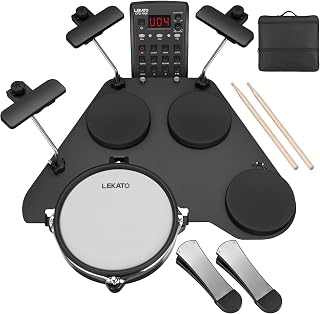


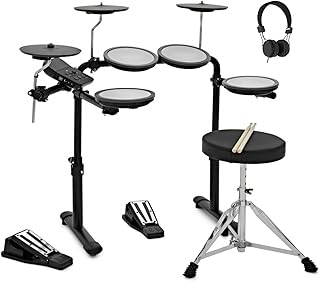


Choosing the best electronic drums is about much more than counting pads, cymbals or built-in sounds. A good electronic drum kit should suit the way you intend to play, the space available in your home, your experience level, your preferred playing feel and the equipment you may want to connect later. The right choice for a beginner learning at home can be very different from the right electronic drum kit for recording, rehearsing with headphones, performing live or replacing an acoustic kit.
The UK electronic drum market includes compact beginner kits, mid-range mesh-head systems, advanced performance kits and premium electronic drums designed to deliver a more acoustic-style playing experience. Well-established manufacturers such as Roland, Yamaha and Alesis cover a wide range of requirements, while other brands can appeal to buyers looking for particular features or a lower entry price.
This buying guide is designed to help you compare electronic drum kits by the factors that actually affect everyday use: pad response, triggering, hi-hat behaviour, cymbal zones, sound-module capability, connectivity, expandability, rack construction, noise, playing space and long-term practicality.
When comparing electronic drums, start with the playing experience rather than the number of sounds advertised on the module. A kit with hundreds of voices is not necessarily a better choice if its pads, hi-hat or trigger response do not suit your playing.
Pad material is one of the first differences buyers notice when comparing electronic drum kits. Mesh heads are popular because they can provide a more drum-like rebound and playing sensation than basic rubber surfaces. They can also be adjusted on some systems to alter the playing response.
Rubber pads can still make sense for compact practice kits, particularly where price, simplicity and small dimensions are more important than acoustic-style feel. They are often straightforward to maintain and can work well for beginners developing basic coordination.
A mesh-head kit is not automatically superior in every situation. The quality of the trigger system, pad construction, module and overall configuration also matters. A poorly integrated mesh pad can still provide a less satisfying experience than a well-designed system using a different surface.
Triggering is the bridge between physically hitting a pad and the sound produced by the module. When you strike a pad, the system detects the impact and interprets information such as velocity and, depending on the pad and module, the playing zone.
This means two kits with apparently similar pad sizes can behave quite differently. Trigger accuracy becomes particularly important when playing ghost notes, soft accents, fast fills and dynamic passages.
When comparing models, pay attention to how many zones each pad supports and whether those zones are interpreted by the module. A dual-zone snare, for example, can provide different responses from the head and rim. More advanced configurations can provide additional cymbal or snare behaviour.
Velocity sensitivity determines how the electronic drum system responds to different playing strengths. A gentle stroke should not sound identical to a powerful hit if you want expressive performance.
For beginners, good velocity response helps develop dynamic control. For experienced players, it becomes even more important because musical expression often depends on subtle differences in volume and articulation rather than simply hitting every pad at the same strength.
A useful electronic drum kit should interpret normal playing consistently. Poorly adjusted sensitivity can result in missed hits, unwanted sounds or excessive triggering from vibrations elsewhere on the kit.
Trigger settings can often be adjusted through the module. Before buying, therefore, consider not only the hardware but also how much control the module provides over sensitivity, threshold and related trigger parameters.
The hi-hat deserves particular attention when comparing electronic drums. It is one of the most frequently played components of a drum kit and is used for timekeeping, accents, grooves, transitions and expressive patterns.
Basic electronic kits may use a simple pad and pedal arrangement, while more advanced systems can provide a more sophisticated hi-hat arrangement designed to reproduce the changing behaviour of an acoustic hi-hat.
If you are an experienced drummer, do not judge a kit solely by the number of drum sounds. Test or research the hi-hat response, particularly how it handles closed, open and partially open positions and how accurately foot control is interpreted.
Cymbals vary considerably between electronic drum kits. Some provide straightforward single-zone triggering, while more advanced cymbals can detect multiple playing areas and additional techniques.
The module is effectively the control centre of an electronic drum kit. It receives trigger information from the pads and determines which sounds are produced. It can also provide effects, practice tools, recording functions and connections to external equipment.
Entry-level modules tend to focus on essential drum sounds and practice features. More sophisticated modules can offer deeper sound editing, greater customisation, multiple outputs, sample handling and integration with computers or other music equipment.
Preset kits are useful for getting started quickly. Look for a selection that covers the styles you actually play rather than choosing solely by the number of presets.
Useful sound categories may include acoustic-style kits, rock, pop, jazz, electronic percussion and specialised sounds. The ability to adjust individual drum voices can be more valuable than a large collection of presets that you rarely use.
More advanced modules can allow changes to parameters such as tuning, muffling, ambience, effects and other characteristics. This can be useful when creating a kit that fits a particular song or recording.
If you intend to use the electronic drums as a serious production instrument, examine the module's editing depth and output options before making a purchase.
Beginners generally benefit from a kit that is straightforward to assemble, easy to configure and capable of supporting progression. You do not necessarily need the most expensive electronic drum set to learn fundamental drumming skills.
Look for a stable frame, responsive pads, a sensible pedal arrangement, a usable metronome and practice functions. Headphone connectivity can also be particularly useful for home practice.
Alesis has a strong presence in the entry-level and value-oriented electronic drum market, while Roland and Yamaha offer compact systems as well as more advanced configurations.
Once you have developed your technique, limitations that are easy to overlook as a beginner become more noticeable. Advanced players are more likely to care about detailed trigger response, hi-hat articulation, cymbal zones, pad dimensions, module editing and integration with external software.
Roland V-Drums systems are widely associated with advanced electronic drumming and include families such as the TD-17 and TD-27. Yamaha's DTX range includes the DTX6, DTX8 and DTX10 families, covering increasingly sophisticated configurations. Alesis also offers higher-end Strata systems alongside its more affordable ranges.
At this level, the best electronic drum kit is usually the one that reproduces your preferred playing techniques accurately rather than the model with the largest list of headline specifications.
Roland V-Drums are a major option for buyers seeking an established electronic drum platform. The range spans compact practice systems through to advanced performance-oriented configurations.
The Roland TD-17 family is particularly relevant to players who want a serious practice and performance platform without automatically moving into the company's highest tier. Features available within the TD-17 platform include expressive triggering, coaching functions, Bluetooth audio, USB audio and MIDI, customisation options and expansion capability depending on the specific configuration.
The Roland TD-27 platform sits higher in the range and is aimed at players who place greater emphasis on expression, advanced triggering and detailed sound control. Buyers should compare the exact kit configuration rather than assuming that every TD-series package contains the same pads, cymbals or accessories.
Yamaha's DTX electronic drum range provides another strong choice for UK buyers. The DTX family includes compact configurations as well as higher-level systems designed to deliver a more substantial playing experience.
The DTX6 range is aimed at players looking for a balance between compactness and performance. The DTX8 range moves towards a more substantial acoustic-style presentation, while the DTX10 range represents a flagship-level approach within Yamaha's DTX electronic drum lineup.
Yamaha is particularly worth considering if you value the combination of drum hardware, sound technology and a familiar acoustic-drum-inspired layout.
Alesis has become an important choice for buyers looking for a broad selection of features at different points in the market. Its electronic drum range includes beginner-friendly systems as well as the more advanced Strata family.
The Alesis Nitro range is worth considering when affordability, mesh pads and home practice are important. The Strata range moves towards more sophisticated sound systems and larger configurations for players who want a more substantial electronic drum setup.
Alesis can therefore be particularly interesting when comparing feature lists across price categories. However, buyers should still examine rack stability, pad sizes, trigger behaviour and module capability rather than assuming that more components automatically mean a better kit.
There is no universal winner between Roland, Yamaha and Alesis. Each manufacturer has different strengths, and the most suitable choice depends on what matters most to you.
Rather than choosing a brand first, decide which playing characteristics matter most and then compare specific kits that meet those requirements.
Electronic drums are particularly attractive for home practice because headphones can allow the player to practise without producing the full volume of an acoustic drum kit. However, electronic does not mean completely silent.
The kick pedal can transmit mechanical vibration through the floor, while pad impacts and rack movement can create physical noise. This is especially relevant in flats, terraced homes and rooms positioned above bedrooms or shared living areas.
Consider placing the kit on a suitable drum mat or isolation solution where appropriate. The goal is to reduce movement and impact transmission rather than simply make the electronic module quieter.
Electronic drum kits are generally much easier to control for airborne volume than acoustic drums, particularly when using headphones. Nevertheless, the physical act of hitting pads still creates noise.
Mesh pads can alter the character of the impact noise, but they do not eliminate it. Kick pedals can be particularly noticeable in buildings with lightweight floors.
Available floor space should be measured before purchasing. Drum kits can look compact in product photographs while requiring more room once the throne, pedals, cymbal stands and player are included.
Compact configurations can be an excellent solution for bedrooms, home offices and smaller practice rooms. Look for a rack that allows the pads and cymbals to be positioned efficiently rather than selecting a larger kit simply because it includes additional components.
Remember to leave enough room behind and beside the kit to sit comfortably, move your arms naturally and access cables or the module.
Pad size affects both playing comfort and the physical footprint of the kit. Larger pads can feel more familiar to experienced drummers, while smaller pads can make a compact setup easier to accommodate.
Snare size is particularly important because it is one of the most frequently used surfaces. If possible, compare the physical dimensions of the snare, toms and cymbals rather than relying only on the overall kit description.
Connectivity becomes increasingly important if you plan to use electronic drums with a computer, tablet, phone, recording system or external sound source.
If recording is part of your plan, look beyond the module's internal sounds. MIDI connectivity can allow your playing to control virtual drum instruments, while USB audio can simplify recording on compatible equipment.
For production work, triggering consistency and MIDI interpretation may be more important than the number of internal presets. A kit that produces a clean, consistent performance signal can provide greater flexibility when working with software instruments.
Before purchasing, check whether the module supports the connections and MIDI functionality required by your existing computer, DAW or recording setup.
Live players need to consider reliability, transport, stage footprint, outputs and the practicality of setting up the kit in different venues.
A large electronic kit may offer a highly convincing playing experience but can be less convenient to transport. A smaller setup can be easier to move but may require compromises in pad size or configuration.
Practice functions can make an electronic drum kit significantly more useful for learners. A metronome is one of the most valuable tools because it encourages consistent timing and helps players recognise whether they are rushing or slowing down.
Some systems provide coaching exercises, performance recording, song playback or other learning tools. These features can be useful, but they should support rather than replace structured practice.
When comparing beginner kits, consider whether the practice features are genuinely useful to you rather than paying extra for functions you are unlikely to use.
Headphones are often the simplest way to practise electronic drums without filling a room with amplified drum sounds. Choose headphones that are comfortable enough for extended sessions and compatible with the module's output.
Speakers provide a more natural room experience but introduce additional considerations around volume and sound quality. If you intend to perform with the kit, a suitable amplification system may eventually become necessary.
The kick component is another area that should not be overlooked. Some electronic drum configurations use compact kick pads, while others offer a larger kick tower arrangement that can feel more familiar to acoustic drummers.
Check whether the kit includes a pedal, whether a compatible pedal is required separately and whether the physical configuration works with your preferred playing technique.
Double-pedal users should pay particular attention to compatibility and available space. Do not assume that every electronic kick pad is equally suitable for double-bass techniques.
The rack is the foundation of the electronic drum kit. If the frame moves excessively when you play, even excellent pads can become frustrating to use.
Look for adjustable hardware that allows the playing position to be customised. Check how the toms and cymbals are mounted and whether the overall arrangement can be tightened securely.
A large sound library can look impressive, but the playing experience depends heavily on triggering, pads, cymbals and the module's ability to interpret your performance.
Many buyers focus on the snare and toms but overlook the hi-hat. Because it is central to everyday drumming, its response should be an important part of your comparison.
More pads require more space. A larger configuration can be excellent for a dedicated music room but inconvenient in a bedroom or shared living area.
Headphones solve the problem of amplified sound, not necessarily physical impact noise. Consider kick pedal and pad noise before deciding where the kit will be installed.
If you expect to add a crash, tom or another component later, check the module's inputs and compatibility before buying.
A low-cost kit can be perfectly suitable for basic practice. However, if you already know that you will want more realistic triggering, larger pads or advanced connectivity, buying too basic a system can lead to an unnecessary upgrade later.
Product photographs can show a complete-looking setup, but package contents vary. Check whether the throne, pedals, rack components, power supply, headphones and other accessories are included before comparing overall value.
Specifications should be interpreted in context. A bigger pad is not automatically better, and a higher number of sounds does not necessarily indicate better sound quality.
Prioritise ease of use, reliable triggering, sensible pad placement, headphone support and useful practice functions. A compact Alesis or Roland configuration can be appropriate depending on budget and requirements.
Look for mesh pads, a responsive snare, a convincing hi-hat system, strong triggering and a module with useful coaching or customisation features. Roland TD-series and Yamaha DTX-series kits are worth comparing in this category.
Prioritise MIDI, USB connectivity, consistent triggering and a module that integrates well with your recording workflow. Internal sounds are useful, but external software can significantly broaden production options.
Focus on reliability, outputs, portability, rack stability and quick access to the sounds required for performance. The most elaborate home kit is not always the most practical stage kit.
Choose a compact rack and avoid buying additional pads simply because they are available. Measure the complete playing area, including the throne and pedals, before committing to a configuration.
There is no single ideal budget because electronic drums range from simple entry-level practice systems to sophisticated professional instruments.
A sensible approach is to divide your budget according to the features that will directly affect your playing. If you are a complete beginner, spending more on an advanced module may provide less benefit than investing in a kit with better pad response and a stable rack. If you are already an experienced drummer, upgrading the trigger system, hi-hat and cymbal response may be more valuable than simply adding presets.
Always compare the complete package rather than the headline price. A seemingly affordable kit can become considerably more expensive if you later need a throne, pedal, headphones, additional pads or other accessories.
A used electronic drum kit can sometimes provide access to a higher-level configuration for a lower purchase cost, but condition is especially important with electronic instruments.
For a used kit, the exact model number and included configuration matter considerably because older versions can differ from newer packages carrying similar names.
Electronic drums require less traditional maintenance than acoustic drums, but they still benefit from regular care. Keeping pads, cymbals, cables and mounting hardware in good condition can help preserve consistent performance.
Correct positioning can make a significant difference to comfort and technique. Start by adjusting the throne height so that your knees and feet can operate the pedals naturally. Position the snare at a comfortable height and then arrange the toms and cymbals around it.
The objective is to avoid excessive reaching. Your most frequently used playing surfaces should be comfortably accessible without forcing your shoulders or wrists into awkward positions.
Once the kit is positioned, tighten the relevant rack and mounting hardware and check that striking one pad does not cause another component to move unnecessarily.
Realism comes from a combination of physical and electronic characteristics rather than a single specification. Pad rebound, dynamic sensitivity, hi-hat behaviour, cymbal response, sound quality and latency all contribute to the overall experience.
A realistic kit should respond differently to soft, medium and hard strokes. The relationship between what your hands and feet do and what you hear should also feel immediate and predictable.
For experienced acoustic drummers, the hi-hat and cymbal behaviour can be especially important because those instruments involve more nuanced physical techniques than simply hitting a pad.
Latency refers to the delay between hitting a pad and hearing the resulting sound. Excessive latency can make an electronic instrument feel disconnected from your playing.
When using the internal sound module, the system is designed to process the trigger signal directly. When using external software, the computer, audio interface, drivers and software settings can all influence the overall response.
If recording or performing through a computer is important, make sure your intended setup is capable of maintaining a responsive playing experience.
Many modern electronic drum kits can be used as controllers for computer-based drum instruments. This can significantly expand the available sounds and production possibilities.
The quality of the MIDI information sent by the kit matters because virtual instruments can respond to velocity, articulation and other performance data. Before buying for software use, check the module's MIDI capabilities and compatibility with your intended setup.
Rock players may prioritise strong kick and snare response, comfortable tom placement and cymbals capable of handling energetic playing.
Pop drumming often benefits from accurate dynamics, dependable hi-hat control and flexible sound selection.
Jazz players may place greater importance on subtle dynamics, ride response, snare articulation and natural playing expression.
Players working with electronic music may value extensive sound editing, sample integration, MIDI connectivity and flexible effects more than acoustic-style pad appearance.
Metal players should pay close attention to kick-pedal compatibility, triggering consistency, pad stability and the ability to handle fast playing without unwanted triggering.
A children's electronic drum kit should be judged by adjustability, physical accessibility and simplicity rather than simply buying the smallest available system.
The throne and pad heights should allow the player to maintain a comfortable posture. A complicated module may also be unnecessary for a child who is beginning to learn basic rhythm and coordination.
If the player is likely to progress quickly, however, a more capable kit can make sense because replacing an unsuitable starter kit can cost more in the long term.
Create a shortlist of two or three kits that fit your budget and intended use. Then compare the actual hardware rather than relying on broad marketing descriptions.
Before making a final decision, verify the exact model and package rather than relying on a general product family name. Manufacturers can offer multiple configurations that share similar branding.
The best beginner electronic drum kit is one that provides dependable triggering, comfortable pad placement, useful practice functions and a configuration you can grow into. Compact Roland, Yamaha and Alesis systems are all worth comparing, depending on budget and requirements.
Neither is universally better. Electronic drums are particularly useful for controlled-volume practice, compact spaces, recording and flexible sound selection. Acoustic drums provide a different physical playing experience and natural acoustic response.
Mesh pads can be worthwhile if realistic rebound and playing feel are important. They are particularly attractive to players who practise frequently or want a closer transition between electronic and acoustic drums.
Yes. Advanced electronic drum systems can provide sophisticated triggering, expressive pads, detailed sound engines, extensive connectivity and configurations suitable for demanding practice, recording and performance.
It depends on the specific kits being compared. Roland may appeal to buyers prioritising advanced triggering and the V-Drums ecosystem, while Alesis can be attractive when feature coverage and value are major considerations. Compare the actual models rather than judging solely by brand.
Yamaha is a well-established electronic drum manufacturer with the DTX range covering compact, mid-range and high-end configurations. The DTX6, DTX8 and DTX10 families are useful starting points for comparing Yamaha's different approaches to electronic drums.
Yes, compatible electronic drum modules commonly provide headphone connectivity. This is one of the main reasons electronic drums are popular for home practice, although physical pad and pedal impact noise can still be audible.
Many modern electronic drum modules support USB or MIDI connections for computer-based music production, recording and virtual drum software. Check the exact module specification before purchasing because connectivity differs between models.
Some kits can be expanded with additional pads or cymbals, but expansion depends on the module's available inputs and compatibility. Check these details before buying if future expansion is important.
No. Headphones can greatly reduce amplified sound, but striking pads and operating pedals still creates physical noise. Kick pedals can also transmit vibration through floors, particularly in flats and other multi-occupancy buildings.
Consider the sound library, editing options, trigger settings, practice functions, connectivity, expansion inputs, recording capability and compatibility with external software. Choose the features that match your intended use rather than paying for functions you will not use.
Longevity depends on the construction, frequency of use, playing intensity, maintenance and availability of replacement components. Regular inspection of pads, cables, mounting hardware and pedals can help identify problems before they become more serious.
For many practice, recording and performance applications, an electronic kit can provide an effective alternative. However, the physical response, sound projection and playing environment are different from an acoustic kit, so the best choice depends on your priorities.
The best electronic drums are not necessarily the largest, most expensive or most heavily advertised. The right kit is the one that gives you the playing response, configuration, connectivity and practical features you will genuinely use.
For beginners, focus on dependable triggering, sensible ergonomics, practice functions and a comfortable setup. For experienced players, place greater emphasis on snare and hi-hat response, cymbal articulation, dynamics, module capability and expansion. For recording, investigate USB and MIDI functionality. For live use, consider outputs, portability and rack stability. For home practice, measure the space and think carefully about impact noise.
Roland, Yamaha and Alesis provide useful reference points across different levels of the electronic drum market, but comparing specific models is more useful than selecting a manufacturer purely by reputation. Check the exact configuration, technical specifications, included accessories and current retailer information before making a purchase.
A thoughtful comparison at the buying stage can prevent the most common electronic drum mistake: choosing a kit based on headline specifications rather than the way you actually intend to play it.