

♥ Wishlist
Compare 11 verified Makita Cordless Caulking Guns products in United Kingdom. Reviews, ratings, pros, cons and buying advice updated for November 2026.


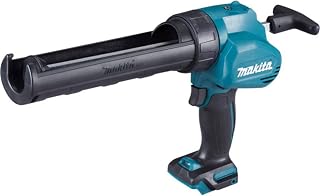


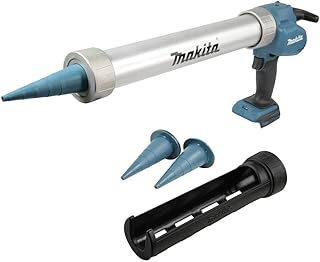
Choosing a cordless caulking gun is less about finding the most powerful tool and more about matching the dispensing system to the materials, cartridges, sausage packs and workload you actually use. For tradespeople working with sealants and construction adhesives, a battery-powered gun can make long applications considerably more consistent than relying on a conventional manual applicator.
Makita is particularly relevant to buyers already using the company's cordless tool ecosystem. Its DCG180 LXT cordless caulking gun is designed for cartridges and sausage packs and is available in configurations supporting different capacities. Makita's published specifications list an 18V LXT platform, variable speed control, a maximum pushing force of 5,000 N and a no-load speed range of 0–28 mm/s. :contentReference[oaicite:0]{index=0}
This guide explains what to look for when comparing Makita cordless caulking guns in the UK, how dispensing force and speed affect real-world work, which cartridge formats matter, what battery compatibility means, and the common mistakes that can turn an otherwise capable caulking gun into the wrong purchase.
A cordless caulking gun uses an electric motor and battery-powered drive mechanism to push sealant or adhesive through a cartridge or sausage pack. Instead of repeatedly squeezing a manual trigger against the resistance of the material, the user controls the powered plunger with an electronic trigger and, depending on the model, a separate speed adjustment.
This distinction becomes increasingly important when applying thick construction adhesives, high-viscosity sealants, hybrid polymers, polyurethane products or other materials that require substantial dispensing force. A powered applicator can also help maintain a more even bead because the drive mechanism provides continuous mechanical assistance rather than relying entirely on hand pressure.
For occasional household jobs, a manual gun may still be perfectly adequate. For repeated sealing, bonding, glazing, installation, construction or maintenance work, however, a cordless model can make more sense because it combines controlled material delivery with the convenience of a battery-powered tool.
The strongest reason to consider Makita is platform compatibility. Buyers who already own compatible Makita LXT batteries may be able to use the same battery ecosystem across multiple tools, although the exact battery and kit configuration should always be checked before purchase.
The DCG180 is built around the 18V LXT system and is intended for both caulking and adhesive applications. Makita lists electronic overload protection, a battery protection system, LED work lighting, variable speed control and a tool-only net weight of 1.7 kg. The published weight with battery varies by battery configuration. :contentReference[oaicite:1]{index=1}
These features are more meaningful than simply looking at the brand name. A good cordless caulking gun should be assessed according to the material being dispensed, required force, cartridge format, speed control, handling characteristics, battery system and frequency of use.
Specifications can vary by regional configuration and included accessories, so buyers should compare the exact model designation and kit contents rather than assuming every DCG180 package is identical. :contentReference[oaicite:2]{index=2}
Pushing force is one of the most important specifications on a powered caulking gun because sealants and adhesives can differ dramatically in viscosity.
Makita specifies a maximum pushing force of 5,000 N for the DCG180. This is a substantial mechanical force designed to handle demanding dispensing applications. :contentReference[oaicite:3]{index=3}
However, maximum pushing force should not be interpreted as a guarantee that every material will dispense at the same speed or with the same smoothness. The actual effort required depends on the formulation, temperature, cartridge design, nozzle opening, material viscosity and condition of the product.
A narrow nozzle opening increases resistance. A thick adhesive creates greater resistance than a low-viscosity sealant. Cold material can also behave differently from material stored at a more suitable working temperature.
For this reason, a sensible buying decision considers both force and speed control. Maximum force provides headroom for difficult materials, while adjustable delivery speed helps the user manage the bead during more delicate work.
A cordless caulking gun without suitable speed control can be difficult to use precisely. Dispensing too quickly can produce an oversized bead, waste material and make finishing more difficult. Dispensing too slowly can make the process unnecessarily tedious.
The DCG180 has a variable speed dial and a trigger that can be used to control material flow. Makita specifies a no-load speed range of 0–28 mm/s. :contentReference[oaicite:4]{index=4}
In practical terms, speed control is particularly useful when moving between different applications:
Capacity is an easy specification to overlook, yet it can determine whether a cordless caulking gun is convenient or frustrating for a particular job.
Standard-sized cartridges are a familiar format for many general-purpose sealants and adhesives. A 300 ml configuration can be a sensible choice for smaller projects, repair work and applications where changing material frequently is not a major inconvenience.
The advantage is flexibility. If most of the products you purchase are supplied in conventional cartridges, there may be little reason to prioritise a larger sausage-pack configuration.
Larger sausage packs can be useful for professional applications where a significant amount of material is required. They can reduce the frequency of material changes during repetitive work, but the applicator must be configured correctly for the relevant pack and accessory system.
An 800 ml configuration is aimed more strongly at high-volume applications. It can make sense where the operator repeatedly applies substantial quantities of sealant or adhesive and wants to minimise interruptions.
Do not choose the largest capacity simply because it sounds more professional. A larger holder can increase the overall size and handling requirements of the tool, and there is little benefit if your normal materials are supplied in smaller cartridges.
One of the most common mistakes when buying a cordless caulking gun is concentrating on the tool while ignoring the consumables.
Before purchasing, identify the exact products you intend to dispense. Check whether they are supplied as cartridges or sausage packs, note their capacity, and confirm that the intended gun configuration and accessories are compatible.
Compatibility can involve more than simple volume. The physical dimensions of the cartridge or pack, holder, plunger arrangement and nozzle system can all affect whether a particular setup is suitable.
If you regularly use several different sealants, adhesives or construction products, it is worth checking compatibility for each one rather than assuming that one holder configuration will cover every application.
The DCG180 belongs to Makita's 18V LXT platform. For an existing LXT user, this can be an important purchasing advantage because the cordless caulking gun can potentially fit into an existing battery ecosystem, subject to the exact battery and product requirements.
Buyers should nevertheless distinguish between a bare tool and a complete kit. A body-only version does not necessarily include a battery or charger. Makita's product literature uses specific model and configuration information, so check the package contents before ordering. :contentReference[oaicite:5]{index=5}
If you are starting from scratch, calculate the total cost of the tool, battery and charger rather than comparing the bare-tool price with a competing product that includes everything required to start working.
A Makita cordless caulking gun is most compelling for users who regularly dispense sealants or adhesives and value powered, controlled application.
For a person applying one or two tubes of sealant occasionally, the additional cost and weight of a cordless applicator may not provide enough practical benefit. The more frequently the tool is used, the more valuable powered dispensing and controlled flow become.
A cordless caulking gun is not automatically better for every user.
A manual applicator can remain a sensible choice for infrequent DIY repairs, small decorating jobs and occasional household sealing. Manual guns are generally simpler, do not require batteries and can be easier to keep available for occasional use.
Similarly, if your work involves very small quantities of low-viscosity material, the additional weight of a battery-powered applicator may not be worthwhile.
Makita is not the only manufacturer worth considering. Buyers may also encounter cordless dispensing tools from brands such as Milwaukee, DeWalt, Ryobi and Bosch Professional.
The best choice depends heavily on the battery platform already used in your workshop. If you already own several compatible batteries and chargers from one ecosystem, staying within that platform can simplify ownership.
Makita's main advantage for existing LXT users is platform continuity. The DCG180 combines 18V operation with a published 5,000 N pushing force, variable speed control and multiple capacity configurations. :contentReference[oaicite:6]{index=6}
Milwaukee is worth comparing when the buyer already operates within its cordless tool ecosystem. Pay close attention to the specific M12, M18 or other platform, dispensing force, cartridge configuration and included accessories rather than comparing brands solely on reputation.
DeWalt cordless dispensing tools can be attractive to users already invested in the XR or related battery platforms. Compare the exact dispensing force, speed range, capacity and battery configuration against the Makita model rather than assuming that similar-looking tools perform identically.
Ryobi can be relevant for buyers who already use its ONE+ ecosystem. It may be particularly interesting for users whose requirements span DIY and occasional trade applications, but the exact model specifications and compatible cartridge systems should be checked before making a decision.
Bosch Professional provides another established cordless ecosystem. Buyers should compare its specific dispensing equipment with the Makita DCG180 according to application requirements, especially maximum force, speed control and cartridge format.
When comparing several models, avoid using a single headline specification as the deciding factor. A useful comparison should include the following:
A caulking gun may not look like a physically demanding tool, but professional users can hold it for extended periods while working along walls, floors, windows, joints and overhead areas.
Makita lists the DCG180 at 1.7 kg net tool weight, with the operating weight increasing according to the battery used. :contentReference[oaicite:7]{index=7}
That means battery selection can affect handling as well as runtime. A larger-capacity battery may be useful when working for long periods, but a lighter battery can make the tool more comfortable for detailed applications.
Look beyond the number on the specification sheet. Balance, grip position, trigger access and the position of the cartridge holder can all influence how comfortable the gun feels during repeated use.
A common buying mistake is choosing the largest battery available without considering how the tool will actually be used.
For lengthy applications, additional battery capacity can reduce the need for battery changes. However, a larger battery also adds weight. When working overhead, at awkward angles or during detailed finishing, lower overall weight may be more valuable than maximum runtime.
If you already own several compatible LXT batteries, consider allocating the most suitable battery according to the job rather than treating one battery size as the universal choice.
Sealants and adhesives are not interchangeable from a dispensing perspective. Two products that look similar in a cartridge can require noticeably different dispensing effort.
High-viscosity materials generally demand more pushing force. Lower-viscosity formulations can flow more easily and may require greater care to avoid dispensing too quickly.
Temperature can also influence viscosity. A material that feels significantly stiffer when cold may dispense differently once it reaches an appropriate working temperature. Always follow the manufacturer's instructions for storage, preparation and application conditions rather than attempting to compensate for unsuitable material conditions by simply increasing tool speed or pressure.
The nozzle has a direct influence on bead size and material flow. Cutting the nozzle opening too large can result in excessive material consumption and messy joints, while an opening that is too small can increase resistance and make dispensing harder.
A practical approach is to start with a conservative nozzle opening and adjust it according to the required joint size and application. The cut should also be clean enough to produce the desired bead shape.
Remember that the nozzle does not operate independently from the gun. A smaller opening increases resistance, so the required trigger control and dispensing speed can change accordingly.
Even the best cordless caulking gun cannot compensate for poor application technique. Consistent results usually come from combining suitable material preparation, correct nozzle sizing, controlled gun speed and steady hand movement.
A high pushing force is useful for difficult materials, but maximum force alone does not produce a better finished joint. Speed control and operator technique remain essential.
Buying a powerful tool that does not suit your preferred cartridge or sausage-pack format is an avoidable mistake. Confirm the material packaging before purchasing.
A body-only product and a complete kit are not equivalent purchases. Check whether the battery, charger, holder and other necessary accessories are included.
The lightest published tool weight may not represent the weight you will actually hold. Compare the working weight with the battery you intend to use.
Makita, Milwaukee, DeWalt, Bosch Professional and Ryobi all have strong positions in cordless tools, but brand reputation should not replace specification comparison. The correct model is the one that fits the application.
High speed is not automatically more productive. If the bead becomes too large or difficult to finish, faster dispensing can increase waste and reduce overall productivity.
Powered caulking guns can be useful across a wide range of professional applications where compatible sealants or adhesives are specified.
The correct sealant or adhesive remains application-specific. The caulking gun is the delivery mechanism; it does not determine whether a particular material is suitable for a joint, substrate or environmental condition.
Regular cleaning is important because cured sealant or adhesive can interfere with moving components and make subsequent applications more difficult.
Do not use solvents or cleaning chemicals on the tool unless they are confirmed to be compatible with the relevant components and the manufacturer's instructions permit their use.
Good battery habits matter when cordless tools are used frequently. Use the correct charger and compatible batteries, avoid exposing batteries to unsuitable conditions, and follow the battery manufacturer's storage and charging guidance.
Battery performance should be considered separately from the mechanical performance of the caulking gun. A tool can have excellent dispensing characteristics but still become inconvenient if the battery system does not match the user's workload.
A powered caulking gun should be treated as a professional power tool rather than simply an electric version of a manual applicator.
There is no single configuration that is best for every buyer. Start with the material and application rather than the tool.
Consider whether you genuinely need a powered applicator. If you only use sealant a few times per year, a manual gun may be more economical and easier to store. If you already own compatible Makita batteries and regularly work with demanding adhesives, a cordless model becomes more attractive.
Prioritise controlled dispensing, cartridge compatibility, ergonomics, battery availability and reliability of the complete setup. The ability to work consistently for long periods can matter more than a single headline specification.
Look closely at larger-capacity configurations, battery strategy and material consumption. Reducing cartridge changes can improve workflow, but only if the larger holder and pack format match your normal materials.
Pay particular attention to pushing force. Thick construction adhesives can demand substantially more mechanical assistance than lightweight sealants. The Makita DCG180's published 5,000 N maximum pushing force makes it a model worth considering for demanding dispensing applications. :contentReference[oaicite:8]{index=8}
The right choice depends on the material, cartridge format, workload and battery system. The Makita DCG180 is a key model to compare because it is an 18V LXT cordless caulking gun with a published 5,000 N pushing force, variable speed control and support for 300 ml, 600 ml and 800 ml configurations. :contentReference[oaicite:9]{index=9}
Yes. Makita describes the DCG180 as suitable for caulking and gluing and specifies it for cartridges and sausage packs. Suitability still depends on the particular adhesive, its viscosity and the correct holder configuration. :contentReference[oaicite:10]{index=10}
Makita specifies a maximum pushing force of 5,000 N. :contentReference[oaicite:11]{index=11}
The DCG180 is an 18V LXT model. Check the exact product configuration and battery requirements before purchasing, particularly when comparing body-only and complete kits. :contentReference[oaicite:12]{index=12}
Yes. Makita specifies a variable speed dial and trigger control, with a published no-load speed range of 0–28 mm/s. :contentReference[oaicite:13]{index=13}
Yes. Makita describes the DCG180 as a caulking gun for cartridges and sausage packs, with configurations covering different capacities. Always check the exact holder and accessory configuration for the pack you intend to use. :contentReference[oaicite:14]{index=14}
Not necessarily for every user. A cordless model is particularly useful for repetitive work, demanding materials and users who value powered dispensing and speed control. A manual gun can remain a practical choice for occasional, low-volume applications.
The published 5,000 N maximum force provides substantial dispensing capability, but whether it is appropriate depends on the specific adhesive and application. Always check the adhesive manufacturer's application requirements and the compatibility of the cartridge system. :contentReference[oaicite:15]{index=15}
Both matter, but they solve different problems. Pushing force helps overcome resistance from thick materials, while speed control determines how quickly material is delivered. For professional use, a combination of sufficient force and precise speed adjustment is generally more useful than maximising either specification alone.
If you already use compatible 18V LXT batteries, platform compatibility can make the purchase more convenient. However, compare the exact tool, cartridge configuration, weight and application requirements before deciding.
They can be, but suitability depends on how often you work with sealants and adhesives. For occasional household jobs, a manual gun may be sufficient. For frequent DIY renovation, installation or adhesive work, powered dispensing can provide useful convenience.
Choose according to the packaging of the materials you use most often. Standard cartridges may make a 300 ml configuration more practical, while frequent use of larger sausage packs can favour a 600 ml setup.
No. Larger capacity primarily means more material can be held or dispensed before changing the consumable. It does not automatically mean better control, greater force or superior results.
No. Compatibility depends on the cartridge or pack format, holder, material properties and manufacturer's instructions. Always confirm compatibility before using a particular sealant or adhesive.
The best Makita cordless caulking gun is the one that fits the materials, cartridge formats and workload you actually encounter. For buyers already invested in the Makita 18V LXT ecosystem, the DCG180 is a particularly relevant model to investigate because its specification combines a 5,000 N maximum pushing force with variable speed control and multiple capacity configurations. :contentReference[oaicite:16]{index=16}
Do not choose purely on brand, maximum force or battery voltage. Compare the complete specification: dispensing force, speed control, cartridge compatibility, sausage-pack support, holder configuration, working weight, battery requirements and included accessories.
For occasional DIY sealing, a manual gun may remain the simpler option. For regular professional applications, demanding adhesives and repetitive dispensing, the advantages of a powered tool become considerably more compelling.
Before buying, compare the exact model configuration, read verified customer reviews, check the manufacturer's current specifications, compare competing brands such as Milwaukee, DeWalt, Bosch Professional and Ryobi, and check today's retailer prices and kit contents. This approach is more reliable than selecting a cordless caulking gun solely from a product ranking or headline specification.