

♥ Wishlist
Compare 41 verified Metabo Cordless Impact Drivers products in United Kingdom. Reviews, ratings, pros, cons and buying advice updated for November 2026.


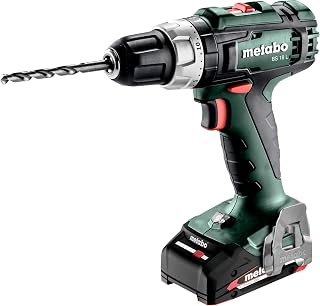


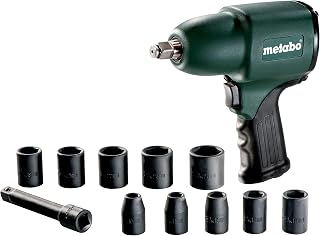

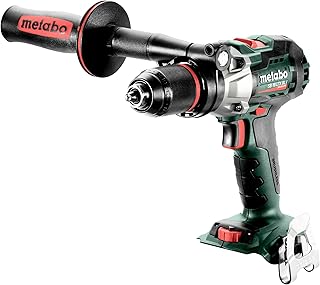


Choosing the right Metabo cordless impact driver is less about finding the tool with the biggest headline torque figure and more about matching the driver to the fasteners, materials, working environment and frequency of use. A compact impact driver can be an excellent choice for repetitive screwdriving, timber construction, installation work and general trade use, while a more powerful model may be better suited to demanding fastening applications where longer or larger fixings are involved.
Metabo has a broad professional power-tool range, and its cordless impact drivers are designed around the practical requirements of drilling and fastening work. When comparing models, it is worth looking beyond the tool body itself and considering the battery platform, charger, control system, chuck or bit holder, ergonomics, speed settings and the type of work you expect to carry out.
This guide provides additional buying information for anyone comparing Metabo cordless impact drivers in the UK. It focuses on the specifications and practical characteristics that matter when narrowing down a shortlist, including torque, speed, impact rate, battery compatibility, control, size, weight, fastening performance and long-term usability.
An impact driver combines rotational movement with rapid impact action to help drive screws and other suitable fasteners with less tendency for the tool to stall under resistance than a conventional drill driver. The impact mechanism is particularly useful when driving longer screws or working with dense materials where ordinary rotational drive can require considerably more effort.
Metabo is an established professional power-tool brand with a product range covering woodworking, metalworking, construction and installation applications. Its cordless systems are intended to provide the convenience of battery operation while retaining features aimed at professional and demanding users.
For buyers already using compatible Metabo cordless tools, platform compatibility can be one of the strongest reasons to stay within the same battery ecosystem. A suitable battery can potentially be shared between compatible tools, reducing the need to maintain separate battery systems.
One of the most important distinctions when shopping for a cordless fastening tool is the difference between an impact driver and an impact wrench. They are not interchangeable, even though both use an impact mechanism.
An impact driver is generally intended for screwdriving and fastening applications using screwdriver bits and suitable accessories. It is commonly used for construction screws, wood screws, self-tapping screws and other compatible fasteners.
An impact wrench is normally designed around socket accessories and is more appropriate for applications involving nuts and bolts, automotive work and heavier mechanical fastening. If the primary requirement is removing or tightening wheel nuts, structural bolts or large machine fasteners, an impact wrench may be a more suitable category.
For buyers specifically searching for a Metabo cordless impact driver, the key question is therefore whether the majority of work involves screws and bit-driven fasteners rather than socket-based mechanical fastening.
Torque is one of the most frequently quoted specifications on an impact driver, but it should not be treated as the only indicator of performance. A higher torque capability can be useful for demanding fastening, but maximum torque does not automatically make one model better for every application.
For light installation work, excessive torque can actually make controlled fastening more difficult. A powerful impact driver can drive a small screw rapidly into soft material, but without appropriate speed and trigger control it may also increase the risk of damaging the screw head, stripping threads or overdriving the fixing.
For heavier construction applications, additional torque can provide greater headroom when driving long or large fasteners. The useful range therefore depends on the materials and fasteners rather than a single specification.
Speed and impact rate are closely related to how an impact driver behaves during fastening. A high no-load speed can help complete repetitive tasks quickly, while a higher impact rate can assist when the fastener encounters increasing resistance.
However, maximum speed is not necessarily the most useful setting for every job. Controlled low-speed operation is important when starting screws, positioning fixings, working close to delicate surfaces or avoiding damage to the fastener.
Electronic speed control is therefore an important consideration when comparing Metabo cordless impact drivers. Models offering multiple operating levels or refined trigger control can provide a wider range of usable performance than a tool that is primarily optimised for maximum output.
When comparing specifications, consider the relationship between speed, impact rate and torque rather than evaluating any one figure in isolation.
Different fastening jobs demand different levels of control. A useful impact driver should not simply deliver maximum power; it should allow the user to apply that power appropriately.
Electronic control can be especially valuable for professionals who regularly switch between different materials and fastener sizes throughout the day.
Brushless motor technology is an important feature to consider when comparing modern cordless impact drivers. A brushless motor uses electronic control rather than conventional brushes and a commutator to manage motor operation.
For users who regularly depend on cordless tools, the potential advantages include efficient operation, reduced mechanical wear associated with brushes and good use of available battery energy. Brushless designs are now common in professional cordless power tools because they can support compact, high-performance tool designs.
A brushless motor does not automatically mean that a particular impact driver is the best choice. Motor technology should still be considered alongside torque, speed, control, battery capacity, tool dimensions, ergonomics and the intended workload.
Battery compatibility can have a major effect on the overall value of a cordless impact driver. Before buying a bare tool, check which battery system the specific model uses and whether you already own compatible batteries and chargers.
Metabo's cordless ecosystem includes different battery technologies and voltage classes, so buyers should never assume that every Metabo battery will fit every Metabo cordless tool. Always verify compatibility for the exact model before purchasing.
If you already have compatible Metabo batteries, a bare tool can potentially be an economical way to expand your collection. If you are entering the battery platform for the first time, the cost and availability of batteries and chargers should be included in the total purchase calculation.
A bare tool is generally aimed at buyers who already have compatible batteries and a charger. It can make sense when expanding an established cordless collection.
A kit may be more appropriate when starting from scratch because it can include the battery and charging equipment required to use the tool. Compare the complete contents rather than assuming that the cheapest listed tool represents the lowest overall cost.
Battery capacity affects how long a cordless impact driver can operate between charges, although actual runtime depends heavily on workload. Driving small screws into softwood consumes considerably less energy than repeatedly driving long fixings into dense material.
A larger-capacity battery can provide longer working time between charges, but it may also add size and weight. This creates an important trade-off for users who frequently work overhead or in confined spaces.
For installation work where portability and low weight are important, a smaller compatible battery may be preferable. For intensive construction work, a higher-capacity battery may be more practical if the additional weight is acceptable.
There is no universal winner between a compact impact driver and a larger, higher-output model. The correct choice depends on how the tool will be used.
The best balance is usually the smallest tool that comfortably handles the work you actually perform. Buying substantially more power than necessary can add unnecessary bulk without improving everyday productivity.
An impact driver may appear simple compared with larger cordless tools, but ergonomics can have a significant effect on day-to-day usability. A tool used hundreds of times during a working day needs to feel manageable as well as powerful.
Look at the overall shape of the grip, balance between the motor and battery, trigger position, control layout and ease of changing direction. A compact tool can be particularly useful where access is restricted, while a well-balanced larger model can remain comfortable when fastening at bench height.
The bit interface should be considered before purchasing an impact driver because impact-rated accessories are important when using an impact mechanism. Standard accessories are not automatically suitable for every impact application.
Look for a convenient bit-change system and make sure the accessories you intend to use are compatible with the tool. For demanding fastening, use suitable impact-rated screwdriver bits and accessories from reputable manufacturers.
Common accessory requirements include Phillips bits, Pozidriv bits, Torx bits, hex bits and other specialist fastening profiles. The exact accessory selection should be determined by the fasteners used in the project.
One of the most common buying mistakes is spending significant attention on the tool while overlooking the bits. An impact driver can deliver substantial force through a small contact area, so poorly matched or unsuitable accessories can wear quickly or fail to provide reliable engagement.
Impact-rated bits are designed for use with impact tools and are generally better suited to the repeated torsional loading generated during impact operation.
When comparing several Metabo models, create a shortlist based on the features that directly affect your intended work. A useful comparison should include more than the headline torque figure.
A direct comparison is most useful when the same criteria are applied to every model. Rather than choosing the model with the largest number in one specification, consider how the complete package fits your working requirements.
Identify the screws, bolts or other fasteners you use most frequently. Think about their typical diameter, length, head type and material.
Timber, sheet materials, metal and other substrates place different demands on an impact driver. Dense or resistant materials may require greater torque and more robust control.
A professional tradesperson working with structural timber may require substantially more output than someone assembling furniture or carrying out occasional household repairs.
If you already own cordless Metabo equipment, platform compatibility may be more important than a small difference between tool specifications.
Compact dimensions can be extremely valuable when working inside cabinets, between joists, behind fixtures or in other restricted locations.
Multiple speed settings, electronic control and a responsive trigger can be more useful than maximum torque for many installation applications.
When two products appear similarly priced, check whether one includes batteries, a charger, a case or other accessories. The complete package can make a significant difference to overall value.
Maximum torque is easy to compare, but it does not describe the complete character of an impact driver. A model with excellent control and a compact design may be more useful for everyday installation work than a substantially more powerful tool.
A cordless tool is part of a wider battery ecosystem. If you do not already own compatible batteries, include the cost and practicality of batteries and charging equipment when comparing options.
More battery capacity can mean longer runtime, but it can also increase weight. Consider whether longer runtime or reduced weight matters more for your particular work.
Not every screwdriver bit is designed for impact loading. Use accessories appropriate for the tool and application.
Excessive power can make small fasteners harder to control. Precision, trigger response and appropriate operating modes can be just as important as raw output.
Before choosing a large impact driver, think about the tightest spaces in which you normally work. Head length and overall dimensions can matter more than a small difference in performance figures.
Always check what is actually included. A bare tool and a complete kit are not directly equivalent purchases.
Impact drivers are particularly useful in timber construction because they can make repetitive screwdriving considerably faster. However, good results still depend on choosing an appropriate screw and using suitable speed and control.
When working with timber, consider the length and diameter of the screw, the density of the wood, proximity to edges and the likelihood of splitting. Starting at a controlled speed can help position the fastener before increasing speed where appropriate.
For delicate timber, cabinetry and visible finishing work, an impact driver should be used with care. A conventional drill driver may sometimes offer greater control for applications where impact action is unnecessary.
Impact drivers can also be useful for suitable metal fastening tasks, particularly when using appropriate self-drilling or self-tapping fasteners. The correct accessory and fastener selection is important because metal can place different demands on both the fastener and the tool.
Do not assume that an impact driver is automatically the best tool for drilling metal. If drilling holes is the primary task, a drill designed for drilling may be more appropriate. An impact driver is primarily a fastening tool, even though suitable accessories can extend its usefulness.
The two tools overlap but are designed around different priorities.
For a homeowner or professional who performs a wide variety of tasks, owning both an impact driver and drill driver can provide greater flexibility than expecting one tool to perform every function.
When comparing Metabo with other established power-tool brands such as Makita, Bosch Professional, DeWalt and Milwaukee, avoid judging the decision purely by the tool's maximum specification.
The most meaningful comparison includes the complete cordless ecosystem, available batteries, charger options, ergonomics, tool range, accessory availability, intended workload and compatibility with equipment already owned.
Makita has a large cordless ecosystem covering a wide range of professional tools. The comparison is particularly relevant for buyers who already own batteries from either platform. Consider the specific models rather than assuming that one brand is universally superior.
Bosch Professional offers an extensive professional cordless range and is another logical alternative. Compare the battery platform, dimensions, control features and specifications of the exact impact drivers under consideration.
DeWalt is widely associated with professional construction tools and offers multiple cordless systems. Buyers should compare tool size, fastening performance, battery compatibility and the demands of their particular applications.
Milwaukee offers a broad professional cordless range, including fastening tools aimed at demanding users. When comparing Milwaukee and Metabo, look at the complete system rather than brand reputation alone.
An impact driver is not essential for every toolbox. If your work consists mainly of drilling holes, light furniture assembly or occasional small screws, a conventional drill driver may provide enough capability with a simpler operating experience.
Likewise, users primarily working with nuts and bolts should investigate impact wrenches rather than choosing an impact driver simply because it has a high torque specification.
Fast screwdriving is one of the strongest use cases for an impact driver. Carpenters may benefit from compact dimensions, good trigger control and dependable battery performance when moving repeatedly between fastening points.
Construction applications can place higher demands on torque, durability and battery capacity. The correct model should be selected according to the size and type of fasteners involved rather than simply choosing the highest-output option.
Electricians often work in confined spaces and around installed equipment. Compact dimensions, controlled speed and good visibility can therefore be particularly useful.
Suitable screwdriving applications can benefit from cordless convenience, although tasks involving nuts and bolts may call for an impact wrench instead.
Installers can benefit from a balance between portability and fastening speed. Where many fixings are installed throughout a working day, ergonomics and battery management become particularly important.
Regular care can help keep a cordless impact driver working reliably. The tool should be kept clean, inspected regularly and operated according to the manufacturer's instructions.
Battery condition affects the usefulness of every cordless tool. Store batteries in accordance with the manufacturer's recommendations and avoid exposing them to unsuitable temperatures, moisture or physical damage.
Do not use a battery that is visibly damaged, swollen or otherwise abnormal. Battery maintenance is not simply about maximising runtime; it is also an important part of safe cordless-tool ownership.
Always follow the safety instructions supplied with the specific Metabo model and use appropriate personal protective equipment for the application. Eye protection is particularly important when fastening or working around materials that can generate fragments or debris.
Good impact-driver technique is not simply about pulling the trigger fully. Start the fastener carefully, maintain good alignment and increase speed as appropriate. Keeping the bit square with the fastener head helps reduce slipping and premature wear.
For visible work, pay particular attention to the final stage of fastening. Overdriving can damage the material or leave the fixing below the intended surface. Where precise depth is important, use the lowest practical setting and develop a consistent fastening technique.
DIY buyers should generally prioritise versatility, ease of handling and sensible power rather than automatically selecting the most powerful professional model.
For occasional home projects, a compact model with good electronic control may be easier to live with. If DIY work includes decking, timber construction, renovation and repeated long-screw fastening, a higher-output model may provide greater flexibility.
Think about the projects you are likely to undertake over the next several years rather than buying solely for one task. However, avoid paying for capability that will remain unused for most of the tool's life.
Professional users should consider workload, battery logistics and ergonomics alongside performance. A tool that feels comfortable for several minutes may feel very different after several hours of repetitive fastening.
Professionals should also consider whether the chosen battery platform already covers other tools in their kit. Sharing batteries across compatible tools can simplify charging and site logistics.
For intensive work, look particularly closely at the complete specification, including motor technology, torque range, control settings, dimensions, weight, battery options and protection features stated by the manufacturer.
Product specifications can appear complicated when several models are placed next to each other. Start with the specifications that directly correspond to your application.
Specifications can vary between model generations, regional versions and kit configurations. Product listings can also show different battery combinations or accessories for what appears to be the same tool.
Before making a purchase, check the current manufacturer's specification for the exact model number. Pay particular attention to battery compatibility, included accessories, operating modes and dimensions.
This is especially important when comparing older reviews with current products. A review referring to an earlier generation should not automatically be treated as evidence about a newer model.
Customer reviews can provide useful insight, but they should be read alongside technical specifications rather than treated as a substitute for them.
Look for repeated comments about practical characteristics such as ergonomics, battery life, ease of bit changes, control and suitability for particular applications. A single positive or negative comment does not necessarily represent the typical experience.
The cheapest impact driver is not necessarily the best value, and the most powerful model is not necessarily the best investment. Value comes from getting the capabilities you need without paying for features that do not improve your work.
For an existing Metabo user, compatibility with batteries already owned may make a particular bare tool especially attractive. For a first-time cordless-tool buyer, a complete kit may offer a more practical starting point.
Consider the total ownership picture, including batteries, charger, accessories and the type of work the tool will perform. A slightly more capable tool may make sense for intensive use, while a simpler compact model may provide better value for occasional jobs.
Prioritise a short, manageable tool with good electronic control and a battery configuration that does not make the tool unnecessarily heavy. Compactness can be more valuable than maximum torque when working inside cabinets or around installed equipment.
Look for a model offering enough torque and battery capacity for the fasteners you regularly use. A robust design, good trigger control and appropriate impact-rated bits are also important.
Focus on the higher-output models within the appropriate Metabo range, but confirm that the specific tool is intended for the fastening applications you have in mind. Check torque, speed, impact rate, battery options and dimensions together.
A compact and versatile model can be more practical than a heavy professional-grade option. Buyers should prioritise manageable weight, battery convenience and useful control settings.
Battery compatibility should be one of the first criteria. If you already have suitable batteries and a charger, choosing a compatible bare tool can simplify ownership and reduce duplication of charging equipment.
Even the best cordless impact driver cannot replace every other power tool. Understanding its limitations is part of making a good buying decision.
Metabo produces professional-oriented power tools, and the suitability of an individual impact driver depends on its specification and the workload involved. Professional buyers should compare the exact model's torque, control, battery system, dimensions, weight and intended application before choosing.
An impact driver can be particularly useful for long screwdriving because its impact mechanism helps maintain rotational drive as resistance increases. The appropriate model depends on the fastener size, material and required fastening performance.
Brushless motors offer advantages associated with efficiency and reduced brush-related wear, making them an important feature in modern cordless tools. However, the best model should still be selected according to torque, control, battery compatibility, dimensions and intended workload.
No. Battery compatibility depends on the specific cordless platform and tool. Always check the manufacturer's compatibility information for the exact impact driver and battery.
Choose a bare tool if you already have compatible batteries and charging equipment. A complete kit can be more practical when starting a new cordless platform because it may include the battery and charger needed to operate the tool.
No. Higher torque can be valuable for demanding fastening, but excessive output can make delicate applications harder to control. The best balance depends on the fasteners and materials you normally use.
No. An impact driver is primarily designed for fastening. Although suitable accessories can broaden its usefulness, a drill driver remains the more appropriate choice when drilling is a major part of the workload.
An impact driver is primarily intended for bit-driven fastening. For regular nut-and-bolt work, an impact wrench with appropriate sockets is generally the more suitable tool category.
Use accessories that are appropriate for impact-tool use. Impact-rated screwdriver bits are designed to withstand the repeated torsional loading associated with impact mechanisms and are a sensible choice for demanding fastening.
Look at overall head length, weight, battery size, grip, trigger control and access around the fastening point. A compact tool can be especially valuable for installation work in restricted spaces.
Battery capacity affects potential runtime, but actual runtime varies according to workload, fastener size, material and operating conditions. Larger batteries can extend working time while adding weight, so choose according to your priorities.
Yes, an appropriate model can be useful for DIY projects involving repetitive screwdriving and fastening. Occasional users should consider whether the tool's power, size and battery system match the projects they actually undertake.
Compare the specifications that matter most to your work: torque, speed, impact rate, dimensions, weight, control settings, battery compatibility and included equipment. If the performance figures are similar, ergonomics and battery-platform compatibility can become decisive factors.
No. Ratings can provide useful information about ownership experience, but they should be considered alongside the exact technical specifications and your intended application. Reviews from users performing similar work are generally more useful than generic ratings alone.
The best Metabo cordless impact driver is the one that provides the right combination of fastening performance, control, size, battery compatibility and usability for your actual workload. There is little benefit in selecting the highest-output model if most of your work involves small fixings, just as a compact low-output tool may become frustrating when regularly used for demanding construction fastening.
Start with the fasteners and materials you work with most often. Then compare torque, speed, impact rate, operating modes, motor technology, dimensions and battery options. If you already own compatible Metabo cordless equipment, the battery ecosystem should be an important part of the decision.
Before purchasing, verify the current specification for the exact model, check what is included in the selected package, compare suitable impact-rated accessories and read verified customer reviews. Retailer pricing and availability can change, so check current information at the time of purchase rather than relying on an older listing or review.
For commercial buyers and professional tradespeople, prioritise durability, ergonomics, battery logistics and suitability for the daily workload. For DIY users, focus on versatility, manageable weight and sensible power. Taking this application-first approach makes it much easier to identify the Metabo cordless impact driver that represents the right fit rather than simply choosing the model with the largest specification.