
♥ Wishlist
Compare 46 verified Showers for UK Bathrooms products in United Kingdom. Reviews, ratings, pros, cons and buying advice updated for November 2026.
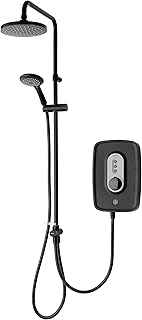


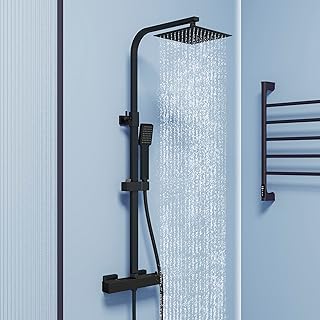


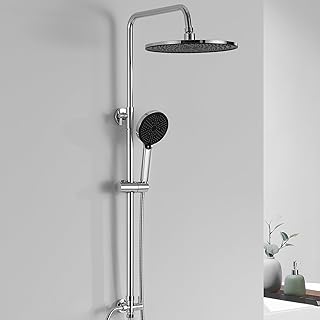


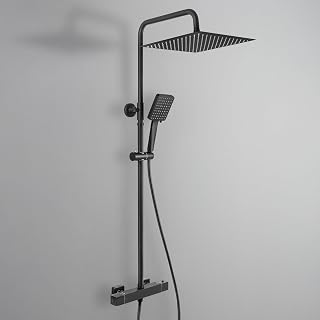


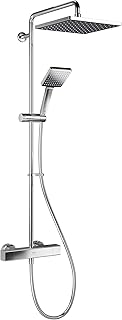
Choosing the best shower for a UK bathroom is about much more than appearance. The right shower needs to suit your home's water system, available pressure, hot-water supply, electrical installation, bathroom layout and the way your household actually uses it. A shower that performs exceptionally well in one property may be a poor choice in another.
This detailed buying guide explains the main shower types available in the UK, including electric showers, mixer showers, thermostatic showers, power showers and digital showers. It also covers shower pressure, flow rate, kilowatt ratings, shower heads, controls, installation considerations, water efficiency, limescale resistance, maintenance and the mistakes that can make an otherwise attractive shower frustrating to use.
Popular UK shower manufacturers include Mira, Triton, Aqualisa, Bristan and Grohe. However, brand reputation should not be the only consideration. The most suitable model is the one whose technical specification matches your plumbing system, installation requirements and personal preferences.
The first question to answer is not which shower looks best. It is which type of shower is compatible with your water and electrical systems.
Before comparing individual models, establish your water system, available water pressure, existing pipework, electrical supply where relevant, installation space and preferred shower configuration. This prevents the common mistake of choosing a shower based solely on its design or advertised features.
Electric showers are particularly useful when you want a shower that heats cold mains water independently of your home's stored hot-water supply. This can make them suitable for households where hot-water availability is an important consideration.
An electric shower contains a heating element that raises the temperature of incoming cold water. The shower's power rating is expressed in kilowatts, commonly written as kW. In general, a higher-rated electric shower can provide a greater flow of heated water under comparable conditions.
The kilowatt rating indicates the electrical power available to heat the incoming water. It should not be interpreted simply as a guarantee of a particular pressure level.
A higher-rated shower can generally heat a greater volume of water to the desired temperature than a lower-rated model under similar conditions. However, actual performance also depends on incoming water temperature, flow conditions, installation and the shower's internal design.
When comparing electric showers, look beyond the headline kW figure. Check the manufacturer's stated flow performance, electrical requirements, water pressure requirements, temperature controls and installation specifications.
Thermostatic showers are designed to maintain a selected water temperature more consistently than basic manual mixer controls. The thermostatic mechanism reacts to changes in the incoming hot and cold water conditions and adjusts the mixture accordingly.
This can be particularly valuable in a busy household where another tap, toilet or appliance may alter water demand while somebody is showering.
Thermostatic technology does not mean every shower will have identical performance. The underlying plumbing system, water pressure, valve specification and installation still matter.
A thermostatic mixer shower uses the home's hot and cold water supplies, whereas a thermostatic electric shower heats incoming cold water electrically. Both can offer temperature regulation, but their installation requirements and performance characteristics are different.
If your property has a suitable hot-water system and you want a concealed or traditional mixer appearance, a thermostatic mixer can be an excellent option. If you need a shower that operates independently of stored hot water, a thermostatic electric shower may be more appropriate.
Mixer showers blend hot and cold water to achieve the desired shower temperature. They are available in exposed and concealed configurations, with designs ranging from simple bar mixers to more elaborate multi-outlet systems.
Mixer showers can offer a cleaner bathroom aesthetic because the controls and pipework can be integrated into the wall or coordinated with the surrounding fittings.
An exposed mixer shower has the main valve and controls visible on the bathroom wall. This can simplify access for installation, servicing and replacement and can be particularly convenient when replacing an existing exposed shower.
Many exposed models incorporate a riser rail, handset and adjustable shower head. Some also support multiple outlets or additional overhead shower heads.
Concealed showers hide much of the valve and pipework behind the wall. Only the controls and selected outlets remain visible.
The result can be a cleaner, more minimalist appearance, but concealed installation needs greater attention to pipe positions, wall depth, access and compatibility with the existing bathroom.
A power shower is designed to increase shower flow by using a built-in pump. Unlike an electric shower, a power shower does not normally heat the water itself. It draws from the home's hot and cold water supplies and boosts the flow using the pump.
This makes power showers particularly relevant to certain gravity-fed systems where the available natural pressure may otherwise result in disappointing shower performance.
Do not assume that a power shower is suitable for every low-pressure situation. Pumped shower systems have specific plumbing requirements, and the manufacturer's installation instructions should always be checked before purchase.
Digital showers add electronic control to the traditional showering process. Depending on the model, they can provide accurate temperature adjustment, digital displays, programmable settings, remote controls, warm-up functions and smart-home integration.
Higher-end systems can also offer app or voice control, allowing users to start or configure a shower without adjusting conventional mechanical controls.
Digital showers can be more complicated than conventional mixers, so compatibility should be checked carefully. Consider the location of the digital valve, controller, power supply, water supplies and any connectivity requirements before installation.
The shower head has a major effect on how a shower feels. A technically powerful shower can still be disappointing if the head produces an unsuitable spray pattern.
Fixed overhead heads are mounted above the user and are commonly selected for rainfall-style showering. Larger heads can provide broad coverage, while smaller designs can produce a more concentrated spray.
When selecting a large overhead head, check the manufacturer's recommended flow and pressure requirements. A large head connected to an unsuitable water system may not produce the experience you expect.
Handsets are flexible and practical for everyday cleaning, washing hair, rinsing the shower enclosure and assisting children or users who find a fixed head inconvenient.
A handset mounted on an adjustable riser rail can also make it easier for different household members to position the shower head at a comfortable height.
Dual-outlet systems combine an overhead shower head with a handheld handset. They offer greater flexibility and can provide a more premium showering experience.
However, running multiple outlets simultaneously can increase water demand. Before selecting a dual-head system, check the manufacturer's flow requirements and confirm that your water system can support the intended configuration.
Some shower heads allow the user to switch between different spray modes. Common options include concentrated, massage, normal, soft and wider spray patterns.
More spray settings are not automatically better. Consider which patterns you will actually use and prioritise ease of adjustment, cleaning and compatibility with the shower's available flow.
Water pressure is one of the most frequently overlooked factors when buying a shower. Two bathrooms with apparently identical fittings can produce very different results because their plumbing systems supply water differently.
Before buying a mixer or power shower, establish whether your property has a gravity-fed system, combi boiler, unvented cylinder or another arrangement. The pressure and flow available at the shower location can influence which products are suitable.
Gravity-fed systems typically use a cold-water storage cistern and hot-water cylinder. Available pressure can be influenced by the vertical distance between the stored water and the shower outlet.
Where natural pressure is limited, a suitable pumped system may provide a significant improvement, provided the shower and plumbing arrangement are designed for it.
Combi boilers heat water on demand rather than relying on a traditional hot-water cylinder. Mixer shower performance depends on the boiler's ability to provide hot water and the available mains flow and pressure.
A powerful-looking shower head does not compensate for insufficient incoming flow. Always compare the shower's requirements with the plumbing system rather than assuming a combi boiler automatically provides strong shower performance.
Unvented cylinders can supply hot water at mains pressure, but the exact performance depends on the property's plumbing installation and available mains supply.
When choosing a mixer shower, check the minimum and maximum pressure requirements stated by the manufacturer.
Water pressure and flow rate are related but they are not the same measurement.
Pressure describes the force available to move water through the system, while flow rate describes how much water passes through the shower over a particular period, usually expressed in litres per minute.
A shower can have adequate pressure but still be restricted by the valve, shower head, pipework or other components. Conversely, a high-flow shower head may demand more water than the property's system can comfortably supply.
For commercial investigation, the manufacturer's stated flow figures are more useful than vague descriptions such as “powerful”, “luxury” or “high performance”.
Bar mixer showers are compact exposed valves that combine hot and cold water. They are popular for straightforward bathroom installations and are available with thermostatic controls.
Concealed valves are installed behind the wall with only the controls visible. They are often selected for modern bathrooms where a minimalist appearance is important.
Sequential shower controls typically use a single control to increase temperature progressively. Their straightforward operation can be convenient for users who prefer simple controls.
Dual-control showers separate temperature and flow adjustments. This allows users to control the water temperature and volume independently.
When comparing controls, consider accessibility, visibility, grip, temperature markings and how easy the controls are to operate with wet hands.
The finish of a shower affects more than its appearance. It can influence cleaning requirements, visible water marks and how well the product coordinates with other bathroom fittings.
Chrome remains a versatile choice because it works with a wide variety of bathroom styles. It is particularly easy to coordinate with chrome taps, towel rails and other bathroom hardware.
Matt black showers can create a contemporary appearance and work particularly well with modern bathroom schemes. However, visible water marks and limescale can be more noticeable depending on local water conditions and the finish.
Some higher-quality shower valves use brass bodies or other durable internal components. When comparing specifications, look beyond the visible finish and examine the materials used for the valve, cartridge, controls and connection components.
Limescale is an important consideration for many UK households. Mineral deposits can accumulate around shower heads, spray nozzles, cartridges and other water-contact components.
If you live in a hard-water area, choose a shower that makes cleaning and descaling straightforward. Rub-clean nozzles can be particularly convenient because deposits can often be loosened by wiping the flexible outlet tips.
For areas with particularly hard water, long-term maintenance should be considered before choosing a shower rather than after performance begins to deteriorate.
Water efficiency can affect both household water consumption and the energy required to heat that water. However, a shower advertised as “eco” should still provide enough flow for your preferred showering experience.
Look for practical features such as flow limiters, eco settings, pause functions and adjustable spray patterns where appropriate.
Thermostatic control can also help avoid unnecessary water waste while waiting for the shower temperature to stabilise, although the actual saving depends on the product and how it is used.
If reducing running costs is important, consider the entire system rather than focusing on the shower alone. Shower duration, flow rate, water temperature and the energy source used to heat the water all influence consumption.
Family bathrooms usually benefit from easy controls, predictable temperature performance and flexible shower-head positioning.
A family shower should be selected for the needs of the least confident user as well as the person who wants the most powerful shower.
Accessibility should be considered during the initial purchase rather than treated as an afterthought.
Large, clearly marked controls can be easier to operate than small decorative controls. A handheld shower head provides greater flexibility, while an adjustable rail can accommodate users of different heights.
Thermostatic temperature control can also provide greater predictability by reducing unwanted changes in water temperature.
For bathrooms used by people with mobility limitations, consider the complete installation, including shower controls, grab rails, seat requirements, handset position and access to the shower area. A qualified bathroom professional can help determine whether the proposed arrangement is appropriate.
An en-suite shower often has different priorities from a family bathroom. Space can be limited, and the installation may need to avoid major changes to existing plumbing.
Compact electric showers can be attractive where independent hot-water heating is useful. A compact exposed mixer can also work well where suitable hot and cold supplies are already available.
Before purchasing, measure the wall space carefully and check the position of existing pipework, cable entry points and shower rail fixings.
In a small bathroom, the shower itself is only part of the equation. The position of controls, riser rail, hose and shower enclosure can influence how spacious the room feels.
Several established manufacturers have extensive UK shower ranges. Comparing brands can be useful, but model-to-model specifications matter more than the badge alone.
Mira offers electric, mixer, power and digital shower systems across a wide range of bathroom applications. When comparing Mira models, examine the water-system requirements, thermostatic features, installation configuration, shower head options and replacement-part considerations.
Triton is well known for electric showers and also produces thermostatic, mixer and pumped shower solutions. Its electric shower ranges include different power ratings, making the electrical and flow specifications particularly important when comparing models.
Aqualisa offers electric, mixer, power and smart shower systems. Its range includes conventional controls as well as digital and connected showering solutions, so buyers should compare the required installation arrangement and available features carefully.
Bristan is another established UK bathroom brand with mixer and thermostatic shower products. Compare valve type, pressure requirements, finish, control arrangement and included fittings rather than selecting solely by appearance.
Grohe is widely recognised for bathroom fittings and shower systems. Its shower products can be particularly relevant to buyers who place emphasis on design, control quality and coordinated bathroom fittings.
Before purchasing a shower, work through the following checklist.
A beautiful black, chrome or minimalist shower can still be unsuitable if the home's water system cannot provide the required pressure or flow.
This is one of the most significant mistakes. Always identify the plumbing system before comparing mixer, power and digital showers.
For electric showers, higher electrical power can support greater heated-water flow under comparable conditions, but kW rating should not be confused with household water pressure.
A large shower head may require substantial flow. If the water system cannot supply it, the result may be a disappointing spray.
When replacing an existing shower, check cable entry, pipe positions, fixing points, valve dimensions and the manufacturer's replacement guidance. A model that technically fits the bathroom may still require additional work.
A complicated shower with multiple outlets and finishes may require more cleaning than a simple handset. Consider how much maintenance you are realistically prepared to perform.
Electric showers can require dedicated electrical circuits and appropriate protective devices. Never assume that an existing cable or electrical arrangement is automatically suitable for a higher-powered replacement.
Replacing a shower is often easier when the new model is designed around similar connection positions and installation dimensions. However, “like-for-like” should not be assumed without checking the technical documentation.
Compare the old and new shower's cable entry positions, water inlet locations, fixing points, dimensions and power rating. For mixer showers, check the valve configuration and pipe centres. For electric showers, check electrical loading as well as plumbing connections.
Where electrical work or significant plumbing modifications are required, use an appropriately qualified professional and follow the manufacturer's installation instructions.
Regular maintenance can help preserve shower performance and make problems easier to identify before they become serious.
Remove mineral deposits from the spray outlets according to the manufacturer's instructions. Flexible or rub-clean nozzles can make routine cleaning easier.
Check the shower hose for cracking, kinks, leaks or deterioration. Replace damaged components rather than continuing to use them.
Use appropriate bathroom cleaning methods for the specific finish. Abrasive cleaners can damage decorative surfaces and leave permanent marks.
If a thermostatic shower begins fluctuating unexpectedly, requires unusual adjustment or does not maintain the selected temperature, investigate the issue rather than continuing to operate it as normal.
Hard-water deposits can affect spray patterns and internal components. Follow the manufacturer's recommended cleaning and descaling procedure.
There is no single lifespan that applies to every shower. Durability depends on product quality, water conditions, installation, frequency of use, maintenance and availability of replacement components.
Instead of choosing solely on an advertised lifespan, investigate whether the manufacturer provides replacement cartridges, shower heads, hoses, seals and other service parts for the specific model.
A shower that can be maintained and repaired may represent better long-term value than a cheaper model that becomes difficult to service.
When comparing two showers, create a like-for-like specification checklist rather than comparing marketing descriptions.
Best for independent hot water: An electric shower can be a practical choice where the shower needs to heat cold water independently.
Best for consistent temperature: A thermostatic shower is worth considering when stable temperature control is a priority.
Best for suitable low-pressure gravity systems: A compatible power shower can provide boosted flow where the plumbing arrangement allows one.
Best for minimalist bathrooms: A concealed mixer or digital shower can provide a cleaner visual appearance when the installation allows it.
Best for flexible showering: A dual-outlet system with an overhead head and handset provides more ways to use the shower.
Best for smart-home features: A digital or smart shower may provide presets, electronic controls and connected functionality.
Not necessarily. A more expensive shower may provide additional features, premium materials, more sophisticated controls or a more elaborate design, but those advantages are only valuable if you will actually use them.
For many households, spending more on a well-specified thermostatic valve, suitable shower head and reliable installation can be more beneficial than paying for unnecessary smart features.
When comparing prices, consider the complete installation rather than the shower unit alone. Additional pipework, electrical work, wall preparation, valves, riser rails, shower heads and other fittings can affect the overall project cost.
The best everyday shower is usually one that is predictable, easy to control, simple to clean and properly matched to the property's plumbing system.
Strong performance is useful, but consistency matters just as much. A shower that produces a comfortable flow and maintains the selected temperature without constant adjustment can be more satisfying than a model with impressive specifications that does not suit the home's water supply.
There is no universal best shower. Electric showers are useful where independent hot-water heating is required, mixer showers suit homes with appropriate hot and cold supplies, power showers can benefit suitable low-pressure gravity-fed systems, and digital showers appeal to buyers wanting advanced electronic controls.
Thermostatic showers are worth considering if consistent temperature control is important. They are designed to react to changes in water temperature and pressure and adjust the hot and cold mix to help maintain the selected temperature.
Neither is automatically better. An electric shower can operate independently of stored hot water, while a mixer shower uses the home's hot and cold water supplies and can provide excellent flow when the plumbing system is suitable.
The appropriate rating depends on the desired performance, incoming water temperature, available electrical supply and manufacturer's requirements. Higher-rated electric showers can generally deliver more heated-water flow under comparable conditions, but the electrical installation must be suitable for the selected rating.
Not necessarily. A large or high-flow shower head can provide broad coverage, but it may require more water than your plumbing system can deliver. Match the shower head to the available flow and pressure.
No. Power showers have specific plumbing requirements because their pumps are designed for particular hot and cold water supply arrangements. Check the manufacturer's installation instructions before purchase.
Digital showers can provide sophisticated temperature and flow control, but reliability depends on the product, installation, maintenance and operating environment. Compare the technical specification, installation requirements and long-term service support before buying.
An exposed shower is generally easier to access and can simplify replacement or servicing, while a concealed shower can provide a cleaner minimalist appearance. The right choice depends on your bathroom design, wall construction and installation requirements.
First identify the property's water system and measure or establish the available pressure and flow. A suitable power shower may be appropriate for some gravity-fed systems, while other properties may require a different solution. Always check the shower manufacturer's minimum requirements.
Clean the shower head regularly, remove deposits according to the manufacturer's instructions and select easy-clean spray nozzles where available. In hard-water areas, consider maintenance requirements when comparing different shower models.
A thermostatic shower with straightforward controls and an adjustable handset is often a practical choice for a family bathroom. The final decision should also consider the home's water system, pressure, available space and the needs of individual household members.
Check the existing and proposed power ratings, cable size and entry position, water connection position, fixing dimensions, electrical protection and manufacturer's installation requirements. A higher-powered replacement should not be assumed to be compatible with the existing electrical installation.
Compare pipe centres, inlet positions, valve dimensions, mounting requirements, pressure requirements and shower outlet configuration. A like-for-like replacement is usually easier when the new model is designed around compatible dimensions.
The best shower is not necessarily the most expensive, the most powerful or the one with the longest list of features. It is the shower that works correctly with your home's plumbing and electrical systems while providing the temperature, flow, control and convenience you actually want.
Start by identifying your water system. Then compare pressure and flow requirements, shower type, temperature control, electrical specifications, shower head design and installation dimensions. After that, consider materials, finish, cleaning, limescale resistance, replacement parts and warranty terms.
For 2026 buying decisions, established names such as Mira, Triton, Aqualisa, Bristan and Grohe provide useful starting points for comparison, but the exact model specification remains the most important factor. Compare current specifications, read verified customer reviews, check today's prices from trusted retailers and make sure the chosen shower is compatible with your property before purchasing.