

♥ Wishlist
Compare 12 verified Worx Cordless Hedge Trimmers & Cutters products in United Kingdom. Reviews, ratings, pros, cons and buying advice updated for November 2026.


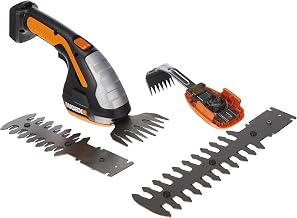


Choosing the right cordless hedge trimmer is about more than simply selecting the longest blade or the highest voltage. Hedge size, branch thickness, cutting frequency, working height, battery compatibility, tool weight and handle design can all make a noticeable difference to how easily a trimmer performs in a typical UK garden.
WORX has developed a broad range of battery-powered hedge trimmers and related garden cutting tools, including compact 20V models, longer-bladed machines, brushless options, pole hedge trimmers and higher-powered 40V systems. The range also includes smaller shear and shrub-trimming tools intended for lighter shaping work. This makes the brand worth considering whether you are maintaining a small ornamental hedge, regularly shaping established garden boundaries or looking for a cordless tool that can share batteries with other WORX PowerShare equipment.
This guide is designed to help you compare WORX cordless hedge trimmers and cutters according to the job they actually need to perform. Rather than treating one specification as universally better, it explains what blade length, cutting capacity, motor type, battery system, weight, reach and ergonomics mean in real-world use.
Cordless hedge trimmers remove one of the main practical restrictions associated with electric garden tools: the mains cable. There is no extension lead running across the lawn and no cable to keep clear of the cutting head while moving around a hedge.
Battery operation can also make it easier to move between different areas of a garden. This is particularly useful when a property has several separated hedges, shrubs or planting areas where repeatedly repositioning a power cable would be inconvenient.
WORX's PowerShare approach is another important consideration. The brand's 20V battery platform is used across a range of garden and power tools, while certain higher-voltage products use combinations of 20V batteries. If you already own compatible WORX equipment, the ability to share batteries can influence the overall value of a tool-only purchase.
However, cordless does not automatically mean lighter, more powerful or better in every situation. Battery weight contributes to the overall mass of the machine, and a large hedge may require more battery capacity than a small shrub. The best choice therefore depends on matching the tool to the workload.
20V models are generally attractive for homeowners who want a relatively portable hedge trimmer for routine garden maintenance. The WORX WG261, for example, is a 20V cordless hedge trimmer with a 22-inch blade and a stated maximum cutting diameter of 3/4 inch in WORX documentation.
A 20V system can be particularly appealing when the garden contains ordinary ornamental hedges rather than very thick, woody growth. It can also be easier to handle for users who value lower overall weight and manoeuvrability.
One important distinction is that voltage alone does not determine cutting performance. Motor efficiency, blade design, cutting geometry, battery condition and the thickness and hardness of the material being cut all influence how a hedge trimmer behaves.
Some WORX 40V hedge trimmers achieve their higher system voltage by using two compatible 20V batteries together. This approach allows users already invested in the PowerShare ecosystem to access a higher-powered tool without necessarily moving to a completely separate battery platform.
The WORX WG284 family is an example of this design. WORX documentation specifies a 40V Max system based on two 20V Max batteries, a 24-inch cutting length and a maximum cutting diameter of 3/4 inch for the relevant model.
Higher voltage should not be interpreted as meaning that a 40V machine is automatically the right choice for every hedge. Two-battery tools can be heavier, and the extra capability may be unnecessary for occasional trimming of small shrubs. They become more interesting when cutting workload, hedge size and sustained performance are higher priorities.
PowerShare is WORX's battery platform designed around batteries that can be used across compatible WORX tools. This can simplify ownership for someone who already has several cordless products from the brand.
Before purchasing a tool-only hedge trimmer, check the exact battery requirements rather than assuming every WORX battery is interchangeable with every product. Voltage class, battery generation, charger compatibility and product-specific requirements should be confirmed against the manufacturer's current specifications.
Blade length is one of the most visible specifications on a hedge trimmer, but a longer blade is not automatically better.
A longer cutting blade can cover a greater area during each pass. This can be useful when maintaining long, relatively uniform hedge faces because fewer passes may be required to cover the same surface.
Shorter blades, meanwhile, can feel easier to control when working around corners, narrow sections, individual shrubs or irregular growth. They can also be preferable when precision matters more than covering large areas quickly.
A 20-inch-class blade can offer a useful balance between reach and manoeuvrability. It can suit homeowners maintaining medium-sized garden hedges without wanting an unnecessarily large machine.
A 22-inch blade provides additional cutting reach while remaining within a manageable format for many domestic applications. The WORX WG261 family is an example of a 22-inch cordless hedge trimmer.
A 24-inch blade becomes more attractive when you regularly maintain long hedge faces and want to cover more area per pass. Models such as the WORX WG284 family use a 24-inch cutting length.
There is, however, a trade-off. A longer blade can make the front of the tool feel more substantial, particularly when the machine is held at an angle for prolonged periods. Users should therefore consider blade length alongside weight and handle positioning.
Maximum cutting diameter describes the approximate thickness of material the hedge trimmer is designed to cut. It should not be interpreted as a recommendation to force the machine through every branch at the stated maximum.
Many WORX hedge trimmer specifications quote a cutting diameter around 3/4 inch for certain models. In practical terms, the condition, hardness and shape of the branch still matter. A fresh, flexible shoot and an old, hard woody branch of the same diameter do not necessarily present the same cutting challenge.
For routine hedge maintenance, regular trimming can prevent branches from becoming excessively thick. This can make a cordless hedge trimmer considerably easier to use than attempting to cut through neglected woody growth after several seasons.
Blade length tells you how much cutting surface the tool provides. Cutting diameter tells you something about the thickness of material it is designed to handle. They are separate specifications.
A hedge trimmer with a long blade may still be unsuitable for heavy branches if its cutting system is not designed for them. Conversely, a compact cutter may be ideal for small stems even though it cannot cover a large hedge face quickly.
Dual-action blades use two sets of cutting teeth moving against each other. This configuration is widely used in modern hedge trimmers because it can provide a relatively controlled cutting action while helping reduce the sensation of vibration compared with some simpler cutting arrangements.
WORX describes several of its hedge trimmers as using dual-action blades. The exact blade construction and tooth geometry vary between models, so buyers should check the specification for the particular product rather than assuming all WORX trimmers have identical cutting systems.
For commercial investigation, blade movement is worth considering alongside stroke rate, tooth spacing and maximum cutting diameter. A specification such as strokes per minute can look impressive in isolation, but it does not tell the whole story about how efficiently a hedge trimmer handles different types of growth.
Strokes per minute describes how quickly the cutting mechanism moves. A higher figure can contribute to fast cutting action, but it should not be treated as a standalone measurement of overall performance.
For example, WORX documentation for the WG261 lists a no-load speed of 2,600 strokes or movements per minute, while documentation for the WG284 family lists 2,200 per minute. This demonstrates why simply comparing the numerical stroke rate can be misleading when evaluating different machines.
The practical result depends on the combination of motor output, blade geometry, cutting diameter, battery performance and the material being cut.
A brushless motor uses electronic control rather than traditional mechanical brushes to manage motor operation. Brushless technology is increasingly common in higher-performance cordless tools.
For hedge trimmers, the potential advantages can include efficient use of battery energy, reduced mechanical wear associated with brushes and the ability to design tools around higher-performance cordless power systems.
WORX offers brushless hedge trimmer models, including products in its 20V and 40V ranges. These can be particularly interesting to buyers who use their hedge trimmer frequently and want a more advanced cordless platform.
Not necessarily. A brushless motor may be an attractive feature, but it does not automatically make a product the best option for a particular garden.
If you trim a small hedge once or twice a year, paying more for advanced motor technology may not provide the same practical benefit as choosing a lightweight, comfortable and appropriately sized machine.
For frequent use, however, brushless technology becomes more relevant because efficiency, motor design and long-term tool characteristics have greater importance.
Amp-hours, commonly abbreviated as Ah, describe battery capacity rather than direct cutting power. In broad terms, a higher-capacity battery can provide more stored energy, although actual runtime depends on the tool, cutting conditions, battery age, temperature and workload.
A small battery may be perfectly adequate for trimming a modest hedge. A larger-capacity battery can become more useful when cutting for longer periods or operating a more demanding tool.
Battery runtime is not a fixed number in real garden conditions. Continuous cutting of dense growth places a different demand on the battery than intermittent trimming of light new shoots.
Battery age and storage conditions can also influence performance. For this reason, buyers should avoid choosing a hedge trimmer solely because one advertised runtime figure appears higher than another.
A tool-only package can be attractive when you already own compatible batteries and a charger. It can also reduce duplication when several garden tools use the same battery platform.
If you are entering the WORX ecosystem for the first time, however, the total cost of the tool, required batteries and charger should be considered rather than comparing the tool-only price with a complete kit.
Hedge trimming is often performed with the tool held away from the body. This makes perceived weight particularly important.
A machine that feels manageable for five minutes can become tiring when held at shoulder height for a longer session. The practical effect is even more noticeable when shaping the top of a hedge because the user's arms may remain elevated for extended periods.
WORX highlights lightweight construction on some of its cordless hedge trimmers. Its published information for the WG261 family, for example, identifies a machine weight in the region of 5 lb depending on configuration.
Always check the weight of the exact model and whether the published figure includes the battery. A tool's working weight is more useful for comparison than a bare-tool figure when the machine will be used with a battery installed.
Handle design can make a surprisingly large difference to comfort and control. A good hedge trimmer should allow you to maintain a stable grip while changing cutting angles without placing unnecessary strain on your wrists.
A well-positioned front handle gives the user control over the direction and angle of the blade. WORX uses different front-handle configurations across its hedge trimmer range, including D-grip and full-wrap designs depending on the model.
A comfortable rear grip is particularly important during longer trimming sessions. Soft-grip materials can help make the tool more comfortable to hold, although grip shape and overall balance remain equally important.
Some WORX hedge trimmers provide adjustable or rotating components intended to make top and side cutting more comfortable. For example, WORX documentation for the WG284 family describes a rotating rear handle and a 180-degree head rotation feature on relevant models.
These features are valuable because hedge trimming rarely involves holding the blade in exactly the same position throughout the job. The ability to adjust the tool can help accommodate different cutting angles.
A pole hedge trimmer is designed to extend the user's reach. This can be useful for tall hedges where using a standard hedge trimmer would require stretching, standing on an unstable surface or repeatedly changing position.
WORX offers 20V pole hedge trimmer options, including models designed around an adjustable cutting head and extension arrangement.
The major benefit is reach. The principal compromise is handling. A longer tool places more weight farther away from the user's body, increasing leverage and potentially causing fatigue.
A pole hedge trimmer is therefore most useful when additional reach solves a genuine problem. It is not automatically the better option for ordinary waist-height hedges.
The WORX WG261 family is a useful reference point for buyers looking at a conventional 20V cordless hedge trimmer. WORX documentation identifies a 22-inch blade, a maximum cutting diameter of 3/4 inch and a no-load speed of approximately 2,600 movements per minute.
It is the type of configuration that makes sense for general hedge maintenance where portability and everyday usability are important.
The WG263 range adds brushless motor technology to a 20V 22-inch hedge trimmer format. This makes it particularly relevant for buyers who want a more advanced motor design while remaining within the 20V PowerShare family.
When comparing a brushless model with a conventional 20V model, consider whether the additional motor technology is useful for your frequency of use rather than assuming it is necessary for occasional trimming.
The WG284 family represents a larger 40V-class approach, using two 20V batteries in compatible configurations. WORX documentation identifies a 24-inch cutting length, a maximum cutting diameter of 3/4 inch and a no-load speed of approximately 2,200 per minute for relevant models.
This type of machine is more compelling when you need a longer blade and a higher-powered cordless format for substantial hedge maintenance.
The WG252 range is aimed at users who need additional reach. WORX describes the 20V model as a pole hedge trimmer with an adjustable head, making it a different proposition from conventional handheld hedge trimmers.
Consider this category when hedge height is the main limitation rather than simply buying a pole model because it has a longer specification.
The WG801 family sits at the compact end of the range. WORX describes it as a 20V PowerShare cordless tool combining a 4-inch shear and an 8-inch shrubber trimmer.
This type of product is better understood as a precision garden cutter than as a replacement for a full-size hedge trimmer. It can be useful for small shrubs, edging and detail work where a long hedge-trimmer blade would be unnecessarily cumbersome.
One of the most common buying mistakes is selecting a tool based on the word "trimmer" without considering the scale of the work.
A full-size hedge trimmer is designed to cover hedge surfaces efficiently. A compact shear or shrubber trimmer is better suited to smaller plants and precision shaping.
Only within the limits specified by the manufacturer. A hedge trimmer is not a chainsaw or dedicated pruning saw, and forcing it into branches beyond its intended cutting capacity can place unnecessary stress on the cutting mechanism and motor.
If your hedge contains numerous mature branches that approach or exceed the stated maximum cutting diameter, a dedicated pruning saw, lopper or chainsaw may be more appropriate depending on the size and type of work involved.
For routine hedge maintenance, regular trimming is generally the better strategy because it keeps new growth within a manageable cutting range.
Prioritise low weight, manoeuvrability and battery convenience. A compact 20V hedge trimmer may be more practical than a large 40V machine if the hedge is relatively short and regularly maintained.
A 20V model with a blade around 20 to 22 inches can provide a useful compromise between portability and cutting coverage. If the garden contains several hedges, battery compatibility may also become an important part of the decision.
Longer blades and higher-powered models become more relevant. Consider a 24-inch-class machine if you regularly maintain long, broad hedge faces and can comfortably handle its weight.
Consider a pole hedge trimmer when reach is the main issue. The benefit is reduced dependence on ladders or awkward overhead positioning, but assess the balance and total working weight before choosing one.
Look beyond blade length. Motor technology, battery system, cutting diameter and overall power delivery become more important. A brushless or higher-powered model may be more appropriate if substantial cutting is a regular part of your maintenance routine.
A 40V tool is not necessarily better for every garden. If your hedge is small, a lighter 20V model may be easier and more convenient to use.
A longer blade can improve productivity on large hedge faces, but it can also increase reach, weight and the effort required to control the machine.
Tool-only pricing can look attractive until you realise that you need a compatible battery and charger. Compare the complete ownership requirement.
Never judge comfort from the bare-tool weight alone. Add the battery and consider how the tool feels when extended away from the body.
It does not. A hedge trimmer is designed for repeated cutting of hedge growth rather than heavy timber.
Extra reach can become unnecessary bulk. A standard hedge trimmer may provide better control for low and medium-height hedges.
Reviews can provide useful insight, but ratings should be considered alongside specifications and your own requirements. A product that works exceptionally well for a large hedge may be excessive for someone maintaining a small shrub border.
WORX is not the only manufacturer producing cordless hedge trimmers. When comparing it with brands such as Bosch, Ryobi, Makita, DeWalt, BLACK+DECKER, Einhell, Greenworks or STIHL, the most useful approach is to compare equivalent categories rather than brand names alone.
A cordless hedge trimmer is rarely the only battery tool a homeowner owns. Once a battery platform has been established, additional tool-only purchases can become more economical and convenient.
This is one of the strongest reasons to consider the wider WORX PowerShare ecosystem rather than evaluating a hedge trimmer completely in isolation.
For example, a homeowner who already uses compatible WORX lawn equipment, garden tools or DIY products may value a hedge trimmer that accepts the same battery family. Someone buying their first cordless tool should instead compare the total entry cost of the platform.
Cordless operation removes the electrical cable from the garden, but it does not remove the risks associated with a moving cutting blade.
Working at height deserves particular attention because a hedge trimmer combines reach, weight and a moving blade. A pole hedge trimmer can reduce the need to physically stand close to the top of a hedge, but it still requires careful control.
Do not overreach simply because the tool has an extended shaft. Move your position when necessary and keep the cutting head under control. The longer the tool, the more leverage it can place on your arms and shoulders.
Where a hedge is particularly high, wide or difficult to access safely, professional assistance may be preferable to attempting the work with unsuitable equipment.
After use, remove accumulated leaves, sap and plant debris according to the manufacturer's cleaning instructions. Keeping the cutting assembly reasonably clean can make inspection easier and help identify problems before the next job.
Check the blades for obvious damage, bent sections or excessive wear. Do not continue using a machine if the cutting assembly is damaged or unsafe.
Use the blade sheath or protective cover supplied with the tool where applicable. This protects the cutting assembly and reduces the risk of accidental contact during storage.
Follow the manufacturer's recommendations for charging, storage and temperature. Avoid storing lithium-ion batteries in unsuitable environmental conditions and use the correct charger for the battery system.
Before extended use, inspect the tool for loose components, damaged guards or other visible issues. A hedge trimmer should be in good working condition before the cutting session begins.
The quality of the finished hedge depends on technique as well as the tool.
For a level hedge top, work steadily and avoid repeatedly digging the blade into one area. Use controlled passes and maintain a consistent cutting angle.
For the sides of a hedge, a slight taper can help prevent the upper section from excessively shading the lower growth. The precise shape depends on the species, hedge design and desired appearance.
Regular light trimming is generally easier than allowing a hedge to become heavily overgrown and then attempting to remove large quantities of woody material in one session.
A WORX 20V hedge trimmer is likely to make the most sense for homeowners who want a cordless solution for routine hedge and shrub maintenance without moving to a larger two-battery system.
It is particularly attractive when the garden already contains compatible PowerShare equipment. The ability to share batteries can reduce the need to maintain separate chargers and battery systems.
For users who only occasionally trim a modest hedge, a 20V model can also provide a sensible balance between portability and capability.
A 40V WORX hedge trimmer becomes more compelling when you regularly maintain larger hedges, want a longer blade or prefer a higher-powered cordless configuration.
The two-battery design is worth considering carefully because the additional power comes with a larger overall system. Users should balance cutting requirements against weight and battery availability.
If you already own two compatible 20V batteries, a tool-only 40V option can also make more sense than purchasing an entirely new battery system, subject to the exact model's compatibility requirements.
Brushless models are worth investigating for frequent users who place greater importance on motor technology, efficiency and higher-end cordless tool design.
They can also make sense for buyers building a more capable collection of PowerShare tools. For occasional light hedge trimming, however, the advantages may be less important than low weight, price and ease of handling.
Choose a pole hedge trimmer primarily when reach is a genuine requirement. Tall hedges, high tops and difficult-to-access sections are the situations where the additional reach can provide the greatest benefit.
For low and medium-height hedges, a conventional handheld model can generally provide simpler handling and easier control.
A compact WORX shear or shrubber trimmer is a better match for small shrubs, ornamental shaping and detail work than for maintaining long hedge boundaries.
If you have several types of planting in the garden, owning a compact cutter alongside a full-size hedge trimmer can sometimes be more useful than trying to make one machine perform every task.
Fast-growing hedges can require frequent shaping. A conventional 20V or 22-inch-class cordless hedge trimmer can be suitable where the growth is predominantly thin and regularly maintained.
Large conifer hedges can become substantial and woody if neglected. Consider cutting capacity, blade length, motor performance and tool weight carefully. A larger cordless model may be preferable where the hedge is extensive, but particularly thick branches may still require a different cutting tool.
Broad-leaved hedges can create substantial amounts of cut material. Blade length and cutting capacity are useful considerations, while regular trimming can help keep growth manageable.
For small ornamental shrubs, a compact shear or shrubber tool can provide better control than a full-size hedge trimmer.
The correct trimming frequency depends on the plant species, desired shape, growth rate and local conditions. Some hedges require more frequent attention than others.
The important consideration for cordless tool selection is that regular maintenance generally creates smaller, easier-to-cut growth. If a hedge is repeatedly allowed to become heavily overgrown, the demands placed on the cutting tool increase.
Always consider the nesting season and applicable wildlife guidance before undertaking significant hedge cutting. Check current UK guidance and local requirements where relevant, particularly when cutting established hedges that may contain nesting birds.
Think about whether you are shaping a surface or removing individual branches.
A hedge trimmer is designed for repeated, rapid cutting of many smaller shoots across a hedge. A pruning saw is designed for individual branches that are too thick for the hedge trimmer.
If your hedge contains a mixture of fine new growth and occasional thick woody branches, the most practical solution may be to use a hedge trimmer for the main shaping work and a suitable pruning tool for the larger branches.
WORX offers a broad selection of cordless hedge and shrub cutting equipment, making the range relevant to many UK garden sizes. The availability of different 20V, brushless, 40V and pole configurations means that buyers can choose according to workload rather than relying on a single general-purpose design.
The important point is to select the model according to the garden rather than assuming the most powerful machine is the best purchase. For a small domestic hedge, a lighter 20V model can be easier to handle. For extensive hedge maintenance, a longer-bladed or higher-powered model may be more appropriate.
Customer reviews can be useful when comparing cordless hedge trimmers, but they should be read for recurring themes rather than treated as a simple popularity contest.
Look for comments about battery life under realistic workloads, comfort during extended trimming, blade performance, balance, ease of cleaning and suitability for different hedge types.
Pay particular attention to reviews from people with gardens similar to yours. A user maintaining a small ornamental hedge may have completely different priorities from someone trimming several hundred feet of mature boundary hedge.
Also distinguish reviews of the exact model from reviews of a wider product family. Similar model numbers can represent materially different battery configurations, kit contents or motor designs.
The headline tool price is only one part of the buying decision.
If you already own compatible batteries, the economics can be substantially different from those of a first-time buyer. This is one of the reasons battery compatibility should be considered before comparing individual tool prices.
There is no single model that is objectively best for every homeowner. For ordinary domestic hedge maintenance, the most appropriate choice is usually the smallest machine that comfortably handles the hedge without forcing the motor or cutting system beyond its intended capacity.
A 20V model is therefore a sensible category to investigate for many homeowners, particularly where portability and battery sharing are priorities.
If the hedge is extensive, dense or regularly requires heavier cutting, a larger 40V or brushless model can be a more appropriate category to investigate.
If height is the main issue, look towards the pole hedge trimmer category instead of simply buying a larger handheld machine.
For larger hedge faces, look for a longer blade combined with sufficient cutting capacity and a battery system suited to the workload. The WORX 40V 24-inch category is particularly relevant to this type of comparison.
However, large hedge does not necessarily mean thick branches. If the hedge is large but regularly maintained, a 20V model may still be perfectly adequate. The volume of hedge and thickness of growth should therefore be evaluated separately.
A WORX pole hedge trimmer is the category to investigate when reach is the primary requirement. Adjustable head positions can also help when shaping different sections of a hedge.
Before choosing a pole model, consider the combined length and weight of the machine. Maximum reach is useful only if you can maintain stable and controlled operation throughout the cutting task.
If you already own compatible WORX PowerShare tools, battery compatibility can be one of the strongest reasons to choose a WORX hedge trimmer.
Tool-only variants can be particularly attractive because you may not need another charger or battery. Always verify the exact battery requirements for the model you are considering rather than relying on the general PowerShare name.
For frequent hedge maintenance, look beyond basic specifications. Brushless motor technology, battery capacity, balance, handle comfort and cutting capacity become increasingly important as annual usage rises.
A more advanced model may justify its additional cost when it saves time and reduces fatigue across repeated jobs. For occasional seasonal trimming, however, a simpler machine may offer better overall value.
Yes. WORX produces a range of battery-powered hedge trimmers, including 20V PowerShare models and higher-powered configurations using two compatible 20V batteries.
Some are. Larger WORX models with longer blades and higher-voltage configurations are designed for more substantial hedge maintenance. The correct choice depends on hedge size, branch thickness and how frequently the hedge is maintained.
A 20V model generally uses a single 20V battery, while compatible WORX 40V models can use two 20V batteries to provide a higher-voltage system. The 40V category can offer greater capability for demanding cutting, but it can also add weight and complexity.
Not automatically. Higher voltage is only one specification. Blade length, cutting capacity, motor design, battery capacity, weight and ergonomics are also important.
For many domestic hedge-maintenance jobs, a 22-inch blade can provide a useful balance between coverage and control. Larger hedge faces may benefit from a longer blade, while small shrubs may be easier to manage with a shorter cutting tool.
Not necessarily. A 24-inch blade can cover more area per pass, but the additional size may not be useful for a small garden. Choose blade length according to the hedge rather than treating the longest option as automatically superior.
Yes, particularly for frequent users who want the advantages associated with brushless cordless motor technology. For occasional light trimming, a conventional model may be sufficient.
Only within the manufacturer's specified cutting capacity. If branches are beyond that range, use a suitable pruning tool rather than forcing the hedge trimmer through them.
Do not assume that a cordless tool is suitable for wet conditions. Follow the exact safety instructions supplied with the model and avoid operating equipment in conditions prohibited by the manufacturer.
It depends on the exact package. WORX sells both complete kits and tool-only variants. Always check the contents of the specific model and retailer listing before purchasing.
Compatible WORX PowerShare batteries are designed to work across suitable products within the platform, but compatibility should be confirmed for the exact tool and battery combination.
PowerShare is WORX's cordless battery platform used across compatible garden and power tools. It is intended to allow compatible batteries to be shared between tools.
It is better when extra reach is needed. For low or medium-height hedges, a conventional handheld hedge trimmer can provide easier handling and control.
A lightweight 20V hedge trimmer or compact shrubber tool is usually the category worth considering. The choice depends on whether you are maintaining a proper hedge or simply shaping small shrubs.
A pole hedge trimmer is the most relevant category when additional reach is required. Consider the overall working weight and head adjustment range as well as maximum reach.
A tool-only version can make sense if you already own compatible batteries and a charger. If you do not, compare the combined cost of the tool, battery and charger against a complete kit.
There is no single runtime that applies to every WORX hedge trimmer. Runtime depends on battery capacity, tool type, vegetation density, cutting technique, temperature, battery condition and workload.
Clean the machine according to the manufacturer's instructions, protect the cutting blade with its supplied sheath where applicable, remove the battery as instructed and store both tool and battery in appropriate conditions.
No. Hedge trimmers are designed for hedge growth and smaller stems within their specified cutting capacity. Larger branches should be handled with an appropriate pruning saw, lopper or chainsaw where suitable.
The best WORX cordless hedge trimmer is the one that matches the scale of the work rather than the one with the biggest headline specification.
For smaller gardens and routine maintenance, a manageable 20V model can offer a strong balance between portability, battery convenience and cutting capability. For larger hedge faces or more demanding workloads, a longer-bladed or 40V model can provide additional capability. Brushless models are worth considering when frequent use makes motor efficiency and advanced cordless technology more important. For tall hedges, a pole trimmer addresses the specific problem of reach, while compact shear and shrubber tools are better suited to small plants and detailed shaping.
Before making a purchase, compare the exact model number, blade length, cutting diameter, motor type, weight, battery requirements and package contents. If you already own WORX PowerShare equipment, battery compatibility should be part of the calculation. If you are new to the platform, consider the total cost of the tool, battery and charger rather than the bare-tool price.
Most importantly, choose according to your actual hedge. A lightweight machine that comfortably handles regular growth can be a better purchase than an oversized high-powered tool that adds unnecessary weight. Conversely, repeatedly asking a small cordless trimmer to handle thick, neglected growth is likely to be frustrating and inefficient.
Use the specifications as a starting point, compare verified customer reviews for the exact model, check the latest manufacturer's documentation and confirm current retailer pricing and package contents before buying. This approach makes it much easier to identify the WORX cordless hedge trimmer or cutter that genuinely fits your garden, workload and existing battery setup.