

Best Contour Gauge Products online UK (United Kingdom)
Explore our real-time updated product directory index curated for performance, verified star metrics, and historical consumer trust rankings.


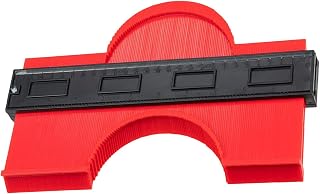

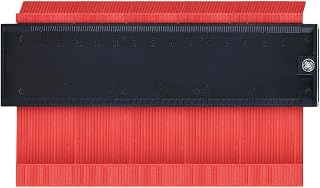


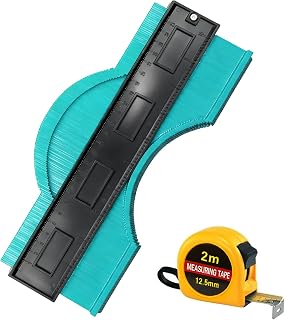


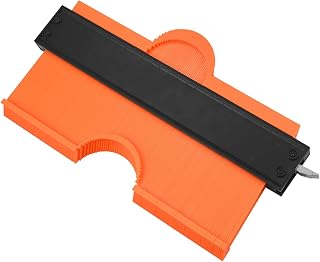


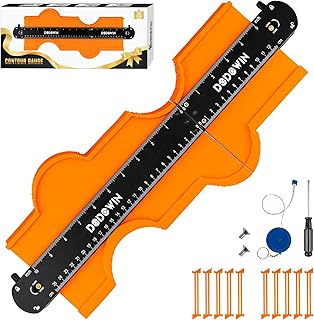

A contour gauge is a simple but highly useful tool for copying the shape of irregular surfaces. Instead of estimating a curve or repeatedly measuring an awkward profile, you can press the gauge against the object and transfer its shape. The result provides a practical template for marking materials before cutting, trimming or fitting them.
Contour gauges are particularly useful when working with shapes that are difficult to measure with a conventional ruler or tape measure. Pipes, curved walls, door surrounds, skirting boards, mouldings and unusual corners can all create fitting challenges. A contour gauge captures these profiles quickly, helping you create a closer match with less trial and error.
A contour gauge consists of a series of narrow pins or blades that move independently. When the tool is pressed against a surface, the pins follow its shape. You can then lock the profile in place and use it as a guide for marking your workpiece.
This straightforward design makes a contour gauge useful for both experienced tradespeople and DIY users. It can save time during projects where precise fitting is important. The tool does not replace every measuring method, but it provides a convenient way to reproduce shapes that are difficult to describe with straight-line measurements.
Contour gauges have a wide range of applications around the home, workshop and job site. They are commonly used for flooring installations where boards or tiles need to fit around pipes, columns and other obstacles. They are also useful for woodworking when creating components that need to follow existing curves or profiles.
For tiling projects, a contour gauge can help when tiles need to be cut around irregular edges. In carpentry and joinery, it can assist with transferring shapes from walls, frames and mouldings onto timber or sheet materials. DIY users may also find one helpful for home improvements where an unusual shape needs to be copied accurately.
When choosing a contour gauge, consider the width of the tool and the depth of its profile measurement. A wider gauge can cover larger areas, while a narrower option may be easier to position in confined spaces. The material and construction of the contour pins are also important, especially if you expect to use the tool frequently.
A locking mechanism can be useful because it helps hold the copied profile in place while you transfer it to your material. Look for a gauge that feels stable during use and allows the pins to move smoothly. Clear markings can also make positioning and transferring measurements more convenient.
Different projects can benefit from the same basic contour-copying principle. Flooring installers can use a contour gauge to mark cuts around pipes and other fixed objects. Tilers can use one to reproduce unusual shapes before cutting tiles. Woodworkers can transfer profiles to timber, boards and other materials when producing accurate fitted components.
For general DIY work, a contour gauge is valuable because it reduces the need to create templates from scratch. Once the profile has been captured, it can be traced onto the material and used as a cutting reference. This can make complicated fitting jobs more manageable, particularly when several adjustments would otherwise be required.
Start by positioning the gauge against the profile you want to copy. Press the pins evenly against the surface so they follow the shape without forcing them excessively. Once the profile has been captured, use the locking mechanism if available to help preserve the shape.
Place the gauge against the material you intend to mark and trace along the transferred profile. Check the marking before cutting. For expensive materials or detailed projects, it is sensible to make a test template first. This provides an opportunity to check the fit and make small adjustments before committing to the final cut.
The main advantage of a contour gauge is convenience. It turns a difficult three-dimensional profile into a shape that can be traced onto another surface. This can reduce measuring time and help improve the consistency of cuts. It is particularly useful where small differences in shape can create visible gaps or poor-fitting joints.
A contour gauge is also compact and easy to carry between work areas. Unlike larger measuring equipment, it requires little storage space and can be used whenever an unusual profile needs to be copied. For DIY enthusiasts, tradespeople and workshop users, it is a practical addition to a broader collection of measuring and marking tools.
Consider the type of work you regularly undertake before choosing a contour gauge. Think about the size of profiles you need to copy, the spaces in which you will use the tool and how frequently it will be handled. A durable construction and smooth-moving pins can be useful for regular work, while a compact design may be preferable for occasional DIY projects.
Using the right contour gauge can make shape transfer faster and more straightforward. Whether you are fitting flooring, cutting tiles, shaping timber or completing a home improvement project, this tool can provide a practical reference for irregular profiles. Explore the available contour gauge options to find a suitable solution for accurate marking and efficient project work.
Find the right contour gauge for copying awkward shapes, curves and profiles with greater accuracy. A contour gauge is a practical measuring tool for DIY, woodworking, flooring, tiling and many other fitting tasks. It allows you to transfer the exact shape of an object onto another material without relying on guesswork. Whether you need to work around pipes, door frames, skirting boards, curved edges or other irregular surfaces, a contour gauge can make marking and cutting much easier.