
Best Cordless Circular Saws Products online UK (United Kingdom)
Explore our real-time updated product directory index curated for performance, verified star metrics, and historical consumer trust rankings.


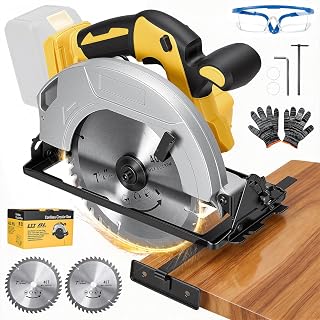

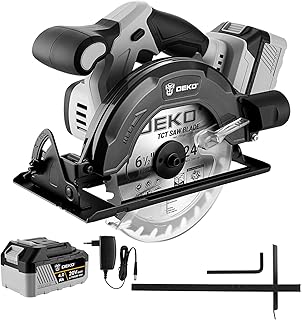


Cordless circular saws combine the cutting action of a circular blade with the freedom of battery power. Without a mains cable trailing across the work area, you can move around a workshop, garden, building site or renovation project more easily. This makes a cordless circular saw particularly useful when working away from convenient power sockets.
The best model for your project depends on the materials you plan to cut, the depth and angle of each cut, how frequently you will use the saw and which battery system you already own. Comparing these factors before buying helps you choose a saw that matches your workload rather than simply selecting a model based on power alone.
A cordless circular saw is commonly used for making straight cuts through timber and sheet materials. Depending on the blade and manufacturer's specifications, suitable applications can include cutting wooden boards, plywood, MDF, chipboard, flooring materials and construction timber. Some specialist models can also be configured for other materials with the correct compatible blade.
These saws are popular for framing, decking, fencing, flooring, furniture projects, home improvements and general woodworking. Their portability can be especially helpful when materials are being cut outdoors or inside unfinished buildings where mains electricity is not readily available.
Blade diameter has a direct relationship with the maximum cutting depth available from a saw. However, the actual capacity also depends on the saw's design and cutting angle. Check the manufacturer's stated maximum depth at 90 degrees and at common bevel settings before choosing a model.
Cordless circular saws are available across different battery platforms. Higher-voltage systems can provide strong performance for demanding applications, while compact battery systems can be convenient for lighter work. If you already own compatible cordless tools, choosing a saw from the same battery platform may allow you to share batteries and chargers.
A bevel adjustment allows the blade to cut at an angle rather than only vertically through the material. This feature is useful for tasks such as roofing, framing, trim work and angled woodworking joints. Look at the available bevel range and how easily the adjustment can be locked into position.
Weight, grip design, balance and trigger placement can affect how comfortable a saw feels during extended use. A well-balanced cordless circular saw can be easier to guide along a marked cutting line. If portability is a priority, consider the total tool weight together with the battery rather than the bare-tool weight alone.
The main advantage is freedom of movement. A cordless design removes the need to position an extension lead or remain close to a socket. This can make repetitive cutting tasks more convenient and can reduce cable-related obstacles around the work area.
Modern cordless systems can also deliver substantial cutting performance while remaining relatively portable. Brushless motor technology is available on many models and can offer efficient operation, reduced maintenance requirements and useful runtime characteristics. Actual performance varies between tools, batteries and applications, so always check the manufacturer's specifications.
For DIY users, a compact cordless circular saw can be a practical choice for occasional home renovation and woodworking projects. Features such as simple depth adjustment, an easy-to-read cutting guide and comfortable handling can make everyday tasks more straightforward.
Professional users may need greater cutting capacity, extended runtime, robust construction and compatibility with an established battery platform. Contractors working across multiple locations can particularly benefit from cordless equipment because tools can be transported and used without relying on fixed electrical supplies.
The blade is an important part of circular saw performance. Different blades are designed for different materials and cutting results. Tooth count, blade diameter, kerf and tooth design can all influence cutting speed and finish.
A blade with fewer teeth may be suited to faster rough cuts in appropriate timber, while a higher-tooth-count blade can be useful where a cleaner finish is required. Always ensure that the blade diameter, bore size, maximum rated speed and material compatibility match the circular saw. Never fit an unsuitable blade simply because it physically appears to fit.
Correct handling and suitable protective equipment are essential when operating a circular saw. Read the manufacturer's instructions before use and check that the blade guard operates correctly. Secure the workpiece firmly and keep both hands in the recommended positions while cutting.
Wear suitable eye protection to protect against dust and flying particles. Hearing protection may also be appropriate, particularly during prolonged cutting. Depending on the material and environment, additional respiratory protection may be required. Keep the cutting path clear and allow the blade to reach the appropriate operating speed before beginning the cut.
Accurate preparation can improve both safety and cutting quality. Mark the cutting line clearly and support the material so that the cut does not cause the workpiece to pinch the blade. Set the cutting depth appropriately rather than exposing more blade than necessary.
Allow the saw to progress at a controlled rate. Forcing the tool can place unnecessary load on the motor and blade. If the saw begins to slow significantly, reassess the material, blade condition, cutting depth and feed rate. A sharp, suitable blade is usually more effective than excessive pressure.
When shopping for cordless circular saws in the UK, consider the type of work you perform most often. Think about required cutting depth, bevel capability, battery compatibility, expected runtime and the availability of replacement blades and batteries.
It is also important to establish whether a saw is supplied as a bare tool or as a complete kit. A bare tool can make sense if you already have compatible batteries and a charger. A kit may be more convenient for someone entering a particular battery platform for the first time.
Choosing the right cordless circular saw starts with understanding your cutting requirements. Consider the materials, thicknesses and angles involved, then compare blade size, cutting capacity, battery system, handling and adjustment features. With the right specification and compatible accessories, a cordless circular saw can provide a versatile cutting solution for DIY projects, woodworking and professional applications.