

Best Computer Mouse for Work, Gaming & Everyday Use Products online UK (United Kingdom)
Explore our real-time updated product directory index curated for performance, verified star metrics, and historical consumer trust rankings.


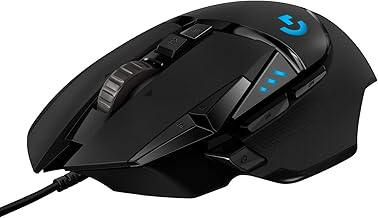


A computer mouse is an essential accessory for many desktop and laptop users. While a basic model can handle everyday navigation, different mouse designs are built around different priorities. Some users want a compact wireless mouse for a tidy desk, while others need an ergonomic shape for longer working sessions. Gamers may prefer precise sensors, programmable buttons and responsive tracking, while creative professionals can benefit from accurate movement and customisable controls.
When choosing a mouse in the UK, it is useful to consider how and where you will use it. A mouse for office work may prioritise comfort, quiet clicks and dependable wireless connectivity. A gaming mouse may focus on sensor performance, responsiveness and additional buttons. Compact models can be convenient for travel, while larger ergonomic designs can provide better support during extended use.
A wireless mouse can help create a cleaner and more flexible workspace by removing the need for a permanent cable connection. Many wireless models connect using a USB receiver, while some use Bluetooth for compatible computers and laptops. Battery life, connection stability, range and the availability of an on/off switch are useful points to consider before choosing a wireless design.
Wireless mice are particularly practical for laptops and flexible workstations. A compact model can fit easily into a laptop bag, whereas a full-size design may provide greater comfort at a desk. Check the connection requirements of your computer before buying to make sure the mouse is compatible with your setup.
A wired mouse provides a direct connection to a computer and does not require batteries for operation. This makes wired models a straightforward choice for users who prefer a simple plug-and-use setup. They can also be useful for gaming and fixed desktop workstations where low-maintenance connectivity is important.
USB connectivity is common, but it is still worth checking the available ports on your computer. If your laptop or desktop uses USB-C connections, an appropriate adapter or compatible mouse may be required depending on the model.
An ergonomic mouse is designed with hand position and comfort in mind. This can be useful for people who spend several hours working at a computer. Shapes vary considerably, from gently contoured traditional designs to vertical mice that position the hand differently.
There is no single ergonomic shape that suits everyone. Consider the size of your hand, preferred grip and typical working position. Palm, claw and fingertip grips can each feel different, so selecting a shape that feels comfortable can be just as important as comparing technical specifications.
Gaming mice are designed for users who want responsive tracking and additional control during gameplay. Depending on the model, features can include adjustable sensitivity, programmable buttons, custom profiles and high-performance optical sensors. The right specification depends on the games you play and your personal preferences.
For competitive gaming, sensor accuracy and consistent tracking can be especially important. For strategy, MMO or productivity-focused users, additional programmable buttons may be more useful. Weight and shape also influence handling, so comfort should remain part of the decision rather than focusing solely on sensor specifications.
Several specifications can help you compare computer mice. DPI describes sensitivity, with higher settings allowing the pointer to move further across the screen with less physical movement. Adjustable DPI can be useful when switching between precise tasks and faster navigation.
Button configuration is another consideration. A basic mouse may have the standard left and right buttons with a scroll wheel, while advanced models can include extra side buttons and programmable controls. Scroll-wheel design, click feel and overall build quality can also affect everyday usability.
The physical design of a mouse can significantly affect comfort. Smaller mice can be convenient for travel or smaller hands, while larger models may provide more support for users with larger hands. Ambidextrous designs can suit both left- and right-handed users, although some mice are specifically shaped for one hand.
Think about your normal grip and desk space before choosing. A lightweight compact mouse may be ideal for mobile working, while a more substantial ergonomic or gaming mouse can be preferable for a permanent workstation.
Whether you need a mouse for home computing, office productivity, gaming, study or travel, choosing according to your actual usage can help narrow down the options. Consider connectivity, comfort, size, sensor performance, battery requirements and button layout together rather than selecting based on one specification alone.
For UK shoppers, compatibility is an important final check. Make sure the connection method works with your computer and consider the operating system requirements where relevant. Comparing the available options can help you select a computer mouse that fits both your setup and your everyday computing habits.
Find the right computer mouse for your setup with options suited to everyday computing, office work, creative tasks and gaming. A mouse can make navigation faster and more comfortable, so choosing the right design, connection type and features can improve how you use a desktop or laptop.