

♥ Wishlist
Compare 51 verified Bosch Cordless Sanders products in United Kingdom. Reviews, ratings, pros, cons and buying advice updated for October 2026.










Choosing a cordless sander is not simply a matter of picking the highest voltage or the most powerful-looking model. The right Bosch cordless sander depends on the type of surface you are preparing, the amount of material you need to remove, how frequently you work, how important portability is, and whether you already own batteries in a compatible Bosch system.
Bosch offers cordless sanding tools across both its Professional and DIY ranges, with important differences between the battery platforms, machine formats, sanding movements, ergonomics and intended workloads. For example, the Bosch Professional GEX 12V-125 and GEX 18V-125 are 125 mm random orbit sanders designed around the Professional battery systems, while the Bosch DIY EasySander 18V-8 uses an iron-shaped sanding plate for work on flat surfaces, corners and edges. The AdvancedOrbit 18 is a 125 mm cordless random orbit sander aimed at broader DIY applications.
This guide expands the buying information around Bosch cordless sanders so that you can compare the important differences before choosing a machine. It covers sanding technology, battery systems, pad size, speed control, dust extraction, ergonomics, sanding discs and sheets, suitable applications, maintenance, common buying mistakes and the questions that matter most when comparing models.
A Bosch cordless sander is a battery-powered sanding machine designed to smooth, prepare, strip or finish surfaces without requiring a mains power cable during operation. Depending on the model, the sanding action may be orbital, random orbital or adapted to a multi-sander format.
The principal advantage is freedom from a power lead. This can be particularly useful when working outside, moving between rooms, sanding unfinished buildings, working on large furniture or operating in locations where mains electricity is inconvenient.
The trade-off is that cordless tools depend on battery capacity and charging. A cordless sander therefore needs to be assessed as a complete system rather than as an isolated power tool. The battery, charger, sanding accessories, dust collection arrangement and expected workload can all influence the practical value of the machine.
One of the most important distinctions when comparing Bosch sanders is the difference between the Bosch Professional and Bosch DIY ranges.
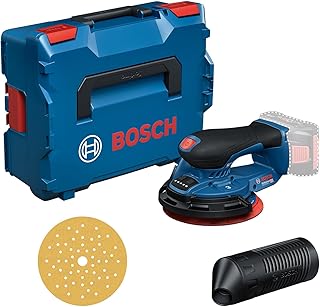
Bosch Professional tools are aimed at tradespeople, contractors and demanding users. The Professional cordless sanding range includes 12V and 18V machines, including the GEX 12V-125 and GEX 18V-125 random orbit sanders. Bosch describes the GEX 18V-125 as an all-round cordless random orbit sander with a brushless motor, speed selection, a 125 mm sanding pad and compatibility with the Professional 18V system and Bosch Click & Clean dust extraction.
The Professional range is particularly relevant if you already own Bosch Professional batteries and other compatible tools. Battery-platform compatibility can be a significant factor because purchasing a bare tool may make more sense when suitable batteries and a charger are already available.
Bosch DIY tools are designed for household users, makers, hobbyists and general DIY projects. The AdvancedOrbit 18 is a cordless random orbit sander with a 125 mm sanding pad, adjustable orbital stroke rate and compatibility with the 18V POWER FOR ALL ALLIANCE. Bosch lists it for sanding and polishing applications on wooden, painted, varnished and polished surfaces as well as filler and plaster.
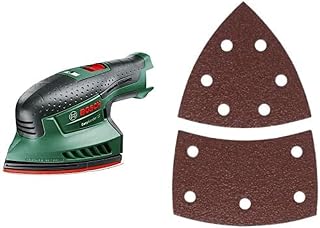
The EasySander 18V-8 takes a different approach. Its iron-shaped sanding plate is designed to reach corners and edges while also handling medium-sized flat surfaces. Bosch specifies a 149 x 101 mm sanding plate and an orbital stroke rate of 22,000 movements per minute.
When comparing Bosch cordless sanders, avoid judging models solely by voltage. A higher voltage does not automatically mean that one machine will produce a better finish for your particular job.
A random orbit sander combines orbital movement with rotation of the sanding pad. This produces an abrasive pattern that is less likely to leave obvious repetitive sanding marks when the tool is used correctly.
Random orbit sanders are popular for furniture, doors, timber panels, painted surfaces, preparation work and general finishing. They can remove material relatively quickly while still being suitable for finer sanding when the correct abrasive and technique are used.
Bosch's GEX 12V-125 and GEX 18V-125 are examples of cordless 125 mm random orbit sanders in the Professional range. Bosch specifies the same 125 mm sanding-pad format for both, with the GEX 12V-125 focusing on compactness and the GEX 18V-125 providing the additional capacity of the Professional 18V platform.
A 125 mm sanding pad represents a useful compromise between coverage, manoeuvrability and accessory availability. It is large enough for furniture, doors, timber boards and general workshop work without becoming unnecessarily cumbersome for smaller projects.
For many domestic and professional users, a 125 mm random orbit sander can therefore be a practical first cordless sander. However, the ideal size depends on the surface area and working environment.
A 12V platform can be attractive when compactness and handling are more important than maximum endurance. The Bosch Professional GEX 12V-125 is specifically described as having a lean and compact design intended to make sanding in tight spaces easier. It also includes speed selection, a battery status indicator and a brushless motor.
This makes a compact 12V machine particularly interesting for furniture work, finishing tasks and applications where the tool is frequently held in different positions.
An 18V platform generally makes more sense for users who already have several Bosch Professional 18V tools or who expect to use the sander frequently. The GEX 18V-125 uses Bosch's Professional 18V system and a brushless motor, and Bosch positions it for basic sanding, intermediate sanding, lacquer removal and finishing applications.
If you are building a wider cordless workshop, battery compatibility can be more important than the individual tool's headline specification.
These two battery families should not be treated as interchangeable simply because both are described as 18V systems.
The Bosch DIY AdvancedOrbit 18 and EasySander 18V-8 belong to the 18V POWER FOR ALL ecosystem, while Bosch Professional GEX models belong to the Bosch Professional battery platform. Bosch explicitly identifies the AdvancedOrbit 18 and EasySander 18V-8 as POWER FOR ALL products, while the GEX 18V-125 is specified for the Professional 18V system.
Before buying a bare tool, identify the batteries already in your workshop. Buying a machine that uses a different battery ecosystem can turn an apparently attractive tool-only purchase into a much larger investment.
The EasySander 18V-8 is worth separating from conventional round-pad random orbit sanders because its iron-shaped sanding plate serves a different purpose.
Bosch describes it as suitable for medium-sized flat surfaces as well as corners and edges. Its shape makes it particularly relevant for furniture, doors, frames and projects where access into corners is important.
The machine uses a hook-and-loop sanding-paper fastening system and a removable Microfilter dust box. Bosch lists an 18V battery voltage, a recommended battery capacity of at least 2.5 Ah, a 22,000 opm orbital stroke rate and a 1.6 mm orbit diameter.
The AdvancedOrbit 18 takes the more familiar round-pad random orbit approach. Bosch specifies a 125 mm sanding pad, a 3.2 mm orbit diameter and a variable orbital stroke rate of 6,000 to 24,000 opm. The machine weighs 1.40 kg without the battery according to Bosch's published specifications.
The variable speed range is useful because sanding is not a one-speed operation. Coarser stock removal, intermediate sanding and delicate finishing can require different approaches, and excessive speed can be counterproductive on some surfaces.
Motor technology is another consideration when comparing cordless sanders.
Brushless motors eliminate the conventional carbon-brush arrangement found in brushed motors. This can reduce a common wear component and can support efficient operation in modern battery-powered tools.
Bosch specifies brushless motors in the GEX 12V-125 and GEX 18V-125 Professional cordless sanders.
For occasional DIY use, motor type should not automatically outweigh ergonomics, battery compatibility and sanding performance. For frequent professional use, however, brushless technology can become a more relevant part of the overall tool-selection decision.
No. A larger battery can provide greater energy capacity, but it also adds weight and can alter the balance of a handheld sander.
This matters more with sanders than it might with some other cordless tools because the machine is often held against a surface for extended periods. Additional battery weight can contribute to fatigue, particularly when working on vertical surfaces or overhead.
Do not select battery capacity in isolation. Consider the complete tool-and-battery combination and how it feels during the actual sanding position you will use.
There is no single runtime figure that applies to every Bosch cordless sander or every sanding job.
Runtime depends on battery capacity, battery condition, sanding pressure, speed setting, material, abrasive condition, workpiece size, extraction configuration and how continuously the tool is operated.
A heavily loaded sander removing material from hardwood can place a very different demand on its battery from a machine performing light finishing passes on a previously prepared surface.
For this reason, avoid buying a sander purely on an advertised or assumed runtime expectation. If cordless operation is essential for a full working day, consider whether carrying a second compatible battery is more practical than relying on a single high-capacity battery.
Pad size influences both productivity and manoeuvrability.
A 125 mm pad is a versatile choice for furniture, doors, timber boards, workshop projects and general surface preparation. Bosch uses this size across several of its cordless random orbit models, including the GEX 12V-125, GEX 18V-125 and AdvancedOrbit 18.
An iron-shaped plate can be more useful when access into corners and narrow edges is a priority. The EasySander 18V-8 is an example of this format, with Bosch listing a 149 x 101 mm sanding plate.
Rather than asking which pad is universally best, ask which shape matches the geometry of the workpieces you regularly sand.
Variable speed is useful because different materials and sanding stages can require different levels of aggression.
The Bosch GEX cordless models include speed selection, while the AdvancedOrbit 18 has a published variable orbital stroke range of 6,000 to 24,000 opm.
Orbital stroke rate describes how rapidly the sanding mechanism moves through its orbital action. It is often expressed in movements or orbits per minute.
A higher number should not automatically be interpreted as superior sanding performance. Sanding efficiency is influenced by the interaction between movement, orbit size, abrasive grade, pressure, material and extraction.
For buying comparisons, treat orbital speed as one part of the performance picture rather than the sole performance indicator.
Orbit diameter describes the size of the sanding movement. A larger orbit can alter the character of material removal and finishing, while a smaller movement can be advantageous where control and surface refinement are more important.
The Bosch AdvancedOrbit 18 has a specified 3.2 mm orbit diameter, while the EasySander 18V-8 has a 1.6 mm orbit diameter. These differences reflect their different tool formats and intended applications.
When comparing two sanders, therefore, do not look only at the highest orbital-speed figure. Consider speed and orbit diameter together.
Dust management is one of the most important practical considerations when choosing a sander.
Sanding can produce significant quantities of fine particulate material. Effective dust collection can help keep the immediate work area cleaner and reduce the amount of dust released around the operator.
Bosch cordless models use different collection arrangements. The GEX 12V-125 and GEX 18V-125 include dust bags and are compatible with Bosch's Click & Clean dust extraction system. The AdvancedOrbit 18 uses a Microfilter dust box, while the EasySander 18V-8 also uses a removable Microfilter dust box.
A dust box is convenient for short jobs and situations where connecting an extractor is impractical. A workshop extraction system can be preferable for longer sanding sessions, larger projects or applications where dust control is a major priority.
If you regularly sand indoors, consider the extraction system before deciding between two otherwise similar machines.
A high-quality cordless sander cannot compensate for poor sanding technique.
Excessive downward pressure can reduce the effectiveness of the sanding movement, increase heat and place unnecessary load on the machine. A controlled, consistent technique generally produces more predictable results.
The abrasive grade should be selected according to the material and the stage of work.
Do not assume that using the finest possible abrasive will produce the best result. Starting too fine can make material removal unnecessarily slow, while staying too coarse for too long can leave deeper scratches that require additional finishing work.
For general timber sanding, a 125 mm random orbit sander is often a versatile choice because it can cover relatively broad areas while remaining manageable around furniture and panels.
The Bosch Professional GEX 12V-125 and GEX 18V-125 are specified for wood and related surface-finishing applications, while Bosch lists the AdvancedOrbit 18 for wooden surfaces as well.
For furniture containing corners, narrow edges or awkward profiles, a multi-sander such as the EasySander 18V-8 may be more convenient because of its plate geometry.
Paint and varnish require controlled sanding because the objective is often to remove or key a coating without unnecessarily damaging the underlying material.
Start with an abrasive suitable for the coating and the required result. When preparing an existing finish for repainting, aggressive sanding is not always necessary; the correct approach depends on the coating, its condition and whether complete removal is required.
Bosch lists the GEX cordless sanders for lacquer removal and finishing applications and the AdvancedOrbit 18 for painted and varnished surfaces.
Furniture restoration is one of the areas where cordless sanders can be particularly convenient. The lack of a power cable makes it easier to move around a bench, workpiece or workshop.
A random orbit sander can be useful for larger flat panels, while an iron-shaped multi-sander can help with corners and edges. A practical restoration setup may therefore involve choosing the machine based on the geometry of the furniture rather than simply selecting the most powerful model.
Doors provide a good example of why sanding-pad shape and ergonomics matter. Large flat door faces can suit a round random orbit sander, whereas narrow frame sections and corners may benefit from a compact multi-sander format.
The EasySander 18V-8 is specifically described by Bosch as suitable for furniture, doors and frames and for working on corners and edges.
Hardwood and softwood can behave differently under abrasive action. Hardwood may require more controlled stock removal, while softwood can be more susceptible to uneven sanding, particularly around softer grain areas.
The important consideration is not simply choosing the most powerful machine. Use an appropriate abrasive, avoid excessive pressure and inspect the surface frequently.
Yes, suitable Bosch sanders can be used for paint-related sanding applications, but the appropriate abrasive and technique depend on the coating and substrate.
Bosch specifically lists lacquer removal among the intended applications for its GEX 12V-125 and GEX 18V-125 cordless random orbit sanders.
When sanding old painted surfaces, always consider the possibility of hazardous coatings and follow appropriate UK safety guidance for the material and age of the finish rather than assuming every painted surface is suitable for routine dry sanding.
Some Bosch sanding tools can be used on suitable metal surfaces when the machine, abrasive and application are appropriate. However, the abrasive must be specifically suitable for the material and task.
Do not assume that a wood sanding disc or sheet is automatically appropriate for metal. Abrasive selection, heat generation, sparks and surface contamination all need to be considered.
Some Bosch models are specified for mineral, acrylic, filler or plaster-related applications. Bosch lists the GEX 18V-125 for mineral and acrylic surfaces and the AdvancedOrbit 18 for filler and plaster.
However, plaster dust can be particularly fine, so dust extraction and suitable respiratory protection become important considerations. Always follow the machine manufacturer's safety instructions and the requirements associated with the material being sanded.
Sanding can involve repetitive movement for extended periods. A machine that appears excellent on a specification sheet can become uncomfortable if its balance, grip or vibration characteristics do not suit the user.
Pay attention to:
Bosch highlights balance and ergonomics as design features of the GEX 12V-125 and GEX 18V-125, with the GEX 18V-125 specifically described as having balance close to the workpiece and ergonomic palm-rest and grip areas.
Vibration matters because sanding often involves repeated hand contact with the tool. Even when a machine is comfortable during a short demonstration, extended use can make ergonomics much more important.
Where available, compare manufacturer-published vibration information, but remember that vibration figures can vary with the operating conditions and should not be interpreted as a guarantee of how every user will experience the machine.
Hook-and-loop fastening is widely used because it makes abrasive changes relatively quick. Bosch specifies hook-and-loop fastening on the sanding pads of its GEX 12V-125 and GEX 18V-125, while the EasySander 18V-8 also uses hook-and-loop sanding-paper attachment.
Before buying replacement abrasives, check the diameter, hole pattern, shape and fastening arrangement. A sanding disc that looks approximately correct may not provide the correct dust-extraction alignment or attachment.
Yes. On dust-extracting sanders, the holes in the abrasive need to align with the corresponding openings in the sanding pad so that dust can pass through effectively.
Using incorrectly matched abrasive sheets can reduce extraction performance and may make the work area significantly dustier.
This is an important comparison for cordless tool buyers.
A bare tool can be economical when you already own compatible batteries and a charger. It can also be the best way to expand an established Bosch cordless system without unnecessarily buying duplicate charging equipment.
A complete kit may be more appropriate if you are entering the battery platform for the first time. Check exactly what is included because kit contents can vary between product variants.
For example, Bosch lists the GEX 18V-125 in configurations that include an L-BOXX and sanding sheet, while other variants are supplied without the same storage arrangement.
Two apparently similar listings can have very different values if one contains a battery, charger, case and accessories while the other is a bare machine.
When comparing today's prices, record:
An 18V machine is not automatically better for every user. A compact 12V model may be easier to handle, while a specialised multi-sander may be more useful around corners.
Do not assume that every Bosch 18V battery works with every Bosch 18V tool. The Professional and POWER FOR ALL ecosystems are separate platforms.
A round random orbit sander and an iron-shaped multi-sander can complement each other rather than directly replace one another.
High orbital speed is not the same as better finishing. Speed needs to be considered alongside orbit diameter, abrasive grade, material and technique.
A machine that is excellent mechanically can become frustrating if dust management does not suit your workspace.
Check the cost and availability of replacement sanding discs or sheets before committing to a tool platform.
For occasional furniture work, an oversized professional machine may provide capabilities that you rarely use. Conversely, a lightweight DIY machine may not be the right choice for demanding trade workloads.
These two models are natural comparison candidates because both are Bosch Professional cordless 125 mm random orbit sanders.
Bosch's own product comparison places both machines within its all-round sanding category, with the primary platform difference being 12V versus 18V.
These machines may look like competitors because both use an 18V battery and 125 mm random orbit format, but they belong to different Bosch tool families.
The most important buying question is therefore not simply which has the larger number. Ask which battery ecosystem, workload and handling characteristics fit your workshop.
Both are Bosch DIY 18V POWER FOR ALL sanders, but they are designed around different sanding formats.
If most of your projects involve tabletops, panels and broad timber surfaces, the AdvancedOrbit format may be more natural. If corners, frames and edges dominate your projects, the EasySander format deserves closer consideration.
Choose the range based on your working pattern rather than the colour or perceived status of the tool.
Empty the dust box or bag regularly and clean it according to the manufacturer's instructions. A blocked or overloaded collection system can reduce effectiveness.
Dust and debris can build up around the hook-and-loop surface. Keeping the pad clean helps the abrasive attach properly.
Replace worn, clogged or damaged abrasives. Continuing to use an exhausted abrasive can increase the temptation to apply excessive pressure.
Store and charge batteries according to the manufacturer's instructions. Keep battery contacts clean and inspect the pack for visible damage.
Look for damaged components, loose parts, damaged sanding pads or other visible problems before starting work.
Random orbit sanders are designed to reduce the risk of repetitive sanding marks, but technique remains important.
Keep the machine moving at a controlled pace, avoid excessive downward pressure and do not use an unnecessarily aggressive abrasive for the final stage. Clogged or worn abrasive can also produce inconsistent results.
For visible timber surfaces, take particular care during the final sanding stages because scratches can become much more noticeable after applying paint, stain, oil or clear finishes.
Cordless operation has clear practical advantages when portability matters.
Cordless is not automatically superior. If you perform long periods of continuous sanding at a fixed workstation and already have reliable mains power, a corded machine may eliminate battery-management concerns.
For demanding workshop applications, compare the cordless machine against Bosch's mains-powered professional sanders as part of the purchasing decision rather than assuming the battery model is automatically the best solution.
Bosch products can be sold in multiple configurations. A product name alone may not tell you whether a battery, charger, case or accessory pack is included.
Bosch publishes individual part numbers for variants such as the GEX 18V-125, so buyers should compare the exact model or order number rather than relying solely on photographs or shortened product titles.
Retailer listings can vary in how much technical information they display. Before purchasing, cross-check the listing against the manufacturer's specifications and confirm that the exact model number matches.
Pay particular attention to phrases such as "bare tool", "body only", "without battery", "with battery and charger", "in case" and "L-BOXX". These terms can represent substantially different packages.
A first-time buyer should prioritise ease of use, battery compatibility and the type of work they actually intend to perform.
For general furniture and timber projects, a 125 mm random orbit sander is a sensible format to investigate. For projects involving many corners and edges, an iron-shaped multi-sander may be more appropriate.
Do not buy a professional-grade machine simply because you are new to sanding. Equally, do not choose the cheapest machine if you expect to use it regularly for demanding work.
Woodworkers should look beyond headline power and consider surface quality, vibration, speed control, dust extraction and abrasive compatibility.
A random orbit sander can be particularly useful for preparing broad timber surfaces and removing sanding marks between finishing stages. For detailed areas, a smaller or pointed sanding format can complement it.
If your workshop contains several Bosch cordless tools, staying within the same compatible battery family can simplify charging and battery management.
Tradespeople should consider the complete workflow. A cordless sander can be particularly valuable where the work moves between rooms, properties or construction areas.
In this situation, battery interchangeability, extraction compatibility, durability, ergonomics and accessory availability may matter more than a small difference in headline specifications.
The Bosch Professional GEX range is specifically positioned within the Professional battery ecosystem and includes compatibility with Bosch Click & Clean extraction on the cordless models discussed above.
For corners, an iron-shaped multi-sander is usually more naturally suited than a conventional round random orbit machine. The Bosch EasySander 18V-8 is specifically designed for work on corners and edges as well as medium-sized flat surfaces.
A 125 mm random orbit sander is a practical format for many broad surfaces because the circular pad provides consistent coverage while remaining relatively manoeuvrable.
The Bosch GEX 12V-125, GEX 18V-125 and AdvancedOrbit 18 all use 125 mm sanding pads, making them natural models to compare for this type of work.
Portability depends on more than tool weight. Battery size, charger requirements, storage case and the number of accessories you need to carry all contribute to the practical portability of a cordless sanding setup.
A compact 12V Professional machine can be attractive for users who value a smaller tool format, while a Bosch DIY multi-sander can be useful for users whose projects involve awkward edges and corners.
If you already own Bosch Professional 18V batteries, the GEX 18V-125 deserves close consideration because it uses the same Professional 18V ecosystem. If your existing tools are Professional 12V, the GEX 12V-125 may be the more logical platform choice.
If you already have Bosch 18V POWER FOR ALL batteries, the AdvancedOrbit 18 and EasySander 18V-8 are relevant options to compare. Choose between them primarily according to sanding geometry: the AdvancedOrbit 18 uses a round 125 mm pad, while the EasySander 18V-8 uses an iron-shaped plate for corners, edges and flat surfaces.
For many workshops, two complementary sanding formats can be more useful than one machine intended to do everything.
A round random orbit sander can handle large surfaces efficiently, while a compact detail or multi-sander can reach corners and edges. The choice depends on your project mix and how frequently those awkward areas occur.
A good cordless sander should provide a sensible balance between sanding performance, controllability, battery endurance, dust management, ergonomics and accessory availability.
The strongest buying decision is rarely based on a single specification. Instead, it is the model that fits your battery system, surfaces, workload and preferred working method.
There is no universal best Bosch cordless sander. The Bosch Professional GEX 18V-125 is a strong all-round model to consider for users within the Professional 18V ecosystem, while the GEX 12V-125 is more compact. Bosch DIY users can compare the AdvancedOrbit 18 and EasySander 18V-8 according to whether they need a conventional round random orbit pad or an iron-shaped sanding plate.
Neither range is automatically better for every user. Bosch Professional tools are aimed more towards professional and demanding applications, while Bosch DIY tools are designed around household and general DIY use. The correct choice depends on workload, ergonomics, battery platform and application.
Not necessarily. An 18V platform can be attractive for demanding or frequent work, but a 12V machine can offer a compact format that is easier to handle. The Bosch GEX 12V-125 is specifically designed around compactness, while the GEX 18V-125 uses the Professional 18V system and a brushless motor.
You should not assume they are interchangeable. Bosch Professional 18V and Bosch 18V POWER FOR ALL are separate battery ecosystems. Always check the manufacturer's stated battery compatibility for the exact tool.
For many users, yes. A 125 mm random orbit format is versatile for furniture, timber panels, doors and general surface preparation. It is also a common size across Bosch cordless random orbit models.
A random orbit sander normally uses a circular pad and is well suited to broad surfaces. A multi-sander may use a shaped sanding plate that provides better access to corners and edges. The Bosch AdvancedOrbit 18 is a 125 mm random orbit design, while the EasySander 18V-8 uses an iron-shaped plate.
Not necessarily, because some models include dust boxes or bags. However, an extractor can be preferable for larger projects and situations where dust control is particularly important. Bosch's Professional GEX cordless models are compatible with Click & Clean extraction.
Suitable models can be used for lacquer or varnish-related sanding applications. Bosch lists lacquer removal among the intended applications for the GEX 12V-125 and GEX 18V-125.
Yes. Wood is one of the principal applications for Bosch cordless sanding tools. Select the machine format and abrasive according to the size, shape and finish of the workpiece.
Yes, suitable Bosch sanders can be used for painted and varnished surfaces. Use an appropriate abrasive, avoid unnecessary pressure and follow appropriate safety procedures for the coating.
For frequent use, brushless technology can be an attractive feature because it removes the conventional carbon-brush wear component and is used in Bosch's Professional GEX 12V-125 and GEX 18V-125 cordless models. However, battery compatibility, ergonomics and application should still be considered.
Choose according to the balance between runtime and weight. Larger batteries can support longer workloads but add weight. For occasional work, a smaller battery may be more comfortable; for extended use, additional compatible batteries can be more practical.
Not necessarily. Sanding performance depends on orbital speed, orbit diameter, abrasive grade, material, pressure and technique. A higher speed can be useful for certain applications but is not automatically better.
Use a coarse abrasive for greater material removal, medium grades for general preparation and finer grades for finishing. The correct sequence depends on the material and desired surface finish.
A bare tool can make sense if you already own compatible batteries and a charger. If you are new to the battery platform, compare the total cost of a complete kit against purchasing the components separately.
It is specifically designed for work on corners and edges as well as medium-sized flat surfaces. Its iron-shaped sanding plate makes it a different proposition from a conventional round random orbit sander.
It is designed for sanding and polishing jobs of different sizes and uses a 125 mm sanding pad. For particularly large professional workloads, however, it is sensible to compare it with larger or more powerful professional sanding equipment.
Bosch Professional offers cordless sanding models specifically positioned within its Professional range. The appropriate model depends on the workload, battery ecosystem and extraction requirements.
The best Bosch cordless sander is the one that fits the work rather than the one with the most impressive specification.
Start by identifying the surfaces you will sand and whether your work is mainly broad and flat or detailed around corners and edges. Next, establish which Bosch battery system you already own, if any. Then compare pad format, sanding movement, speed control, orbit diameter, dust collection, motor technology, ergonomics and included accessories.
For a versatile professional 18V setup, the Bosch Professional GEX 18V-125 is an important model to compare. For users who prioritise compact Professional equipment, the GEX 12V-125 is a relevant alternative. Within the Bosch DIY ecosystem, the AdvancedOrbit 18 provides a conventional 125 mm random orbit format, while the EasySander 18V-8 is particularly interesting for corners, edges and furniture-style work.
Before making a purchase, compare the exact model number, battery configuration, included accessories, sanding-pad requirements, current specifications and today's retailer prices. Customer reviews can provide useful information about long-term ownership and handling, but specifications and your own intended workload should remain central to the decision.
Bosch cordless sanders cover several distinct use cases rather than one single category of machine. Professional users can choose between compact 12V and more capable 18V platforms, while DIY users can choose between conventional random orbit and corner-friendly multi-sander designs. Understanding the battery ecosystem, sanding movement, pad geometry, speed, dust collection and workload is far more useful than choosing purely by voltage or price.
For UK buyers in 2026, the most sensible approach is to compare the exact Bosch model, confirm compatibility with your existing batteries, match the sanding format to your workpieces and check the complete kit contents before purchase. That process gives you a much better chance of selecting a cordless sander that remains useful well beyond the first project.