

♥ Wishlist
Compare 65 verified Exhaust Fans for Bathrooms, Kitchens and Ventilation products in United Kingdom. Reviews, ratings, pros, cons and buying advice updated for November 2026.


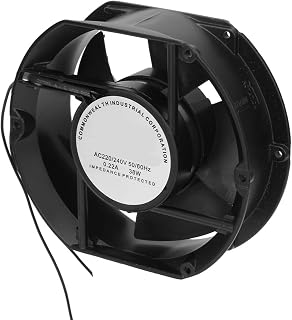


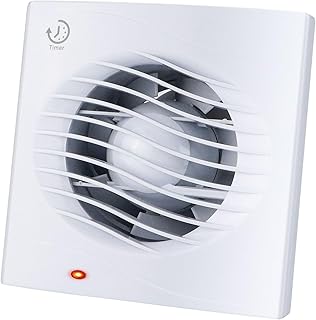


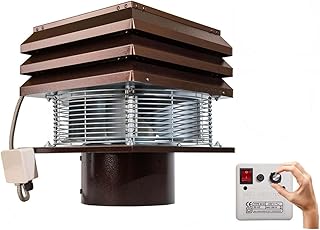


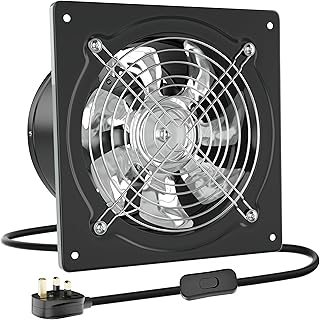



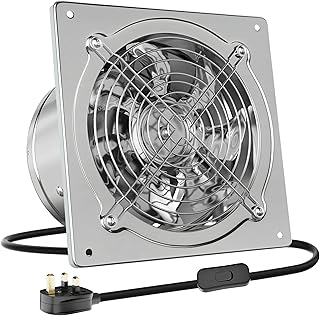
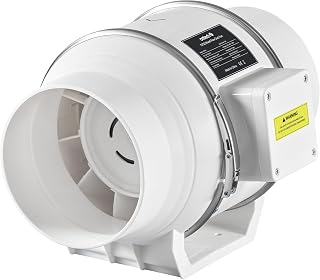


Choosing the right exhaust fan is about more than selecting the highest airflow figure or the cheapest model available. A suitable extractor needs to match the room, duct route, moisture level, installation position and frequency of use. The best exhaust fan for a compact cloakroom may be very different from the right choice for a busy family bathroom, utility room or kitchen.
For UK homes, useful buying decisions should balance extraction performance, operating noise, energy consumption, controls, installation requirements, cleaning access and long-term reliability. Brands such as Xpelair, Vent-Axia, Manrose, Envirovent, Greenwood Airvac and Airflow are worth considering when comparing established ventilation ranges, while individual specifications should always be checked rather than choosing solely by brand name.
Bathroom ventilation is primarily concerned with removing humid air created by showers, baths and general washing. A good bathroom extractor should move moisture away efficiently without becoming so noisy that household members avoid using it.
Kitchen extraction presents different challenges because cooking produces moisture, odours, grease and airborne particles. A bathroom-style extractor may not be the most appropriate solution for a kitchen where substantial cooking takes place.
When comparing kitchen ventilation products, consider whether you need a dedicated wall or ceiling extractor, an externally vented cooker hood, or another ventilation arrangement. Extraction capacity, grease management, duct diameter and the distance between the appliance and the external outlet can all influence real-world performance.
A utility room can generate significant moisture from washing machines, tumble dryers, sinks and wet laundry. A fan with dependable continuous or automatic ventilation can be useful where the room remains humid for long periods.
Look beyond the headline airflow specification. If the duct run is long or contains several bends, the fan's ability to maintain useful airflow against resistance becomes particularly important.
A small WC or cloakroom generally has less moisture than a bathroom, so the requirements can be simpler. Compact dimensions, quiet operation and automatic controls may matter more than maximum extraction capacity.
Wall-mounted exhaust fans are common where the room has an external wall that allows a relatively direct route outdoors. A short duct path can help reduce resistance and may make installation simpler.
Before choosing a wall fan, measure the available opening and check the required wall sleeve, grille and ducting dimensions. Replacing an existing unit is usually easier when the new fan is compatible with the existing aperture and electrical arrangement.
Ceiling fans are useful where a direct wall installation is impractical or where the duct route naturally travels through a loft or ceiling void. They can provide a discreet appearance, particularly in bathrooms.
However, the duct route becomes particularly important. A fan with a strong motor cannot automatically compensate for poorly designed ducting, excessive bends, restrictions or an unsuitable external termination.
Inline extractors place the motor within the duct system rather than directly at the room grille. This configuration can be useful for longer duct routes or situations where the visible room grille needs to remain discreet.
When comparing inline systems, consider fan pressure capability, duct diameter, access for maintenance, noise transmission through the duct and the location of the motor.
Continuous-running ventilation fans are designed to provide background extraction rather than operating only when someone enters the room. They can be particularly relevant where maintaining consistent ventilation is more important than occasional high-speed extraction.
Check the available operating modes, minimum airflow, boost function, controls and electrical requirements before purchasing.
Humidity-controlled fans use a sensor to detect changes in moisture levels and can increase extraction when humidity rises. This can be convenient in bathrooms because the fan does not always have to depend on manual switching.
Sensor sensitivity and installation conditions matter. A poorly adjusted humidity control may cause unnecessary operation, while insufficient sensitivity can delay extraction when moisture rises.
Timer models continue operating for a set period after being switched off. This is useful in bathrooms where moisture remains after the shower has finished.
When comparing timer fans, check how the overrun is controlled and whether the installation requires additional wiring or a particular switching arrangement.
Pull-cord models can provide straightforward manual control and may be useful where installing a conventional wall switch is inconvenient. They are particularly easy to understand because the user controls the fan directly.
Airflow is one of the most important specifications when comparing extractor fans, but it should never be considered in isolation. Manufacturers may express airflow in different units, and the quoted figure may be measured under particular test conditions.
Higher airflow can be beneficial, but an oversized fan is not automatically the best choice. Excessive extraction can increase noise and energy use, while an undersized fan may struggle to remove moisture effectively.
A useful starting point is to consider the room's volume rather than relying solely on floor area. Multiply the room's length, width and height to estimate its approximate volume, then use the manufacturer's guidance to determine an appropriate extraction requirement.
For a compact cloakroom, a modest extractor may be sufficient. A larger family bathroom with frequent showers can require more capable ventilation. Kitchens and utility rooms should be assessed according to the activity taking place rather than room size alone.
Do not assume that doubling the fan's quoted airflow will automatically double ventilation performance. Duct restrictions, external grilles, backdraught shutters and installation quality can all affect the amount of air actually moved.
Ducting is often overlooked when people compare exhaust fan products. A powerful fan connected to restrictive or poorly routed ducting can perform less effectively than expected.
Longer duct routes deserve particular attention because airflow resistance increases as the system becomes more complex. If the installation requires a long run through a loft or ceiling void, compare fans using pressure-performance information where available rather than relying only on a free-air airflow figure.
Noise is one of the most important comfort factors in bathroom and bedroom-adjacent ventilation. A fan that is technically powerful but unpleasantly loud may be used less frequently, undermining its purpose.
Check the manufacturer's stated sound level and understand the conditions under which it was measured. A published decibel figure is useful for comparison, but actual noise can also be influenced by ducting, mounting surfaces, airflow restrictions and vibration.
An exhaust fan normally consumes relatively little electricity compared with many household appliances, but a fan that operates continuously can accumulate considerably more running time than one used for short periods.
When comparing energy consumption, check the motor's rated electrical input and consider how the fan will actually be used. A low-wattage model with suitable automatic controls may be preferable to a higher-powered fan that operates unnecessarily.
Features such as humidity control, timers, intermittent operation and multiple speed settings can help match extraction to demand, although additional electronics should be assessed for reliability, replacement cost and installation requirements.
Bathrooms require additional attention to electrical safety because of the presence of water and moisture. Do not select an extractor simply because it is advertised as a bathroom fan. Check its installation instructions, electrical classification, permitted location and suitability for the intended position.
The exact requirements depend on where the fan is located in relation to water sources and the electrical installation. When replacing or installing fixed electrical equipment in a bathroom, professional advice is sensible, particularly where the work involves new wiring or changes to the existing electrical installation.
A humidity sensor can automate extraction when moisture rises. It is particularly useful for bathrooms where users may forget to operate a manually controlled fan.
A timer keeps extraction running after the switch is turned off. Compare the available delay period and installation requirements.
Boost operation provides increased extraction when additional ventilation is required. It can be useful after showers or during periods of heavy cooking.
Some fans provide background ventilation at a low airflow and increase extraction when demand rises. This approach can provide a different balance between ventilation, noise and energy consumption.
A backdraught shutter can help limit unwanted air movement through the duct when the extractor is not operating. Check that the chosen component is compatible with the fan and duct system.
Automatic controls can improve convenience, but more sophisticated controls are not necessarily better for every installation. Consider whether you genuinely need humidity sensing, continuous operation, timer functions or multiple speeds.
Cleaning access matters. A removable cover can make it easier to clean accumulated dust and deposits without replacing the complete unit.
Extractor fans are generally constructed from moulded plastics and other components selected for their operating environment. For bathrooms, resistance to moisture and appropriate construction are important considerations.
Look at the quality of the grille, housing, mounting points and control components. A fan that is easy to remove for cleaning can be more practical over its service life than a model with difficult maintenance access.
Do not judge build quality solely from appearance. Examine the manufacturer's specification, installation documentation, replacement-part information and warranty terms before making a final decision.
The motor is central to an extractor's performance, noise and electricity consumption. Traditional AC motors remain common, while electronically controlled and brushless motor designs can offer different combinations of efficiency, controllability and operating characteristics.
Motor technology should be evaluated alongside the fan's intended operating pattern. A continuously running ventilation system has different priorities from a fan used for ten or fifteen minutes after a shower.
Maximum airflow is attractive on a specification sheet, but it does not tell the complete story. Noise, duct resistance, controls and installation all affect practical performance.
Connecting a fan to unsuitable or restricted ducting can compromise performance. Always check compatibility before purchasing.
The initial purchase price is only one part of long-term value. Check whether grilles, shutters, filters, covers or other serviceable components are available when required.
A noisy fan may be switched off prematurely or avoided altogether. This is especially relevant for en-suites and bathrooms located next to bedrooms.
Electrical and environmental suitability depends on installation position. Always follow the manufacturer's requirements and obtain qualified advice where necessary.
A replacement fan may look like a simple swap, but wiring, ducting, wall thickness, access, external termination and mounting can make the job more complicated than expected.
Established ventilation manufacturers can provide useful starting points for product research, but no single brand is automatically the best for every room or installation.
Brand recognition should be treated as a starting point rather than proof that one particular model is superior. Compare the exact product specification, installation conditions, controls, noise level and intended application.
Create a short comparison list rather than attempting to judge products from star ratings alone. Start with the room and installation requirements, then eliminate products that cannot meet them.
More extraction is not always better. A fan should provide appropriate ventilation without creating unnecessary noise or energy use. Excessively aggressive extraction may also interact with the home's overall ventilation strategy, particularly in properties with other mechanical ventilation equipment or combustion appliances.
For this reason, the best exhaust fan is usually the one that provides appropriate performance for the room and duct system rather than simply the model with the largest headline airflow figure.
Regular maintenance is essential for maintaining airflow and reducing avoidable noise. Dust, fibres, grease and other deposits can accumulate around the grille, fan blades and housing.
Regular cleaning is particularly important in bathrooms and kitchens because accumulated contamination can restrict airflow and increase the load placed on the fan.
A fan does not necessarily need replacement simply because it is old, but several symptoms can indicate that further investigation is worthwhile.
If a fan appears ineffective, replacing it immediately is not always the first step. Check the complete ventilation route.
Condensation occurs when warm, moisture-laden air encounters cooler surfaces. Bathroom and kitchen extraction can help remove moisture before it accumulates on walls, ceilings, mirrors and other surfaces.
However, an extractor fan is only one part of a home's ventilation strategy. Good airflow paths, appropriate background ventilation and sensible household habits can all influence how effectively moisture is controlled.
If persistent condensation, dampness or mould remains despite apparently adequate extraction, investigate the wider ventilation system rather than assuming that simply installing a more powerful fan will solve the problem.
Before buying, establish exactly what installation involves. A straightforward replacement can differ considerably from installing a new fan where no ducting, electrical supply or external opening currently exists.
Electrical work should be approached with particular care in bathrooms and other damp environments. The installation instructions supplied with the chosen fan should be treated as essential information, not optional reading.
Building regulations and electrical requirements can vary depending on the type of property, location and work being carried out. Where the project involves new wiring, significant alterations or uncertainty about bathroom electrical zones, consult an appropriately qualified professional.
Not every premium feature is necessary, but some can provide meaningful benefits depending on the room.
It is equally important to avoid paying for functions that do not solve a genuine problem. A basic bathroom may not require advanced connectivity, multiple automated modes or complicated controls if a reliable timer fan meets the household's needs.
Consider how the fan will actually be used. Simple controls can sometimes be preferable because they are easy for every household member to understand and operate.
When viewing a product specification, focus on the information that directly affects your installation.
For a 2026 purchase, compare current specifications rather than relying on older product descriptions or generic recommendations. Manufacturers can change motors, controls, dimensions and model numbers, so the exact model reference matters.
Check the latest manufacturer documentation, compare independent customer feedback, examine installation requirements and compare current prices from reputable retailers. If two models appear similar, pay particular attention to noise, duct compatibility, controls, energy consumption and ease of maintenance.
The best bathroom exhaust fan is one that provides appropriate extraction for the room and duct arrangement while remaining quiet enough to use consistently. Timer and humidity-sensing controls can add convenience, but the correct installation and ducting are equally important.
No. Airflow needs to be appropriate for the room and ventilation system. A very high-rated fan can create unnecessary noise and energy consumption, while poor ducting can prevent even a powerful fan from delivering its expected performance.
Yes, particularly in bathrooms close to bedrooms or living spaces. Lower operating noise can make regular ventilation less intrusive and therefore easier to use consistently.
A timer can be useful because it allows extraction to continue after the user leaves the room. Whether it is better depends on how the fan will be used and whether post-use ventilation is important.
They can be useful in bathrooms where moisture levels vary significantly. Automatic humidity control can reduce the need for manual operation, although the sensor settings and installation conditions should be considered.
An extractor can help reduce moisture in the air and therefore contribute to condensation control, but it cannot correct every cause of dampness. Persistent problems may require investigation of the wider ventilation, insulation and building conditions.
Cleaning frequency depends on the room and how heavily the fan is used. Bathrooms and kitchens can accumulate deposits more quickly, so inspect the grille and accessible components regularly and follow the manufacturer's maintenance instructions.
Noise can result from dust build-up, worn components, vibration, damaged ducting, airflow restrictions or normal motor operation. Cleaning the accessible parts is a sensible first step, but unusual vibration or electrical symptoms should be professionally investigated.
Possible causes include insufficient airflow, blocked ducting, an obstructed external outlet, an unsuitable fan size or excessive resistance in the duct route. The complete ventilation system should be assessed rather than judging the motor alone.
Not necessarily. Check the mounting dimensions, duct diameter, electrical requirements, controls and intended installation location. Bathroom installations also require careful attention to the permitted electrical equipment for the particular position.
Xpelair, Vent-Axia, Manrose, Envirovent, Greenwood Airvac and Airflow are established names worth including in product comparisons. The best model still depends on the specific application, so compare individual specifications rather than selecting purely by brand.
Check the exact model number, airflow, noise level, power consumption, dimensions, duct size, controls, installation position, electrical suitability, maintenance requirements and warranty terms. Also compare verified customer feedback and the latest manufacturer documentation.
The strongest exhaust fan purchase is not necessarily the cheapest model or the one with the biggest airflow number. Start with the room, identify the moisture and ventilation requirements, examine the duct route and then compare suitable products on performance, noise, controls, power consumption, installation requirements and maintenance.
For UK buyers, also pay attention to the exact installation location and applicable electrical or building requirements. A qualified installer can help determine whether a particular model and installation arrangement are appropriate where there is uncertainty.
When comparing the best exhaust fan products in 2026, use current specifications and verified customer feedback as supporting evidence, but give greater weight to compatibility with your own room and ventilation system. The right combination of airflow, quiet operation, automatic control, efficient running and straightforward maintenance will usually provide better long-term value than an impressive specification that does not suit the installation.