

♥ Wishlist
Compare 35 verified Makita Cordless Impact Driver products in United Kingdom. Reviews, ratings, pros, cons and buying advice updated for November 2026.


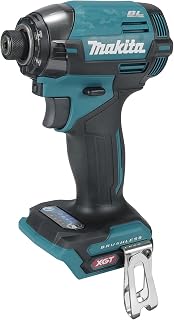


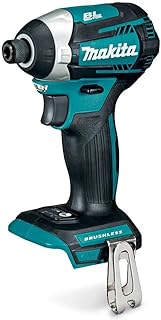


Choosing a Makita cordless impact driver is not simply a matter of selecting the model with the highest torque figure. The right tool depends on the type of fasteners you use, the materials you work with, how frequently the driver will be used, and whether you already own compatible Makita batteries and chargers. A compact impact driver can be an excellent choice for installation work and general fastening, while a higher-performance model may be better suited to demanding construction, structural timber and repeated heavy-duty applications.
This guide expands the buying considerations behind Makita cordless impact drivers, helping UK buyers compare specifications more intelligently. Rather than relying on one headline figure, consider the complete combination of torque, speed, impact rate, control, ergonomics, battery platform, chuck or bit holder, working environment and intended application.
A cordless impact driver is a powered fastening tool designed primarily for driving screws, bolts and other fasteners. Unlike a conventional drill driver, an impact driver uses a rotating impact mechanism to deliver additional turning force when resistance increases. This allows the tool to handle demanding fastening tasks while keeping the overall package relatively compact.
The impact mechanism is particularly useful when driving long screws or working with resistant materials. Instead of relying entirely on continuous motor torque, the mechanism delivers rapid rotational impacts that help overcome resistance at the fastener.
For many tradespeople and DIY users, this makes an impact driver a useful complement to a drill driver rather than a complete replacement. A drill driver remains preferable for many drilling applications, especially where controlled drilling and a conventional chuck are important, while an impact driver is optimised around fastening performance.
One of the most common buying mistakes is treating an impact driver and drill driver as interchangeable tools. They overlap in some applications, but their strengths are different.
If your work consists largely of timber screws, construction fixings, decking screws, cabinet installation or repeated fastening, a cordless impact driver can be particularly useful. If you regularly need to drill holes using a broad range of drill bits, a drill driver may be the more versatile primary tool.
Makita has a broad cordless tool ecosystem, which is one of the main reasons buyers consider its impact drivers. The attraction is not only the individual tool but also compatibility with the wider battery platform. For someone already using compatible Makita cordless equipment, purchasing a bare tool can make more sense than moving to an entirely different battery system.
Makita's impact-driver range also covers different approaches to size, power, control and application. Depending on the model, buyers may encounter compact tools intended for restricted spaces, higher-performance machines for demanding fastening and feature-rich versions offering multiple operating modes.
However, brand familiarity should not replace specification checking. The best Makita impact driver for one user may be unnecessarily powerful for another, or too large for detailed installation work. Compare the actual requirements of your projects before deciding.
Torque is one of the most frequently advertised specifications, but it should not be considered in isolation. Higher torque can be valuable when driving larger or longer fasteners, but maximum torque does not automatically mean better control for every task.
For delicate installation work, excessive power can make it easier to overdrive screws, damage workpieces or strip fastener heads if the operator does not use appropriate settings and technique. For demanding construction work, however, additional torque can provide useful headroom.
When comparing models, consider maximum torque alongside speed settings, operating modes and trigger control.
No-load speed indicates how quickly the tool's output rotates when it is not under load. Higher speed can help with rapid fastening, particularly when driving large numbers of smaller screws.
Speed is most useful when it can be controlled. A tool with multiple speed or application modes may provide greater flexibility than a tool that simply operates at one maximum setting.
The impact rate describes how frequently the impact mechanism operates under suitable conditions. A higher impact rate can contribute to fast fastening performance, although it should not be interpreted as a direct measure of overall tool quality.
Motor output, impact mechanism design, gearing, battery performance, control electronics and the fastener itself all influence real-world results. Treat the impact-per-minute specification as one part of the comparison rather than a standalone performance ranking.
Many modern cordless professional tools use brushless motors. A brushless design eliminates conventional motor brushes and can offer advantages in efficiency, durability and electronic control.
For users who regularly rely on an impact driver throughout the working day, brushless technology can be particularly attractive. However, the motor type should still be considered alongside the complete tool specification, because motor technology alone does not determine whether a particular model is suitable for your work.
Battery voltage is important, but it is not a simple ranking system in which the highest voltage automatically represents the best purchase. Different cordless platforms are designed around different combinations of size, power, runtime and compatibility.
For existing Makita users, battery compatibility may be one of the most important purchasing factors. Before ordering a bare tool, check that your existing batteries and charger are compatible with the exact model.
If you are starting from scratch, compare the cost and availability of the complete battery ecosystem rather than looking only at the price of the impact driver itself.
Battery capacity affects how much work can be completed between charges, although actual runtime varies considerably according to load, fastener size, material, operating mode, temperature and user technique.
A larger-capacity battery may increase working time but can also add weight. A compact battery can make an impact driver easier to handle overhead or in restricted spaces. For installation work, a smaller battery may provide a useful balance between runtime and manoeuvrability. For repetitive heavy fastening, additional capacity may be more valuable.
Tool dimensions matter more than many buyers initially expect. An impact driver that looks impressive on a specification sheet can become tiring if it is unnecessarily large or heavy for the job.
Pay particular attention to overall length when working inside cabinets, between joists, around pipework, beneath worktops or in other restricted areas. A compact head-to-rear dimension can make positioning the bit considerably easier.
Grip design is equally important. Look for an impact driver that feels balanced in the hand, with controls that can be reached without awkwardly changing your grip.
Manufacturers may provide tool weight in different ways, so check whether the stated figure includes the battery. The difference can be meaningful when comparing cordless tools.
For overhead fastening, repetitive installation and long working sessions, every additional amount of weight can contribute to fatigue. Conversely, a heavier battery may be worthwhile where longer runtime is more important than minimum weight.
A compact impact driver can be particularly useful for electricians, kitchen fitters, joiners, maintenance workers and installers who regularly work in confined positions.
Do not judge compactness solely by total length. The shape of the housing, battery position, LED placement and grip geometry can all influence how easily the tool fits into a confined workspace.
One of the most valuable features of a modern impact driver is the ability to control how aggressively it delivers power. Multiple speed settings or application modes can make the same tool suitable for a wider range of fasteners.
Lower settings can help when working with smaller screws or delicate materials. Higher settings can be useful for larger fasteners and more demanding construction applications. Some models also provide specialised control intended to reduce overdriving, assist with fastening precision or manage different fastening conditions.
Electronic controls can improve the relationship between the trigger, motor and output speed. This can make a tool easier to use consistently, especially when moving between different fastener sizes.
For professional users, controllability can be more useful than maximum power because it can reduce the need to compensate manually for an excessively aggressive output.
Most impact drivers use a quick-change hex bit holder rather than the conventional three-jaw chuck found on many drill drivers. This allows compatible impact-rated screwdriver bits and accessories to be changed rapidly.
Always use accessories designed for impact applications where required. Standard accessories that are not intended for impact loading may not be suitable for the repeated forces generated by an impact mechanism.
Bit selection is an important part of impact-driver performance. A powerful driver paired with a poor-quality or unsuitable bit can still produce poor results, including premature bit wear, damaged screw heads or inconsistent fastening.
Choose the correct bit type and size for the fastener. Keep frequently used bits clean and inspect them for wear. Replace damaged or excessively worn bits rather than continuing to use them.
Integrated LED lighting can be surprisingly useful when fastening inside cupboards, under stairs, in service areas, beneath vehicles or in poorly lit construction environments.
When comparing models, consider not only whether an LED is present but also its position and how effectively it illuminates the working area around the bit.
Impact drivers are widely suited to fastening applications involving timber. Long screws can require substantial rotational force, making the impact mechanism useful when working with structural timber and general construction materials.
For structural applications, always select fasteners and installation methods appropriate to the specific project. The impact driver provides the driving force; it does not determine whether a particular fastener is structurally suitable.
Decking projects can involve driving a large number of screws, so tool ergonomics, battery capacity and control become important. A comfortable impact driver can reduce fatigue during repetitive fastening.
Because outdoor environments can expose tools to dust, moisture and changing temperatures, follow the manufacturer's operating and storage guidance and avoid assuming that a cordless tool is waterproof simply because it is designed for professional use.
Installation work often benefits from compact dimensions and precise control rather than maximum torque. Cabinets, fittings and furniture components can be damaged by excessive fastening force.
A model with multiple modes or a controllable trigger can therefore be more useful for installation specialists than a higher-powered driver without equivalent control.
Electricians, maintenance technicians and other installers may value compactness, accessibility and battery efficiency. The ability to work quickly in restricted spaces can be more important than maximum fastening performance.
For mechanical applications involving larger nuts and bolts, compare an impact driver with an appropriate impact wrench. An impact driver should not automatically be treated as a substitute for a tool designed specifically for high-torque socket work.
A DIY user may not need the same combination of power, runtime and durability demanded by someone using an impact driver every working day. The most sensible choice is the model that matches actual workload rather than the most powerful model available.
When comparing several Makita impact drivers, create a shortlist based on the characteristics that affect your own work. Avoid choosing solely because one specification is higher.
Makita is not the only established manufacturer in the cordless power-tool market. Buyers may also compare models from DeWalt, Milwaukee, Bosch Professional and HiKOKI. The best choice often depends on which battery ecosystem, tool range and ergonomics suit the user rather than on brand reputation alone.
If you already own several cordless tools from one manufacturer, staying within that platform can reduce the need to purchase additional chargers and batteries. If you are buying your first cordless tools, compare the broader ecosystem, including drills, saws, grinders, lighting, batteries and chargers that you may eventually need.
Battery compatibility is one of the easiest details to overlook when buying a bare cordless tool. A listing may show an attractive tool-only price, but the complete cost can be considerably different if you also need batteries and a charger.
Before purchasing, establish whether the package includes the battery, charger or both. Then check the exact battery compatibility rather than assuming that every Makita battery fits every Makita cordless tool.
For someone building a larger cordless collection, platform compatibility can have long-term financial and practical value. A shared battery system means fewer chargers, more interchangeable batteries and a simpler approach to managing tools on site.
More torque is not automatically better. If most of your work involves small screws, cabinet fittings or light installation, excessive output can make controlled fastening more difficult.
A slightly more compact driver can be significantly easier to use inside cabinets, between framing members and around existing installations. Check dimensions before buying if access is important.
A bare tool may look attractive when compared with a complete kit, but the total cost needs to include any battery and charger required for operation.
Impact mechanisms subject accessories to repeated loading. Use suitable impact-rated accessories where appropriate and replace worn bits promptly.
Customer reviews can provide useful information about ownership, but individual experiences do not replace technical specifications. Compare verified customer feedback with manufacturer information and consider whether the reviewer's application resembles your own.
An impact driver normally uses a hex bit holder and is optimised around screws and smaller fastening tasks. An impact wrench is designed around socket-based fastening and is generally the more appropriate category for larger automotive and mechanical fasteners.
A practical selection process is to start with your most demanding regular task rather than your occasional maximum task.
Makita cordless impact drivers may be offered in different package configurations. A tool-only package can be particularly attractive to users who already have compatible batteries and chargers.
A complete kit may make more sense for a new user who does not already own the required battery platform. When comparing prices, make sure you are comparing like-for-like packages.
Good maintenance helps preserve the condition of a cordless impact driver and its accessories. Always follow the manufacturer's instructions for cleaning, lubrication, storage and servicing because requirements can differ between models.
Even a high-quality impact driver requires appropriate technique. Start with a suitable bit that fully engages with the fastener head. Keep the driver aligned with the fastener and avoid applying unnecessary sideways pressure.
For delicate materials, begin with a lower power or speed setting where available. Increase output only when necessary. This approach can help reduce the risk of stripping fastener heads or driving screws too deeply into the material.
For repeated fastening, develop a consistent technique rather than relying entirely on the tool's maximum setting. Consistency becomes especially important when installing visible fixings or working with materials that can easily be damaged.
Use appropriate personal protective equipment for the work being carried out and follow the manufacturer's safety instructions. Eye protection is particularly important where fastening work may generate flying debris.
Before changing accessories, carrying out maintenance or inspecting the tool, follow the manufacturer's instructions for isolating the tool from its power source. For cordless equipment, this generally means removing the battery where appropriate.
Be particularly careful when working near electrical wiring, plumbing, gas services or concealed structural components. An impact driver can drive a fastener quickly, so identify the work area and understand what is behind the surface before fastening.
Use the following checklist when comparing individual Makita impact driver models:
A Makita cordless impact driver can be a strong option for users who regularly drive screws and fasteners and want the convenience of cordless operation. It can be especially useful for construction, carpentry, joinery, kitchen installation, maintenance, renovation and general DIY.
It may be less suitable as a standalone tool for someone whose work is predominantly drilling, particularly where a conventional chuck and precise drilling control are required. In those circumstances, pairing an impact driver with a drill driver can provide a more versatile setup.
If your projects involve only occasional light-duty fastening, a high-output professional model may offer more capability than you actually need. A smaller and lighter cordless driver can be easier to handle and may provide better control for simple household jobs.
Similarly, if most of your work involves drilling holes rather than driving fasteners, consider whether a quality drill driver should be your first purchase.
There is no single impact driver that is automatically the best choice for every UK buyer. The better approach is to match the tool to the workload.
Price comparison should be performed using equivalent package specifications. A low advertised figure may represent a bare tool, while another listing may include one or more batteries and a charger.
When comparing current UK offers, check the exact model number, included accessories, battery configuration and retailer terms. Prices and availability can change, so use the current retailer listing rather than relying on an old price mentioned in an editorial article.
For affiliate and independent buying research, the most useful comparison is the total cost of obtaining a usable tool for your circumstances rather than the headline price of the body alone.
Customer reviews are most useful when they contain specific information rather than simply a star rating. Look for comments about the characteristics that matter to your application.
Remember that a review from someone using an impact driver for heavy structural construction may not translate directly to a buyer using the tool for occasional cabinet installation.
The tool itself is only one part of an efficient fastening setup. Suitable accessories can have a significant effect on productivity and fastening quality.
Choose accessories according to the manufacturer's compatibility guidance and the fasteners you actually use. A large accessory set is not necessarily better than a smaller collection of high-quality, appropriate bits.
A Makita cordless impact driver is primarily used for driving screws, bolts and other compatible fasteners. It is particularly useful where increased rotational force and rapid fastening are required.
Neither is universally better. An impact driver is generally better suited to demanding fastening, while a drill driver is more versatile for drilling and conventional chuck-based applications. Many users benefit from having both.
It can be used for certain drilling tasks when a suitable compatible accessory is fitted, but a drill driver is generally the more natural choice for broad drilling applications. Always use accessories appropriate for the tool and material.
Yes. A cordless impact driver can be useful for DIY projects involving repeated screw fastening. However, occasional DIY users should choose a model based on actual requirements rather than assuming a professional high-output model is necessary.
Battery compatibility depends on the exact Makita cordless platform and model. Always check the manufacturer's compatibility information before purchasing or attempting to use a battery.
A bare tool can make sense if you already own compatible batteries and a charger. If you do not, compare the total cost of the tool, battery and charger against a complete kit.
The appropriate torque depends on the fasteners and materials involved. More torque can help with demanding fastening, but excessive output may reduce control for delicate applications. Choose according to your normal workload rather than maximum torque alone.
Brushless models can offer advantages in efficiency, motor design and electronic control. They are particularly worth considering for users who expect frequent or demanding cordless-tool use.
Impact drivers commonly use a quick-change hex bit system. Check the exact model specification and use accessories that are compatible with impact applications.
An impact driver can be useful for certain automotive fastening tasks when the appropriate accessories are used, but larger nuts and bolts may call for an impact wrench designed specifically for socket-based high-torque applications.
An impact driver generally uses a hex bit holder and is aimed primarily at screws and smaller fastening applications. An impact wrench normally uses a square drive for sockets and is designed for larger nuts and bolts.
Not necessarily. Impact rate is only one specification. Torque, speed, motor performance, control, ergonomics, battery system and the design of the impact mechanism all contribute to the overall suitability of a tool.
Use the correct bit size, keep the driver aligned with the fastener, start at a controlled speed and select an appropriate power or application mode where available. Avoid continuing to drive a fastener once it has reached the required depth or resistance.
The best Makita cordless impact driver is the one that fits your work rather than simply the one with the biggest specification. Start by identifying the fasteners you use, the materials you work with and the environments in which you normally operate. Then compare torque, speed, impact rate, control, dimensions, weight, battery compatibility and package contents.
For existing Makita users, battery compatibility can be a major advantage. For new cordless-tool buyers, consider the wider battery ecosystem and the other tools you may eventually need. For professional users, ergonomics, control, runtime and dependable accessories can matter just as much as headline power. For DIY users, compactness and ease of use may be more important than maximum performance.
Before purchasing, verify the exact model number and manufacturer's specifications, compare equivalent packages from trusted UK retailers, check current pricing and read relevant verified customer feedback. This approach makes it easier to distinguish genuinely useful features from specifications that may have little practical relevance to your own projects.