

♥ Wishlist
Compare 56 verified Makita Dust Extractor products in United Kingdom. Reviews, ratings, pros, cons and buying advice updated for November 2026.


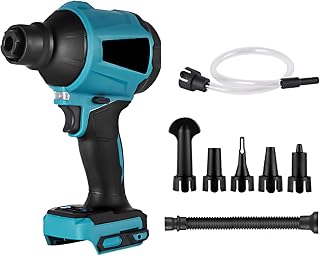


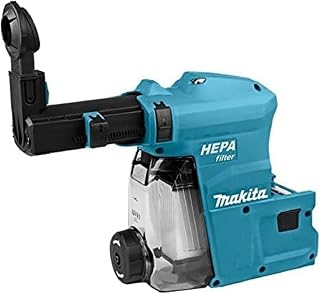


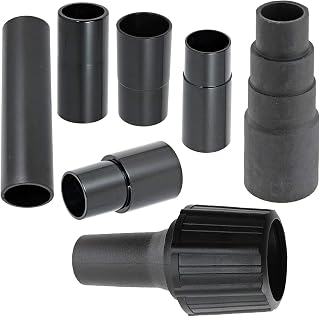


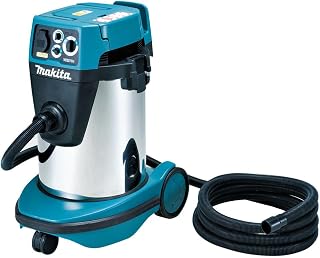


Choosing the right Makita dust extractor is about considerably more than selecting the machine with the largest capacity or the highest headline power figure. A suitable extractor needs to match the tool being used, the type of dust being produced, the working environment, the required filtration level and the way the machine will be transported, emptied and maintained.
Makita's dust extraction range covers solutions for general workshop cleaning, power-tool extraction, drilling, cutting, sanding and demanding construction applications. Some models are designed around portability and frequent movement, while larger units can prioritise capacity and continuous extraction. Understanding these differences makes it much easier to compare Makita dust extractors on meaningful criteria rather than relying solely on product appearance or a single specification.
This guide expands the buying considerations that matter when comparing Makita dust extractors in the UK. It focuses on extraction performance, filtration, capacity, compatibility, portability, maintenance, dust classification, accessories and long-term practicality so that buyers can narrow down the right type of extractor for their particular work.
A Makita dust extractor is a powered vacuum system designed to collect dust and debris generated during work rather than allowing it to remain suspended around the work area. Depending on the model, an extractor may be connected directly to a power tool, used as a general-purpose workshop vacuum or operated as part of a more comprehensive dust-management system.
Dust extraction becomes particularly important when using tools such as sanders, circular saws, routers, grinders, planers, wall chasers and drilling equipment. These machines can produce substantial quantities of fine material, and simply sweeping the resulting debris afterwards does not provide the same level of control as capturing dust at or close to the source.
The best extractor for one application is not necessarily the best choice for another. A compact unit can be advantageous for a tradesperson who moves between rooms and sites, whereas a larger capacity extractor may be more appropriate where extended periods of cutting, sanding or cleaning are involved.
Dust control affects cleanliness, visibility, equipment maintenance and the overall working environment. Fine dust can settle on benches, floors, tools and other surfaces, while airborne particles can remain around the work area after a task has apparently finished.
Connecting an appropriate extractor directly to a compatible power tool can capture material at the point where it is generated. This can reduce the amount of debris escaping into the surrounding workspace and can make subsequent cleaning substantially easier.
For professional users, dust extraction can also form part of a broader workplace dust-control strategy. The extractor should therefore be considered alongside the tool, extraction accessories, filtration system, working practices and the material being processed.
Compact extractors are intended for users who value portability and easy movement. Their smaller footprint can be useful for installation work, maintenance, finishing work and tasks where equipment has to be transported frequently.
The main advantage is convenience. A compact machine can be easier to carry between locations and position close to the tool. The trade-off is that a smaller container may require more frequent emptying, particularly when working with materials that generate substantial volumes of waste.
Wet-and-dry extractors are designed to provide greater versatility by handling suitable dry debris and liquid collection applications, subject to the manufacturer's instructions and the specific model's capabilities.
This format can be particularly useful for workshops, construction environments and general maintenance where the nature of the cleaning task can change during the day. Buyers should always check the operating instructions before collecting liquids, as not every configuration or filter arrangement is intended for every application.
Larger extractors can be useful where considerable amounts of dust and debris are generated. Greater container capacity can reduce interruptions caused by emptying, although a larger machine may also occupy more storage space and be less convenient to transport.
Capacity should therefore be considered alongside portability rather than treated as an independent measure of quality. A large extractor that is difficult to position next to the work may be less practical than a smaller machine that can be moved easily between applications.
Cordless extraction can be particularly attractive on construction sites, during installation work and in locations where access to mains power is limited. A battery-powered Makita extractor can also fit naturally into a wider cordless tool setup.
When comparing cordless models, consider the battery platform, expected runtime, battery availability, charging arrangements and the duration of typical extraction tasks. Runtime can vary significantly according to workload and operating conditions, so it is better to consider the complete working system rather than relying on a theoretical runtime figure alone.
Dust classification is one of the most important considerations when selecting a professional dust extractor. In broad terms, dust classes indicate the level of filtration and the types of dust for which a machine is designed. UK buyers should always check the exact classification stated by the manufacturer and ensure it corresponds with the material and application involved.
L-class extraction is intended for lower-risk dust applications within the scope defined by the applicable equipment requirements. It can be suitable for many general construction and workshop tasks, depending on the material being processed.
Do not select an extractor solely because it is inexpensive or convenient. The dust classification should be determined by the application first, followed by other considerations such as capacity and portability.
M-class extractors provide a higher level of dust-control capability and are commonly considered when working with materials that generate more hazardous or finer dust. Applications can include certain woodworking, mineral and construction materials, subject to the manufacturer's stated suitability.
For professional work, it is important to understand the dust produced by the material and the requirements applicable to the specific task rather than assuming that a general-purpose vacuum is sufficient.
H-class extraction is intended for particularly hazardous dust applications and has more demanding filtration and containment requirements. It should be selected only when appropriate to the material, task and applicable workplace requirements.
Because dust classification can have significant safety implications, buyers should consult the manufacturer's documentation and relevant UK workplace guidance when determining which class is required.
Airflow and suction are related but they are not interchangeable terms. Extraction performance depends on how effectively the vacuum system moves air and captures material through the hose, filter and collection system.
A high airflow figure does not automatically mean that an extractor will perform better with every power tool. Fine dust capture, hose diameter, hose length, filter condition, tool connection and the geometry of the dust outlet can all influence practical extraction performance.
Similarly, a strong suction specification should not be evaluated in isolation. The complete extraction system needs to maintain effective airflow while dealing with the type and quantity of material being generated.
Compatibility is one of the easiest buying considerations to overlook. Before purchasing, identify the exact tool or tools that will be connected to the extractor and check the manufacturer's stated compatibility.
Compatibility matters particularly when a workshop contains tools from several manufacturers. Makita tools may be used alongside equipment from Bosch, DeWalt, Festool, Milwaukee or other brands, but connection systems and accessories should never be assumed to be interchangeable simply because the tools have similar dust outlets.
Automatic switching can make an extractor considerably more convenient when it is used continuously with a corded power tool. Instead of manually starting the vacuum each time the tool is operated, the extraction system can be designed to start in conjunction with the connected equipment, where supported.
This feature can also help make the extraction process more consistent because the extractor is less likely to be forgotten during a short cutting, sanding or drilling operation.
When comparing models, check exactly how the automatic switching function works and which tool types or electrical configurations it supports. Features should always be evaluated against the actual equipment being used rather than assumed from a general product description.
For users already invested in Makita cordless tools, battery compatibility can be a significant purchasing consideration. A cordless extractor can be particularly convenient when the work location has no convenient mains supply or when trailing cables would interfere with movement.
However, battery-powered extraction needs to be assessed as part of the complete workflow. A demanding application may consume considerably more battery capacity than occasional cleaning, and professional users may need multiple charged batteries to maintain productivity throughout the working day.
Check the exact battery system supported by the extractor rather than relying on the assumption that every Makita battery will fit every cordless machine. Battery generation, voltage platform and model compatibility should be verified before purchase.
The filter is central to an extractor's performance. A dust extractor does not simply collect debris in a container; it must also manage the air passing through the machine while retaining appropriate particles within the filtration system.
Fine dust can rapidly load a filter, which is why filter maintenance and cleaning are important considerations. A heavily loaded filter can affect airflow and reduce extraction effectiveness.
When comparing Makita extractors, look for information about the filter type, filtration class, cleaning mechanism and recommended maintenance procedure. Buyers who frequently work with fine dust should pay particular attention to how the extractor is designed to maintain filtration performance during extended use.
Some professional dust extractors incorporate automatic or assisted filter-cleaning systems. These systems are intended to help remove accumulated dust from the filter and maintain more consistent airflow during operation.
Filter cleaning can be particularly useful when sanding, cutting or processing materials that generate large quantities of fine particles. However, filter-cleaning technology does not eliminate the need for routine inspection and maintenance.
Always follow the manufacturer's instructions for filter cleaning, replacement and disposal. The correct maintenance procedure can vary between extractor models and dust classes.
The collection method can have a noticeable effect on everyday convenience. Dust bags can make disposal cleaner and easier, while bagless configurations can be useful when dealing with larger quantities of coarse debris or applications for which the relevant machine is specifically designed.
Before choosing an extractor, establish which consumables it requires and how frequently they are likely to be replaced. An apparently attractive machine can become less convenient if its consumables are poorly suited to the user's workload.
Capacity should be selected according to the volume and type of material generated rather than simply choosing the largest container available.
A smaller capacity can be perfectly practical for light-duty sanding, drilling or installation work. Larger capacity becomes more attractive when the extractor is expected to collect significant amounts of debris before being emptied.
There is a practical balance to find. A larger container can reduce interruptions, but a larger extractor may be heavier and take up more room in a vehicle or workshop.
For tradespeople who work across multiple properties or construction sites, portability can be just as important as extraction performance. Consider the complete machine rather than focusing only on its quoted weight.
An extractor that is easy to transport and store is more likely to be used consistently. This makes portability a genuine productivity consideration rather than simply a convenience feature.
The extraction hose forms part of the airflow path, so its dimensions can influence practical performance. A hose that is unnecessarily long or poorly matched to the tool may introduce additional resistance.
On the other hand, a hose that is too short can restrict movement and make the extraction system awkward to use. The best arrangement provides enough reach for the task while avoiding unnecessary bends, kinks and excess length.
When comparing extractors, check the supplied hose dimensions and investigate whether alternative hoses or adaptors are available for the tools you intend to connect.
Dust extractors can operate for long periods, particularly in workshops and during repetitive sanding or cutting work. Noise can therefore become an important part of the buying decision.
Check the manufacturer's stated noise information and consider where the extractor will be used. A machine operating in a small enclosed room may feel considerably more intrusive than the same machine used in a larger, open construction environment.
Noise should not be assessed separately from extraction performance. The most appropriate model is the one that provides the required extraction capability while remaining practical for the intended working environment.
Construction quality matters when an extractor is expected to survive regular transport and professional use. Look at the design of the container, wheels, handles, hose connections, clips and other components that are likely to receive repeated handling.
Professional users should also consider how easy the machine is to maintain. A robust extractor is more useful when filters, bags, hoses and other service items can be inspected and replaced without unnecessary difficulty.
Do not judge build quality solely by external appearance. Technical documentation, replacement-part information and the manufacturer's maintenance instructions provide more useful evidence when comparing models.
Woodworking can generate a mixture of chips, larger particles and fine dust depending on the tool and material. Sanders, routers, saws and planers can each produce different extraction requirements.
For sanding, fine-dust filtration and consistent airflow are particularly important. For sawing and planing, collection capacity and suitable hose arrangements can become more significant because the material can be generated at a much higher volume.
Woodworkers should also consider how the extractor interacts with the specific machine. A sander may have a relatively small dust outlet, whereas a larger saw or planer can require a different extraction arrangement.
Concrete, masonry and similar mineral materials can generate substantial quantities of fine dust. These applications require careful attention to the appropriate dust class, filtration and extraction accessories.
When using grinders, wall chasers, drills or other masonry equipment, the extractor should be selected according to the material and the manufacturer's stated application requirements. A general workshop vacuum should not automatically be treated as an appropriate substitute for a properly specified construction dust extractor.
Professional users should also consider the extraction hood, shroud or drilling attachment being used. Capturing dust effectively at the tool can be just as important as the extractor itself.
Sanding produces fine particles that can quickly spread around a workshop or room. A suitable extractor can help capture dust directly from the sander through its extraction port.
When choosing an extractor for sanding, pay particular attention to fine-dust filtration, filter maintenance, airflow stability and hose compatibility. If sanding is a major part of the workload, a model designed around effective fine-dust management may be preferable to a basic general-purpose vacuum.
Drilling applications vary considerably. Occasional drilling in timber has different extraction requirements from repeated drilling in masonry or concrete.
For overhead or wall drilling, portability and hose flexibility can become particularly important. A compact extractor or dedicated extraction attachment may be easier to position close to the work than a large workshop machine.
Where drilling produces fine mineral dust, the required dust classification and filtration capability should be confirmed before selecting the extractor.
Saws can generate both coarse debris and fine dust, depending on the material and cutting method. Extraction effectiveness depends on the saw's dust outlet, blade guard design, cutting position and connection to the vacuum.
For repeated cutting, consider container capacity, hose flexibility and the ability to move the extractor with the saw. A machine that can keep up with the work without frequent emptying can make a noticeable difference to workflow.
Routing can create a mixture of chips and fine particles, often at high velocity. Effective extraction depends on both the extractor and the router's dust-collection arrangement.
When comparing options, make sure the hose and adaptor arrangement is compatible with the router and any extraction hood being used. A poorly fitted connection can allow debris to escape even when the vacuum itself has strong extraction capability.
Some buyers need an extractor primarily for cleaning rather than permanent connection to a power tool. In this situation, capacity, hose flexibility, floor accessories, storage and wet-and-dry capability may become more important than specialised tool synchronisation.
A workshop-focused machine should be easy to move around benches, machinery and storage areas. Buyers should also consider whether the supplied floor nozzle and accessories are appropriate for the surfaces being cleaned.
Makita is not the only established manufacturer in the professional extraction market. Buyers may also encounter systems from Bosch, DeWalt, Festool, Hilti and Milwaukee. Comparing brands is most useful when the comparison is based on the actual requirements of the application rather than brand reputation alone.
Makita and Bosch both offer extensive professional power-tool ecosystems, making compatibility and accessory availability important considerations. If a workshop already contains tools from one ecosystem, staying within that system can simplify battery management, accessories and general workflow.
DeWalt is another major choice for professional cordless equipment. Buyers comparing Makita and DeWalt extractors should pay particular attention to battery-platform compatibility, tool connections, extraction performance, filtration and the accessories required for the intended applications.
Festool is strongly associated with integrated extraction systems and professional woodworking equipment. A comparison with Makita should therefore consider the complete tool-and-extractor ecosystem, particularly for users who perform a large amount of precision woodworking or finishing work.
Hilti is particularly prominent in professional construction and building applications. Buyers comparing Hilti and Makita should assess the exact dust class, construction application, tool compatibility and extraction accessories required for the work rather than relying on brand-level comparisons.
Milwaukee is another strong option for users who prioritise cordless professional tools. Battery-platform compatibility can be a deciding factor when choosing between ecosystems, particularly for users who already own several compatible cordless machines.
Product specifications can look confusing when comparing several models. The following criteria provide a practical framework for evaluating them.
A large container does not automatically make an extractor better. If the machine is unnecessarily bulky for the work, portability and storage can become disadvantages.
Dust classification should be established before comparing convenience features. The extractor needs to be appropriate for the material being processed.
Tool connections differ between manufacturers and product ranges. Always check the actual connection dimensions and available adaptors.
Motor wattage alone does not tell the whole story. Airflow, vacuum pressure, filtration, hose design and filter condition all contribute to real-world extraction behaviour.
Filters and dust bags are ongoing requirements for many extraction systems. Check which consumables are required before committing to a model.
A cordless extractor can be highly convenient, but buyers should consider battery capacity, charging time, additional batteries and the expected duration of extraction work.
If the extractor will regularly be moved between floors, vehicles and job sites, excessive weight can become a practical problem. Portability should reflect the actual working environment.
The simplest approach is to start with the application rather than the product name.
Professional users should focus on reliability of the complete workflow. The machine needs to be appropriate for the dust produced, simple enough to transport and capable of supporting repeated use.
Consider the time spent emptying containers, cleaning filters, changing bags, moving the machine and connecting tools. These small tasks accumulate over hundreds of working hours.
Woodworkers should concentrate on fine-dust filtration, tool compatibility, airflow, hose arrangements and collection capacity. The correct extractor can be especially valuable when multiple dust-producing machines are used during the same project.
DIY buyers may not need the same capacity or continuous-duty capability as a professional contractor. A smaller, versatile extractor can be more practical when it is used only periodically.
However, DIY users should not compromise on suitability for the material being processed. Dust classification and filtration remain important even when the extractor is not used professionally.
Construction applications often involve mineral dust, drilling, cutting and grinding. Mobility, dust classification, filtration and compatibility with extraction attachments can therefore be particularly important.
Regular maintenance is essential for maintaining effective extraction. A machine with a clean filter and unobstructed airflow can perform very differently from one that has been neglected.
A noticeable reduction in extraction performance can have several causes. Before assuming that the motor has developed a fault, check the simpler parts of the system.
If basic checks do not resolve the problem, follow the manufacturer's troubleshooting and servicing instructions rather than continuing to operate a machine that may be damaged.
Even a capable extractor can perform poorly if the overall extraction system is poorly configured. Keep the hose as direct as practical, avoid unnecessary bends and ensure that connections are secure.
Keep filters and collection components maintained according to the manufacturer's instructions. When using a power tool, make sure the extraction attachment or dust port is properly positioned so that dust is captured close to its source.
Extraction performance should always be evaluated as a system consisting of the tool, extraction port, hose, filter, collection method and vacuum unit.
The right accessories can significantly improve the usefulness of a dust extractor. Depending on the model and application, useful accessories may include additional hoses, adaptors, floor nozzles, crevice tools, extraction cuffs, dust bags and specialised tool connections.
For professional users, it can be worthwhile creating an accessory setup around the tools used most frequently. This avoids repeatedly changing configurations and makes it easier to move from one operation to another.
A multi-tool workshop needs flexibility. One machine may be connected to a sander in the morning, a circular saw later and used for general cleaning afterwards.
In this situation, prioritise broad compatibility, suitable filtration, practical capacity, flexible hose options and accessories that allow quick changes between tools.
It is also worth considering storage. A workshop extractor should have a logical place for its hose, accessories and consumables so that the complete system remains organised.
There is no single budget that is right for every buyer. The appropriate spend depends on the application, frequency of use, required dust classification and the value of the tools and work being protected.
Instead of setting a budget first and then trying to find an extractor that fits it, identify the minimum technical requirements first. You can then compare models that satisfy those requirements and evaluate the additional features that matter to your workflow.
When comparing current products, check today's prices from trusted retailers rather than relying on historical prices or assumptions about what a particular model should cost.
An older model is not automatically inferior to a newer one. The most important question is whether the model still provides the required extraction performance, filtration, compatibility and practical features for the intended application.
Older equipment can become less attractive when replacement filters, bags, hoses or other accessories are difficult to obtain. Buyers should therefore check current parts and consumable support before choosing an older model.
For a new model, compare the complete specification against established alternatives rather than assuming that a newer release is automatically the better purchase.
Product listings can contain several specifications that look similar but describe different aspects of performance. Read the manufacturer's technical information carefully and distinguish between airflow, vacuum pressure, capacity, filtration and electrical power.
Also check what is included in the stated package. A product listing may describe a machine that can support particular accessories without necessarily including every accessory shown or discussed.
For demanding professional applications, useful features generally centre on reliability, filtration management, tool compatibility and ease of handling. Automatic filter cleaning, suitable dust classification, robust construction, practical hose storage and convenient transportation can all contribute to a more efficient setup.
However, more features do not automatically mean a better machine. A feature only adds value when it addresses a genuine requirement in the user's workflow.
Home workshop users often benefit from a balance of versatility and compactness. A machine that can connect to common tools, handle routine cleaning and fit neatly into available storage can be more useful than a large professional extractor that is rarely moved.
Consider the frequency of use, the materials being processed and whether the extractor needs to support wet cleaning. These factors should determine the specification before price becomes the deciding factor.
Dust extraction should be treated as one component of safe working practice rather than a complete substitute for other controls. The correct extraction system depends on the material, tool and task.
Read the manufacturer's instructions for both the power tool and extractor. Use the appropriate filter, collection system and accessories for the application. Do not collect materials that the extractor is not designed or approved to handle.
Where work involves hazardous dust, professional users should follow the applicable UK workplace requirements and risk-control procedures rather than relying on a general-purpose vacuum.
There is no universal ranking of specifications because different jobs place different demands on the extraction system. For a construction professional working with mineral dust, dust classification and filtration may be more important than container size. For a mobile installer, weight and battery operation may matter more. For a woodworking workshop, fine-dust extraction and tool compatibility can be central.
A useful comparison therefore starts by separating essential requirements from desirable features. Any model that fails an essential requirement should be removed from consideration, regardless of how attractive its other specifications appear.
Start with three questions: what dust will be collected, which tools will be connected and where will the extractor be used? These answers establish the fundamental specification.
Next, compare filtration, airflow, capacity, power source and portability. Once the technically suitable models have been identified, compare convenience features, accessory availability, maintenance requirements and current retailer pricing.
Finally, review verified customer feedback with a critical eye. Reviews are most useful when multiple customers identify the same practical strength or weakness, such as hose compatibility, ease of emptying, portability or filter maintenance. Individual opinions should not replace the manufacturer's technical documentation.
The best Makita dust extractor depends on the application. There is no single model that is ideal for every user. Consider dust classification, tool compatibility, filtration, capacity, power source and portability before making a choice.
Makita offers dust extraction solutions suitable for various woodworking applications. The correct choice depends on the tool being used, the material, the amount of dust generated and the filtration requirements.
It may be possible where compatible hoses, adaptors and extraction connections are available, but compatibility should always be checked for the exact tool and extractor. Do not assume that equipment from different brands will connect directly.
They can be particularly useful where portability is important or mains power is inconvenient. Buyers should consider battery compatibility, runtime, charging arrangements and the demands of the intended application.
A dedicated dust extractor is designed around power-tool dust collection, filtration and related working requirements. A conventional household vacuum is not automatically suitable for collecting workshop or construction dust, particularly where a specific dust classification is required.
Suitable Makita extractors are designed for dust collection, but the appropriate model depends on the type and classification of dust. Check the exact filtration and dust-class specification before using an extractor for fine or hazardous material.
Some models are designed for wet-and-dry operation, while others are intended only for dry extraction. Always check the exact model's instructions before collecting liquids.
There is no single interval that applies to every application. Filter loading depends on the material, workload and operating conditions. Inspect and clean the filter according to the manufacturer's instructions and whenever extraction performance indicates that maintenance may be required.
No. A larger extractor may offer greater capacity, but it can also be heavier and less convenient to transport. The ideal size depends on the volume of dust generated and the environment in which the machine will be used.
Not necessarily. Motor power is only one part of the system. Airflow, vacuum pressure, filtration, hose design, seals and filter condition also influence extraction performance.
Confirm the exact model number, dust classification, filtration specification, capacity, power source, dimensions, weight, hose connections, included accessories and battery requirements. It is also sensible to compare current retailer pricing and read verified customer reviews before purchasing.
For site work, prioritise the correct dust classification, filtration, portability, capacity and compatibility with the tools being used. The best choice depends on whether the primary application is drilling, cutting, grinding, sanding, cleaning or a combination of tasks.
A suitable sanding extractor should provide appropriate fine-dust filtration, compatible connections and sufficient airflow for the sander. Filter maintenance is particularly important because sanding can produce large quantities of fine material.
The correct extractor must be selected according to the dust classification and requirements of the concrete or masonry application. Check the manufacturer's classification and application guidance before choosing a model.
Filter condition directly affects the airflow path through an extractor. A loaded filter can reduce performance, so regular inspection and appropriate filter-cleaning procedures are important for maintaining the system.
A cordless Makita extractor can be particularly convenient when you already use a compatible Makita battery platform. Nevertheless, confirm the exact battery compatibility and compare the extractor's performance and features with your actual workload before buying.
The right Makita dust extractor should be selected as part of a complete dust-management system rather than as an isolated vacuum cleaner. Start with the material and application, establish the required dust classification, then check tool compatibility, filtration, airflow, capacity and portability.
For professional users, the best long-term choice is usually the model that fits the working process most naturally. Easy transport, dependable connections, manageable filter maintenance and readily available consumables can matter just as much as headline specifications.
Before purchasing, compare the exact model specifications, verify what is included in the package, check compatibility with your existing tools and review current prices from trusted UK retailers. Verified customer feedback can provide additional insight into everyday usability, but it should be considered alongside manufacturer documentation rather than used as a substitute for it.
Whether the priority is woodworking, construction, sanding, drilling, cutting or general workshop cleaning, a carefully matched Makita dust extractor can form an important part of a cleaner and more controlled working setup. The strongest buying decision is the one based on the actual dust, tools and working conditions rather than simply choosing the largest, newest or most powerful-looking machine.