
♥ Wishlist
Compare 47 verified Cabinet Safes for Secure Storage at Home & Work products in United Kingdom. Reviews, ratings, pros, cons and buying advice updated for November 2026.




Choosing the right cabinet safe is less about finding the largest or most expensive model and more about matching the safe's construction, locking system, capacity, installation method and intended level of security to what you actually need to protect. A compact cabinet safe may be suitable for documents, cash, keys and small valuables, while a more substantial steel safe can provide greater resistance to unauthorised access and forced entry.
This guide expands the buying considerations that matter when comparing cabinet safes in the UK. It covers safe construction, locking mechanisms, dimensions, capacity, fire considerations, installation, security ratings, everyday usability and common purchasing mistakes. The aim is to make product comparisons easier by explaining what specifications mean in practical terms rather than relying solely on star ratings or marketing descriptions.
When comparing individual products, consider the manufacturer's stated specifications alongside verified customer feedback, installation requirements and your own security needs. Brands such as Yale, Master Lock, Burg-Wächter, Phoenix and Rottner offer products across different categories and price levels, but the most appropriate choice depends on the particular model rather than the brand name alone.
A cabinet safe is a lockable security container generally designed to store documents, cash, keys, jewellery, small electronics and other valuables. Cabinet-style safes are typically larger and more practical for everyday storage than very small portable boxes, while remaining compact enough for installation inside a home, office, cupboard, cabinet or other suitable location.
The term cabinet safe can cover a broad range of designs. Some models are shallow and intended for paperwork, whereas others have greater internal depth for wallets, cameras, small devices or larger collections of valuables. There are also models designed specifically for key storage, business documents or controlled access.
Cabinet safes should not automatically be considered equivalent to high-security commercial or insurance-rated safes. Construction thickness, door design, locking bolts, hinges, anchoring provisions, certification and tested resistance can vary considerably between products.
The best cabinet safe for one household may be completely unsuitable for another. Start with the items you need to store, then work backwards to the dimensions, security features and locking system required.
Security is determined by several components working together. A sophisticated lock cannot compensate for a very weak cabinet, while thick steel is less useful if the safe can simply be removed from the premises. When comparing products, assess the complete design rather than focusing on one headline specification.
Steel is widely used for cabinet safes because it provides a strong structural shell and can resist impacts, bending and other forms of physical attack better than lightweight materials. However, not all steel construction is equivalent.
Where manufacturers provide material or thickness information, compare these specifications between products. Also consider how the steel is formed, how the door meets the frame and whether vulnerable seams or gaps are apparent from the product design.
The door is one of the most important parts of a safe because it contains the locking mechanism and provides access to the protected compartment. Look for a door that closes firmly within the frame and uses substantial locking points appropriate to the safe's intended security level.
A thicker or reinforced door can offer greater resistance than a simple lightweight panel, but door thickness alone should not be treated as a complete measure of security. The frame, hinges, bolts and mounting arrangement also matter.
Locking bolts secure the door to the safe body when the safe is locked. Depending on the design, bolts may engage with the side, top or bottom of the door frame.
When comparing cabinet safes, consider the number and arrangement of bolts, the diameter or size where specified, and how securely they engage with the frame. A multi-bolt arrangement can provide a more substantial locking structure than a simple single-point mechanism.
Hinges allow the door to open while forming part of the safe's overall construction. Some safes have exposed hinges, while others use concealed or protected hinge arrangements.
Do not judge hinge security in isolation. The overall door design, locking bolts and frame determine how effectively the door is secured. If a product description specifies protected hinges or anti-tamper construction, treat that as one feature within the broader security assessment.
The locking mechanism has a major effect on convenience as well as security. There is no universally superior lock type because different users value different characteristics.
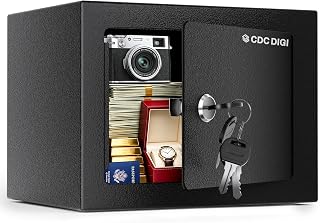
Key-operated cabinet safes are straightforward and do not require batteries, PIN codes or electronic components. They can be useful where the same trusted people need regular access and maintaining a physical key is convenient.
The main practical consideration is key management. Losing the key can create an access problem, while leaving a spare key in an obvious location can undermine the purpose of the safe.
Electronic safes use a keypad, typically allowing the user to enter a PIN to unlock the door. They can be convenient for frequent access because there is no physical key to carry.
When comparing an electronic cabinet safe, check the battery type, battery location, low-battery warning, emergency opening method and any override procedure. Some models provide emergency keys, while others use an external emergency power facility or another manufacturer-specific method.
Electronic access is particularly convenient for households or workplaces where authorised users need to access the contents regularly. However, battery maintenance should form part of normal ownership.
Mechanical combination locks avoid batteries and can provide keyless access. They may appeal to users who want a traditional mechanism and do not want to manage an electronic PIN system.
The trade-off is that mechanical combinations can require more deliberate operation than an electronic keypad. Compare the actual mechanism and manufacturer's instructions rather than assuming every combination lock provides the same level of security.
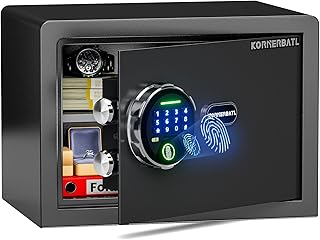
Some compact security safes use fingerprint recognition. This can make everyday access quick, but biometric technology introduces additional electronic components and therefore additional considerations around battery power, emergency access and reliability.
If considering a biometric cabinet safe, check how many fingerprints can be stored, whether PIN or key backup access is available and how the product handles low battery conditions.
Digital features can vary significantly between apparently similar products. A keypad alone does not tell you how sophisticated the locking system is.
Safe capacity should be considered using internal measurements rather than the external dimensions printed in a product title. Thick walls, door mechanisms and internal fittings can reduce usable space.
Before buying, make a simple list of the items that will be stored. For documents, consider whether they need to remain flat. For jewellery and watches, think about shelves or compartments. For keys, check whether hooks or dedicated storage are included. For electronics, measure their depth because some compact safes are relatively shallow.
Small safes are useful for modest quantities of cash, jewellery, passports, keys and small personal possessions. They are generally easier to install discreetly and can fit into cupboards or furniture where larger safes cannot.
The disadvantage is limited internal capacity. A safe that seems adequate initially can quickly become inconvenient if documents or valuables accumulate.
Medium-sized models offer a useful balance between storage capacity and installation practicality. They may accommodate documents, small electronics, wallets, jewellery boxes and other household valuables.
For many domestic applications, medium capacity is worth considering because it provides more flexibility without necessarily requiring the space or handling associated with a large floor safe.
Larger safes are appropriate when the contents include folders, larger document collections or multiple categories of valuables. However, increasing external dimensions can create more demanding installation requirements.
Always check the safe's weight and whether the intended wall or floor can safely support it. A large safe should not be selected solely because it provides more storage.
This is one of the easiest details to overlook when comparing cabinet safes. External dimensions tell you how much space the safe occupies, while internal dimensions determine what you can actually store.
Pay particular attention to depth. A safe can appear spacious from the front but have limited usable depth because of its door mechanism or internal fittings. If you intend to store A4 paperwork, measure the documents and check whether they can be inserted without bending.
Also check the usable opening of the door. Internal capacity does not necessarily mean that every item can be placed through the available opening.
If the primary purpose is storing passports, certificates, deeds, financial paperwork or other important documents, document dimensions should influence the choice.
A safe suitable for documents should provide enough room for papers to be stored without excessive folding. Shelving can improve organisation in larger models, while a removable shelf may provide additional flexibility for taller items.
It is also important to distinguish burglary protection from fire protection. A conventional steel cabinet safe may provide physical security without offering tested fire resistance. If protecting irreplaceable paper records from fire is a primary concern, examine the manufacturer's fire-protection specifications rather than assuming that steel construction makes a safe fireproof.
Cash, jewellery, watches and small valuables generally benefit from a safe that provides secure access while remaining practical for frequent use. The choice between a key lock and digital keypad often comes down to personal preference and access frequency.
For valuables with high financial or sentimental value, security requirements should be assessed more carefully than for everyday possessions. Consider whether the product has an independently recognised security rating and whether your insurance provider has specific requirements for the items being stored.
Key storage creates different requirements from document storage. A key cabinet needs sufficient internal organisation and a layout that makes individual keys easy to identify.
If a safe will hold several sets of keys, look for appropriate hooks or compartments and ensure that the locking arrangement suits the number of authorised users. For business environments, access control can be more important than maximum physical capacity.
Burglary protection and fire protection are separate characteristics. A steel safe can be physically robust without being designed or tested to protect documents against high temperatures for a specified period.
If fire resistance is important, look for explicit manufacturer claims relating to fire protection and check what type of contents the protection is designed for. Paper, digital media and other materials have different protection requirements.
Avoid treating vague descriptions such as fire resistant, fireproof or heat resistant as equivalent to a clearly specified tested rating. The details of the test, duration and protected material are more useful than generic wording.
One of the most important security considerations is whether the safe can be securely attached to the building. A physically strong cabinet safe can still be vulnerable if an intruder can simply remove it from its installation position.
Many cabinet safes include mounting holes for fixing to a suitable floor, wall or other structural surface. Check the manufacturer's instructions carefully before installation because fixing points and recommended hardware vary between models.
The strength of the mounting surface matters. Fixing a safe to a weak cabinet panel is not equivalent to anchoring it securely to an appropriate structural surface.
Wall mounting can provide convenient access while keeping the safe away from the floor. However, the wall construction must be suitable for the mounting method and the safe's weight.
Consider electrical cables, plumbing, heating pipes and other concealed services before drilling. If you are uncertain about the structure or installation method, professional installation may be preferable.
Floor anchoring can provide a strong installation method where the floor construction and fixing system are appropriate. Check for underfloor services and ensure that the chosen location allows the door to open fully.
Placing a cabinet safe inside furniture can improve discretion, but furniture itself may not provide adequate anchoring strength. A safe should not be considered secure merely because it is hidden from view.
Check the safe's mounting provisions and determine whether the surrounding structure can resist attempts to remove the unit.
A safe should be positioned where authorised users can access it without difficulty while avoiding unnecessary visibility. However, concealment should supplement physical security rather than replace it.
Think about how frequently the safe will be opened. A safe used every day should be accessible enough that users do not leave it unlocked for convenience. A safe used occasionally can be placed in a less accessible location if that suits the installation.
Security ratings can make comparisons more meaningful when they are based on recognised testing rather than manufacturer marketing language. If a safe has a stated certification or tested security rating, identify exactly what standard or testing regime applies.
Do not assume that a product described as heavy duty, high security or anti-theft has a particular certification unless the relevant documentation confirms it.
Security certification can also be important for insurance purposes. If you intend to store particularly valuable property, check with your insurer before purchasing because the required safe rating can depend on the circumstances and value involved.
Insurance requirements should be checked independently of product marketing. Your insurer may have specific conditions concerning safe ratings, installation, anchoring or the maximum value of goods stored inside.
Do not assume that buying any cabinet safe automatically satisfies an insurance requirement. Keep relevant product documentation and installation information where appropriate, particularly when the safe is being used for valuable property.
Material choice affects weight, rigidity, durability and resistance to physical attack. Steel is the dominant material for security cabinets because it provides a practical combination of strength and manufacturability.
Some products incorporate additional layers, reinforced doors, protective plates or other construction features. These should be assessed as part of the overall design rather than treated as standalone indicators of quality.
Where steel thickness is provided, it can be useful for comparing broadly similar models. However, thickness is not a complete security measurement. A safe with a thicker panel can still have vulnerabilities elsewhere in its construction.
Many cabinet safes use a painted or powder-coated finish to improve appearance and help protect the steel surface. Finish quality matters for long-term appearance, especially in locations where the safe may be handled frequently.
Surface finish should not be confused with security performance. A premium-looking coating does not necessarily indicate stronger construction.
Internal organisation can make a surprisingly large difference to usability. Shelves, hooks, trays and compartments can help separate different types of valuables and reduce the need to remove everything when looking for a particular item.
Consider how the safe will be used in its final position. The door needs sufficient clearance to open, and the keypad or keyhole must remain accessible.
A safe installed inside a cupboard may appear to fit based on its external dimensions but still be impractical if the door cannot open sufficiently. Measure the complete installation area, including the space required for the door and the user standing or reaching in front of it.
Electronic safes require a small amount of ongoing maintenance. Replace batteries according to the manufacturer's instructions and pay attention to low-battery warnings.
Do not wait until an electronic safe stops responding before considering battery replacement. The emergency opening procedure should also be understood before the safe is needed urgently.
Keep emergency keys, where supplied, in a secure and sensible location away from the safe itself. Storing an override key immediately beside the safe can defeat the purpose of having an additional access mechanism.
Key-operated safes require sensible key management. Avoid placing a spare key in an obvious location and consider who should have access to it.
If several people require access, a digital safe may offer more convenient access control than distributing physical keys. Conversely, users who prefer simple mechanical operation may value a key lock because it does not rely on batteries.
A large-looking safe does not necessarily provide enough usable internal space. Always compare internal dimensions and the size of the actual door opening.
Buying a heavy safe without considering how it will be secured can result in a product that is difficult to install effectively. Check mounting provisions before purchasing.
Steel construction can provide physical strength but does not automatically provide tested fire protection. Fire resistance must be assessed separately.
A sophisticated electronic keypad does not make a weak cabinet highly secure. Evaluate the body, door, frame, bolts, hinges and anchoring system together.
A much larger safe can be heavier, harder to install and more difficult to conceal. Choose capacity based on actual storage requirements and reasonable future needs.
A safe that is frustrating to open can encourage poor security habits. If you access the contents frequently, choose a locking system that is convenient enough to use consistently.
Electronic and biometric models can have emergency access procedures that differ considerably. Understand how the safe can be opened if batteries fail or the primary access method becomes unavailable.
For a typical home application, prioritise appropriate physical security, sensible capacity, secure anchoring and convenient access. A digital keypad can be attractive for frequent use, while a key-operated model can suit users who prefer simplicity.
Office environments may require more structured access. Consider who needs access, whether multiple authorised users are involved and whether documents or cash need separate organisation.
For rental accommodation, durability and straightforward operation can be particularly important. Consider whether the safe can be securely installed without creating unnecessary damage and whether future users will understand the locking system easily.
Choose internal dimensions carefully because jewellery boxes and watch cases can require more space than loose items. A lined interior may also be useful for reducing contact between valuables and bare metal surfaces.
Prioritise internal dimensions that accommodate documents comfortably. If protecting paperwork against fire is important, select a model with appropriate tested fire protection rather than relying on a general description of steel construction.
Convenient access can be important when cash or small valuables are retrieved regularly. Digital locks may provide fast keyless access, while mechanical locks avoid electronic battery requirements.
Several established security and lock manufacturers offer cabinet safes or related security storage products in the UK. Yale is widely associated with domestic security products, while Master Lock has a broad range of locks and security storage. Burg-Wächter, Phoenix and Rottner are also names worth considering when comparing safe construction, locking mechanisms and security specifications.
Brand reputation should be used as a starting point rather than the final buying decision. A recognised manufacturer can offer useful documentation and product support, but specifications can vary substantially between models within the same range.
When comparing Yale products, examine the individual model's dimensions, locking technology, construction and mounting provisions. Digital models may be particularly relevant to buyers who prioritise keyless access, while the precise features depend on the product.
Master Lock offers a broad security product range, so compare each cabinet safe according to its actual construction and intended application. Pay attention to capacity, lock type and mounting options rather than assuming that all Master Lock security boxes provide the same characteristics.
Burg-Wächter is a specialist security brand worth including when comparing safes. Individual models can differ in construction, locking technology, certification and intended use, making model-level specifications particularly important.
Phoenix is another established name in security storage. Buyers should distinguish between models intended primarily for burglary protection and those designed with additional fire protection or specialist document storage features.
Rottner offers a range of security storage products in different sizes and configurations. When comparing Rottner cabinet safes with alternatives, consider the locking mechanism, construction, certification, internal layout and installation requirements of the specific model.
When two products appear similar, compare them in a consistent order. Start with the security construction, then examine the locking mechanism, certification, dimensions and installation method. Only after these points should convenience features and appearance influence the final decision.
Product specifications can be difficult to interpret when comparing several models. The following points are particularly useful during commercial research.
These determine whether the safe physically fits into the intended location. Measure height, width and depth against the available installation space.
These determine the practical storage capacity. Always use these figures when checking whether a particular object will fit.
Weight can indicate how substantial a cabinet safe is, although weight alone is not a reliable security rating. It also affects installation and transportation requirements.
This describes the access mechanism, such as key, electronic keypad, mechanical combination or biometric access.
This indicates how many locking points are used to secure the door, although bolt number should be considered alongside bolt construction and frame design.
A fire rating should specify the nature and duration of protection where applicable. It should not be inferred simply from the presence of a steel body.
Certification can provide more meaningful evidence than generic marketing language when it comes from an appropriate recognised testing scheme.
Value is not simply the lowest purchase price. A good-value cabinet safe provides an appropriate level of security, useful capacity, practical access and reliable construction without paying for features that are unnecessary for the intended application.
For example, someone storing a few passports may not need a large high-security cabinet with complex access controls. Conversely, someone protecting valuable jewellery or business assets should not choose a lightweight safe purely because it costs less.
Compare the total suitability of the product rather than judging value from the price alone.
A cabinet safe is not automatically the best solution for every security requirement. If you need substantial fire protection, high-value burglary protection, large document storage or an insurance-specific security rating, a larger specialist safe may be more appropriate.
Similarly, if the primary requirement is key management rather than general valuables storage, a dedicated key cabinet may offer a more suitable internal layout.
Understanding when not to choose a particular product type is an important part of making a sensible purchasing decision.
Regular maintenance can help preserve safe usability. Keep the locking mechanism clean and follow the manufacturer's instructions for lubrication or servicing. Do not introduce oils or cleaning products into electronic components unless the manufacturer specifically recommends them.
Check that the door closes correctly and that locking bolts operate smoothly. If a lock becomes unusually difficult to operate, investigate the cause rather than repeatedly forcing the mechanism.
For electronic safes, replace batteries when required and periodically verify that the emergency access method remains available.
Inspect mounting points occasionally to ensure there is no obvious loosening or damage, particularly if the safe is installed in a location subject to vibration or frequent use.
If you are comparing several cabinet safes, answering a few practical questions can quickly narrow the selection.
The best cabinet safe depends on the contents being protected, required security level, available installation space, preferred locking mechanism and budget. There is no single model that is best for every buyer. Compare construction, security rating, capacity, anchoring and access features before making a decision.
Cabinet safes can provide useful protection for valuables, documents and cash, but security varies considerably between models. Construction, locking bolts, door design, certification and secure installation all influence the overall level of protection.
Neither is universally better. Digital safes offer convenient keyless access but require battery management and an emergency access procedure. Key safes avoid batteries but require secure physical key management.
Many electronic safes provide an emergency access method, but the exact procedure varies by model. Check the manufacturer's instructions before purchase and understand how emergency access works.
Where the product is designed for anchoring, secure installation can substantially improve practical security by making removal more difficult. Follow the manufacturer's installation instructions and use an appropriate structural fixing surface.
Yes, provided the safe can be securely installed and the cupboard provides sufficient space for the safe and its door to operate. Check ventilation, access, mounting requirements and door clearance where relevant.
No. Steel construction does not automatically mean that a safe provides tested fire protection. If fire resistance is important, look for explicit fire-protection specifications and relevant testing information.
Choose a size based on the largest items you need to store, their quantity and likely future requirements. Measure documents, boxes and electronic devices rather than relying on estimated capacity.
For home use, consider appropriate security construction, secure anchoring, practical capacity and a locking mechanism that suits your access habits. If valuable documents or high-value possessions are involved, investigate certification and insurance requirements as well.
Many cabinet safes can accommodate passports, but the internal dimensions should be checked before purchase. If you also want protection against fire, select a model specifically designed and tested for that purpose.
A suitably constructed cabinet safe can provide a secure storage location for jewellery. Check the internal dimensions, locking system, physical security and any insurance requirements that apply to valuable jewellery.
Only electronic or biometric models normally require batteries. Key-operated and mechanical combination safes do not depend on batteries for their primary locking mechanism.
Neither should be considered in isolation. Weight and steel thickness can contribute to physical security, but the door, frame, bolts, hinges, locking system and anchoring method also matter.
Yes, provided the capacity and security level are appropriate. Businesses should also consider access control, document dimensions, fire protection and any insurance or regulatory requirements relevant to the documents being stored.
Not every document requires fire protection, but important or irreplaceable paper records may justify considering it. If fire protection is required, compare the product's stated tested fire rating rather than assuming a metal cabinet offers sufficient protection.
The correct replacement interval depends on the model, battery type and usage. Follow the manufacturer's guidance and replace batteries promptly when the safe indicates low power.
Mechanical combination locks avoid batteries and can appeal to users who prefer traditional operation. Digital safes can be faster and easier for frequent access. The best option depends on convenience, maintenance preferences and the specific security mechanism used.
One of the biggest mistakes is choosing a safe based solely on appearance, price or lock type. The complete security system matters, including construction, door, bolts, hinges, certification, installation and the suitability of the safe for the intended contents.
The strongest buying decision starts with the threat and storage requirement rather than a particular brand or feature. Determine what you need to protect, how often you need access, where the safe can be installed and whether insurance or fire protection requirements apply.
Then compare individual models using their actual specifications. Look beyond product photographs and headline descriptions to examine internal dimensions, construction, locking mechanism, bolt arrangement, mounting provisions, certification, fire protection and emergency access.
For everyday household storage, convenience and sensible capacity can be just as important as physical construction because a security product only works effectively when it is used consistently. For higher-value possessions, security certification, professional installation and insurer requirements deserve greater priority.
Before purchasing, compare the latest specifications, read verified customer reviews for practical usability issues, check the manufacturer's instructions and confirm today's retailer information. Product ranges, specifications and availability can change, so the individual model's current documentation should always take precedence over general assumptions about a brand or safe category.