

♥ Wishlist
Compare 19 verified Cordless Metal Cutting Saws products in United Kingdom. Reviews, ratings, pros, cons and buying advice updated for November 2026.


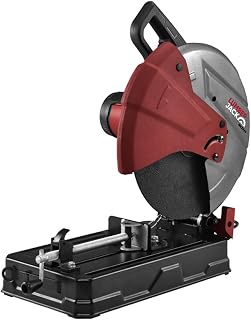


A cordless metal cutting saw can be a highly practical choice when you need to cut steel, stainless steel, aluminium, sheet metal, pipe, box section, angle iron or other metal stock without being tied to a mains socket. However, cordless models vary considerably in cutting capacity, blade technology, battery platform, ergonomics, speed control and suitability for different materials.
The right choice depends less on simply buying the most powerful-looking machine and more on matching the saw to the material, thickness, frequency of use and type of cut you regularly make. A compact saw may be ideal for installation work and occasional fabrication, while a heavier-duty model can make more sense for repetitive workshop or construction applications.
When comparing cordless metal cutting saws in the UK, look beyond headline voltage or motor figures. Blade diameter, maximum cutting capacity, tooth configuration, no-load speed, guarding, chip management, battery compatibility and the manufacturer's intended application can have a greater effect on real-world usefulness.
A cordless metal cutting saw is a battery-powered cutting tool designed specifically for cutting metal or metal-based materials. Unlike a conventional wood-cutting circular saw, it normally uses a blade engineered to cope with the hardness, heat and debris generated when cutting metal.
Depending on the design, a metal cutting saw may use a toothed carbide-tipped blade or an abrasive cutting system. Modern cordless models increasingly favour engineered metal-cutting blades because they can provide controlled cuts with less material removal than traditional abrasive discs, although abrasive systems remain useful for certain applications.
These saws are commonly used for fabrication, construction, maintenance, electrical installation, plumbing, mechanical work, roofing, HVAC installation and general workshop projects.
An angle grinder and a dedicated metal cutting saw can both cut metal, but they are designed around different working methods.
If your primary requirement is accurate repeated cutting rather than general metalworking, a dedicated metal cutting saw is often worth considering. If you need one tool for many different abrasive and finishing operations, an angle grinder may be more versatile.
One of the most important distinctions when comparing metal cutting saws is the cutting system itself. The blade or disc has a direct effect on cutting behaviour, heat generation, finish quality and running costs.
Carbide-tipped blades use engineered teeth designed for metal cutting. They can remove material efficiently while producing a relatively narrow kerf compared with many abrasive cutting systems.
They are particularly attractive for users who regularly cut steel tubing, angle section, sheet material, conduit and similar stock. The exact material compatibility must always be checked against the blade manufacturer's instructions.
Abrasive systems cut by grinding through the material rather than using conventional saw teeth. They can be effective for heavy-duty cutting and are widely established in metalworking.
The disadvantages can include greater heat generation, more sparks, abrasive dust and a wider kerf. Disc wear also needs to be considered when estimating ongoing running costs.
Neither system is universally better. For clean, controlled and repetitive cuts, a suitable toothed metal-cutting blade can be highly attractive. For certain heavy-duty applications, abrasive cutting may remain the preferred approach.
Always match the cutting accessory to the material and saw. A blade intended for one material should not automatically be assumed suitable for another simply because the dimensions appear compatible.
Cutting capacity is one of the most useful specifications to compare because it tells you what size of material the saw can accommodate.
Look for stated capacities for common materials such as round pipe, rectangular tube, square section, angle iron and flat stock. Some manufacturers provide different capacities depending on the shape and material being cut.
Do not assume that a larger blade automatically means a substantially larger practical cutting capacity. Guard design, blade position and the saw's geometry also influence how much material can actually be cut.
Blade diameter determines the basic cutting envelope of a circular metal saw. Common cordless designs use compact blade sizes intended to balance cutting depth, portability and battery efficiency.
A larger blade can provide greater theoretical cutting depth, while a smaller blade can make the tool easier to control and carry. Choose the diameter based on your actual work rather than selecting the largest option available.
The blade itself is often more important than the headline motor specification. Tooth geometry, tooth count, carbide design, kerf width and intended material all influence cutting performance.
A blade designed for thin sheet steel may not be the best choice for thick structural section. Likewise, a blade intended for aluminium should not automatically be used for steel.
When comparing models, check whether replacement blades are readily available and whether compatible accessories are offered by established manufacturers.
No-load speed describes how quickly the blade rotates when the tool is running without cutting material. It is useful for comparing designs, but it should never be interpreted as a simple measure of cutting performance.
Metal cutting requires the correct combination of blade design, peripheral speed, motor control and tooth geometry. Higher speed is not automatically better, particularly when working with materials or accessories that require controlled cutting speeds.
Modern cordless saws may incorporate electronic control systems designed to maintain more consistent blade behaviour under load. Such systems can help the motor respond when cutting resistance changes.
Where available, soft-start, electronic braking and overload protection can also improve control and usability. The exact functions vary between manufacturers and models, so compare the published specification rather than assuming every cordless saw provides the same electronics.
Battery voltage is useful when comparing tools within a manufacturer's range, but it should not be treated as a direct measure of cutting performance.
A major consideration is the battery platform. If you already own compatible batteries from brands such as Makita, DeWalt, Milwaukee, Bosch Professional, HiKOKI or Metabo, staying within that ecosystem may reduce the need to purchase additional batteries and chargers.
Check the exact battery compatibility because different voltage families and generations are not necessarily interchangeable.
Battery capacity is commonly expressed in ampere-hours. Higher-capacity batteries can provide more stored energy, although they may also add weight and bulk.
For occasional installation work, a lighter battery can improve handling. For repetitive cutting, a larger battery may reduce interruptions for battery changes. The best balance depends on how long you work continuously and how demanding the material is.
Weight becomes particularly important when cutting material in awkward positions or when carrying the tool around a construction site.
A heavier saw may provide a substantial feel and potentially suit demanding work, but a lighter model can be easier to manoeuvre. Consider the complete working weight including the battery rather than looking only at the bare-tool figure.
Good ergonomics can make a considerable difference during repetitive cutting. Look at the main handle, auxiliary grip, trigger arrangement, balance and visibility of the cutting line.
A well-balanced saw should feel controllable rather than excessively front-heavy. Handle placement should also allow a secure two-handed grip where the manufacturer's instructions recommend one.
Being able to see where the blade will enter the workpiece helps improve accuracy. Blade guards, dust extraction components and the shape of the base can all affect visibility.
If precision matters, compare photographs and specifications carefully and consider whether the saw's sightline is suitable for your typical material.
Guarding is a fundamental part of a metal cutting saw. The guard should operate correctly and provide appropriate protection for the cutting accessory while allowing the tool to perform its intended function.
Never modify or remove protective components to gain additional access. Use the saw exactly as specified by its manufacturer.
Metal cutting can generate hot chips, fragments and, depending on the cutting system, sparks. Some saw designs incorporate collection or directional systems intended to control debris.
Consider where chips are likely to travel before starting work. A feature that appears minor on a product specification can become important when working indoors, near finished surfaces or in confined spaces.
The exact materials supported depend on the saw, blade and manufacturer instructions. Common applications can include mild steel, stainless steel, aluminium, conduit, tubing, sheet metal, threaded rod and various structural sections.
Material thickness is just as important as material type. A saw capable of cutting thin steel tubing is not necessarily suitable for thick structural steel.
Mild steel is a common application for metal-cutting saws. Suitable blades can produce efficient cuts through many types of steel tube, sheet and section.
Stainless steel requires appropriate tooling because its cutting behaviour differs from ordinary mild steel. Heat management, correct blade selection and controlled cutting technique are particularly important.
Aluminium is softer than steel but still requires the correct blade geometry. Use an accessory specifically rated for aluminium where the manufacturer requires one.
For electrical, plumbing and installation work, the ability to make repeated cuts through conduit or thin-wall tube can be more important than maximum heavy-duty capacity.
Structural and fabrication work often involves angle iron, channel, box section and rectangular tube. Compare the manufacturer's published cutting capacities for each profile rather than relying on a single maximum figure.
Professional users should evaluate a cordless saw differently from someone completing an occasional DIY project.
A professional-grade saw may offer construction quality and features intended for frequent use, but that does not necessarily make it the best purchase for an occasional user.
DIY buyers should concentrate on compatibility, ease of use, appropriate cutting capacity and the total cost of the tool, battery, charger and replacement blades.
Professional users should consider the entire ownership cycle, including battery investment, accessory consumption, maintenance, downtime and how easily replacement parts can be sourced.
For cordless tools, the battery ecosystem can become more important than the individual saw. A user already invested in a particular platform may find that buying a bare tool is considerably more convenient than starting another battery system.
Major professional tool manufacturers including Makita, DeWalt, Milwaukee, Bosch Professional and HiKOKI offer broad cordless ranges, while other established manufacturers such as Metabo also have extensive battery-powered tool systems.
Before buying, check:
A bare tool normally makes the most sense when you already own compatible batteries and a charger. A complete kit can be more appropriate when entering a battery platform for the first time.
Do not compare the advertised price of a bare tool directly with a kit without accounting for the battery and charger. The apparent cheaper option may not be cheaper once the complete system is assembled.
The blade is a consumable component and should be treated as part of the total ownership cost. A good saw fitted with the wrong blade can deliver disappointing results, while an appropriate blade can significantly improve the usefulness of a capable tool.
Tooth count influences cutting behaviour and must be considered alongside blade diameter, tooth geometry and material thickness. More teeth can be advantageous for certain thinner materials and cleaner cutting applications, while different configurations may be better suited to thicker stock.
Kerf is the width of material removed by the blade. A narrower kerf can reduce material loss and may require less cutting energy, but the blade must still be suitable for the tool and application.
Blade life depends on material, thickness, cutting technique, blade quality, cleanliness and workload. Avoid assuming that one blade will provide the same service life across different applications.
If you are making dozens of identical cuts, repeatability can be more important than maximum cutting capacity. Look for a stable base, predictable blade tracking, a clear cutting line and comfortable handling.
For repeated fabrication work, a suitable work support or cutting guide can also improve consistency. The saw itself is only one part of an accurate cutting setup.
Pipe cutting places particular emphasis on blade geometry, workpiece stability and cutting capacity. Compare the published maximum diameter for round pipe rather than relying on the maximum depth figure.
A saw that handles a large piece of flat stock may have a different practical capacity when cutting round tubing because the workpiece geometry changes the point at which the blade enters the material.
For square and rectangular tube, compare the manufacturer's capacity figures for those specific profiles. Consider whether the saw allows the workpiece to be positioned securely and whether the blade remains easy to see throughout the cut.
For fabrication work, a stable setup and repeatable cutting technique can have as much influence on finished results as the nominal power of the saw.
Thin sheet metal requires careful blade selection and controlled handling. A saw designed around thicker stock may not be the ideal choice for delicate sheet material.
Check the manufacturer's stated application range and accessory recommendations before using a particular blade on thin sheet.
The main advantage of cordless equipment is mobility. There is no mains cable to route around the workpiece, which can be particularly useful on construction sites, during installation work or in locations where electrical access is limited.
A corded saw can remain attractive for fixed workshop environments where continuous mains power is readily available. The better option depends on how and where the tool will be used.
A handheld cordless metal cutting saw and a dedicated chop saw serve different purposes. A chop saw generally provides a fixed cutting position and can be useful for repetitive fabrication work where the material can be brought to the machine.
A handheld cordless saw is more flexible when the workpiece is already installed or too large to move easily. For site work, that mobility can be a major advantage.
A reciprocating saw can cut many materials and is particularly useful where access is difficult. However, it does not normally provide the same straight-cut behaviour as a dedicated circular metal-cutting saw.
Choose a reciprocating saw when access and versatility are priorities. Choose a metal-cutting circular saw when controlled straight cuts and repeatability are more important.
Higher voltage does not automatically mean a better metal cutting saw. Motor design, electronics, blade selection and overall engineering all contribute to performance.
A bare tool may look attractive until the cost of a suitable battery and charger is added. Always compare the complete system required for operation.
A larger blade can increase cutting capacity, but it can also increase tool size and weight. Buy according to your normal material dimensions.
Blade compatibility should never be based solely on diameter and bore size. The accessory must also be rated for the material and application.
Excessive force can negatively affect control and accessory life. Follow the manufacturer's operating instructions and allow the cutting system to work at an appropriate feed rate.
Metal chips and sparks can create hazards around combustible materials, finished surfaces, vehicles, electrical equipment and other workers. Consider the environment before choosing where and how to cut.
Metal cutting should always be treated as a potentially hazardous operation. Read the manufacturer's instructions before using the tool and use the protective equipment recommended for the specific application.
Metal cutting can produce different forms of debris depending on the cutting technology and material. The working area should therefore be prepared before cutting begins.
Do not assume that a cordless metal saw produces no airborne particles simply because it uses a toothed blade. Cutting operations can still generate fine debris, particularly when working with coatings, composites or contaminated material.
Where the work environment requires additional respiratory protection or extraction, follow the relevant workplace guidance and the tool manufacturer's instructions.
Regular maintenance helps preserve cutting performance and can make it easier to identify problems before they become more serious.
Store the saw in a dry, suitable environment where the blade, guard and battery cannot be damaged. Remove the battery when the manufacturer's instructions recommend doing so for storage.
Replacement blades should be stored so that their teeth cannot strike hard surfaces or other tools. Batteries should also be stored and charged according to the battery manufacturer's instructions.
A useful comparison should consider the complete specification rather than a single headline feature.
Established power-tool manufacturers are often worth considering because their cordless ranges can provide access to compatible batteries, chargers and accessories. Depending on the application, buyers may wish to compare models from Makita, DeWalt, Milwaukee, Bosch Professional, HiKOKI and Metabo.
The brand itself should not be the only deciding factor. Compare the individual model's specifications, intended application, cutting capacity, battery system and accessory compatibility before making a purchase.
Instead of setting a budget around the tool alone, consider the complete cost of ownership.
Product specifications can be difficult to compare because manufacturers do not always present information in exactly the same format. Pay particular attention to the conditions under which cutting capacity is quoted.
A specification might provide separate figures for different shapes and materials. For example, the maximum capacity for round stock may differ from the capacity for rectangular or square material.
Battery runtime figures should also be treated cautiously. Actual runtime depends on material, thickness, blade condition, cutting frequency, battery capacity, temperature and operator technique. Published figures should therefore be used for comparison rather than treated as a guaranteed working duration.
Buying substantially more capacity than you need can increase cost, weight and size without delivering a practical benefit. Conversely, choosing a saw that is too small can create frustration when your normal work exceeds its limits.
A good approach is to identify the largest three or four materials you regularly cut and compare the published capacities for each one. This produces a more useful shortlist than simply searching for the model with the highest maximum cutting depth.
A cordless metal cutting saw can be particularly useful when mobility, repeatable straight cuts and freedom from a mains cable are important.
A cordless metal cutting saw is not automatically the best tool for every metal-cutting task.
An angle grinder can be more suitable for occasional cutting combined with grinding and finishing. A reciprocating saw may be preferable where access is difficult. A fixed metal chop saw can be better for repetitive workshop production. A bandsaw may be more appropriate where controlled, low-spark cutting and particular fabrication requirements take priority.
Choosing the right tool category before comparing individual models can prevent an expensive mismatch.
There is no single best model for every buyer. The right option depends on the material, cutting capacity, frequency of use, battery platform, preferred blade system and budget. Compare models from established manufacturers against the requirements of your specific work.
Many cordless metal cutting saws are designed specifically for steel applications, but suitability depends on the particular model, blade and material thickness. Always check the manufacturer's stated cutting capacity before using a saw on a particular steel section.
Some models and blades are designed for stainless steel, but not every metal saw or blade is suitable. Check the manufacturer's accessory recommendations and material ratings before cutting stainless steel.
Some are suitable for aluminium when fitted with an appropriate blade. The correct blade geometry and application rating are important, so follow the blade manufacturer's instructions.
It depends on the job. A metal cutting saw can be preferable for controlled straight cuts and repetitive work, while an angle grinder offers greater versatility for cutting, grinding and finishing.
They serve different purposes. Carbide-tipped blades can provide efficient, controlled cutting for suitable materials, while abrasive discs remain useful for many heavy-duty applications. The best choice depends on the material, required finish and manufacturer's recommendations.
Not necessarily. Voltage is only one part of the specification. Motor design, electronics, blade technology, cutting capacity, ergonomics and battery system should all be considered.
Choose a bare tool if you already own compatible batteries and a charger. A kit may be more convenient if you are entering the battery platform for the first time.
Battery capacity affects how much stored energy is available between charges. Higher-capacity batteries can be useful for demanding repetitive work, while smaller batteries can reduce weight and improve portability.
No. Physical dimensions are not the only consideration. The blade must be compatible with the saw and rated for the material, speed and application.
Use the protective equipment recommended by the saw and accessory manufacturers and appropriate to the work environment. Eye protection is particularly important because metal cutting can produce chips and fragments. Additional protection may be required depending on noise, dust, sparks and workplace conditions.
There is no universal replacement interval. Blade life varies with material, thickness, cutting frequency, blade quality and technique. Replace the blade when it becomes excessively worn, damaged or unsuitable for producing the required cut, following the manufacturer's guidance.
Many are designed with professional applications in mind, but suitability depends on the individual model and workload. Professional buyers should consider durability, cutting capacity, battery ecosystem, accessory supply and long-term maintenance requirements.
For most buyers, the most important starting point is the manufacturer's stated cutting capacity for the exact material and profile they intend to cut. After that, compare blade compatibility, battery platform, ergonomics, weight and the intended frequency of use.
The best cordless metal cutting saw is the one that matches the work rather than simply the one with the biggest specification. Start by identifying the material and dimensions you cut most frequently, then compare suitable saws by cutting capacity, blade system, battery compatibility, weight, ergonomics and accessory availability.
For occasional DIY work, a compact model that shares batteries with tools you already own may offer the most sensible overall solution. For professional fabrication and installation, durability, cutting consistency, battery capacity and access to replacement blades can become much more important.
Before making a final decision, compare the complete specification, read current verified customer feedback, check the manufacturer's instructions and compare today's prices from trusted retailers. A careful comparison of the saw, battery platform and cutting accessories will usually produce a better result than choosing purely on brand name, voltage or headline power.