

♥ Wishlist
Compare 40 verified Crowbars Hand Tools for Heavy-Duty Levering products in United Kingdom. Reviews, ratings, pros, cons and buying advice updated for October 2026.






A good crowbar is one of the simplest tools in a workshop, building site, renovation kit or demolition toolbox, yet choosing the right one is not simply a matter of buying the longest or heaviest bar available. Crowbars and pry bars are designed for different jobs, and the ideal tool depends on the amount of leverage required, the material being moved, the available working space, the type of contact point and how much control you need during the task.
This independent buying guide explains the differences between common crowbar designs, identifies the specifications that matter most and highlights the practical factors worth checking before buying. It covers heavy-duty demolition bars, general-purpose pry bars, wrecking bars, nail-pulling tools, flat bars and compact pry tools, with guidance for DIY users, tradespeople, renovators and professional contractors.
Rather than treating one design as universally best, the useful approach is to match the crowbar to the work. A long, heavy demolition bar can provide substantial leverage but may be unnecessarily cumbersome for cabinet work or flooring. A compact flat pry bar can offer excellent control in confined spaces but may not provide enough leverage for structural or heavy demolition tasks. Understanding that distinction is one of the most important parts of choosing the right tool.
A crowbar is a manually operated levering tool, normally manufactured from steel or another high-strength material, with a shaped end designed to provide leverage between two objects. Depending on the design, a crowbar can be used for demolition, prying, lifting, separating materials, removing nails, opening gaps, dismantling timber structures and moving heavy components over short distances.
The term crowbar is often used interchangeably with wrecking bar, pry bar, demolition bar, nail bar and lever bar. These tools overlap considerably, but their shapes and intended applications can differ. Some have a curved end for increased leverage, while others have a flattened blade intended to slide behind trim, flooring, boards or other materials.
The most important mechanical principle is leverage. A longer bar can generally provide greater mechanical advantage, allowing the user to apply less force at the handle to generate a greater force at the working end. However, greater length also increases weight, reduces manoeuvrability and can make precise work more difficult. The best crowbar is therefore not necessarily the longest one; it is the one that provides the appropriate balance of leverage, strength and control.
The terminology used by manufacturers and retailers is not completely standardised, so two tools with similar dimensions may be described differently. Nevertheless, several broad categories are useful when comparing products.
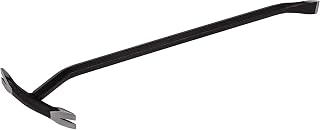
Traditional crowbars are typically substantial steel bars with a pointed or flattened end and a curved or angled section. They are often selected for heavy-duty levering, lifting and demolition work where strength and leverage are more important than fine control.
Wrecking bars are generally associated with demolition. They commonly feature a curved levering end and a flattened section capable of getting underneath timber, boards and other materials. Some designs incorporate a nail-pulling slot at one or both ends.
Pry bars are a broad category covering everything from compact trim-removal tools to heavy-duty demolition levers. A pry bar may be deliberately slim so it can enter narrow gaps, or it may be a large forged bar intended for demanding construction and demolition work.
Nail bars are particularly useful when nail removal is a major requirement. Their shaped ends can provide a suitable contact point around nail heads, making them useful for dismantling timber and reclaiming boards.
Flat pry bars are generally thinner and wider than traditional round-section crowbars. Their profile can make them particularly useful for separating materials without creating an unnecessarily large contact point. They are commonly used for trim, flooring, skirting boards and general renovation tasks.
The right choice starts with the job rather than the brand. Before comparing individual products, consider what you will actually be doing with the tool.
Heavy demolition calls for a substantially different tool from delicate renovation work. If you are dismantling timber framing, breaking apart pallets or separating stubborn construction materials, a robust wrecking bar may be appropriate. If you are removing skirting boards, architraves or flooring, a thinner flat pry bar may give you considerably better control.
For occasional household tasks, a medium-sized general-purpose pry bar can be a sensible compromise. For professional users, owning several sizes is often more useful than expecting one crowbar to perform every job.
Length is one of the most important specifications because it affects leverage. A longer crowbar allows the user to generate more leverage for a given amount of hand force, but it also requires more clearance.
Short bars are easier to control and can be used in confined spaces. Medium-length bars are versatile for general renovation and maintenance. Long demolition bars are better suited to situations where maximum leverage and working reach are more important than compactness.
Do not automatically choose the longest bar. If you cannot position the tool correctly, additional length provides little practical benefit.
Diameter and cross-sectional profile influence strength, stiffness, weight and how the tool feels in use. A thick round or hexagonal section can be suitable for high-load levering, whereas a wide flat section may be better for sliding beneath boards or trim.
The profile should therefore be considered alongside length. Two bars with the same overall length can behave very differently depending on their geometry.
The end configuration can be more important than the overall appearance of the tool. A curved end is useful for levering because the geometry can provide a favourable angle against the workpiece. A flattened end can help the bar enter gaps. A nail slot provides an additional function for dismantling timber.
Some bars have different ends for different tasks, making them particularly versatile. Others are optimised for a specific job and may perform better within that narrower application.
Most quality crowbars are manufactured from steel because the material combines high strength with durability and is capable of handling substantial loads when properly designed and manufactured.
Forged steel is widely used for demanding hand tools. Forging shapes the metal under controlled conditions and can produce a strong, durable component suitable for heavy mechanical loads. When comparing heavy-duty crowbars, a properly manufactured forged steel construction is an important characteristic to investigate.
Heat treatment can influence the mechanical properties of steel, including hardness and toughness. The objective is not simply to make a crowbar as hard as possible. Excessive hardness without adequate toughness can be undesirable because a tool subjected to severe loading needs to resist deformation and damage.
Where a manufacturer provides meaningful information about steel grade, forging and heat treatment, it can help distinguish a properly engineered professional tool from an inexpensive bar with limited technical information.
Some manufacturers specify the grade or type of steel used in their tools, while others focus on construction method and application instead. Steel grade alone should not determine the purchase decision because geometry, heat treatment, manufacturing quality and the design of the working ends also influence real-world performance.
When technical information is available, consider the complete specification rather than assuming that a particular steel designation automatically makes one crowbar superior to another.
A suitable surface finish can help protect the tool against corrosion and make it easier to clean after use. Painted, powder-coated, polished and plated finishes can all be found on hand tools. The finish is secondary to the structural integrity of the bar, but it can still matter if the tool will be stored in a damp garage, workshop or outdoor environment.
Length is one of the easiest specifications to compare, but it should be interpreted in terms of intended use.
Short bars are useful where space is limited. They are easier to transport and control and can be particularly effective for trim removal, small dismantling jobs and general household maintenance.
Their principal limitation is leverage. A compact bar cannot normally provide the same mechanical advantage as a substantially longer bar when the working geometry is otherwise comparable.
Medium-sized bars are often the most versatile choice for DIY renovation, general maintenance and mixed workshop use. They provide more leverage than compact tools without becoming as difficult to handle as large demolition bars.
Long bars are intended for situations where leverage, reach and force multiplication are important. They can be useful for heavy dismantling, lifting and demanding demolition work.
The trade-off is increased weight, storage requirements and reduced suitability for confined areas. A long crowbar can also be unnecessarily destructive when working around materials that need to be preserved.
For heavy demolition, look for a robust bar with substantial steel construction, a suitable length and working ends designed for levering and separation. A dedicated wrecking or demolition bar is generally more appropriate than a small trim pry bar.
Prioritise structural strength, stiffness, comfortable handling and the ability to maintain a secure contact point. If the tool will be subjected to repeated high loads, construction quality should take precedence over decorative features.
If nail removal is a major part of the work, choose a bar with a properly shaped nail-pulling end. The slot needs to be positioned and shaped so that it can engage the nail effectively without requiring excessive manipulation.
For reclaimed timber, the geometry of the nail puller can be particularly important because controlled extraction can help reduce unnecessary damage to the surrounding material.
A relatively slim flat pry bar is often more suitable for flooring and renovation work because the working end can be inserted beneath boards or other materials. A bulky demolition bar may provide plenty of force but can be awkward in the narrow gaps encountered during flooring removal.
Trim removal generally benefits from a thin blade and controlled leverage. A compact pry bar can be easier to position behind skirting, architrave and moulding, particularly when trying to minimise damage to the wall or the material being removed.
Pallet dismantling can require both leverage and nail removal. A medium or heavy-duty wrecking bar with a nail-pulling end can therefore be more useful than a simple flat bar.
The ideal size depends on pallet construction, access and how frequently the work is performed. A bar that is too large may be cumbersome, while an undersized tool may require excessive effort.
Heavy-duty bars can be useful for levering stones, separating compacted materials and positioning objects during landscaping. However, the tool should not be confused with a purpose-built digging bar. A crowbar is primarily a levering tool, and using it for applications outside its intended design can increase the risk of bending, damage or loss of control.
Flat and curved designs serve different purposes, so neither should automatically be considered better.
A flat bar is generally easier to insert into narrow gaps and can provide a broad contact surface. This makes it particularly useful for trim, flooring and controlled separation.
A curved crowbar can provide advantageous leverage and may be better for heavy-duty dismantling. The curvature can also help create a more useful fulcrum position when lifting or separating materials.
If your work includes both delicate renovation and heavy demolition, owning one of each type may be more practical than trying to find a single universal bar.
A single crowbar is normally sufficient if you have one clearly defined task. A set becomes more useful when your work involves different materials, access conditions and required levels of leverage.
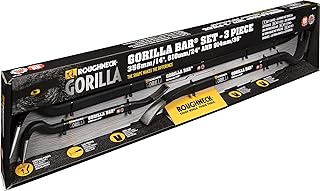
A useful combination can include a compact pry bar for precision work, a medium general-purpose wrecking bar and a larger demolition bar for high-leverage applications.
Having multiple sizes also reduces the temptation to use an oversized bar where a smaller tool would provide better control. This matters when working around reusable timber, finished surfaces, cabinetry and other materials where unnecessary damage is undesirable.
Check the overall length rather than relying on descriptions such as compact, standard or heavy-duty. Exact dimensions make products easier to compare.
Weight affects portability and handling. A heavier bar may feel substantial and can be appropriate for demanding work, but excessive weight becomes tiring during repetitive tasks.
Look for clear information about steel construction and manufacturing. For demanding applications, construction quality should be one of the primary buying criteria.
Compare round, hexagonal and flat profiles according to the application. The profile affects stiffness, access and how the bar transfers force.
A wider end may distribute contact over a larger area, whereas a narrower end may be easier to insert into tight gaps. Choose according to the material and task.
If nail removal matters, inspect the shape and position of the nail slot rather than simply checking whether the product description says it has a nail puller.
Consider how and where the bar will be stored. A suitable protective finish can make maintenance easier, particularly in workshops or garages where moisture is present.
Some crowbars are simply bare steel bars, while others include a shaped or coated grip. A comfortable grip can make a difference during repetitive work, although the grip should not distract from the fundamental strength and geometry of the tool.
Leverage is governed by the relationship between the applied force and the distance from that force to the fulcrum. Increasing the effective lever arm can increase the mechanical advantage available to the user.
In practical terms, a longer bar can make a stubborn object easier to move when the working end and fulcrum can be positioned correctly. However, the theoretical advantage does not always translate into a better result. If the bar cannot be inserted far enough, if there is insufficient clearance or if the user cannot maintain control, a shorter tool may actually be more effective.
This is why crowbar length should be selected according to working environment rather than treated as a simple measure of quality.
Strength is essential, but buyers should distinguish between a tool designed to withstand high loads and a tool that merely appears thick or heavy.
A properly designed crowbar needs appropriate steel, geometry and manufacturing processes. The bar should resist excessive bending under normal intended use and the working ends should remain securely formed.
When comparing products, pay attention to the manufacturer's stated application and technical information. Avoid assuming that a heavier tool is automatically stronger, because weight and structural performance are related but not identical.
Any metal component can be damaged when subjected to loads beyond its intended design. Crowbars can bend when excessive force is applied, particularly when the tool is used in an unsuitable configuration or when an improvised extension is added.
A bar that has visibly bent, cracked, developed severe deformation or otherwise suffered structural damage should not simply be returned to heavy-duty service. Continuing to use a damaged lever can increase the risk of sudden failure and loss of control.
Longer is not always better. A large bar can be difficult to position and may be unnecessarily destructive for renovation tasks.
The cheapest tool may be adequate for occasional light work, but repeated professional use places greater demands on construction quality. Compare material, dimensions, intended application and manufacturer information rather than price alone.
A crowbar's ends determine how it interacts with the material. A beautifully finished bar with an unsuitable end geometry is still the wrong tool for the job.
Heavy bars generate considerable leverage. That can be an advantage during demolition but a disadvantage when trying to preserve flooring, trim or timber.
Users who regularly undertake different types of work may find that a small selection of complementary bars is more efficient than relying on one oversized tool.
Large steel bars require appropriate storage space. If a tool is difficult to store safely, it may be left in unsuitable locations where it can become a trip hazard or be exposed unnecessarily to moisture.
Several established hand-tool brands offer crowbars, wrecking bars and pry tools across different price and application categories. The right choice still depends on the individual model and specification rather than the brand name alone.
Stanley has a broad range of established hand tools, including bars and demolition-oriented tools. When comparing Stanley products, pay attention to the specific length, construction, profile and end configuration rather than assuming every bar in the range is intended for the same workload.
Bahco is widely associated with professional hand tools and offers products designed for maintenance, construction and workshop applications. Its crowbars and pry tools are worth comparing where ergonomics, tool design and professional use are important considerations.
Roughneck is particularly associated with robust tools for construction, demolition, landscaping and demanding manual work. Buyers considering heavy-duty crowbars should compare the dimensions, weight and intended application of individual Roughneck models.
Fiskars is well known for tools across construction, gardening and outdoor applications. Its approach to tool design makes the brand worth considering when comparing ergonomics and application-specific designs.
Estwing is an established tool brand with a strong presence in professional and heavy-duty hand tools. Individual Estwing pry and demolition products should be evaluated according to their construction, dimensions and intended use.
Draper offers a wide range of hand tools and workshop equipment in the UK market. Its range can be useful for buyers comparing general-purpose and professional-oriented tools across different sizes and specifications.
Silverline offers a broad selection of tools covering DIY and general workshop applications. Individual products should be compared carefully for dimensions, materials and intended duty level, particularly where the tool will be subjected to repeated heavy loads.
The distinction between professional and DIY tools is often less about appearance and more about expected workload, durability and ergonomics.
An occasional DIY user may need a crowbar only a few times each year. In that situation, a reasonably specified general-purpose bar can provide adequate versatility without requiring the features intended for continuous trade use.
A professional contractor, demolition worker, builder or renovator may use a bar repeatedly throughout the working day. In that environment, durability, consistent dimensions, comfortable handling and appropriate construction become more important because fatigue and tool failure have greater practical consequences.
Renovation work presents a particular challenge because the objective is often to remove something without damaging the surrounding structure.
For this reason, a renovation toolkit benefits from tools of different sizes and profiles. A thin pry bar can help with trim, while a medium wrecking bar can handle more substantial dismantling. A larger bar can then be reserved for situations where greater leverage is genuinely required.
Consider the surface behind the material being removed. If plasterboard, finished timber, flooring or painted surfaces need to be protected, using a broad contact point or an appropriate protective block can help distribute the load. The crowbar itself is only part of the system; technique and load distribution also influence the result.
Even a high-quality crowbar can cause damage if excessive force is applied in the wrong position. Controlled leverage is usually preferable to sudden, uncontrolled loading.
When prying against a finished surface, consider placing a suitable protective material between the bar and the surface where appropriate. This can distribute contact pressure and reduce localised damage.
For timber dismantling, work progressively rather than attempting to separate an entire section with one extreme movement. Creating a small gap first can make subsequent leverage easier and more controlled.
Crowbars are simple tools, but they can generate significant mechanical force. Appropriate personal protective equipment and sensible working practices are therefore important.
Wear suitable eye protection when demolition may produce flying fragments, splinters or dust. Gloves can provide additional protection and improve grip where appropriate, although they should not reduce the user's ability to control the tool.
Inspect the bar before use. Look for cracks, severe corrosion, deformation, damaged ends or other signs that the tool may no longer be structurally sound.
Keep other people clear of the working area, particularly when using a long bar. The movement of a crowbar can be unpredictable if the material suddenly releases.
Do not use a crowbar as a hammer unless it is specifically designed for impact use. Do not add pipes, extensions or other improvised handles to increase leverage unless the manufacturer specifically permits such use. Excessive leverage can exceed the design limits of the tool and increase the possibility of failure.
Some demolition bars are designed with ends that can tolerate specific forms of impact, while others are intended purely for levering. Buyers should check the manufacturer's instructions rather than assuming that any steel crowbar can safely be struck with a hammer.
If impact driving is an important part of the job, a purpose-designed demolition tool is generally preferable to improvising with a standard pry bar.
Remove dirt, dust, adhesive, paint and other residues after use. A clean tool is easier to inspect for damage.
Steel tools can develop surface corrosion when exposed to moisture. Keep the bar dry and store it in a suitable environment. If the manufacturer recommends a protective treatment, follow those instructions.
Look for mushrooming, cracking, severe deformation or excessive wear around the ends. Any significant structural change warrants careful consideration before further use.
Long crowbars should be stored where they cannot fall, become a trip hazard or interfere with other tools. Keeping the tool in a dry, organised location also makes routine inspection easier.
Online listings can make crowbars look remarkably similar, so comparison should focus on objective specifications.
Start with the exact length, weight, construction material and profile. Then compare the shape of each working end, whether nail extraction is included and whether the manufacturer identifies a specific intended application.
Product photography can help, but images alone do not reliably communicate dimensions or steel construction. Read the technical specification and manufacturer's information wherever available.
Customer feedback can provide useful information about handling, suitability and long-term use, but reviews should be interpreted in context. A person using a compact pry bar for light household work has very different requirements from a contractor using a demolition bar every day.
When reading customer reviews, focus on comments that describe the actual application rather than relying only on star ratings.
Whether a more expensive crowbar is worthwhile depends heavily on frequency of use and workload. Someone who needs a bar for a single small renovation project may have little reason to invest in a professional-grade tool designed for sustained heavy use.
Conversely, a professional who relies on a crowbar repeatedly may benefit from spending more on a tool with suitable construction, ergonomics and durability.
The best value is therefore not necessarily the lowest purchase price. Consider the tool's intended workload, expected service life, usability and whether its specification actually solves the problem you have.
There is no universal size that fits every application, but a useful way to think about crowbar selection is in terms of leverage versus control.
Choose a compact bar when access and precision are the main priorities. Choose a medium bar when you want a balance between portability and leverage. Choose a large bar when working space is sufficient and substantial leverage is genuinely required.
For mixed workloads, a set containing different sizes can reduce compromises and help you select the correct tool for each stage of a project.
The angle between the crowbar, the material and the fulcrum affects how effectively the applied force is converted into movement. A theoretically powerful bar can perform poorly if positioned at an awkward angle.
This is another reason to consider curved and angled designs. Their geometry can make it easier to establish a useful working position without requiring excessive movement from the user.
Whenever possible, position the tool so that force is applied in a controlled direction and the working end remains securely engaged. Avoid situations where the bar is likely to slip sideways when pressure is increased.
A crowbar can be useful for short-distance positioning and controlled lifting, but it is not a substitute for specialist lifting equipment when loads are substantial or hazardous.
For relatively small positioning tasks, a robust bar can help raise an object enough to insert a support or move it incrementally. The surface supporting the fulcrum must be capable of handling the applied load, and the object must remain stable throughout the operation.
Never rely on a crowbar alone to support a load while working underneath it. Proper mechanical supports and appropriate lifting equipment should be used whenever there is a risk of crushing or entrapment.
Demolition work places greater demands on both the tool and the operator. A suitable demolition bar should provide the required leverage without being unnecessarily cumbersome.
Before starting demolition, consider hidden electrical cables, plumbing, structural elements, glazing, fixings and other hazards. A crowbar can remove material effectively, but the tool itself does not make an unknown structure safe to dismantle.
For controlled demolition, use the smallest appropriate tool first and increase tool size only when greater leverage is necessary. This approach can improve control and reduce unintended damage.
If you primarily need a tool for general renovation, trim removal and light dismantling, a pry bar may be the more versatile choice. If your work involves heavy leverage, moving stubborn materials and demolition, a substantial crowbar or wrecking bar is more appropriate.
For professional users, the question is often not crowbar versus pry bar but which combination provides the widest practical coverage. A compact pry bar and a heavy wrecking bar can complement each other extremely well.
A nail bar is preferable when nail extraction is a central requirement because the end is shaped specifically to engage nail heads. A conventional crowbar can still provide excellent leverage but may not offer the same convenience for repeated nail removal.
If dismantling timber structures, pallets or old flooring involves large numbers of nails, the right nail-pulling geometry can make the task considerably more manageable.
These tools can look similar but are designed for different jobs. A crowbar is primarily intended for levering, prying and demolition. A digging bar is generally designed for penetrating or breaking compacted ground and other materials.
If digging, breaking hard soil or working with rocks is the main objective, a purpose-built digging bar is usually a more suitable choice than adapting a crowbar to the task.
A crowbar is a leverage tool, not a cutting tool. It should not be used as a substitute for bolt cutters, demolition cutters or other purpose-designed cutting equipment.
Selecting the correct tool for the operation reduces unnecessary force and helps maintain control. If a task requires cutting rather than levering, choose a tool specifically designed for cutting.
Some product features can look impressive in marketing photographs but should not distract from the fundamentals.
Colour, branding graphics and decorative finishes have little bearing on whether a crowbar is suitable for a particular application. Even an attractive handle or unusual coating cannot compensate for an unsuitable length, poor working geometry or inadequate construction.
For a serious buying decision, prioritise material, dimensions, profile, working ends, manufacturer information and intended use before cosmetic details.
A useful toolkit does not need dozens of bars. A small selection covering different working conditions can be enough for most users.
A compact pry bar is useful for trim, flooring and confined spaces. A medium wrecking bar can cover general dismantling. A heavier demolition bar can provide additional leverage when required.
Professional users may also benefit from specialist nail bars or flat bars depending on the type of work undertaken regularly.
Timber, flooring, masonry components, pallets and construction materials can require different working-end shapes and levels of leverage.
Limited clearance usually favours a compact or slim pry bar. Open demolition environments can accommodate longer bars.
If yes, choose a design with an appropriate nail-pulling feature.
Frequent professional use makes construction quality, durability and ergonomics more important.
Precision generally favours smaller and slimmer tools, while heavy leverage usually favours longer and more substantial designs.
If you want to reuse timber or avoid unnecessary damage, a thinner bar with controlled leverage may be more appropriate than a heavy demolition tool.
When two products appear similar, compare them systematically rather than choosing based on appearance.
First compare dimensions and weight. Then examine the working ends and profile. Next consider the construction information and intended application. Finally, read customer feedback with particular attention to users performing work similar to yours.
If one model is significantly heavier, ask whether that additional weight provides a useful advantage for your work. If one is substantially longer, check whether you have enough space to exploit the extra leverage. If one has a different end profile, consider whether that feature solves a real problem.
Durability is affected by more than steel thickness. Repeated loading, bending forces, impact, corrosion and misuse can all affect service life.
A crowbar used within its intended application and stored correctly should generally experience less unnecessary stress than one routinely used as an improvised hammer, wedge, digging tool or extension lever.
For professional applications, consistent manufacturing quality is particularly important because the tool may be exposed to repeated loading over a much longer period than an occasional DIY tool.
A smaller bar can be the better tool when the job requires accuracy. Removing trim, separating glued components or working in a confined gap often benefits from a tool that can be positioned precisely.
Smaller tools also tend to be easier to carry and store. They can be particularly convenient for service engineers, maintenance workers and DIY users who need a compact selection of hand tools rather than a large demolition kit.
A heavy-duty crowbar makes more sense when the primary challenge is resistance rather than access. Heavy timber, stubborn materials and demanding dismantling tasks may require substantial leverage.
In these situations, a longer, stronger bar can reduce the amount of manual force required, provided that the bar can be positioned securely and the surrounding structure can safely withstand the applied load.
Good technique can make a significant difference. Establish a stable contact point before applying force, keep your body positioned so that you can control the tool if the material releases suddenly and use progressive pressure rather than uncontrolled movements.
When separating timber or boards, create an initial gap before increasing leverage. Where appropriate, reposition the fulcrum as the material moves rather than trying to complete the entire operation from one position.
Using the right size of bar is also part of good technique. A tool that is too large can make precision difficult, while an undersized bar can encourage excessive force.
If you repeatedly need to apply extreme force, struggle to position the working end or find that the bar causes unnecessary damage, the problem may be tool selection rather than simply technique.
A compact pry bar used for major demolition may be undersized. Conversely, a heavy wrecking bar used for delicate trim can be unnecessarily aggressive.
Frequent difficulty is a useful signal to reassess the tool's length, profile and working-end geometry.
Yes. A suitable crowbar or pry bar can be useful for a wide range of DIY projects, including dismantling furniture, removing old flooring, taking apart timber structures, lifting boards, removing nails and carrying out renovation work.
The key is to choose a size and design appropriate to the task. For occasional household work, a compact or medium pry bar may provide greater versatility than a large demolition bar.
For homeowners who carry out renovation, maintenance or dismantling work, a crowbar can be a useful addition to a basic toolkit. It performs tasks that cannot be replicated efficiently with a screwdriver, hammer or pair of pliers.
However, a crowbar should complement rather than replace other tools. Different operations require different tool geometries, and using the wrong tool can increase damage and effort.
The best crowbar depends on the intended application. For heavy demolition, prioritise strength, suitable length and leverage. For trim and flooring, prioritise a slim profile and control. For nail removal, choose a design with an effective nail-pulling end.
Choose the smallest size that provides adequate leverage for the job while still allowing comfortable access. Compact bars suit confined spaces, medium bars offer versatility and long bars are useful where substantial leverage is required.
The terms overlap, but a wrecking bar is generally associated with demolition and dismantling, while crowbar is a broader term for levering tools. Individual designs can vary considerably.
Neither is universally better. Flat pry bars are often advantageous for entering narrow gaps and working around trim, while round or substantial crowbars can provide useful strength and leverage for heavier work.
A nail bar or wrecking bar with a properly designed nail-pulling slot is generally the most convenient choice when nail extraction is a major part of the job.
Yes, suitable heavy-duty crowbars and wrecking bars are commonly used for dismantling and demolition tasks. Always consider the surrounding structure, hidden services and the manufacturer's intended use.
It is better to use a purpose-designed digging bar when penetrating hard soil, compacted ground or similar materials is the main task. Crowbars are primarily designed for levering and prying.
Only do so when the manufacturer specifically indicates that the particular tool is designed for striking. A standard crowbar should not automatically be assumed to be suitable for impact use.
Strength depends on steel properties, cross-sectional geometry, manufacturing quality, heat treatment and overall design. Thickness alone is not a complete measure of strength.
Not necessarily. Weight can accompany a stronger or more substantial design, but a heavy tool may also be harder to control. Choose weight according to the workload and required leverage.
They can be worthwhile for frequent or demanding use, particularly where durability, construction quality and handling matter. For occasional light DIY work, a simpler model may provide better value.
Established brands worth comparing include Stanley, Bahco, Roughneck, Fiskars, Estwing, Draper and Silverline. Compare individual models rather than assuming that every product from a particular brand has the same specification or intended duty level.
A set can be useful when you regularly encounter different jobs and working spaces. If you have one specific application, buying a single suitable bar may be more economical and practical.
Store it somewhere dry and secure where it cannot fall or become a trip hazard. Clean the tool before storage and inspect it periodically for corrosion or damage.
Inspect it for cracks, severe corrosion, deformation, damaged working ends and other structural changes. A visibly damaged bar should not be relied upon for demanding work.
Compare exact dimensions, weight, steel construction, profile, working-end design, intended application and manufacturer information. Customer feedback can then provide additional context about handling and real-world suitability.
The best crowbar is the one that matches the job, not necessarily the one with the greatest length, highest weight or most aggressive appearance. Start by identifying whether you need precision, access, nail removal, general-purpose leverage or heavy demolition capability.
For renovation and household maintenance, a compact or medium pry bar is often the most practical starting point. For dismantling timber, pallets and construction materials, a wrecking or nail bar can offer greater versatility. For demanding demolition and heavy levering, a substantial long bar may be more appropriate.
When comparing products, concentrate on steel construction, dimensions, profile, working-end geometry, weight and intended use. Established brands such as Stanley, Bahco, Roughneck, Fiskars, Estwing, Draper and Silverline provide useful reference points, but individual models should always be judged on their own specifications.
Most importantly, do not choose a crowbar simply because it looks heavy-duty. The right tool should provide enough leverage for the task while remaining controllable in the available working space. A well-chosen bar can make demanding manual work considerably easier, whereas an unsuitable one can increase effort, damage materials and create unnecessary safety risks.