

♥ Wishlist
Compare 13 verified Dewalt Cordless Bandsaws for Fast, Precise Cutting products in United Kingdom. Reviews, ratings, pros, cons and buying advice updated for October 2026.


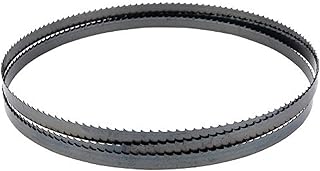


Choosing the right DEWALT cordless bandsaw is less about finding the most powerful-looking model and more about matching the saw's cutting capacity, blade specification, size, speed control, battery platform and intended workload to the job. A compact bandsaw can be exceptionally useful for repetitive cuts in confined spaces, while a larger deep-cut model is better suited to heavier pipe, structural metal and larger stock.
DEWALT's UK cordless bandsaw range includes compact, mid-size and deep-cut options, giving buyers several different approaches to portable metal cutting. The current UK range includes the DCS377NT-XJ compact model, DCS378N-XJ mid-size model and DCS374N-XJ deep-cut model, alongside the established DCS371N-XJ. Model availability and specification details can change, so buyers should always check the exact model number and current manufacturer specification before ordering.
This guide explains what separates these machines, which specifications actually matter, how to choose between compact and deep-cut designs, what to look for in replacement blades and batteries, and which common buying mistakes can make an apparently good bandsaw unsuitable for the work.
The best choice is therefore application-dependent. Cutting 20 mm threaded rod repeatedly is a very different requirement from cutting 100 mm-plus pipe, and neither job should be judged solely by motor power or battery voltage.
DEWALT's cordless bandsaws are designed primarily around portable cutting rather than the stationary workshop format associated with traditional bench-mounted band saws. That distinction is important. A portable bandsaw is intended to be carried to the material and used in different orientations, whereas a conventional workshop bandsaw normally brings the material to the machine.
For electricians, plumbers, mechanical installers, fabricators, maintenance workers and construction professionals, that portability can be a major advantage. The DEWALT DCS371, for example, is specified for applications including threaded rod, Unistrut and steel pipework, with a 63 mm cutting capacity. DEWALT also describes it as suitable for use in different orientations, including overhead work.
The newer DCS378 moves into a larger mid-size category. DEWALT states an 86 mm cutting capacity, along with variable-speed control, tool-free blade changing and adjustable blade tracking.
At the larger end, the DCS374N-XJ is a deep-cut 18V XR brushless bandsaw with a stated 127 mm cutting capacity. It also adds five-position variable-speed control, a variable-speed trigger, tool-free blade changing and tracking adjustment.
The DCS371N-XJ occupies an important position for buyers who need a relatively compact portable bandsaw without moving into the larger deep-cut category. DEWALT specifies a 63 mm cutting capacity, a 3.9 kg product weight and a 460 W power-output figure. It is supplied as a bare unit, meaning the battery and charger are separate purchases.
Its stated 63 mm capacity makes it particularly relevant to jobs involving smaller pipe, threaded rod, Unistrut and similar metal lengths. The manufacturer also highlights its balanced design, LED work light, blade tracking adjustment and ability to make cuts with little or no sparks compared with some other metal-cutting methods.
The most important point for a buyer is not simply that the DCS371 is a DEWALT bandsaw. It is that its size and capacity place it in a particular application class. If the material regularly approaches or exceeds its cutting envelope, stepping up to a larger model is likely to be more sensible than trying to make a compact saw perform work for which it was not designed.
Specification figures should always be checked against the exact UK product variant because model suffixes can indicate differences in packaging, market or included accessories.
The DCS378 is particularly interesting for buyers who find a compact bandsaw too restrictive but do not necessarily need the physical size of a deep-cut machine. DEWALT lists an 86 mm cutting capacity, making it larger than the DCS371 class. The manufacturer also describes it as an 18V XR brushless mid-size bandsaw aimed at applications such as Unistrut, conduit, threaded rod and similar site work.
One of the most useful additions is variable speed. The DCS378 combines a variable-speed dial with a variable-speed trigger, giving the operator greater control over cutting speed. DEWALT specifies five speed settings.
For buyers, this is significant because bandsaw performance is not simply about running the blade as quickly as possible. Blade selection, material type, tooth pitch, workpiece thickness and cutting speed all influence how effectively the saw works. Greater speed control can therefore make a machine more adaptable across different applications.
DEWALT lists the DCS378 at approximately 4 kg, with an 86 mm cutting capacity and 530 W power figure in its published specification.
If cutting capacity is the dominant requirement, the DCS374N-XJ deserves attention. DEWALT describes it as an 18V XR brushless deep-cut bandsaw and gives it a 127 mm cutting capacity. That places it in a substantially larger cutting category than the DCS371 and DCS378.
The DCS374 also includes features aimed at users carrying out demanding cutting work. These include a brushless motor, five-position variable-speed control, a variable-speed trigger, LED work light, adjustable front handle and tool-free blade changing and tracking adjustment. DEWALT lists a 1,140 mm blade length for the model.
A larger cutting envelope does not automatically make the DCS374 the best option for every buyer. The machine's greater size can be unnecessary if the majority of work involves small conduit, threaded rod or light installation material. A larger saw should be chosen because its additional capacity and features solve a genuine requirement, not simply because the specification sheet looks more impressive.
Cutting capacity is one of the easiest specifications to understand and one of the most important to get right. Current DEWALT UK information places the DCS371 at 63 mm, the DCS378 at 86 mm and the DCS374 at 127 mm.
Do not confuse cutting capacity with the maximum diameter of every possible shape of material. Round pipe, square section, rectangular stock, flat bar and irregular components interact with the saw differently. The physical geometry of the workpiece must always be considered.
A cordless bandsaw is only as effective as the blade installed in it. Buyers sometimes spend considerable time comparing motor specifications while giving very little attention to blade tooth configuration, material and dimensions. That can lead to disappointing results even when the saw itself is well suited to the job.
Bi-metal blades are commonly associated with portable metal-cutting bandsaws because they combine a flexible blade body with hardened cutting teeth. DEWALT supplies a 14/18 TPI variable-pitch bi-metal blade with the DCS371, while the DCS374 is supplied with a hardened-steel bi-metal blade according to the manufacturer.
TPI means teeth per inch. It is a crucial specification when choosing replacement bandsaw blades.
There is no universal TPI that is best for every material. The correct choice depends on the material thickness and composition as well as the blade design recommended for the particular saw.
For metal-cutting applications, blade material deserves close attention. Bi-metal construction is widely used because the blade needs to tolerate repeated flexing while retaining durable cutting edges. A blade that is technically compatible with the saw may still be a poor choice if its tooth configuration is inappropriate for the material being cut.
Never purchase a replacement blade based solely on the brand name or an approximate visual match. Check the exact blade length, width, thickness, tooth pitch and compatibility requirements for the bandsaw model.
This is particularly important when moving between different DEWALT bandsaw generations. A blade that fits one model should not be assumed to fit another merely because both machines use an 18V XR battery.
Motor design is another useful comparison point. DEWALT's newer DCS378 and DCS374 models are described as brushless, whereas the established DCS371 specification does not carry the same brushless designation.
Brushless motors eliminate the conventional carbon-brush arrangement used in brushed motors. In cordless tools, brushless technology is commonly used to support efficient electronic motor control and durable professional operation. However, buyers should avoid assuming that a brushless label alone determines cutting performance.
Real-world suitability still depends on the entire system: motor, gearbox, blade, battery, cutting capacity, speed control and the way the tool is used.
One of the strongest reasons to choose a DEWALT cordless bandsaw can be battery-platform compatibility. If you already own compatible DEWALT XR batteries and chargers, a bare-tool configuration may make more sense than purchasing another battery and charger unnecessarily.
However, battery compatibility should be verified against the exact model and regional version. Do not assume that every DEWALT product carrying an XR designation has identical battery requirements or that a battery supplied with one tool is automatically the ideal choice for every other tool.
Battery capacity is normally expressed in ampere-hours, or Ah. A higher Ah rating generally means more stored energy, but it can also increase battery size and weight.
Runtime cannot be predicted from Ah alone. Blade condition, material, cutting pressure, material thickness, temperature, battery condition and operator technique all influence actual runtime.
Many professional cordless tools are sold as bare units. This means the machine is supplied without a battery and charger. DEWALT explicitly lists the DCS371N-XJ as a bare unit with the battery and charger sold separately.
A bare tool can be the logical choice if you already have compatible batteries and a suitable charger. It can be less attractive for someone entering the battery platform for the first time.
Variable speed is particularly valuable when one bandsaw is expected to handle different materials and thicknesses. The DCS378 and DCS374 both provide variable-speed functionality, with DEWALT specifying five-position speed control on these models.
Higher speed is not automatically better. The correct cutting speed depends on the blade and material. Running too aggressively can increase heat, accelerate blade wear and make it more difficult to maintain a controlled cut.
A variable-speed saw gives the operator more scope to adjust the cutting process rather than forcing every application into one fixed-speed setting.
Blade tracking controls the position of the blade as it travels around the wheels. Correct tracking is essential for stable blade operation.
DEWALT includes blade tracking adjustment on its cordless bandsaw designs, while the newer DCS378 and DCS374 add tool-free tracking adjustment.
If a blade repeatedly moves away from the correct path, the problem should not simply be ignored. The blade may be incorrectly installed, worn, damaged or improperly tensioned, or the tracking may need adjustment. Always follow the manufacturer's instructions for inspection and adjustment.
Tool-free blade changing can make a noticeable difference when a bandsaw is used frequently. The DCS378 and DCS374 are specified with tool-free blade changing.
The main advantage is reduced interruption rather than increased cutting power. When blades become worn or when a different blade specification is required, quicker changes can help keep the workflow moving.
Even with a tool-free system, blade changes should only be performed with the saw switched off and the battery removed, following the manufacturer's safety and installation instructions.
An integrated LED can be useful when a bandsaw is used in plant rooms, service areas, workshops, ceiling voids, construction sites or other locations where ambient light is poor. DEWALT lists LED work lighting on the DCS371, DCS378 and DCS374.
A work light should not be treated as a substitute for proper task lighting. It is best considered a visibility aid that helps illuminate the immediate cutting area.
Portable bandsaws are unusual compared with many handheld saws because the operator often supports the machine while cutting horizontally, vertically or overhead. Balance therefore matters considerably.
DEWALT specifically highlights balance and ergonomics on the DCS371 and describes it as suitable for different orientations.
When comparing models, consider more than the published weight. Think about where that weight is located, how the handles are positioned, whether the front handle can be adjusted, how easy the tool is to position over the workpiece and how long the saw may need to be held during a typical task.
This is one of the most important trade-offs in cordless bandsaw buying.
Do not choose a saw based on the largest job you might perform once every few years. Choose according to the work you realistically expect to do, while leaving enough capacity for normal variations in material size.
A common buying question is whether a cordless bandsaw is actually necessary when a reciprocating saw is already available.
Both tools can cut metal, but their cutting behaviour is different. A portable bandsaw uses a continuous loop blade and is particularly well suited to controlled, relatively clean cuts through suitable metal stock. A reciprocating saw uses a back-and-forth blade and can be more versatile when access is awkward or when demolition is the priority.
An angle grinder can be exceptionally versatile for metal cutting, but it is not simply a faster version of a bandsaw. The two tools have different strengths.
A grinder uses an abrasive or cutting disc and can generate sparks, heat and debris. A bandsaw uses a toothed blade and is often chosen when a controlled metal-cutting process is preferred.
For applications where sparks are undesirable, such as certain installation environments, a bandsaw can offer a practical alternative. DEWALT specifically highlights little or no sparks when cutting metal with the DCS371.
Neither tool should be treated as universally safer simply because of its cutting method. Appropriate PPE, material preparation, secure workholding and the manufacturer's operating instructions remain essential.
Cordless operation provides freedom from mains cables and can be particularly valuable on construction sites, service calls and locations without convenient power access.
A corded machine may still be preferable for a fixed workshop where continuous access to mains power is available and portability is less important.
These tools are most compelling for users whose work involves frequent metal cutting away from a fixed workshop.
Not every metal-cutting task requires a professional portable bandsaw.
If you only need to cut a small amount of thin metal occasionally, purchasing a dedicated cordless bandsaw may not be the most economical solution. A suitable hand tool, reciprocating saw, hacksaw or other appropriate cutting method may be sufficient depending on the material and task.
The strongest justification for a cordless bandsaw comes when its specific advantages are repeatedly useful: portable operation, controlled cutting, repetitive metal cuts, suitable capacity and compatibility with an existing cordless tool system.
More capacity is useful only when you need it. A larger bandsaw can add unnecessary physical bulk if most jobs involve smaller stock.
Check the exact replacement blade specification before buying the saw. A professional tool is of limited practical value if obtaining appropriate replacement blades is difficult or expensive in your area.
Battery voltage is only one part of the system. Compare cutting capacity, motor design, speed control, blade dimensions, weight, ergonomics and intended application.
A bare-unit listing may look inexpensive because the battery and charger are not included. Calculate the complete setup required for use.
Battery-platform compatibility does not mean that the tools have the same dimensions, blades, capacities or operating characteristics.
TPI is important, but blade dimensions, construction, material and compatibility matter as well.
A stated maximum capacity does not mean every shape of material at that dimension can be cut in exactly the same way. Consider the cross-section and the way the material will be positioned.
Portable models are designed to be carried and positioned around the material. If your work consists of high-volume stationary cutting, a dedicated workshop bandsaw may be a better category to investigate.
Start by measuring the largest material you regularly cut rather than the smallest. Then consider how often you approach that maximum.
These are application-planning guidelines rather than guarantees of what any particular material can be cut safely. Always check the manufacturer's specifications and operating instructions for the exact material and cutting situation.
Electricians often have a particularly strong use case for a portable bandsaw because installation work can involve repeated cuts in threaded rod, conduit, Unistrut and other support materials.
For this type of work, prioritise portability, balance, visibility, blade selection, battery compatibility and sufficient cutting capacity. A compact saw may be easier to carry throughout a building, while a mid-size model can make more sense where larger sections are routinely encountered.
The DCS378 is specifically described by DEWALT as suitable for electricians and plumbers working with Unistrut, conduit and threaded rod.
Plumbing applications can vary considerably, from relatively small installation components to larger pipework. The correct bandsaw therefore depends heavily on pipe diameter and material.
For smaller pipework and installation components, a compact machine may provide the best balance of portability and capacity. For larger pipe, the additional capacity of a mid-size or deep-cut machine can become more important.
When choosing, pay particular attention to the maximum cutting capacity, blade specification, battery endurance, tool weight and access around existing pipework.
Fabricators should consider whether the bandsaw is being used primarily as a portable finishing and installation tool or as a substitute for a stationary workshop bandsaw.
A portable DEWALT model can be highly practical for moving between workstations, cutting components in position and handling jobs where bringing the material to a large stationary machine is inconvenient. For repetitive high-volume production, however, machine configuration, workholding and stationary cutting equipment may become more important than cordless portability.
A cordless bandsaw is a powerful cutting machine and should be treated as such. Always read the manufacturer's instructions for the exact model before use.
Portable cutting tools can be used in awkward positions, including overhead or in confined locations. Good body positioning and secure control become particularly important in these situations.
Regular maintenance can help preserve cutting performance and identify problems before they become more serious.
Look for damaged teeth, excessive wear, cracks or other abnormalities. A blade that is no longer cutting efficiently should not simply be forced through the material.
Metal chips and debris can accumulate around moving components. Follow the manufacturer's cleaning instructions and avoid methods that could drive debris into sensitive parts.
If the blade does not track correctly, stop and investigate rather than continuing to cut. Follow the model-specific procedure for tracking adjustment.
Keep battery interfaces clean and dry. Do not use damaged batteries or continue using a battery that shows signs of physical damage.
A noticeable deterioration in cutting speed, increased vibration or unusual noise can indicate that the blade needs attention or that the tool requires inspection.
Power figures can be useful for comparing tools within the same product category, but they should not be treated as a direct prediction of cutting speed.
Cutting performance depends on the interaction between motor output, gearing, blade tooth geometry, blade condition, material, speed and operator technique. A saw with a higher published power figure is not automatically the best choice if its capacity, dimensions or blade system do not suit the work.
This is why a proper buying comparison should begin with the application and then move through capacity, blade requirements, ergonomics, speed control and battery requirements.
A blade marked 14/18 TPI variable pitch does not have a uniform tooth spacing throughout the cutting pattern. Instead, the tooth configuration varies within the specified range.
The purpose is to provide a broader cutting behaviour than a single fixed tooth count. DEWALT supplies a 14/18 TPI variable-pitch bi-metal blade with the DCS371.
When purchasing replacements, always match the exact blade dimensions and manufacturer's compatibility requirements rather than relying solely on the TPI number.
A dull blade can increase the effort required to cut material. That can affect the cutting experience and may increase the demand placed on the tool and battery.
Instead of judging battery performance independently from blade condition, consider the complete cutting system. A healthy battery paired with an unsuitable or badly worn blade is not going to produce the same results as the same battery with a correctly selected, sharp blade.
UK buyers should compare the exact model number rather than relying on generic descriptions such as “DEWALT cordless bandsaw”. Product names can look similar while the machines have different capacities, blade dimensions and included equipment.
Check whether the listing is a bare tool or kit, verify the exact model suffix, confirm the included blade and compare the manufacturer's published specification with the retailer's listing.
It is also sensible to check the availability of replacement blades and other consumables before committing to a particular model. A small difference in initial purchase cost can become less important if the tool is expected to see heavy professional use over several years.
DEWALT is not the only manufacturer producing portable cordless bandsaws. When comparing brands, avoid reducing the decision to battery voltage or headline motor claims.
Potential alternatives may include products from Milwaukee, Makita, Bosch Professional and other established power-tool manufacturers. The correct comparison should examine the same criteria for each machine.
A brand comparison is most useful when the competing models are genuinely similar in capacity and intended application. Comparing a compact portable bandsaw with a deep-cut professional machine simply because both are cordless can produce a misleading conclusion.
Milwaukee is another major professional power-tool brand with a strong cordless platform. The most useful comparison is therefore not “DEWALT versus Milwaukee” in isolation, but the specific DEWALT model against the closest Milwaukee equivalent.
Compare cutting capacity first, then blade size, battery system, weight, speed control, ergonomics and the availability of replacement blades. If you already own a substantial collection of one manufacturer's batteries and chargers, platform continuity can also have significant practical value.
Makita also offers cordless tools aimed at professional users. As with Milwaukee, the sensible approach is to compare equivalent classes rather than brands as a whole.
For a buyer already invested in DEWALT XR equipment, staying within DEWALT may simplify battery management. Conversely, someone already invested in Makita may find a comparable Makita bandsaw more convenient from a platform perspective.
Bosch Professional is another established manufacturer worth considering when researching portable cutting equipment. Look at the complete specification rather than brand familiarity alone.
The best professional tool is usually the one that fits the user's existing system and workload rather than the one with the strongest headline specification.
For smaller jobs, the most appropriate choice is generally a compact or lower-capacity model rather than a deep-cut machine. The objective is to achieve enough cutting capacity without carrying unnecessary bulk.
The DCS371's 63 mm capacity puts it into a useful compact-to-mid-range category for many installation-oriented metal-cutting tasks.
A mid-size model can be a strong compromise for professionals who encounter a mixture of smaller and moderately large metal stock. The DCS378's 86 mm capacity and variable-speed controls make it a particularly relevant model to investigate for this type of workload.
For larger stock, the DCS374's 127 mm cutting capacity makes it the logical model to investigate within the current UK DEWALT cordless range. Its deep-cut design is aimed at applications where the additional capacity is genuinely required.
Customer reviews can provide useful information, but they are most valuable when interpreted in context.
Look for repeated comments about blade life, ergonomics, battery consumption, ease of blade changes, cutting capacity and reliability. Give more weight to reviews that describe the material being cut and the workload involved.
A review from someone cutting small threaded rod occasionally may tell you very little about how the same machine behaves when cutting large steel sections for several hours a day.
Also distinguish reviews of the exact model from reviews of related products. Product families often contain several machines with similar names but materially different specifications.
Generic marketplace descriptions can contain simplified, duplicated or incorrectly attributed specifications. For technical power tools, the model number is the most useful starting point.
Manufacturer documentation should be checked for critical information such as cutting capacity, blade dimensions, voltage, weight, included accessories and operating requirements. DEWALT's own UK listings provide model-specific specifications for its current bandsaw range.
There is no single best DEWALT cordless bandsaw for every buyer. The right choice depends primarily on cutting capacity, material, frequency of use, portability and battery requirements. The DCS371 is a 63 mm class option, the DCS378 provides 86 mm capacity, and the DCS374 provides 127 mm capacity.
DEWALT's cordless bandsaws are specifically designed for suitable metal-cutting applications. The manufacturer identifies uses including threaded rod, Unistrut, conduit and steel pipework for relevant models. The correct blade and cutting capacity must be matched to the material.
DEWALT lists a 63 mm cutting capacity for the DCS371N-XJ.
DEWALT lists an 86 mm cutting capacity for the DCS378.
DEWALT lists a 127 mm cutting capacity for the DCS374N-XJ deep-cut bandsaw.
Some are. The current DCS378 and DCS374 are specified as brushless models, while the DCS371 is an established model without the same brushless designation in DEWALT's UK specification. Always check the exact model rather than assuming all DEWALT cordless bandsaws use the same motor technology.
The DCS371N-XJ UK listing is a bare-unit configuration, with the battery and charger sold separately.
Yes. DEWALT specifies variable-speed control with five speed settings and a variable-speed trigger for the DCS378.
Yes. DEWALT lists a five-setting variable-speed dial and variable-speed trigger for the DCS374.
The answer depends on the material and size being cut. DEWALT specifically describes the DCS378 as suitable for electricians and plumbers working with applications such as Unistrut, conduit and threaded rod.
Yes, suitable DEWALT bandsaws are designed for appropriate pipe-cutting applications. The DCS371, for example, is specified for steel pipework and has a 63 mm capacity. Larger pipe may require a model with greater capacity.
The DCS371 is specifically described by DEWALT as balanced and suitable for handling in different orientations, including overhead. The appropriate model should still be selected according to the workpiece, capacity and safe operating requirements.
Check blade length, width, thickness, tooth pitch, construction and compatibility with the exact bandsaw model. TPI should be selected according to the material and thickness rather than treated as a standalone measure of blade quality.
Neither is universally better. A bandsaw can be preferable for controlled cutting of suitable metal stock and can produce little or no sparks in appropriate applications, while an angle grinder may be more versatile for cutting, grinding and other tasks. The choice depends on the material, environment and required finish.
If you already own compatible batteries and a charger, a bare tool may be the more practical configuration. If you are new to the battery platform, a kit containing the required battery and charger may be more convenient. Compare the complete cost rather than the tool-only price.
There is no universal replacement interval. Blade life depends on material, thickness, tooth specification, cutting frequency, cutting technique and maintenance. Replace a blade when it is worn, damaged or no longer producing the required cutting performance.
For most buyers, cutting capacity is the first specification to verify because it determines whether the machine can physically accommodate the intended workpiece. After that, consider blade requirements, speed control, weight, ergonomics, battery platform and accessories.
A useful buying guide should not simply rank products by brand recognition or headline specifications. A better approach is to match each machine to a clearly defined use case and explain the trade-offs.
For this reason, buyers should compare the current manufacturer specifications, exact model number, cutting capacity, blade system, motor design, ergonomics, battery requirements and intended application before making a final decision. Product specifications and availability can change, so verify current details at the point of purchase.
DEWALT's UK bandsaw catalogue currently distinguishes between compact, mid-size and deep-cut cordless options, making application-specific comparison more useful than choosing a single model as the universal winner.
The best DEWALT cordless bandsaw is the one that provides enough cutting capacity for the work without adding unnecessary size, weight or cost. For smaller metal-cutting jobs, a compact model can offer excellent portability. For broader professional use, a mid-size machine such as the DCS378 provides more capacity and variable-speed control. For large stock, the DCS374's 127 mm deep-cut capacity places it in a different class altogether.
Before buying, focus on the material you actually cut, the largest workpiece you regularly encounter, the blade specifications you need, the availability of replacement blades and whether you already own compatible DEWALT batteries. Then compare the exact model specifications and current retailer information.
That approach is more reliable than simply searching for the most powerful cordless bandsaw or the highest-rated model. A well-matched machine should make the intended work easier, more controlled and more practical without paying for capacity that rarely gets used.