

♥ Wishlist
Compare 35 verified Dewalt Cordless Mitre Saws products in United Kingdom. Reviews, ratings, pros, cons and buying advice updated for October 2026.


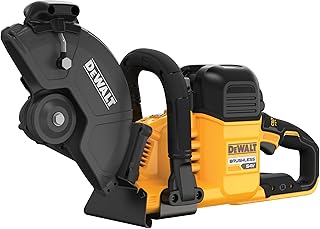


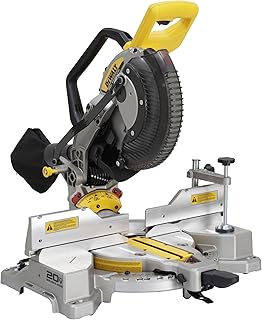


Choosing the right DEWALT cordless mitre saw is less about simply finding the most powerful model and more about matching the saw's battery platform, blade diameter, cutting capacity, portability and angle-adjustment system to the work you actually do. DEWALT's UK cordless mitre saw range spans compact 18V XR machines through higher-powered 54V XR FLEXVOLT models, giving tradespeople several distinctly different options rather than one universal solution.
For occasional woodworking, second-fix carpentry and work where portability matters, an 18V XR model such as the DCS365 can make sense. For demanding site work and larger sections of timber, the 54V XR FLEXVOLT range provides substantially greater cutting capacity and power. Models such as the DCS777 and DCS727 illustrate the difference between a compact professional saw and a larger double-bevel sliding machine.
This guide is designed to help UK buyers compare DEWALT cordless mitre saws on the factors that matter in real applications: blade size, cutting capacity, battery compatibility, motor technology, bevel and mitre adjustment, fence design, shadowline visibility, dust extraction, portability and the type of material being cut.
DEWALT's current UK mitre-saw range includes 18V XR and 54V XR FLEXVOLT cordless models alongside mains-powered machines, so specifications should always be checked against the exact model number rather than the brand name alone.
A cordless mitre saw removes the need to position the machine beside a mains socket or repeatedly manage a power cable across a work area. That can be particularly useful when moving between rooms, working on unfinished construction sites, installing flooring or trim, or carrying out second-fix work where the saw needs to be repositioned frequently.
The main advantage is therefore not simply that the saw is battery powered. It is the combination of cutting accuracy and mobility. A good cordless mitre saw can be transported to the material rather than requiring the material to be brought to a permanently positioned workshop machine.
DEWALT's cordless approach also gives existing XR users a practical route into battery-powered woodworking tools. The DCS365, for example, is part of the 18V XR system, while the DCS777 and DCS727 use the 54V XR FLEXVOLT platform.
On a busy site, the ability to pick up a saw and move it without unplugging or repositioning a cable can save repeated setup time. It can also make temporary cutting stations easier to establish.
However, cordless does not mean maintenance-free or unlimited. Battery condition, battery capacity, material thickness, blade condition and cutting technique all influence practical runtime. A buyer should therefore consider the battery ecosystem as part of the saw rather than treating the battery as an afterthought.
The most important distinction in the range is the power platform. The 18V XR and 54V XR FLEXVOLT systems target different requirements.
The DEWALT DCS365 uses an 18V XR battery and a 184mm blade. DEWALT lists a maximum 90-degree cutting capacity of 250 x 50mm and a maximum 45-degree/45-degree capacity of 176 x 35mm. The manufacturer also specifies a no-load blade speed of 3,750 rpm and a product weight of 10.5kg without the battery.
This makes the DCS365 particularly interesting for users who value a comparatively compact machine and already own compatible 18V XR batteries.
The machine uses sliding rails, a dual fence, positive mitre detents and an aluminium base. It also features DEWALT's XPS shadowline cut indication and an AirLock-compatible dust port.
The 54V XR FLEXVOLT models move into a different class of cordless mitre saw. The DCS777 uses a 216mm blade and a brushless motor, while the DCS727 uses a larger 250mm blade and provides substantially greater cutting capacity.
The DCS777 is specified with a maximum 90-degree/90-degree cutting capacity of 270 x 60mm, a 6,300 rpm no-load speed and a 15kg bare-tool weight.
The DCS727 goes further, with a stated maximum 90-degree/90-degree capacity of 305 x 77mm. Its 54V brushless motor is specified at 4,300 rpm, and the bare machine is listed at 20.5kg.
These figures demonstrate why blade diameter and power platform should be considered together. A larger saw can cut larger material, but the increased physical size and weight may matter if the tool is moved around a site repeatedly.
The DCS365 is positioned around compactness, portability and second-fix applications rather than maximum cutting capacity. It uses a 184mm blade and a sliding design, allowing it to handle wider material than a basic non-sliding mitre saw of similar blade size.
DEWALT states that the DCS365 has nine positive mitre stops and gives a maximum 250 x 50mm cut at 90 degrees.
The DCS365 is worth considering for carpenters, joiners, installers, maintenance workers and serious DIY users whose typical material does not require the greater capacity of a 250mm or 305mm-class saw.
It can also be attractive where carrying weight is a significant consideration. A 10.5kg bare-tool specification is considerably easier to handle than a larger professional FLEXVOLT machine, although the complete working weight increases once a battery is fitted.
The DCS777 occupies an interesting middle position in the cordless range. It combines the 54V XR FLEXVOLT system with a 216mm blade and an internal-rail design intended to provide useful capacity without relying on long external rails.
DEWALT specifies a maximum 90-degree/90-degree capacity of 270 x 60mm, a 6,300 rpm blade speed and a 15kg bare-tool weight.
The DCS777 is particularly relevant when a buyer wants more cutting capacity and power than the compact 18V class but does not necessarily need the physical scale of a 250mm saw.
The DCS727 is designed for users who need substantially more cutting capacity. It uses a 250mm blade and a 54V XR FLEXVOLT brushless motor. DEWALT states a maximum cutting capacity of 305 x 77mm at 90 degrees and 90 degrees, with a maximum depth-of-cut specification of 150 x 28mm for the stated grooving application.
DEWALT states that the DCS727's mitre adjustment covers 0 to 50 degrees left and 0 to 60 degrees right, while the double-bevel mechanism provides adjustment up to 49 degrees left and right.
A larger blade is useful when the work routinely involves deeper or wider sections of timber. It is particularly relevant when the maximum cutting capacity of a smaller saw would require turning, repositioning or making multiple cuts.
That does not mean a larger blade is automatically the best choice. If most work involves skirting, architrave, smaller sections and trim, the additional size and weight may provide little practical benefit. The best DEWALT cordless mitre saw is therefore the one whose capacity matches the material you regularly cut.
Blade diameter is one of the easiest specifications to understand but one of the easiest to misuse. It provides a useful indication of potential cutting capacity, but the actual cut depends on the saw's geometry, blade design, fence arrangement, bevel position and the orientation of the material.
Do not compare blade diameter alone. Always check the manufacturer's stated maximum capacities at the angles you intend to use.
Cutting capacity is arguably more useful than motor power when choosing a mitre saw. A saw that has plenty of power but cannot accommodate the dimensions of your workpiece is still the wrong tool for the job.
When comparing specifications, look for capacity at:
The DCS365, for example, is specified at 250 x 50mm for a 90-degree/90-degree cut, while the DCS777 reaches 270 x 60mm and the DCS727 reaches 305 x 77mm in their respective stated configurations.
These two adjustments are often confused by first-time buyers.
A mitre cut changes the horizontal angle of the cut across the face of the workpiece. This is commonly used when joining two pieces to create a corner.
A bevel cut tilts the blade relative to the material. A saw capable of bevel adjustment on both sides is generally referred to as a double-bevel mitre saw.
For straightforward trim work, single-direction bevel adjustment may be sufficient. For repeated compound cuts, furniture work, architectural trim or applications where the workpiece needs to remain in a consistent orientation, double-bevel capability can be a major convenience.
DEWALT's XPS system is used on several cordless mitre saws in the range. Rather than relying solely on a traditional laser line, the system provides a shadow indication associated with the blade.
For a buyer, the important consideration is not the marketing name but the practical function: a visible cutting reference can make alignment easier, particularly when the exact cut line needs to be positioned repeatedly.
DEWALT describes XPS on the DCS365, DCS777 and DCS727 as a cut-line or crosscut-positioning system designed to provide fast, accurate alignment without requiring calibration.
Battery compatibility should be checked before choosing the saw. The DCS365 belongs to the 18V XR system, whereas the DCS777 and DCS727 use 54V XR FLEXVOLT batteries.
For someone who already owns several 18V XR tools and batteries, the DCS365 may offer a simpler ecosystem decision. Conversely, a professional user already invested in FLEXVOLT equipment may find a 54V model more appropriate for demanding applications.
Many cordless DEWALT tools are available as bare units, while other packages include batteries and a charger. The exact package should be checked carefully because the model number can distinguish between configurations.
A bare tool can be economical when compatible batteries and chargers are already owned. A kit can be more appropriate for someone entering the battery platform for the first time.
Never assume that a listing includes batteries simply because the product photographs show them. Confirm the contents of the exact package before buying.
Motor design is another useful comparison point. Brushless motors are used in DEWALT's 54V FLEXVOLT DCS777 and DCS727 models, while the DCS365 is described by DEWALT as using a fan-cooled motor with replaceable brushes.
Brushless technology can offer advantages in efficiency, durability and electronic motor control, but buyers should not judge a saw solely by the word "brushless". The overall machine design, cutting capacity, battery system and application suitability remain more important.
The fence is a critical component of a mitre saw because it helps keep the workpiece correctly positioned during the cut. A rigid and properly designed fence becomes increasingly important when cutting larger sections of timber.
DEWALT specifies dual or sliding fence arrangements on its cordless models, with the larger DCS727 featuring a large dual sliding fence intended to provide support for larger material and complex angle combinations.
When comparing saws, consider not only the maximum cutting width but also how easily the fence can be adjusted while maintaining secure material support.
A sliding mitre saw can move the blade through the workpiece rather than relying solely on the blade's fixed cutting width. This makes it possible to cut wider material.
The DCS365 uses horizontal rails, while the DCS777 uses an internal rail design. The DCS727 uses dual horizontal rails with roller bearings and a stated 32mm rail arrangement.
Rail design also affects the physical footprint of the saw. An internal-rail machine may be attractive where space behind the saw is limited, while a conventional rail arrangement can offer a different combination of capacity and positioning requirements.
Mitre saws can produce a considerable amount of airborne and settled dust when cutting timber. A suitable extraction setup is therefore an important part of the buying decision rather than a minor accessory consideration.
DEWALT specifies AirLock-compatible dust ports on the DCS365, DCS777 and DCS727. The DCS727 additionally supports Wireless Tool Control with compatible DEWALT extraction equipment.
Buyers should check the compatibility of their existing extractor, hose connections and adapters rather than assuming every dust extractor will connect directly.
The supplied blade is important, but the correct replacement blade can have an equally significant effect on cutting results. Blade diameter and bore must match the saw, while tooth configuration should be selected according to the material and desired finish.
In general terms, blades with more teeth are commonly chosen where a finer finish is required, while lower-tooth-count blades can be useful when faster material removal is more important. The correct choice depends on the material, blade geometry and application.
Do not select a replacement blade solely by tooth count. Check the blade diameter, bore, kerf and the manufacturer's compatibility requirements for the specific saw.
Mitre saws are primarily associated with timber and timber-based materials, but the precise range of suitable materials depends on the blade and the saw manufacturer's instructions.
Common woodworking applications include:
Never assume that a wood blade or a standard mitre saw is suitable for metal, masonry or other specialist materials. The blade and manufacturer's instructions must specifically support the intended material.
| Comparison factor | DCS365 | DCS777 | DCS727 |
|---|---|---|---|
| Battery platform | 18V XR | 54V XR FLEXVOLT | 54V XR FLEXVOLT |
| Blade diameter | 184mm | 216mm | 250mm |
| Motor type | Fan-cooled motor with replaceable brushes | Brushless | Brushless |
| Maximum stated 90°/90° capacity | 250 x 50mm | 270 x 60mm | 305 x 77mm |
| XPS shadowline | Yes | Yes | Yes |
| Dust connection | AirLock compatible | AirLock compatible | AirLock compatible |
| Primary distinction | Compact 18V portability | 216mm FLEXVOLT capacity | Larger capacity and double bevel |
The figures above are manufacturer specifications and should be treated as model-specific information rather than universal characteristics of every DEWALT cordless mitre saw.
Prioritise portability, repeatable angle adjustment, visibility of the cut line and sufficient capacity for the profile you install. A compact 18V saw may be preferable if the majority of work involves smaller trim.
Consider the DCS365 and DCS777 particularly carefully. The choice comes down to the required cutting capacity, battery platform and the value you place on reducing the physical size of the saw.
A 250mm FLEXVOLT model such as the DCS727 becomes more relevant when the material regularly approaches the capacity limits of smaller saws.
Look closely at bevel adjustment. If you frequently make compound mitre-and-bevel cuts, a double-bevel machine can reduce the need to reposition the workpiece.
Weight and carrying handles deserve as much attention as cutting specifications. The DCS365 is listed at 10.5kg without the battery, the DCS777 at 15kg and the DCS727 at 20.5kg in bare-tool specifications.
More capacity is valuable only when you use it. A heavier machine can become inconvenient when it has to be carried repeatedly between floors, rooms or vehicles.
A cordless saw is part of a battery platform. Before purchasing, check which batteries you already own and whether the exact saw is compatible with them.
RPM figures should not be interpreted in isolation. Blade diameter, tooth design and application all influence cutting behaviour.
Check whether the listing is for a bare tool, a battery-and-charger kit or another package configuration. Package contents can vary by model suffix and market.
A product may have an impressive maximum crosscut figure at 90 degrees but a smaller capacity when making a bevel or compound cut. Always check the capacity that corresponds to your actual application.
A mitre saw needs stable support. Before buying, consider the stand, bench, side supports and available workspace. The saw's physical footprint can be just as important as its cutting capacity.
Accuracy is not created by one specification. It depends on the interaction between the blade, fence, detent system, rails, base, workpiece support and operator setup.
A high-quality saw can still produce poor results if the material is not firmly supported or the blade is dull. Similarly, a good blade cannot compensate for incorrect angle settings or movement of the workpiece during cutting.
For repeatable professional work, pay particular attention to:
Regular maintenance can help preserve cutting performance and make problems easier to identify before they become significant.
Remove accumulated sawdust from the base, fence, rails and extraction areas. Follow the manufacturer's instructions when cleaning around moving parts and electrical components.
A dull or damaged blade can increase cutting effort and reduce the quality of the finished edge. Inspect the blade regularly and replace it when appropriate.
Before precision work, check that the fence is correctly positioned and that the workpiece is supported securely.
Sliding mechanisms should move smoothly. Dust and debris can interfere with the movement of sliding components, so follow the manufacturer's maintenance recommendations for cleaning and lubrication.
Use and charge batteries according to DEWALT's instructions. Avoid treating batteries as interchangeable accessories without checking compatibility and the requirements of the exact tool.
A cordless mitre saw is a high-speed cutting machine and should be treated accordingly. Battery power removes the mains cable but does not remove the mechanical hazards associated with a rotating blade.
For detailed operating and safety requirements, always follow the manual supplied for the exact DEWALT model.
A useful way to choose a mitre saw is to measure the largest material you regularly expect to cut and then add a sensible margin. Avoid selecting a machine based solely on occasional maximum requirements.
For example, if your normal work involves relatively narrow trim, a compact machine may be easier to transport and position. If you regularly cut larger framing timber or broad sections, moving to a 216mm or 250mm machine may reduce the need for workarounds.
The important question is not "Which DEWALT saw has the biggest specification?" but "Which DEWALT saw comfortably handles the material and angles I actually use?"
DEWALT is not the only professional power-tool manufacturer producing cordless mitre saws. Depending on the buyer's existing battery ecosystem and application, it can also be sensible to compare models from Makita, Bosch Professional and Milwaukee.
The most useful comparison is not brand against brand in general. Compare equivalent machines by:
This approach produces a more useful comparison than simply choosing the brand with the highest advertised RPM or the largest battery.
Not every feature has the same value to every buyer. Features that can be particularly worthwhile include:
An 18V machine can be the more sensible choice when portability and existing battery ownership outweigh the need for maximum cutting capacity.
Consider an 18V model if:
A 54V FLEXVOLT machine becomes more compelling when the work demands greater cutting capacity, higher power and more substantial construction.
Consider the FLEXVOLT range if:
There is no single best model for every user. The DCS365 is a strong candidate when compact 18V portability is the priority, while the DCS777 and DCS727 are better suited to users who need the greater capacity and power associated with the 54V XR FLEXVOLT platform.
It can be suitable for professional applications where its 184mm blade and published cutting capacities meet the requirements of the job. It is particularly relevant to second-fix and trim work where portability is important.
The two models use different power platforms and are designed around different capacity requirements. The DCS777 uses a 54V XR FLEXVOLT brushless motor and a 216mm blade, while the DCS365 uses an 18V XR platform and a 184mm blade.
DEWALT's UK range includes larger cordless models beyond the DCS727, including a 305mm FLEXVOLT mitre saw listed in the manufacturer's range. Always check the current UK product page for the exact model and specification before purchasing.
Yes. DEWALT specifies double-bevel adjustment on the DCS727, with bevel angles up to 49 degrees left and right.
Yes. DEWALT lists XPS shadowline positioning as one of the DCS777's features.
Yes. DEWALT lists XPS shadowline cut indication on the DCS365 for blade-to-cut-line alignment.
It depends on the exact package. DEWALT lists both bare-tool and battery-kit configurations for different models, so check the precise model number and package contents before purchasing.
You should not assume compatibility based solely on the fact that both systems carry the XR name. Check the exact battery and tool compatibility specified by DEWALT for the model you are considering.
Not necessarily. A 250mm saw generally offers greater cutting capacity, but a 216mm machine can be preferable when portability, footprint and weight matter more than maximum capacity.
The DCS365 uses a 184mm blade with a 16mm bore according to DEWALT's UK specifications.
The DCS777 uses a 216mm blade with a 30mm bore according to DEWALT's published UK specifications.
The DCS727 uses a 250mm blade with a 30mm bore according to DEWALT's UK specifications.
A cordless design does not inherently prevent accurate work. Accuracy depends on the saw's construction, blade, fence, angle settings, workpiece support and operator technique. DEWALT specifically highlights machined bases and fences, detent systems and XPS positioning on several models.
Check the battery platform, blade diameter, maximum cutting capacity at the angles you use, bevel range, mitre range, weight, fence design, rail configuration, dust-extraction connection, package contents and compatibility with your existing batteries.
The strongest DEWALT cordless mitre saw for a particular buyer depends on the balance between capacity, portability and battery compatibility. The DCS365 is the logical model to investigate when an 18V XR system and compact 184mm saw meet the requirements. The DCS777 offers a step up to the 54V FLEXVOLT platform while retaining a relatively compact 216mm format. The DCS727 is aimed at buyers who need greater capacity, a 250mm blade and double-bevel functionality.
Rather than choosing purely by model popularity, compare the specifications against the material you actually cut. A smaller saw that comfortably handles your normal workload can be more practical than a larger machine that spends most of its working life being transported unnecessarily. Conversely, if your projects regularly approach the capacity of a compact saw, moving up a class can make the workflow considerably more straightforward.
For UK buyers, model suffixes, package contents, battery inclusion and current retailer availability should also be checked at the point of purchase. Product specifications and configurations can change, so the exact model documentation should take priority over generalised buying advice.