

♥ Wishlist
Compare 59 verified Dress Up & Pretend Play products in United Kingdom. Reviews, ratings, pros, cons and buying advice updated for November 2026.


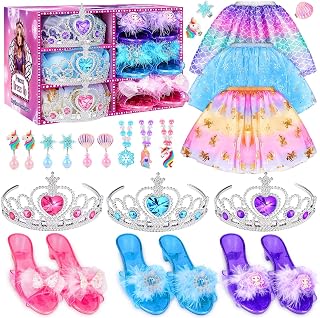


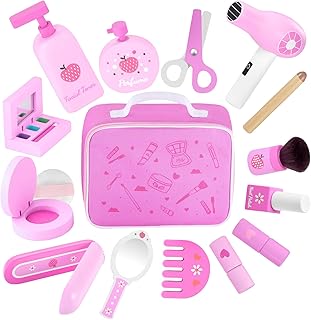


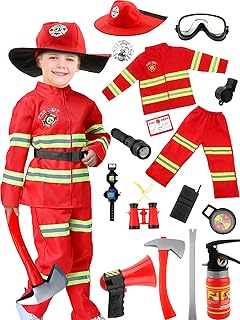


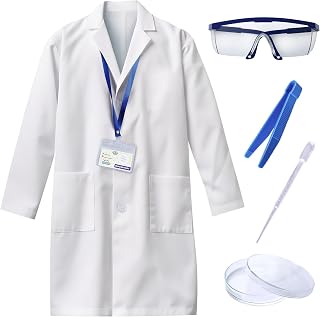


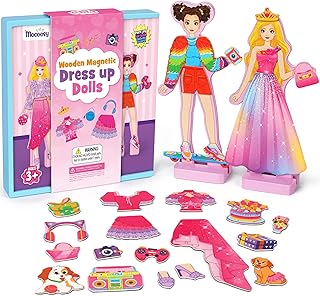


Dress up and pretend play products can turn ordinary playtime into imaginative adventures, role-playing games and creative storytelling. The best choices are not necessarily the most elaborate costumes. A well-designed outfit, accessory set or pretend-play kit should be comfortable enough for extended play, easy for children to handle independently and suitable for the type of imaginative activity they enjoy.
When comparing dress up and pretend play products in the UK, look beyond the character or theme shown on the packaging. Consider the child's age, clothing size, materials, fastening system, flexibility, number of accessories, storage requirements and how easily the item can be cleaned. These details can make a significant difference to whether a costume becomes a frequently used favourite or spends most of its time in a cupboard.
This guide explores the main types of dress up and pretend play products, important specifications to compare, common buying mistakes, safety considerations and practical ways to choose an option that offers lasting play value.
Dress up and pretend play covers a broad range of products designed to support imaginative role-play. This can include full costumes, capes, masks, hats, uniforms, character outfits, pretend accessories, role-play sets and themed kits.
Some products are designed around a particular character or fictional world, while others provide more open-ended play. A doctor kit, chef outfit, firefighter costume or explorer set, for example, can encourage children to invent their own scenarios rather than simply recreating a specific story.
Open-ended products can be particularly useful when several children play together because the same accessory can become part of different games. A simple cape might represent a superhero costume in one game, a royal cloak in another and an explorer's outfit during a different adventure.
Character costumes are among the most recognisable forms of dress up play. They may be inspired by popular films, television programmes, books or established children's characters. Brands such as Disney and other licensed character manufacturers offer themed options across different age ranges.
When comparing character costumes, check whether the package includes the complete outfit or only the main garment. A picture may show several accessories that are sold separately. It is also worth checking the sizing information rather than relying solely on the child's usual clothing size.
Uniform-style costumes allow children to pretend to be doctors, nurses, firefighters, police officers, builders, chefs, pilots or other professionals. These products often have strong educational and imaginative value because children can reproduce familiar activities and invent scenarios around them.
Look for realistic but child-friendly accessories, comfortable clothing and pieces that can be put on without excessive adult assistance. A pretend-play set with a few durable accessories may provide more long-term value than a highly detailed costume with fragile components.
Fantasy costumes can include princess dresses, knights, wizards, fairies, dragons, superheroes and other imaginative themes. These products are particularly suited to storytelling because they do not require children to follow a realistic role.
For frequent use, consider how easy the costume is to move around in. Long skirts, trailing capes, oversized sleeves and rigid accessories may look impressive but can be less practical during active indoor play.
Accessories can provide an inexpensive way to expand an existing dress-up collection. Examples include crowns, tiaras, capes, hats, bags, toy spectacles, wands and pretend tools.
Accessories are worth assessing separately for construction quality and safety. Small components can be unsuitable for younger children, while brittle plastic, sharp edges or poorly secured decorative pieces can reduce practicality.
Pretend play kits combine several accessories around a theme. Examples include doctor sets, beauty and grooming sets, cooking kits, shopkeeper sets, tool sets and explorer kits.
The number of pieces is only one consideration. A kit with fewer well-chosen components can be more useful than a large set containing repetitive accessories that are difficult to store. Check what each piece contributes to the intended play scenario and whether the child can use it independently.
Age suitability should be one of the first checks when comparing a pretend-play product. Younger children generally benefit from simple, easy-to-handle items with larger components, while older children may be ready for more detailed costumes and multi-piece sets.
Do not treat an age recommendation as merely a marketing detail. It can relate to the size and complexity of components, intended method of use and potential safety considerations.
Children of the same age can also have very different abilities and preferences. Consider whether the child can put on the garment, manage its fasteners and handle the accessories without regular assistance.
Costume sizing can differ significantly from ordinary children's clothing. Before purchasing, compare the manufacturer's stated measurements with the child's height and relevant body measurements where provided.
Pay particular attention to sleeve length, garment length, waist dimensions and headwear sizing. A costume that is slightly roomy may be easier to put on, but excessive fabric can interfere with movement.
For children who are still growing, a little additional room can be useful, provided it does not create a tripping or snagging hazard. Avoid assuming that buying several sizes larger automatically provides better value.
Fastenings affect how independently a child can use a costume. Hook-and-loop closures are often easier for young children to operate than small buttons, complicated ties or intricate zips.
Inspect how collars, cuffs, belts and accessories attach to the main outfit. If the costume needs frequent adult assistance, it may be less convenient for spontaneous play.
Dress-up garments can be made from polyester-based fabrics, cotton blends, felt, mesh, faux fur, synthetic leather-look materials or combinations of different textiles. The material should be considered in relation to the intended use.
For active indoor play, lightweight and flexible materials may be preferable. For occasional themed events, visual detail may be more important. If the costume is likely to be worn repeatedly, examine stitching, seams, closures and decorative attachments as well as the fabric itself.
Children can spend much longer in a favourite costume than adults expect. A garment that feels comfortable for a short photo session may become irritating during an extended game.
Check for potentially uncomfortable seams, stiff collars, scratchy decorative materials, tight elastic, restrictive cuffs and heavy accessories. Headwear should also fit comfortably without being unnecessarily tight.
Pretend play is often active. Children may run, crouch, climb, dance, crawl or act out imaginary adventures while wearing their costumes. Movement should therefore be part of the buying decision.
Long trains, oversized capes, loose straps and trailing accessories deserve additional consideration. For younger children especially, a simpler design may provide a better balance between appearance and practicality.
There is no single material that is best for every costume. Lightweight synthetic fabrics can be practical for many dress-up garments, while cotton or cotton-blend components may appeal to buyers looking for a softer clothing feel.
The more important question is whether the material is appropriate for the child's intended use. Frequent play places more demands on seams, fastenings and decorative elements than occasional use for a party or school event.
Look closely at the construction where possible. Seams should appear reasonably secure, particularly around areas that experience repeated movement such as shoulders, waistbands and sleeves.
Loose threads are not necessarily an indication that a product is unsuitable, but extensive unfinished edges or visibly weak construction can be warning signs when durability is a priority.
Sequins, glitter, faux gems, printed details, badges, ribbons and appliqué can make costumes visually appealing. However, decorative elements also introduce additional components that may loosen with repeated use.
If the costume will be used frequently, prioritise securely attached details and a construction that does not rely excessively on delicate decorations.
Safety should always take priority over appearance when selecting children's dress-up products. Follow the manufacturer's stated age guidance and read any safety information supplied with the product.
Pay particular attention to small accessories, detachable components, cords, ribbons, straps, masks and headwear. Products containing small parts may not be appropriate for babies or very young children.
Adult supervision can be particularly important when children are using accessories, props or costumes during energetic play. Make sure the play area is suitable and free from obvious hazards that could become more problematic when a child is wearing a costume that affects visibility or movement.
Masks and face coverings require special consideration because they can affect peripheral vision, hearing or comfort. Check that a child can see clearly and that the mask does not create an obvious obstruction during movement.
A costume can be attractive without requiring a full-face mask. If visibility is compromised, consider whether an alternative accessory can provide the same imaginative effect without restricting the child's awareness of their surroundings.
Capes, belts, ties and straps can add realism to pretend play, but their design should be considered carefully. Avoid unnecessarily long or loose components that can catch on furniture or other objects during active play.
Some dress-up sets include pretend cosmetics or beauty accessories. Check whether an item is a genuine cosmetic product intended for skin contact or simply a toy accessory. Follow all age and usage instructions and do not assume that a toy cosmetic is interchangeable with an adult cosmetic product.
Washability is easy to overlook when buying a costume, but it becomes important if the item is likely to be worn frequently. Children can use dress-up clothing on floors, outdoors, at parties and during energetic games, so marks and spills are inevitable.
Check the care instructions before purchasing. Some costumes can be machine washed, while others may require hand washing or surface cleaning. Accessories may need to be removed before washing.
Avoid treating a costume as ordinary clothing unless its care instructions specifically allow this. Heat, aggressive detergents or unsuitable washing cycles can damage printed designs, elastic, embellishments and synthetic materials.
Storage can have a surprisingly large effect on how often children use dress-up products. If costumes and accessories become tangled or difficult to find, children may stop using them even when they remain interested in imaginative play.
Consider whether the collection can be stored on child-accessible hooks, in labelled boxes, drawers or a dedicated dress-up storage unit. Separate small accessories from larger garments while keeping themed pieces together where practical.
For multi-piece kits, retaining the original packaging or using a dedicated container can make it easier to keep track of the components. This is particularly useful for pretend-play sets containing numerous small accessories.
The better choice depends on the child. If interests change frequently, open-ended products can offer flexibility. If a child has a strong attachment to a particular fictional character, a character costume may provide greater immediate appeal.
Price alone does not tell you how much use a child will get from a dress-up product. A useful comparison is to consider the number of different activities the item can support.
A doctor's coat, for example, can become part of a hospital game, a veterinary scenario, a rescue story or an imaginary clinic. A simple crown can be used for royal games, fantasy adventures, theatre performances and storytelling.
When comparing two products, ask how many different scenarios the child could reasonably create. This provides a more useful measure of play value than simply counting accessories.
A single costume can be easier to store, put on and maintain. Multi-piece sets offer more opportunities for role-play but may require additional storage and supervision.
For younger children, simplicity can be an advantage. Older children who enjoy creating detailed scenarios may appreciate a larger collection of accessories.
A themed set creates a coherent play scenario, whereas individual accessories can encourage children to combine different ideas. A firefighter helmet, chef's apron and explorer bag could become completely different props depending on the story being created.
If the child already has several costumes, adding versatile accessories may provide more variety than purchasing another complete outfit.
Doctor-themed sets can include pretend stethoscopes, medical bags, coats, thermometers and other accessories. They can encourage storytelling around appointments, examinations and imaginary hospitals.
Look for sets where accessories are easy to identify and handle. The purpose is imaginative play rather than technical realism, so a straightforward, durable kit can be more practical than an excessively complicated one.
Chef costumes and kitchen-themed accessories can work well alongside toy kitchens, pretend food and shop play. Aprons, hats and simple utensils can be mixed into many different scenarios.
Check whether accessories are designed as toys and whether they contain small components that may be unsuitable for younger children.
Builder costumes and pretend tool sets can support construction-themed games. A hard-hat-style accessory, tool belt and toy tools can become part of imaginative building, repair or engineering stories.
Consider storage carefully because tool sets can contain numerous pieces that are easy to scatter or lose.
Princess dresses, crowns, capes and fantasy accessories can support storytelling, role-play and creative performances. Look for comfortable fabrics, manageable garment lengths and secure decorative elements.
Superhero costumes often include capes, masks and accessories designed around a particular character or fictional theme. For active play, mobility and visibility deserve particular attention.
A simple cape and emblem can sometimes provide almost as much imaginative flexibility as a more elaborate full costume while being easier to put on and remove.
Animal ears, tails, masks, character outfits and explorer accessories can encourage imaginative storytelling around wildlife and outdoor adventures. These products can also be combined with books, toy animals and nature-themed games.
For younger children, prioritise simplicity, comfortable materials, easy fastening systems and age-appropriate components. Avoid unnecessary accessories that create additional safety or storage concerns.
Large, recognisable pieces such as a hat, apron, cape or simple costume can be sufficient to start imaginative play without overwhelming the child.
Preschool children often begin developing more complex pretend scenarios. At this stage, role-play uniforms, themed kits and mix-and-match accessories can provide many opportunities for storytelling.
Consider products that the child can put on independently, as self-directed play can make the costume more useful throughout the day.
Older children may prefer detailed costumes connected to favourite stories, hobbies or fictional characters. They may also use dress-up clothing for performances, parties, school activities and group games.
At this stage, fit, durability and authenticity of the design can become more important because the child may have stronger preferences about the character or role they want to portray.
Product photographs are useful for understanding the visual design, but they do not tell you everything about comfort, sizing, construction or ease of use. Always examine the specification and care information where available.
Some product images show a complete themed setup even though only certain pieces are included. Read the package contents carefully before deciding what you are getting.
Buying based solely on age ranges can result in an unsuitable fit. Compare actual measurements whenever they are supplied.
A large number of pieces can appear attractive, but more accessories also mean more storage requirements and more components that can become misplaced. Focus on whether the accessories add meaningful play possibilities.
A costume designed primarily for indoor imaginative play may not be the best choice for outdoor activities. Consider where the child is likely to wear it and how much movement will be involved.
A costume that requires complicated care may become inconvenient if it is used regularly. Check washing and cleaning instructions before buying.
Brand recognition can be useful when researching children's toys, although a familiar name should not replace checking the specific product. Established names such as LEGO, Melissa & Doug and Disney cover different areas of children's play and may offer products that suit particular interests.
For character-led products, check whether the item is officially licensed and examine exactly what is included. For open-ended pretend play, compare construction, accessories, age suitability and versatility rather than choosing solely because of the brand.
Different brands can also take different approaches to sizing, materials, packaging and accessory design. Comparing the individual product specification is therefore more useful than assuming all products from one category will have similar quality.
Customer reviews can provide useful information that may not be obvious from a product description. However, they are most valuable when you look for recurring patterns rather than relying on a single positive or negative comment.
Look for repeated observations about sizing, fabric thickness, stitching, ease of putting the costume on, durability of accessories, washing performance and whether the product matched the description.
Reviews that discuss actual use over time can be particularly useful for judging practical durability. At the same time, remember that children's preferences, body shapes and intended uses vary, so one person's experience does not necessarily predict yours.
The cheapest dress-up product is not always the most economical option, and the most expensive product is not automatically the best choice. Value depends on how often the child will use it, how versatile it is and how well it fits the intended purpose.
A simple costume used every week may offer better practical value than a highly detailed outfit used once. Similarly, a versatile accessory set may extend an existing collection without requiring another complete costume.
Consider cost alongside expected frequency of use, durability, versatility, included accessories and maintenance requirements. This provides a more meaningful comparison than looking at the purchase price alone.
If several children will share the collection, versatility becomes especially important. Costumes and accessories that can be mixed across different themes can support cooperative games and reduce arguments over a single character.
Consider having a mixture of roles rather than several versions of the same costume. Doctor, chef, builder, explorer and superhero accessories can create opportunities for children to assign different roles and construct a shared story.
Storage also becomes more important for group collections. Clearly separated containers can make it easier for children to select and return accessories independently.
Dress-up products work particularly well when they provide a starting point rather than a complete script. Parents and carers can encourage children to invent a setting, choose characters and decide what happens next.
A costume can be paired with books, toy figures, building sets, pretend food or household objects that are safe and suitable for play. This allows children to combine different interests rather than keeping each toy within a single theme.
Open-ended storytelling can also help children practise communication, sequencing and imaginative thinking. The product itself does not need to be educationally labelled to become part of a rich play experience.
The best option depends on the child's age, interests, size, play style and intended use. A versatile costume or accessory set can be a strong choice for children who enjoy creating different stories, while a character costume may be more appropriate for a child with a particular favourite theme.
Many costumes can be used for everyday imaginative play when they are appropriately sized, comfortable and designed for the intended age group. Check care instructions and construction quality if frequent use is expected.
Prioritise age suitability, simple construction, comfortable materials, secure components and easy-to-use fastenings. Avoid products with unsuitable small parts or designs that could interfere with movement or visibility.
Neither is universally better. Character costumes can be especially appealing when a child strongly identifies with a favourite fictional character. Generic costumes can provide greater flexibility because they can be incorporated into many different stories.
Sizing is very important because costumes can use different measurements from everyday children's clothing. Always check the manufacturer's measurements where available and consider how much freedom of movement the child needs.
Common materials include polyester-based fabrics, cotton blends, felt, mesh, faux fur and other synthetic textiles. The most suitable choice depends on comfort, intended use, construction, care requirements and the design of the individual costume.
A pretend-play kit can be worthwhile when its components support several different activities and complement toys the child already owns. Compare the usefulness of the individual pieces rather than choosing solely by the total number of accessories.
Follow the manufacturer's care instructions, avoid inappropriate washing methods, store costumes away from excessive moisture and heat, and keep accessories organised. Treat delicate decorative components carefully and inspect frequently used items for signs of damage.
A small amount of extra room can be practical, but an excessively large costume may restrict movement or create avoidable hazards. Choose a size that provides reasonable comfort without excessive loose fabric or oversized components.
Good value comes from the combination of suitability, durability, versatility and frequency of use. A product that supports many different games and remains comfortable and functional over time can provide stronger practical value than one bought purely because it has a low price.
The strongest dress-up and pretend-play choices combine an appealing theme with practical design. Before buying, consider the child's age, interests and size first, then examine the construction, materials, accessories, movement, cleaning requirements and storage needs.
Do not assume that the most detailed costume is automatically the best. For many children, a comfortable and versatile outfit can support more imaginative play than a complicated design that is difficult to put on or uncomfortable to wear.
When comparing products, use specifications and verified customer feedback alongside the product description. Check what is actually included, compare measurements and consider whether the item complements the toys already available at home.
Whether you are looking for a character costume, role-play uniform, fantasy outfit, pretend-play kit or a collection of accessories, the right choice should match the child's developmental stage and the way they naturally enjoy playing. Taking these practical factors into account makes it easier to compare options confidently and choose a dress-up product with genuine long-term play value.