

♥ Wishlist
Compare 17 verified Line Laser Level for Accurate Levelling and Alignment products in United Kingdom. Reviews, ratings, pros, cons and buying advice updated for October 2026.
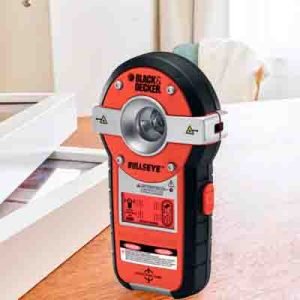
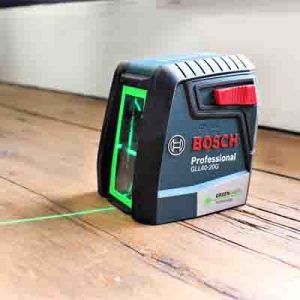
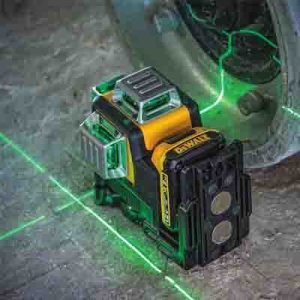
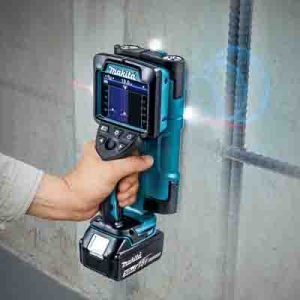


![Bosch UniversalLevel 2 [Gen 2] (E-Commerce Carton)](https://m.media-amazon.com/images/I/617rhOT8kAL._AC_UL320_.jpg)


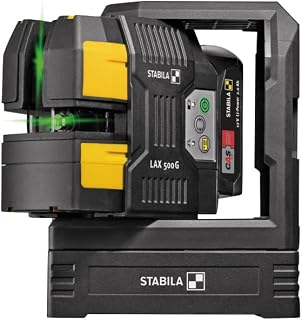


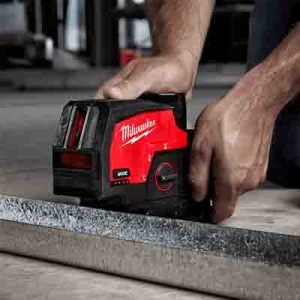
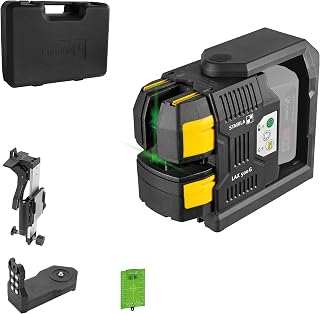
Choosing the right line laser level is less about finding the laser with the longest advertised range and more about matching accuracy, visibility, levelling performance, mounting options, working environment and power system to the job. A suitable model can make setting out walls, floors, ceilings, cabinetry, partitions, tiling and electrical installations considerably easier, while the wrong specification can introduce alignment errors or make a tool frustrating to use in bright or demanding conditions. This independent buying guide explains the specifications that matter when comparing line laser levels in the UK. It covers self-levelling technology, laser colour, accuracy, working range, pulse mode, beam configuration, mounting, power options, construction, protection ratings and practical considerations for different trades. It also explains how to compare professional and DIY models from established manufacturers such as Bosch, DeWalt, Makita, Stanley, Leica, Stabila and Huepar. Product specifications can vary significantly between individual models, even within the same brand. Always check the manufacturer's current specification for the exact model you are considering, particularly for accuracy, operating range, battery compatibility, laser classification, environmental protection and included accessories. A line laser level is a measuring and alignment tool that projects one or more visible laser lines onto a surface. Instead of repeatedly using a spirit level, chalk line or manual measurement to establish a reference, the laser creates a continuous visual datum that can be used for positioning and alignment. Depending on the model, a laser level may project a horizontal line, vertical line, both horizontal and vertical lines, multiple crossing lines or lines around a large portion of a room. Some advanced models can project 360-degree horizontal or vertical planes, making them particularly useful for setting out larger spaces. Line lasers are commonly used by builders, electricians, plumbers, joiners, kitchen fitters, decorators, tilers, dryliners, ceiling installers and other trades. They can also be useful for serious DIY work where accurate alignment is important. The usefulness of a laser level depends heavily on its beam configuration. A simple cross-line model may be ideal for interior fitting work, while a multi-line or 360-degree model can be more productive when several reference planes are required simultaneously. Most modern line laser levels designed for general construction and installation work use an internal self-levelling mechanism. The laser assembly is allowed to compensate for small deviations from level so that the projected line is aligned with the correct reference plane. The exact mechanism varies by design, but the important point for buyers is the specified self-levelling range. A tool can only compensate within its designed tolerance. If the instrument is positioned too far outside that range, it will normally indicate that it cannot establish a reliable level rather than simply projecting an apparently usable line. This makes the self-levelling warning or out-of-level indicator an important feature. A laser that clearly indicates when it cannot achieve a valid reference is safer to use than one that leaves the operator uncertain about whether the line is correctly established. The self-levelling range is normally expressed in degrees. It describes how much the tool can be tilted while still being able to compensate automatically. When comparing products, do not treat a larger self-levelling range as a substitute for accuracy. The two specifications describe different characteristics. Self-levelling range concerns the amount of initial misalignment the mechanism can correct, whereas accuracy describes how closely the projected reference corresponds to the intended plane. Some laser levels include a manual or lock mode that allows the pendulum or levelling mechanism to be fixed. This can be useful when projecting an intentionally angled line, such as a slope, stair reference or decorative layout. A manual mode should not be confused with self-levelling operation. When the tool is locked, the projected line may deliberately no longer represent a true horizontal or vertical reference. Accuracy is one of the most important specifications to examine when comparing laser levels. It is commonly expressed as a deviation over a particular distance, for example millimetres per metre or millimetres over a specified number of metres. Lower deviation generally indicates greater accuracy. However, the published figure should always be read alongside the manufacturer's stated test conditions and measurement distance. For commercial and professional work, small errors can become more noticeable as the working distance increases. A specification that appears insignificant over a short distance may matter when transferring a reference across a large room or along a longer installation. Consider installing a long run of wall cabinets. If the reference line is inaccurate, the error can become visually obvious across the installation. The same principle applies to suspended ceilings, partition walls, tile layouts, skirting, electrical installations and other work where several components need to follow one consistent datum. For occasional DIY jobs, extreme precision may not justify the cost of a premium professional instrument. For frequent trade use, however, accuracy becomes much more important because the laser may be used repeatedly as the primary setting-out reference. Laser colour is another major buying consideration. Traditional line laser levels commonly use red laser beams, while many newer models are available with green beams. Green laser light is generally easier for the human eye to see in many indoor conditions. This can make a green laser particularly useful when working across larger rooms, on surfaces with variable contrast or in conditions where a red line is difficult to see. Red lasers remain widely used and can be perfectly suitable for many applications, especially when working indoors at moderate distances or when the laser is being used with a compatible detector. Laser colour alone should not determine the purchase. A well-specified red-beam professional laser can be more suitable for a particular application than a basic green-beam model with weaker mounting, accuracy or durability specifications. Working range describes how far the laser line can be used effectively. Manufacturers may quote a range that depends on viewing conditions, ambient lighting and whether a laser detector is being used. Indoor range is often sufficient for typical rooms and installation work. Larger construction sites or brighter environments may require a detector to extend the usable range beyond what is practical by eye. This distinction is important when comparing specifications. A laser may have one stated visible range and a considerably greater range when used with a compatible detector. If you mainly work indoors and can see the line clearly, the visible range is the more relevant figure. If you work on larger sites, outdoors or in bright conditions, detector compatibility can become considerably more important. Pulse mode is designed for use with a compatible laser detector. Instead of relying entirely on the human eye to see the beam, the detector identifies the pulsed laser signal and helps establish the position of the projected line. This is particularly useful when ambient light makes the beam difficult to see. Depending on the system, pulse mode can also allow the laser to be used at greater distances than its normal visible range. If you expect to work outdoors, on larger building projects or in bright environments, check whether the laser supports a compatible detector before buying. Not every laser level projects the same pattern. The number and orientation of beams can make a significant difference to productivity. A horizontal-line laser provides a level reference across the working area. It can be useful for shelves, cabinets, wall fittings, electrical work, decorative installations and general alignment. A vertical beam provides a plumb reference. This is useful for positioning frames, partitions, cabinetry, pipework and other vertical installations. A cross-line laser projects horizontal and vertical beams simultaneously. This configuration is popular because the two lines intersect at a defined point, making it easier to establish both level and plumb references. Multi-line models project several lines simultaneously. They can be particularly useful when setting out more complex work where several reference directions are required. A 360-degree horizontal line projects a continuous level reference around the working area. This can be valuable when working around a room because the operator does not necessarily need to reposition the instrument every time the reference moves beyond the initial field of view. A 360-degree vertical plane can provide a continuous plumb reference around a space. Depending on the design, this can simplify setting out partitions, cabinetry and other installations where vertical alignment must be transferred across multiple walls. The best configuration depends on the type of work rather than simply choosing the model with the greatest number of beams. Builders may benefit from a robust housing, reliable self-levelling, good visibility, secure mounting and detector compatibility. If the tool is likely to be used on active construction sites, durability and protection against dust and splashes deserve particular attention. Electricians often need accurate horizontal and vertical references for sockets, switches, lighting points, containment and other installations. A compact cross-line laser can be practical where the tool needs to be moved frequently between rooms. Plumbing installations can benefit from reliable horizontal and vertical references when establishing pipe runs and positioning fittings. A laser with a stable mounting system is useful when consistent reference lines are needed while both hands are occupied. Kitchen installation is a particularly strong use case for line lasers. A level reference can help with cabinet runs, worktop-related setting out and wall-mounted units, while vertical lines can assist with alignment between adjoining components. Tilers need dependable reference lines to maintain consistent courses and alignment. A cross-line or multi-line laser can be useful for establishing horizontal and vertical references, particularly when working across large areas. Joinery work often demands accurate positioning rather than extreme working range. Compact dimensions, precise levelling, stable mounting and clear beam visibility may therefore be more useful than a very long-range construction laser. When comparing two or more products, avoid focusing on a single headline feature. A more reliable approach is to compare the complete specification and ask whether it matches your normal working environment. Power systems can affect convenience as much as the laser specification itself. Models using conventional replaceable batteries can be convenient when working away from a charger. Spare batteries can be carried and replaced quickly, which may be useful for occasional users or professionals who do not want to depend on a particular rechargeable platform. Rechargeable models can be convenient for frequent users, especially where the tool is part of an existing cordless ecosystem. Some manufacturers offer batteries shared with other tools, although compatibility must be checked carefully because not every battery platform is interchangeable. Some compact laser levels use USB-based charging. This can be convenient for light-duty use and transport, although charging requirements and runtime should be checked against the manufacturer's specification. A highly accurate laser is less useful if it is difficult to position securely. Mounting options therefore deserve more attention than they often receive in product comparisons. Many laser levels use a standard tripod connection, while some kits include dedicated brackets, magnetic mounts or clamps. These accessories can make a major difference when working on walls, ceilings, metal framing or other structures where a conventional tripod is inconvenient. A magnetic mount can be particularly useful on suitable metal surfaces. It allows the laser to be positioned without occupying floor space and can make height adjustment easier. A tripod can provide a stable platform and controlled height adjustment. When comparing models, check the thread specification and ensure your existing tripod or intended tripod is compatible. Wall brackets and clamps can be useful for installation work where the laser needs to remain at a fixed height. A supplied mounting accessory can be valuable if it reduces the need to purchase additional hardware. Construction quality becomes increasingly important when a laser level is used on building sites rather than occasionally at home. Look for a housing designed to protect the internal laser and levelling mechanism from the normal knocks associated with site work. Rubberised sections, reinforced housing and protected controls can be useful design features, but the manufacturer's stated protection and operating specifications should carry more weight than appearance alone. An IP rating indicates the level of protection provided against solids and liquids under defined testing conditions. It should not be interpreted as meaning that every laser with an IP rating can be safely exposed to any weather or construction environment. If you work around dust, moisture or occasional splashes, check the exact IP rating and the manufacturer's instructions before selecting a model. Outdoor suitability should be assessed as a combination of visibility, detector compatibility, temperature range and environmental protection rather than based on IP rating alone. Laser levels should always be used according to the manufacturer's safety instructions. Never deliberately look directly into the laser aperture, and never point the beam at people, vehicles, aircraft or other situations where the light could create a hazard. Pay attention to the laser classification stated by the manufacturer and follow the supplied warnings. The fact that a laser is intended for construction or DIY use does not remove the need for sensible handling. The difference between a professional and DIY laser is not simply the brand name or price category. Professional models often combine several characteristics that become valuable with frequent use: greater durability, more comprehensive beam configurations, stronger mounting systems, better visibility, wider accessory ecosystems and specifications designed for demanding work. A DIY user may not benefit from paying for features that will rarely be used. For example, a compact cross-line laser can be entirely adequate for hanging shelves, aligning cabinets and completing occasional renovation projects. Several established manufacturers produce laser levels across different professional and consumer categories. Comparing brands can be useful, but the exact model specification should always take priority over brand reputation alone. Bosch offers laser levels across DIY, home improvement and professional tool ranges. Depending on the product family, buyers can find compact cross-line models as well as more advanced systems. Bosch is worth considering when you want a broad ecosystem of tools and accessories, but compare the exact accuracy, range, beam configuration and battery system of the individual model. DeWalt is well established in professional construction tools and offers laser levels designed around demanding site applications. Models can vary considerably in beam configuration, colour, mounting and battery arrangements, so professional users should compare the complete specification rather than selecting purely on brand familiarity. Makita's extensive cordless tool ecosystem makes its laser levels particularly relevant to tradespeople who already use compatible Makita batteries and equipment. As with other manufacturers, the right choice depends on the individual model's accuracy, beam pattern, visibility, range and mounting system. Stanley offers measuring and layout tools aimed at a broad range of users. Its laser levels can be worth considering for general installation and DIY applications where ease of use and practical functionality are priorities. Leica is associated with precision measurement equipment and professional surveying technology. Its laser products can appeal to users who place a strong emphasis on measurement accuracy, advanced functionality and professional-grade equipment. Stabila has a long-standing presence in levelling and measurement tools. Its laser levels are particularly relevant to trades where accurate setting out and dependable levelling are important. Huepar has become a recognisable option in the laser-level market, particularly for users looking for feature-rich models across different price categories. When considering a Huepar model, pay close attention to the exact specification, accessories, beam configuration, accuracy and detector compatibility rather than assuming all models offer the same performance. If two products appear similar, use a structured comparison rather than relying on headline marketing terminology. A very long advertised range is not automatically useful for a person who mainly works in small rooms. Accuracy, visibility, mounting and beam configuration can have a greater practical impact. Green beams can offer excellent visibility, but beam colour does not determine the complete quality of a laser. Accuracy, construction, self-levelling performance and mounting remain important. A laser that cannot be positioned conveniently can slow down the job. Consider how you will physically mount the instrument before choosing a model. A complex 360-degree multi-line laser may be unnecessary for someone who only wants to hang shelves or pictures. Extra functionality can increase cost and complexity without improving the particular job. If you already own cordless tools, a compatible battery system may be convenient. However, compatibility should always be verified for the exact model and battery generation. A laser can have an impressive self-levelling range without being the most accurate tool available. These are separate specifications and should be assessed independently. Outdoor use presents challenges that indoor work does not. Bright sunlight can make a visible beam difficult to see, while dust, moisture and temperature can affect suitability. Detector compatibility may be essential for outdoor work. Two apparently similar laser levels may be supplied with very different accessories. Check whether the package includes a case, batteries, charger, bracket, magnetic mount, tripod adapter or detector before comparing overall value. Correct setup is just as important as choosing a good instrument. Even a quality measuring instrument should be treated as a precision tool. Before using a laser for critical work, it is sensible to verify that it appears to be functioning correctly and has not suffered damage or calibration issues. A simple comparison can involve projecting the beam onto a suitable reference and checking it against a known level or established datum. More formal accuracy checks should follow the manufacturer's recommended procedure. If the laser has been dropped, exposed to significant impact or shows unusual behaviour, do not assume that it remains calibrated. Consult the manufacturer's guidance regarding inspection, calibration or servicing. Calibration is an important consideration for professional users. A laser level is a measuring instrument, and accuracy can be affected by impact, wear, environmental conditions or other factors. Manufacturers may provide specific calibration procedures, service arrangements or recommended inspection intervals. The appropriate approach depends on the instrument and the consequences of measurement errors in the intended application. For high-consequence professional work, follow the manufacturer's calibration and verification recommendations rather than relying solely on informal checks. Regular care can help preserve the tool's usefulness and reduce avoidable problems. A spirit level remains a useful and inexpensive tool for many applications. A line laser level becomes more advantageous when the reference needs to extend across a larger area or when one person needs to establish a continuous line while working around a room. A spirit level is simple, requires no batteries and can be highly effective for short measurements. A laser level can provide a reference over greater distances and can make repetitive alignment tasks more efficient. For many tradespeople, the two tools complement rather than replace each other. A laser can establish the primary reference while a spirit level remains useful for checking individual components. Line lasers and rotary lasers serve different applications. A line laser projects visible lines, usually for interior setting out and alignment. A rotary laser creates a rotating reference plane and is generally more appropriate when longer ranges, large spaces or outdoor construction applications require a detector. For ordinary room-based installation work, a line laser is often the more practical format. For larger construction sites, external groundworks and long-distance level transfer, a rotary laser may be more appropriate. A 3x360 laser level typically refers to a configuration with three separate 360-degree planes, commonly providing horizontal and vertical coverage in multiple directions. The exact beam arrangement varies by model. These instruments can be particularly useful for professionals who need to establish multiple reference planes simultaneously. They can reduce the need to reposition the instrument during complex setting-out tasks. However, a 3x360 model is not automatically the best choice for every buyer. If your projects only require a single horizontal and vertical reference, a simpler cross-line laser may provide everything you need. Home renovators often benefit from a compact cross-line model with self-levelling, clear visibility and straightforward mounting. Typical jobs such as cabinet installation, tiling, shelving, decorating and partition work rarely require the most advanced professional configuration. Prioritise ease of setup and the beam pattern you will actually use. A model that is quick to position and simple to operate can be more useful than a technically sophisticated instrument with features that remain unused. Construction users should normally place greater emphasis on durability, accuracy, visibility, mounting flexibility and detector compatibility. Site conditions can be considerably more demanding than controlled indoor environments. Consider whether the instrument will be exposed to dust, moisture, impacts, bright light and frequent transportation. A protective case and suitable mounting accessories can also become important over the life of the tool. Kitchen installation benefits from reliable horizontal references because cabinet runs need to maintain consistent alignment. Vertical lines can also assist with positioning adjoining units and establishing plumb references. A compact cross-line laser may be sufficient for many installers, while a 360-degree system can be advantageous when references need to continue around multiple walls. For tiling, the key considerations are accurate horizontal and vertical references, visibility and stable positioning. A cross-line laser can provide a useful intersection for setting out, while multi-line configurations can provide additional reference planes. Before buying specifically for tiling, consider whether the laser can be positioned at the required height and whether the beam remains sufficiently visible against the tile surface and surrounding lighting conditions. Ceiling work often benefits from a stable horizontal reference and a mounting system that allows the laser to be positioned at a practical height. A 360-degree horizontal line can be especially convenient where a continuous reference around a room is useful. For suspended ceilings or detailed commercial installations, accuracy and reliable mounting deserve particular attention because small setting-out errors can become more noticeable across larger areas. Electricians can use laser levels for positioning sockets, switches, lighting and other components consistently. A horizontal line can help maintain a uniform installation height, while a vertical line can assist with alignment. Compact size can be valuable because electrical work frequently involves confined spaces and repeated repositioning. There is no single correct budget because the appropriate specification depends on how often the instrument will be used and what it needs to accomplish. Occasional DIY users can often concentrate on essential functionality such as self-levelling, horizontal and vertical lines, adequate indoor visibility and basic mounting compatibility. Frequent professional users may gain more from investing in accuracy, durability, advanced beam configurations, detector compatibility and a broader accessory system. Rather than selecting a budget purely by price, identify the features that would save time or prevent errors in your normal work. Those are the characteristics that justify moving into a higher specification. Good value does not necessarily mean the lowest purchase price. A product can provide better long-term value when its specifications closely match the intended workload and it avoids the need for additional accessories or replacement equipment. Customer reviews can provide useful information about usability, packaging, accessories and real-world ownership, but they should not replace specification checking. Individual experiences can vary, and a product that suits one user may be inappropriate for another. When reading reviews, look for recurring comments about beam visibility, ease of setup, mounting stability, battery life, controls, durability and whether the supplied accessories are useful. Give greater weight to repeated patterns than to isolated comments. Also compare reviews against the manufacturer's published specifications. A review should not be treated as evidence that a product has a particular technical capability unless that capability is confirmed by reliable product documentation. There is no single best line laser level for every user. The right choice depends on the required accuracy, beam configuration, working range, laser colour, mounting system, durability, power source and intended application. A professional installer may need a very different specification from someone completing occasional household DIY. Green laser beams are generally easier to see in many indoor conditions, but beam colour is only one part of the specification. A red laser can still be an excellent choice when its range, accuracy, beam pattern and mounting system meet the user's requirements. Quality laser levels can provide highly useful alignment references, but their accuracy depends on the individual instrument and its published specification. The tool must also be correctly set up, within its self-levelling range and maintained according to the manufacturer's guidance. Some can, particularly when used with a compatible detector. Bright daylight can make a visible laser line difficult to see, so outdoor users should check detector compatibility, range and environmental specifications before buying. Not necessarily. A 360-degree model is most useful when you regularly need a continuous reference around a room or multiple surfaces. For simple shelving, cabinet alignment and occasional DIY, a conventional cross-line laser may be sufficient. For many DIY applications, yes. A self-levelling cross-line model can provide both horizontal and vertical references for decorating, shelving, cabinetry, tiling and general renovation work. Self-levelling means the laser has an internal mechanism that automatically compensates for small deviations from level so that the projected reference can be established without manually adjusting the tool to exact level. The instrument will normally indicate that it is outside its specified self-levelling range. The exact warning method depends on the model. Always follow the manufacturer's instructions rather than using a line when the tool indicates that it cannot self-level correctly. It can replace a spirit level for some setting-out tasks, but keeping both can be useful. A laser is particularly helpful for longer references and room-scale alignment, while a spirit level remains convenient for checking individual components. The appropriate calibration interval depends on the manufacturer, model and importance of the measurement. Professional users should follow the manufacturer's recommendations and consider additional checks after significant impacts or when accuracy is questioned. Pulse mode allows a compatible detector to identify the laser signal. It is particularly useful when the beam is difficult to see because of bright ambient light or when a greater working range is required. Look for an accuracy specification appropriate to the work, dependable self-levelling, suitable beam coverage, good visibility, robust construction, practical mounting options, detector compatibility where needed and a power system that fits your working routine. A lower-cost model can be worthwhile for occasional DIY if its accuracy, beam configuration and construction are appropriate. The important question is not simply whether the product is cheap, but whether it provides the specifications needed for the work without creating avoidable limitations. The strongest buying decision comes from matching the instrument to the work rather than selecting the model with the longest range, most laser lines or highest feature count. For basic household jobs, a compact self-levelling cross-line laser may provide an excellent balance of simplicity and capability. For regular trade work, accuracy, visibility, mounting flexibility and durability become increasingly important. For larger construction environments, detector compatibility, range and environmental protection can move to the top of the priority list. When comparing current options in 2026, check the exact manufacturer's specification for every shortlisted model and compare accuracy, beam configuration, self-levelling range, visibility, power system, mounting options and included accessories side by side. Then consider independent customer feedback as a secondary source for usability and ownership observations. The best line laser level is ultimately the one that provides an appropriate reference for your work, is easy to position accurately, remains practical in your normal environment and offers the features you will genuinely use.
Best Line Laser Level Buying Guide for the UK in 2026
What Is a Line Laser Level?
What Can You Use a Line Laser Level For?
How Self-Levelling Laser Levels Work
Self-Levelling Range
Manual Mode
Laser Level Accuracy: The Specification That Matters Most
Why Accuracy Matters in Real Projects
Green Laser vs Red Laser
When a Green Laser Makes Sense
When a Red Laser May Be Enough
Line Laser Level Working Range
Visible Range and Detector Range Are Not the Same
What Is Pulse Mode on a Laser Level?
Understanding Laser Line Configurations
Single Horizontal Line
Single Vertical Line
Cross-Line Laser
Multi-Line Laser
360-Degree Horizontal Laser
360-Degree Vertical Laser
How Many Laser Lines Do You Need?
Line Laser Levels for Different Trades
Best Features for Builders
Best Features for Electricians
Best Features for Plumbers
Best Features for Kitchen Fitters
Best Features for Tilers
Best Features for Joiners
Laser Level Buying Guide: Key Specifications to Compare
Battery-Powered vs Rechargeable Laser Levels
Replaceable Batteries
Rechargeable Battery Systems
USB Charging
Why Mounting Options Matter
Magnetic Mounts
Tripod Compatibility
Wall Brackets and Clamps
Durability and Construction Quality
IP Ratings and Site Conditions
Laser Safety
Professional Laser Levels vs DIY Models
When a Professional Model Is Worth Considering
When a Basic Model May Be Enough
Popular Line Laser Level Brands to Compare
Bosch
DeWalt
Makita
Stanley
Leica
Stabila
Huepar
How to Compare Two Line Laser Levels
Common Line Laser Level Buying Mistakes
Choosing by Range Alone
Assuming Green Always Means Better
Ignoring Mounting
Buying Too Many Features
Ignoring Battery Compatibility
Confusing Self-Levelling With Accuracy
Assuming Every Laser Is Suitable Outdoors
Failing to Check What Comes in the Box
How to Get the Best Results From a Line Laser Level
How to Check a Laser Level Before Important Work
Calibration and Long-Term Accuracy
Line Laser Level Maintenance
Line Laser Level vs Spirit Level
Line Laser Level vs Rotary Laser
What Is a 3x360 Laser Level?
Choosing a Line Laser Level for Home Renovation
Choosing a Laser Level for Construction Sites
Choosing a Laser Level for Kitchen Installation
Choosing a Laser Level for Tiling
Choosing a Laser Level for Ceiling Installation
Choosing a Laser Level for Electrical Work
How Much Should You Spend on a Line Laser Level?
Best Line Laser Level Features for Value
How Customer Reviews Should Be Used When Comparing Laser Levels
Questions to Ask Before Buying a Line Laser Level
Quick Buying Guide by User Type
Frequently Asked Questions About Line Laser Levels
Which is the best line laser level?
Are green laser levels better than red laser levels?
Are laser levels accurate?
Can a line laser level be used outdoors?
Do I need a 360-degree laser level?
Is a cross-line laser enough for DIY?
What does self-levelling mean?
What happens if a self-levelling laser is too far out of level?
Can a laser level replace a spirit level?
How often should a laser level be calibrated?
What is pulse mode used for?
What should I look for in a professional laser level?
Is a cheap laser level worth buying?
Final Line Laser Level Buying Checklist
How to Choose the Right Line Laser Level in 2026