

♥ Wishlist
Compare 36 verified Makita Cordless Plunge Saws products in United Kingdom. Reviews, ratings, pros, cons and buying advice updated for November 2026.


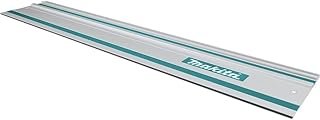

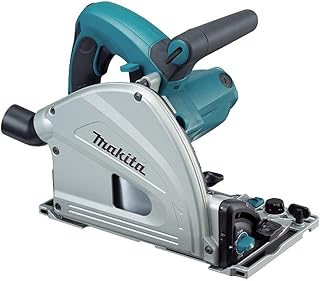


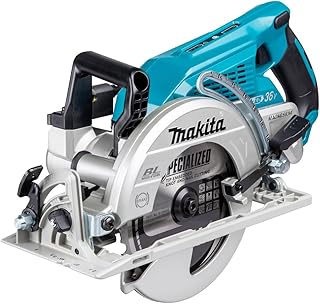
Choosing the right Makita cordless plunge saw is about more than comparing battery voltage or cutting capacity. A good plunge saw needs to work as part of a complete cutting system, including the blade, guide rail, dust extraction arrangement and battery platform. For UK users working with sheet materials, kitchen panels, flooring, doors, furniture components and general joinery, these details can have a greater practical effect on the finished cut than headline specifications alone.
Makita's cordless plunge saw range has included 18V LXT X2 models using two 18V batteries, as well as higher-powered 40V max XGT equipment in markets where those models are offered. Model numbers, kits, batteries, chargers and regional specifications can differ, so always check the exact UK product specification before purchasing.
A cordless plunge saw is a circular saw designed to enter a workpiece from above rather than requiring the blade to start at an exposed edge. The blade is lowered into the material through a controlled plunge mechanism, making the tool particularly useful for cutting sheet goods and making openings where starting from the edge is inconvenient.
When combined with a guide rail, a plunge saw becomes a highly controlled cutting system. The rail helps guide the saw in a straight line while the saw base runs along the rail. This arrangement is particularly useful for large panels that can be difficult to control with a conventional circular saw and straightedge.
Makita is an established power-tool manufacturer with several battery platforms and a broad range of cutting accessories. For buyers already invested in the Makita ecosystem, a cordless plunge saw can make particular sense because compatible batteries, chargers, extraction equipment and other cordless tools may already form part of the workshop or site setup.
The most important advantage of staying within an existing battery system is not simply convenience. A tool-only purchase can sometimes avoid paying for another battery and charger when the user already owns compatible equipment. However, compatibility must always be checked by exact battery platform and model rather than assuming that every Makita battery fits every Makita cordless tool.
One of the most important decisions for buyers comparing Makita cordless plunge saws is the battery platform. An 18V LXT X2 saw uses two 18V LXT batteries together, whereas a 40V max XGT model belongs to the XGT platform. These are different ecosystems and should not be treated as interchangeable.
Makita's 18V X2 approach combines two 18V LXT batteries to provide a higher-voltage system without requiring a separate battery platform. Certain Makita plunge saw models in this category use brushless motors and provide variable-speed operation, substantial cutting capacity and guide-rail compatibility.
This configuration can be attractive to tradespeople who already use several 18V LXT tools. The major consideration is that the saw requires two compatible batteries rather than one, so battery ownership and charging capacity should be considered when comparing the total cost of ownership.
Makita's XGT platform is designed for higher-demand cordless applications. The GPS01 family, for example, uses a brushless motor and variable-speed control and is designed to work with a guide-rail system for accurate cutting. The platform also provides AWS capability on applicable models, allowing compatible dust-management equipment to communicate wirelessly with the tool.
A 40V max XGT plunge saw may therefore appeal to users who already own XGT equipment or who want to build around Makita's higher-output cordless platform. It is less attractive if the rest of the user's workshop is exclusively based around LXT batteries and chargers, because battery-platform compatibility becomes a significant purchasing consideration.
A brushless motor is one of the most useful features to look for in a modern cordless plunge saw. Brushless technology eliminates conventional motor brushes and is commonly associated with improved efficiency, reduced maintenance requirements and better electronic control.
For a plunge saw, motor efficiency matters because the tool is often being used under sustained cutting load. A motor that can maintain useful cutting performance as the blade enters dense material is more valuable than a high no-load RPM figure by itself.
Variable-speed control allows the operator to adjust blade speed for the material and blade being used. This can be particularly useful when moving between different materials or using specialist blades.
Do not automatically assume that the highest RPM is best for every application. Blade tooth design, material type, feed rate and cutting depth all influence the quality and suitability of a cut.
Cutting depth should be considered at both 90 degrees and bevel angles. A saw may offer a generous maximum depth when cutting square, while the available depth becomes lower when the saw is tilted.
For buyers working with worktops, thick plywood, timber panels or laminated boards, compare the stated cutting depth with the actual thicknesses you expect to cut. A larger capacity does not necessarily make a saw better for every user, but insufficient capacity can immediately limit its usefulness.
Bevel capability allows the blade to cut at an angle rather than perpendicular to the workpiece. This can be important for cabinetry, furniture construction, flooring work and other applications where angled panel cuts are required.
Look beyond the maximum bevel angle. The quality of the bevel mechanism, ease of adjustment, scale readability, locking arrangement and stability of the saw on the rail all affect practical usability.
A soft-start system gradually brings the blade up to operating speed rather than applying full motor speed instantaneously. This can make the saw feel more controlled when starting a cut and can reduce the sudden movement associated with powerful electric motors.
An electric brake rapidly slows the blade after the trigger or switch is released. This is useful when making repeated cuts because the operator does not have to wait as long for the blade to coast down before repositioning the tool.
Electronic speed management can help maintain blade speed under load. This is particularly useful when cutting dense sheet material because the saw is less dependent on the operator manually compensating for changes in resistance.
Some higher-end Makita cordless saws use electronic control systems that adjust cutting speed and torque according to the load. The purpose is to balance cutting performance with control rather than simply running the blade at one fixed speed throughout the cut.
A plunge saw without a suitable guide rail can still be useful, but the rail is central to the plunge-saw concept. It provides a controlled reference line and helps the saw travel smoothly through large panels.
Makita offers guide rails in different lengths, including shorter rails for compact work and longer rails for large sheet materials. Longer rails can be advantageous for full-length panel cuts, while shorter rails are easier to transport and store.
Buying a rail that is too short is one of the easiest mistakes to make. Measure the longest cuts you expect to make rather than choosing a rail solely because it is cheaper or easier to store.
A rail should normally extend sufficiently beyond the start and finish of the intended cutting path to give the saw a stable entry and exit. If the rail ends too close to the cutting area, maintaining control at the beginning or end of the cut can become more difficult.
For users who regularly work with standard large sheets, a longer rail or a properly connected multi-rail arrangement can be considerably more convenient than repeatedly repositioning a short rail.
One of the most important buying checks is guide-rail compatibility. Different manufacturers use different rail profiles, dimensions and interface arrangements. Some Makita plunge saws can work with certain compatible third-party rails, but compatibility should never be assumed simply because two rails look similar.
Check the exact saw model, rail profile and any required adapter before purchasing. If accuracy is critical, using the manufacturer's specified rail system can remove unnecessary uncertainty.
The blade can have a major influence on the quality of the finished cut. A premium saw fitted with the wrong blade can produce disappointing results, while a suitable blade matched to the material can significantly improve cutting performance.
Tooth count is one of the simplest specifications to understand, but it should not be considered in isolation.
More teeth do not automatically mean a better blade. Tooth geometry, kerf, rake angle, carbide quality and blade construction also matter.
Makita offers cordless plunge-saw blades designed for applications including wood, MDF and laminate. Some blades use high-grade carbide tips and specialised coatings intended to reduce pitch build-up and support smoother cutting.
For general panel work, select a blade specifically designed for the material rather than relying on a single general-purpose blade for every application.
MDF and laminate can place different demands on a blade compared with ordinary softwood. A blade designed around the relevant material and tooth geometry can help produce a cleaner edge and reduce the likelihood of premature wear.
TCG tooth geometry is commonly associated with applications involving harder or abrasive sheet materials such as MDF and laminate. Always check the manufacturer's intended application before fitting a blade.
Makita also produces specialist plunge-saw blades intended for aluminium applications. These blades should not be treated as interchangeable with ordinary wood blades simply because the diameter and arbor appear compatible.
When cutting aluminium, use a blade explicitly rated for the application and follow the tool and blade manufacturer's instructions concerning speed, workholding and cutting technique.
Many Makita plunge saws use a 6-1/2-inch blade format with a 20 mm arbor on applicable models. However, buyers should always verify the exact blade specification against the exact saw model before purchasing replacement blades.
Never select a blade solely because it has the same diameter. The arbor, maximum permitted RPM, kerf, plate thickness, tooth configuration and intended application all need to be suitable.
Kerf is the width of material removed by the blade. A thinner kerf can reduce the amount of material removed and may help a cordless saw use energy efficiently, although cutting efficiency depends on the complete blade design rather than kerf width alone.
Very thin blades can behave differently from heavier blades, so the blade must be appropriate for the saw and application. Always follow the manufacturer's compatibility requirements.
Dust management is particularly important when cutting MDF, engineered boards and other materials that generate significant airborne dust. A suitable dust extraction system can help keep the work area cleaner and improve visibility around the cutting line.
Some Makita cordless plunge saws are compatible with Makita's AWS system. On compatible equipment, AWS can provide wireless communication between the saw and a compatible dust extractor, allowing the extraction system to start and stop automatically with the tool.
Wireless extraction can be particularly useful for repetitive cutting because it reduces the need to operate the extractor separately. However, AWS capability should be checked on the exact saw and extractor combination rather than assumed from the Makita brand name alone.
Battery runtime is one of the biggest differences between cordless and corded plunge saws. Actual runtime depends heavily on material, blade condition, cutting depth, feed rate, battery capacity, ambient conditions and how much time the saw spends under load.
Do not interpret a published battery figure as a guaranteed number of cuts in every situation. Cutting a thin softwood panel is very different from repeatedly cutting thick, dense sheet material.
If the saw is used intermittently for small projects, a battery already owned for other Makita tools may be the most practical consideration. There may be little benefit in purchasing an extensive battery setup if the saw is only used occasionally.
Tradespeople making repeated cuts should consider having multiple compatible batteries available. The objective is to keep the workflow moving rather than waiting for a single battery to recharge.
It is also worth considering whether the charger can keep pace with the rate at which batteries are being consumed during a typical working day.
Makita cordless tools are commonly offered in different configurations depending on market and model, including tool-only versions and kits containing batteries and chargers.
A tool-only package can be more economical for an existing Makita user who already owns the required batteries and charger. A complete kit may make more sense for someone entering the relevant battery platform for the first time.
Makita has multiple cordless platforms. Buying a saw because it carries the Makita name without checking whether it matches your existing batteries can result in an unexpected additional battery and charger purchase.
A plunge saw is often purchased for precision cutting, yet some buyers focus heavily on the saw and overlook the rail. The guide rail is a fundamental part of the system and should be included in the overall budget.
Tooth count is useful, but it does not tell the whole story. Tooth geometry, material compatibility, kerf and maximum RPM can be equally important.
Diameter and arbor size are only part of the compatibility equation. Check the manufacturer's specifications before fitting a replacement blade.
The most powerful or technically advanced saw is not necessarily the best option for every buyer. A higher-end platform may involve additional battery investment and may offer capabilities that an occasional DIY user never needs.
Long guide rails are excellent for large sheets but can be awkward to transport. Think about how the saw, batteries and rails will be stored in a workshop, van or site environment.
For large plywood, MDF, laminate and other sheet materials, prioritise guide-rail compatibility, cutting capacity, battery endurance, blade selection and dust extraction rather than focusing on motor power alone.
A long, stable guide rail can make a substantial difference when breaking down full-size sheets. The ability to maintain a straight cut over a long distance is one of the main reasons to choose a plunge-saw system instead of a conventional handheld circular saw.
Cabinet and kitchen work typically places a greater emphasis on clean cuts, repeatability and control. A suitable fine-tooth blade, properly maintained guide rail and effective dust extraction can be more important than simply choosing the model with the largest cutting capacity.
For laminated panels, MDF and furniture board, select a blade designed for the material and check the manufacturer's recommendations. A correctly selected blade can help reduce breakout and improve the appearance of exposed edges.
For installation work and construction sites, cordless operation can be particularly convenient because there is no mains cable to route around large panels. However, the practical advantage depends on having enough charged batteries and a sensible charging strategy.
Portability should also be considered alongside rail length. A compact setup may be easier to transport between jobs, while a longer rail can be more productive when large panels are being cut regularly.
DIY buyers should start with the projects they actually intend to complete. If the saw will be used for occasional shelving, furniture panels or home renovation work, an established battery platform and straightforward plunge-saw configuration may be more useful than paying for specialist professional features.
Conversely, someone planning a major renovation involving repeated sheet cutting may benefit from investing in the complete system, including suitable batteries, a longer guide rail, clamps and appropriate blades.
Cut quality is the result of several factors working together. The saw itself is only one part of the equation.
A blunt blade can require excessive force and may increase the likelihood of a poor finish. Similarly, an unsupported sheet can move or vibrate during cutting even when the saw and blade are perfectly capable of producing a clean cut.
Large sheets can flex significantly. If the material moves towards the blade during a cut, the blade can become pinched. If the cut-off section falls or closes against the blade unexpectedly, it can also affect the cutting process.
Proper support should therefore be planned before starting the cut. The objective is to keep the workpiece stable while also allowing the off-cut to separate safely without interfering with the blade.
Regular maintenance can help preserve cutting performance and reduce avoidable problems. Always follow the manufacturer's instructions for the exact model, particularly when cleaning, servicing or replacing components.
Dust and resin deposits can interfere with smooth movement along a guide rail. Keep the saw base and guide-rail interface clean and free from accumulated debris.
Check the blade regularly for damaged, missing or excessively worn teeth. A blade that is no longer cutting cleanly should not be kept in service simply to avoid the cost of replacement.
Inspect the rail for damage, contamination and worn anti-slip or splinter-strip components. A damaged rail can compromise the accuracy of an otherwise capable saw.
The splinter guard is a consumable part of the guide-rail system. If it becomes damaged or excessively worn, replacing it can help restore the intended edge-support function.
Battery and tool contacts should be kept clean and dry. Do not use damaged batteries, and follow the manufacturer's instructions for battery storage, charging and inspection.
A cordless tool is not automatically a low-risk tool. A plunge saw contains a rapidly rotating cutting blade and should be operated with appropriate care and protective equipment.
The principal advantage of cordless equipment is freedom from the mains cable. This can make setup easier and reduce cable management when working around large panels.
A corded plunge saw, however, can remain attractive for workshop users who have continuous access to mains power and do not want to manage batteries. There is also no need to monitor battery charge during prolonged cutting sessions.
The right choice depends on the working environment. A professional installer moving between locations may place a higher value on cordless portability, while a fixed workshop user may prefer the simplicity of mains operation.
A conventional circular saw is often more versatile as a general-purpose cutting tool, particularly for rough construction cuts. A plunge saw is more specialised towards controlled, accurate panel cutting.
The guide-rail interface is the major distinction. A plunge saw and rail combination can provide a repeatable reference for long straight cuts and can be particularly useful where the visible edge of the workpiece needs to remain clean.
The terms plunge saw and track saw are frequently used interchangeably because both systems can use guide rails. In practical buying terms, the important issue is the complete system rather than the terminology.
Compare the saw's rail compatibility, plunge mechanism, bevel range, blade availability, dust extraction, battery platform and accessories. These factors provide a more meaningful comparison than the product name alone.
Makita should not be assessed in isolation when choosing a professional plunge-saw system. Buyers may also encounter systems from brands such as Festool, Bosch Professional and DeWalt.
The strongest comparison is based on the complete ecosystem rather than the saw alone.
For someone already invested in Makita batteries, chargers and extraction equipment, the overall value proposition may be different from that of a new buyer comparing several brands from scratch.
A complete plunge-saw setup can involve considerably more than the saw itself. The accessories you need depend on the work being carried out.
There is no universal answer. A single long rail can provide a continuous reference surface and may be preferable for frequent long cuts. Two shorter rails can be easier to transport and store, while a suitable connector can allow them to cover a longer cutting path.
For mobile tradespeople, storage space and transport can be just as important as maximum cutting length. For workshop users, a longer rail may be easier to leave assembled and ready for repeated panel work.
A professional plunge saw is not necessarily defined by one specification. Professional suitability usually comes from the combination of durability, cutting accuracy, ergonomics, accessory support, battery ecosystem and ability to perform consistently across the user's normal workload.
For occasional DIY use, some professional features may offer little practical benefit. For a kitchen fitter, carpenter, joiner or installer making repeated precision cuts, however, small improvements in setup and workflow can become valuable over hundreds of cuts.
The best value does not always come from selecting the cheapest saw. Consider the total system cost over the period you expect to use the tool.
A buyer who already owns compatible Makita batteries may need only the saw and rail. A new user may need batteries, charger, guide rail, extraction equipment and several blades. These additional components can substantially change the real cost of ownership.
It is also worth considering blade consumption. A high-quality saw used with the wrong or poorly maintained blade can lead to unnecessary replacement costs and poor results. Matching the blade to the application is therefore part of getting good long-term value from the tool.
Product specifications can change between model revisions, regional versions and kit configurations. Before ordering, compare the exact model number rather than relying on a generic product title such as “Makita cordless plunge saw”.
Check the battery platform, included accessories, blade specification, guide-rail compatibility, cutting capacity, bevel range and whether batteries and chargers are included. UK availability and package contents should also be confirmed with the retailer at the time of purchase.
Makita model numbers can contain letters and suffixes that identify different configurations, regions or package contents. Similar-looking model numbers may therefore represent different versions.
Do not assume that two model numbers with a similar core designation contain identical accessories. The difference may relate to battery inclusion, charger configuration, wireless functionality or other equipment.
The best model depends on the battery platform, cutting capacity, materials, guide-rail requirements and workload. An 18V LXT X2 model can be attractive to users already invested in LXT, while a 40V max XGT model may be more appropriate for users building around XGT and seeking a higher-powered cordless platform.
Yes, suitable Makita plunge saws can be used for plywood when fitted with an appropriate blade and used with a properly set-up guide rail. Blade selection and workpiece support have a major influence on the finished cut.
Yes, provided the saw and blade are suitable for the application. Makita offers plunge-saw blades specifically intended for MDF and laminate applications. MDF generates substantial fine dust, so effective extraction and appropriate personal protection are important.
Suitable Makita plunge saw blades are available for laminate applications. The blade should be selected according to the manufacturer's stated application, and the workpiece should be supported correctly to minimise breakout.
Makita produces specialist plunge-saw blades for aluminium applications. Do not use an ordinary wood blade for aluminium simply because it physically fits the saw. Use an appropriate blade and follow the manufacturer's instructions.
Some Makita cordless plunge saws use two 18V LXT batteries simultaneously. Other models use the 40V max XGT platform. Always check the exact model because battery requirements differ between platforms.
Not necessarily. Package contents vary by model and kit configuration, and guide rails may be sold separately. Check the exact product listing before purchasing if a rail is required for your project.
Some Makita plunge saw systems can work with selected competitor guide rails, but compatibility varies. Do not assume that every third-party rail will fit correctly. Check the exact saw and rail specifications before purchase.
Choose a rail based on the longest cuts you expect to make. Shorter rails are easier to transport, while longer rails are more convenient for full-length sheet cuts. Connected rails can provide additional length when a compatible connector is available.
A suitable cordless plunge saw can make highly controlled straight cuts when used correctly with a compatible guide rail. Accuracy also depends on blade condition, rail positioning, workpiece stability, correct measurement and operator technique.
Neither is universally better. A circular saw is a versatile general-purpose cutting tool, while a plunge saw is particularly useful when controlled entry, guide-rail accuracy and clean panel cutting are priorities.
A suitable Makita plunge saw can be useful for kitchen fitting because it can make controlled cuts in sheet materials and panels. A suitable blade, guide rail, extraction setup and careful workpiece support are important for achieving clean results.
Some plunge saws can be used without a rail where the design and application permit it, but the guide rail is a major part of the system's accuracy advantage. If straight, repeatable panel cuts are the reason for buying a plunge saw, budgeting for the correct rail is usually sensible.
Use a blade specifically intended for MDF or engineered board and follow the manufacturer's compatibility guidance. Tooth geometry and blade construction can be more important than simply selecting the highest tooth count.
There is no universal replacement interval. Blade life depends on material, cutting frequency, contamination, feed rate and blade quality. Replace or professionally sharpen a blade when its condition begins to affect cutting performance or when it is damaged.
It can reduce the need for a table saw for many sheet-cutting tasks, particularly when portability is important, but it does not provide exactly the same capabilities. A table saw remains advantageous for certain repetitive rip-cutting, cross-cutting and workshop production tasks.
Check the exact model number, battery compatibility, blade condition, plunge mechanism, base, bevel mechanism, guide-rail interface, electrical controls and signs of damage. Also inspect the battery and charger separately if they are included.
The right Makita cordless plunge saw should be selected as a complete cutting system rather than as an isolated power tool. Start with the material you need to cut, then work backwards through cutting depth, blade type, guide-rail length, battery platform, extraction requirements and accessories.
For an existing 18V LXT user, an 18V X2 plunge saw can provide a straightforward way to remain within the established battery ecosystem. For users committed to Makita XGT, a 40V max XGT plunge saw can provide a different level of cordless platform capability. Neither choice is automatically right for every buyer.
Before purchasing, compare the exact model specification, current UK package contents, compatible batteries, guide rails, blade options and extraction equipment. Then consider the jobs you actually perform rather than paying for features you are unlikely to use.
The strongest buying decision is usually the one that balances cutting performance, accuracy, portability, battery compatibility and the cost of the complete system. A well-matched saw, guide rail and blade can be considerably more useful than simply choosing the model with the most impressive headline specification.