

♥ Wishlist
Compare 34 verified Milwaukee Cordless Heat Gun products in United Kingdom. Reviews, ratings, pros, cons and buying advice updated for October 2026.


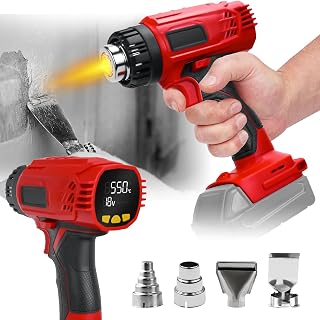


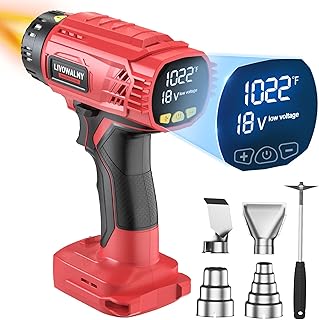





Choosing the right Milwaukee cordless heat gun is less about finding the highest specification and more about matching the tool to the type of heating work you actually perform. A cordless heat gun can be useful for electrical work, heat-shrink tubing, adhesive removal, paint and coating work, plastic forming, thawing frozen pipes and a range of maintenance applications where carrying a mains-powered tool or extension lead is inconvenient. For buyers in the UK, the Milwaukee M18 heat gun is particularly relevant because it is built around the M18 battery platform. The current Milwaukee specification lists a high-performance heat coil capable of reaching 470°C, an operating temperature in approximately six seconds, 170 l/min air volume, an integrated LED light and compatibility with Milwaukee M18 batteries. The tool is supplied with a reduction nozzle and reflector nozzle, although exact equipment can vary between model numbers and kits. Always check the specification of the particular package being considered rather than assuming every listing contains the same accessories. This guide is designed for commercial investigation rather than simply identifying a single product. It explains what the important specifications mean, how to compare cordless heat guns, which features matter for different applications, how battery choice affects practical use, what accessories are worth considering and which common buying mistakes can result in choosing the wrong tool. A Milwaukee cordless heat gun can be a strong choice for tradespeople and serious DIY users who already use the M18 battery platform and want to work without a mains cable. Its main advantages are portability, rapid heat-up, compatibility with the wider M18 battery system and the ability to work in locations where access to a socket is inconvenient. The M18 heat gun reaches up to 470°C and is specified at 170 l/min airflow. Milwaukee also states that it reaches operating temperature in six seconds. These characteristics make it suitable for many general heat-gun applications where rapid deployment and mobility are more important than having an unlimited mains power supply. However, cordless operation is not automatically the best solution for every user. Someone who performs prolonged heating work continuously in a workshop may prefer a mains-powered heat gun, while someone already invested in Milwaukee M18 batteries may find the cordless design substantially more convenient. The right choice therefore depends on frequency of use, application, battery ownership, required temperature, working environment and the importance of cable-free operation. Specifications are useful only when they are interpreted in the context of actual work. A higher temperature does not necessarily mean a heat gun is better for every application, and airflow is just as important as maximum temperature when deciding how quickly and evenly heat can be transferred. These figures should be considered starting points rather than a complete assessment of performance. For a serious comparison, also consider the physical balance of the tool with a battery fitted, the battery capacity you already own, the nozzle options, the size of the work area, how long the heat gun is used continuously and whether the work requires concentrated or distributed heat. A maximum temperature of 470°C indicates the approximate upper operating temperature the tool can produce under the specified conditions. It does not mean that every material should be exposed to 470°C, nor does it mean the surface being heated will instantly reach that temperature. Heat transfer depends on distance, airflow, exposure time, material thickness, material composition and nozzle configuration. A thin heat-shrink sleeve can respond very quickly, while a thick metal component can absorb substantial heat without its surface temperature rising as quickly. This is particularly important when working with plastics, painted surfaces, adhesives and electrical components. Excessive heat can damage surrounding materials even when the heat gun itself is operating correctly. Good technique involves controlling distance, movement and exposure time rather than simply selecting the highest available temperature. Maximum temperature is an easy specification to compare, but useful temperature is application-dependent. For heat-shrink tubing, concentrated heat and controlled movement may be more important than achieving the highest possible temperature. For adhesive removal, maintaining an appropriate temperature across the adhesive layer can matter more than the headline maximum. When comparing heat guns, therefore, do not judge models solely by their highest temperature figure. Consider whether the tool provides the airflow, nozzle selection, handling and control needed for your particular material and task. Airflow determines how much heated air is delivered towards the workpiece. The Milwaukee M18 heat gun is specified at 170 l/min, giving users a useful indication of its hot-air delivery capacity. A heat gun with high temperature but insufficient airflow may behave differently from one that delivers a substantial volume of heated air. Conversely, excessive airflow can be undesirable when working on small components because it can disturb lightweight materials or spread heat beyond the intended area. The best combination depends on the application. Broad heating work can benefit from distributed airflow, while detailed jobs may benefit from a reduction nozzle that concentrates the hot air onto a smaller area. Nozzle selection can have a major effect on how a cordless heat gun behaves in use. The Milwaukee M18 heat gun is supplied with two nozzle types in the manufacturer's listed configuration. A reduction nozzle concentrates the heated airflow into a smaller area. This makes it useful where heat needs to be directed precisely rather than distributed over a wider surface. Typical applications can include heat-shrink tubing, concentrated adhesive work and other jobs where controlling the heating area is important. Concentrated airflow also means that users need to take greater care not to overheat small or heat-sensitive components. A reflector nozzle is designed to distribute heat around an object rather than directing it only at one point. This can be particularly useful for applications involving pipes, tubing and other cylindrical components. For heat-shrink work around cables or pipes, a suitable reflector nozzle can help provide more even heating around the circumference. The correct technique remains important because moving the tool and maintaining an appropriate distance can prevent localised overheating. A cordless heat gun is a versatile workshop and site tool, but its usefulness depends on selecting appropriate applications and materials. The following are common areas where a Milwaukee M18 heat gun may be considered. Material compatibility should always be checked before heating. Some plastics, coatings, adhesives and composite materials can release harmful fumes or deteriorate when heated. A cordless heat gun should not be treated as a universal heating solution. Heat-shrink tubing is a natural application for a compact cordless heat gun because the work often requires controlled, localised heat rather than prolonged heating over a large surface. The important considerations are nozzle selection, working distance, movement and exposure time. A reduction nozzle can help concentrate heat, while a reflector nozzle can be useful when more even heating around a cylindrical component is required. For electrical work, the heat gun should be used only on suitable materials and with appropriate electrical safety procedures. Heating an installed electrical component without understanding the surrounding insulation, connectors and cable ratings can cause damage. Heat can soften certain adhesives, making labels, tapes and bonded components easier to remove. The advantage of a cordless model is that the user can position the tool where required without managing a mains cable. However, adhesive removal requires careful temperature management. Too much heat can damage plastics, decorative finishes, paint, laminates or nearby components. Start conservatively, keep the tool moving and increase exposure gradually when the material permits it. Some thermoplastic materials can be softened and reshaped using controlled heat. This can be useful for fabrication, repair and adjustment work, but not every plastic is suitable for heating. The key variables are material type, thickness, temperature, heating rate and the required final shape. A heat gun should not be used simply because a material appears to soften under heat. Certain plastics can deform unpredictably or produce unpleasant or hazardous fumes when heated. Heat guns are sometimes used to soften paint and coatings before mechanical removal. The technique can reduce the effort required for scraping, but it requires careful control. Older coatings and unknown painted surfaces deserve particular caution. Heating paint can produce hazardous fumes, and some coatings may contain substances that should not be heated. Suitable ventilation, protective equipment and awareness of the surface coating are essential. A heat gun can sometimes be useful for thawing accessible frozen sections of pipe when the material and installation are suitable for controlled hot-air heating. The cordless format can make it easier to reach areas where electrical cables would be awkward. Heat should be applied gradually and evenly. Concentrating very high heat on one small point can damage plastic pipework, fittings, coatings or surrounding materials. Open flames should not be substituted for a heat gun in applications where they introduce unnecessary fire risk. The most significant buying consideration for many Milwaukee users is not the heat gun itself but the battery ecosystem. The M18 heat gun is designed to work with Milwaukee M18 batteries, so existing M18 users may be able to purchase the tool as a body-only configuration rather than duplicating batteries and chargers. This can make the cordless heat gun particularly attractive for tradespeople who already operate several M18 tools. Batteries can be shared between compatible products, reducing the number of separate battery systems required on site. New users should take a different approach. If you do not already own M18 batteries, the total cost of entering the platform includes the appropriate battery and charger as well as the heat gun itself. Compare complete kits and bare-tool packages carefully before deciding which represents the better overall purchase. Battery capacity is measured in ampere-hours, commonly abbreviated as Ah. A higher-capacity battery generally stores more energy, although practical runtime depends on the tool, operating conditions, workload and battery technology. A smaller battery may reduce the overall weight and make the heat gun easier to handle for short jobs. A larger battery can be more appropriate for longer sessions where reducing battery changes is important. For a heat gun, balance matters. The tool is handheld, and adding a large battery changes the weight distribution. A battery that offers excellent runtime on another M18 tool is not necessarily the most comfortable choice for detailed heat-gun work. A compact M18 battery may be preferable when the heat gun is used intermittently for short jobs. Lower weight can be particularly useful when working overhead or holding the tool at awkward angles. Higher-capacity batteries can make more sense when the heat gun is used frequently throughout a working day. Keeping a second charged battery available can also reduce interruptions. Milwaukee products are commonly offered in different configurations, so buyers should identify exactly what is included before comparing prices. A bare tool is generally intended for users who already have compatible batteries and chargers. A complete kit may include batteries, a charger, storage and the heat gun. Do not assume two listings with similar product names contain identical equipment. Model suffixes, regional packages and kit contents can differ. Check the model number, battery quantity, battery capacity, charger type, storage solution and supplied accessories before making a comparison. The biggest difference between cordless and mains-powered heat guns is not necessarily heating performance; it is how the tool fits into the working environment. The better option depends on how the tool will be used. Cordless operation is primarily a convenience and mobility advantage, while mains operation can be practical for stationary workshop applications. Milwaukee is not the only established manufacturer worth considering. Depending on your existing tool ecosystem and application, brands such as Makita, DeWalt, Bosch and Ryobi can also be relevant when comparing cordless heat guns and related workshop equipment. The most useful comparison is not simply brand against brand. Compare the battery platform, maximum temperature, airflow, heat-up time, nozzle selection, ergonomics, battery availability, weight with battery and intended application. Milwaukee's main advantage for existing users is integration with the M18 battery platform. The M18 heat gun combines cordless operation with a specified 470°C maximum temperature, 170 l/min airflow, rapid heat-up and supplied nozzles. Makita can be particularly relevant for buyers already invested in its cordless battery ecosystem. When comparing a Makita heat gun with Milwaukee, check the actual temperature range, airflow, battery compatibility and accessory package rather than assuming one brand is universally better. DeWalt is another major professional cordless platform. For buyers already using DeWalt batteries, staying within that ecosystem may be more convenient than introducing another battery system solely for a heat gun. Bosch offers a broad range of professional and consumer power tools, making it worth considering where the heat gun will be used primarily in workshop, maintenance or DIY applications. Compare temperature control and physical handling carefully for detailed work. Ryobi's cordless ecosystem can be attractive for homeowners and DIY users who already use compatible battery-powered equipment. The most important consideration is whether the specification and ergonomics match the intended workload. When evaluating several models, use the same criteria for each product. This avoids being influenced by a single headline specification. Specifications cannot tell you everything about a handheld heat gun. Ergonomics can become important when the tool is used for extended periods or in awkward positions. Consider the grip, trigger arrangement, battery position, overall length and balance. A heat gun that feels manageable for a five-minute task can become tiring when used repeatedly throughout the day. The battery contributes substantially to the final weight, so evaluate the complete tool rather than the bare-tool specification where possible. The Milwaukee M18 heat gun includes an integrated LED light intended to illuminate the work area. This can be useful when working in cupboards, service spaces, under benches or other areas where ambient lighting is limited. An LED does not replace suitable workplace lighting, but it can improve visibility around the immediate work zone. For precision heating, seeing exactly where the hot airflow is being directed can be useful. Milwaukee specifies REDLINK overload protection electronics in the M18 heat gun and battery system, together with individual battery-cell monitoring. These features are part of the wider M18 system approach to managing tool and battery operation. Electronic protection should not be confused with protection against every possible misuse. The user remains responsible for using the heat gun within its intended application, keeping ventilation appropriate, avoiding combustible materials and following the manufacturer's safety instructions. A higher maximum temperature does not automatically make one heat gun more suitable than another. Application, airflow and control are equally important. A bare cordless tool may appear attractive until the cost of a compatible battery and charger is considered. Compare the complete setup if you are new to the battery platform. Check the exact model number and included equipment. Battery quantity, battery capacity, charger, storage case and accessories can vary between configurations. Maximum battery capacity is not always the best choice for a handheld heat gun. Weight and balance can matter more for detailed work. The nozzle can substantially change the way heat is delivered. If you frequently work on pipes, tubing or small components, ensure the supplied accessories match those applications. Excessive heat can damage materials, finishes and components. A controlled approach is generally more appropriate than simply operating at the highest available temperature. The best Milwaukee cordless heat gun configuration depends on the job rather than a universal ranking. The M18 heat gun is particularly logical for users who already have M18 batteries and regularly work away from convenient mains sockets. Platform compatibility reduces the need to maintain a separate battery ecosystem. Look for a configuration with appropriate nozzle options and sufficient temperature and airflow. A reduction nozzle can be particularly useful for concentrating heat on small areas, while controlled movement helps prevent uneven heating. A reflector nozzle can be useful when heating around cylindrical components because it helps distribute hot air around the object. Always confirm that the pipe material and application are suitable for hot-air heating. For intermittent workshop work, the cordless design can be convenient when the workpiece is away from a socket or when cable management would be inconvenient. For very long periods of continuous use, compare cordless and mains-powered alternatives carefully. If you already own several compatible M18 batteries and chargers, the M18 heat gun has a straightforward ecosystem advantage. You can evaluate the tool primarily on its application suitability rather than needing to build an entirely new battery platform. Heat guns produce extremely hot air and should be treated as high-temperature tools. The cordless format removes the electrical cable but does not remove the hazards associated with heat. Heat guns are commonly associated with heat-shrink tubing and cable preparation, but electrical work requires particular care. The heating process must not damage cable insulation, connectors or nearby components. When working on electrical installations, isolate equipment appropriately and follow the relevant UK electrical safety requirements. A heat gun should not be used as a substitute for proper electrical repair procedures. Plastic behaviour varies significantly between materials. Some thermoplastics soften predictably, while other materials may deform, discolour or release fumes when heated. Before using a heat gun on a plastic component, identify the material where possible and follow the component manufacturer's recommendations. Do not assume that because one plastic responds well to hot air, another plastic will behave similarly. Paint can respond differently depending on its composition, age and substrate. Heating can soften some coatings, but it can also produce fumes and damage the surface underneath. When the coating is unknown, take a cautious approach and investigate the material before applying high heat. Ventilation and suitable respiratory protection may be necessary depending on the application and coating. Routine care can help maintain safe and predictable operation. The exact maintenance requirements should always follow the manufacturer's instructions for the specific model. Battery performance is an important part of the overall cordless experience. Store M18 batteries according to Milwaukee's recommendations and avoid exposing them to unsuitable temperatures, moisture or physical damage. For professional users, keeping appropriately charged spare batteries can be more useful than relying on a single high-capacity battery. This can allow work to continue while another battery is charging. Online listings can contain several versions of the same tool. Before placing an order, compare the exact model designation and not simply the product title. Milwaukee model numbers can identify more than the basic tool type. Different suffixes may indicate different kit configurations, storage solutions or included batteries. For this reason, comparing two listings solely because both contain the words M18 and heat gun can lead to an inaccurate conclusion. The model number should be treated as the more reliable starting point when distinguishing configurations. For commercial buyers, performance should be considered as a combination of heat, airflow, speed, portability and control. Temperature determines the maximum thermal capability. Airflow influences how heated air reaches the workpiece. Heat-up time affects how quickly the tool can be deployed. Battery capacity affects how conveniently cordless work can continue. Nozzles determine how the heat is distributed. Ergonomics affect how comfortably the tool can be used. None of these specifications should be considered in isolation. A well-matched heat gun is one where the complete combination fits the intended workload. A Milwaukee M18 cordless heat gun is worth considering for professional tradespeople, maintenance workers, installers, contractors and experienced DIY users who value portability and already have access to the M18 battery ecosystem. It can also be useful for users who frequently move between work areas or work in locations where running a mains cable is inconvenient. It may be less compelling for someone who only needs a heat gun occasionally in a fixed workshop and does not already own compatible batteries. In that situation, compare the total cost and convenience of mains-powered alternatives before committing to a cordless platform. A mains-powered heat gun may be the more practical choice for prolonged workshop use where a reliable socket is always available and cable management is not a major concern. If the tool is used continuously for long sessions, the ability to operate without considering battery capacity can be valuable. Buyers who do not own any cordless tools should also consider whether adding a new battery ecosystem is justified for one occasional-use tool. Good heat-gun technique is more important than simply owning a high-specification tool. Keep the nozzle at a sensible distance from the material, move the tool rather than concentrating heat on one point and observe how the material responds. Use the nozzle that matches the shape of the work. A concentrated nozzle can provide precise heating, while a reflector nozzle can distribute heat around tubing or pipework. When working with an unfamiliar material, start cautiously. It is easier to increase heat exposure than to repair a surface that has already been scorched, melted or discoloured. Customer reviews can provide useful information about real-world handling, battery compatibility and perceived convenience, but they should not replace specification checking. Look for reviews that explain the application and circumstances rather than relying on a simple star rating. A user who operates a heat gun for occasional DIY work may have very different expectations from a professional who uses it regularly on site. Also distinguish comments about the tool itself from comments about batteries, delivery, retailer service or an individual kit configuration. These details can affect how useful a review is when evaluating the underlying product. Battery-platform compatibility is one of the strongest reasons to choose a cordless tool from a familiar manufacturer. If your toolbox already contains M18 drills, impact drivers, grinders, saws or other compatible equipment, adding another M18 tool can simplify battery management. Instead of maintaining separate chargers and batteries for every cordless tool, users can build a more consistent system around one platform. The value of this approach increases as the number of compatible tools in the collection grows. The Milwaukee M18 heat gun is specified to reach up to 470°C. Maximum temperature is only one part of performance, so airflow, nozzle selection and application should also be considered. Milwaukee states that the M18 heat gun reaches operating temperature in approximately six seconds. Actual working conditions and the definition of operating temperature should still be distinguished from the time required to heat a particular material. The listed M18 heat gun specification gives an air volume of 170 l/min. Airflow is important because it determines how much heated air is delivered towards the workpiece. Yes. The M18 heat gun is designed for the Milwaukee M18 battery system. Buyers should still check the exact product configuration and battery recommendations for the model being purchased. The manufacturer's listed configuration includes two nozzles: a reduction nozzle and a reflector nozzle. Always check the exact kit contents because different retail configurations can contain different accessories. Yes, a cordless heat gun can be useful for suitable heat-shrink applications. The concentrated airflow from an appropriate nozzle can help direct heat towards the tubing. Use controlled movement and avoid overheating cable insulation or nearby components. Heat can soften some adhesives and make certain labels, tapes and bonded materials easier to remove. The suitability depends on the adhesive and the underlying surface. Excessive heat can damage plastics, paint and finishes. A heat gun can be suitable for carefully thawing certain accessible frozen pipes when the pipe material and installation permit hot-air heating. Heat should be applied gradually and evenly, with particular care around plastic pipework and combustible materials. The M18 heat gun should not be assumed to be a brushless FUEL tool simply because other Milwaukee M18 products use POWERSTATE brushless technology. Buyers should check the specific manufacturer's specification rather than transferring features from other products in the M18 range. Yes. Milwaukee lists an integrated LED light for illuminating the work area. This can be useful when heating materials in confined or poorly lit spaces. Neither is universally better. A cordless Milwaukee model offers mobility and battery-platform convenience, while a mains-powered heat gun can be more practical for prolonged stationary workshop use. The better choice depends on the working environment and frequency of use. If you already own compatible M18 batteries and a charger, a bare tool may be the more logical configuration. If you are new to the M18 system, compare the cost and contents of complete kits and consider the long-term value of the battery platform. The best battery depends on the required runtime, handling and balance. Smaller batteries can reduce weight for short tasks, while higher-capacity batteries can be useful for longer work. Consider the complete tool with the battery installed rather than battery capacity alone. Some plastics can soften or melt when exposed to sufficient heat, but different materials react differently. Identify the plastic where possible and follow the manufacturer's recommendations. Avoid heating unknown plastics without considering fumes and material safety. Heat can soften certain paints and coatings, but the technique requires caution. Unknown or older coatings may release hazardous fumes when heated, and the underlying surface can also be damaged. Appropriate ventilation and safety procedures are important. A reduction nozzle concentrates hot air into a smaller area, making it useful for targeted heating. A reflector nozzle distributes heat around an object and can be useful for applications involving pipes and tubing. The M18 heat gun is designed as part of Milwaukee's professional-oriented M18 cordless platform and offers specifications suited to a range of trade and maintenance applications. Whether it is appropriate for a particular professional task depends on the material, workload, required runtime and working conditions. Check the exact model number, maximum temperature, airflow, battery compatibility, kit contents, nozzle selection, included batteries, charger, storage solution and current retailer specification. Reading verified customer reviews can provide additional context about practical handling. The Milwaukee M18 heat gun is best understood as a mobile, battery-powered heating tool for users who value rapid deployment and cordless freedom. Its stated 470°C maximum temperature, 170 l/min airflow, approximately six-second heat-up time, integrated LED and M18 battery compatibility give it a useful specification for a broad range of heating and maintenance applications. The strongest reason to choose it may be the wider M18 ecosystem rather than any single specification. Existing Milwaukee users can benefit from battery compatibility, while new buyers should compare the complete cost of the tool, battery and charger against suitable mains-powered alternatives. For the most informed purchase, compare the exact model configuration, application suitability, nozzle options, battery requirements, ergonomics and current specifications. Then consider verified customer feedback and current retailer pricing before making a final decision. The best option is ultimately the one that fits the materials, workload and working environment rather than simply the product with the most impressive headline number.
Milwaukee Cordless Heat Gun Buying Guide: What to Know Before You Buy
Quick Answer: Is a Milwaukee Cordless Heat Gun Worth Considering?
Milwaukee M18 Heat Gun: Key Specifications to Understand
What Does 470°C Mean on a Cordless Heat Gun?
Maximum Temperature Versus Useful Temperature
Why Airflow Matters as Much as Temperature
Reduction Nozzle Versus Reflector Nozzle
Reduction Nozzle
Reflector Nozzle
Best Uses for a Milwaukee Cordless Heat Gun
Heat-Shrink Tubing: One of the Most Useful Applications
Adhesive Removal and Softening
Plastic Forming and Shaping
Paint and Coating Removal
Thawing Frozen Pipes
Why the Milwaukee M18 Battery System Matters
Choosing the Right M18 Battery Capacity
For Short Maintenance Tasks
For Longer Site Work
Bare Tool or Complete Kit?
Milwaukee M18 Heat Gun Versus a Mains-Powered Heat Gun
Advantages of Cordless Operation
Advantages of Mains-Powered Operation
Milwaukee Versus Other Heat Gun Brands
Milwaukee
Makita
DeWalt
Bosch
Ryobi
How to Compare Cordless Heat Guns Properly
Ergonomics: An Often-Overlooked Buying Factor
Integrated LED Work Light
Electronic Protection and Battery Management
Common Buying Mistakes to Avoid
Buying Solely on Maximum Temperature
Ignoring the Battery Cost
Assuming Every Kit Is Identical
Choosing the Largest Battery Automatically
Ignoring Nozzle Selection
Using Maximum Heat for Every Task
How to Choose the Best Milwaukee Heat Gun for Your Work
Best for M18 Users Who Need Mobility
Best for Heat-Shrink Applications
Best for Pipe-Related Work
Best for Workshop Maintenance
Best for Existing Milwaukee Users
Safety Considerations When Using a Cordless Heat Gun
Heat Guns and Electrical Work
Heat Guns and Plastics
Heat Guns and Painted Surfaces
Maintenance of a Milwaukee Cordless Heat Gun
Battery Care for M18 Cordless Tools
What to Check Before Buying Online in the UK
Understanding Milwaukee Model Numbers
Questions to Ask Before Choosing
Milwaukee Cordless Heat Gun: Performance Factors That Matter Most
Who Should Consider a Milwaukee Cordless Heat Gun?
Who May Be Better Served by a Mains Heat Gun?
How to Get Better Results From a Heat Gun
How to Compare Reviews Without Being Misled
Why Existing M18 Ownership Can Change the Buying Decision
Final Buying Checklist
Frequently Asked Questions About Milwaukee Cordless Heat Guns
What is the maximum temperature of the Milwaukee M18 heat gun?
How quickly does the Milwaukee M18 heat gun heat up?
What airflow does the Milwaukee M18 heat gun provide?
Does the Milwaukee M18 heat gun work with M18 batteries?
Does the Milwaukee heat gun include nozzles?
Is a Milwaukee cordless heat gun suitable for heat-shrink tubing?
Can a Milwaukee heat gun remove adhesive?
Can a cordless heat gun be used for frozen pipes?
Is the Milwaukee M18 heat gun brushless?
Does the M18 heat gun have an LED light?
Is a Milwaukee cordless heat gun better than a mains-powered heat gun?
Should I buy the bare Milwaukee heat gun or a kit?
What battery size should I use with a Milwaukee heat gun?
Can a heat gun melt plastic?
Can I use a heat gun to remove paint?
What is the difference between a reduction nozzle and reflector nozzle?
Are Milwaukee cordless heat guns suitable for professional use?
What should I check before buying a Milwaukee heat gun online?
Bottom Line: Choosing the Right Milwaukee Cordless Heat Gun