

♥ Wishlist
Compare 47 verified Milwaukee Cordless SDS Hammer Drills products in United Kingdom. Reviews, ratings, pros, cons and buying advice updated for November 2026.


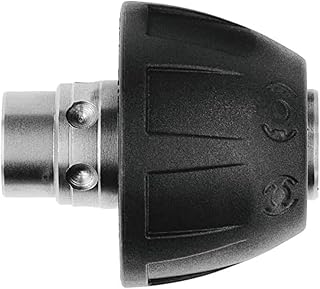


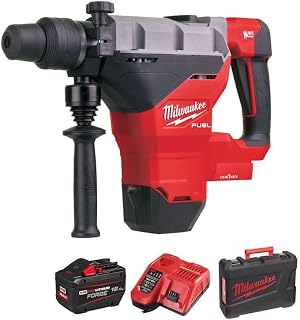


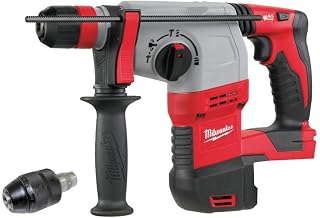


Choosing a cordless SDS hammer drill is less about finding the tool with the biggest headline specification and more about matching the drill to the type, diameter and frequency of drilling you actually expect to undertake. Milwaukee's cordless SDS range is designed around battery-powered convenience while retaining the impact mechanism, drilling modes and accessory compatibility expected from professional rotary hammers. This guide provides an independent buying framework for comparing Milwaukee cordless SDS hammer drills in the UK. Rather than treating every model as interchangeable, it explains the differences that matter when assessing drilling performance, vibration, battery requirements, chuck systems, tool weight, concrete capacity, control features and long-term usability. For occasional DIY work, a compact SDS-Plus rotary hammer may be more appropriate than a larger professional model. For electricians, plumbers, installers, builders and contractors who regularly drill concrete or masonry, the priorities can shift towards impact energy, sustained performance, vibration management, battery capacity and compatibility with larger accessories. The right choice therefore depends on the work rather than simply the highest specification. The best Milwaukee cordless SDS hammer drill depends primarily on the material, hole size, drilling frequency and accessory system you need. An SDS hammer drill, more accurately described in many cases as an SDS rotary hammer, combines rotary drilling with a mechanical hammering action. The hammer mechanism repeatedly drives the bit forwards while the motor rotates it, allowing the tool to break through hard masonry and concrete considerably more effectively than a conventional drill using a hammer-drill setting. The SDS system also allows compatible bits to be inserted and removed quickly without using a conventional keyed chuck. The bit is held by grooves in the SDS shank and can move axially within the chuck while remaining positively driven during operation. This distinction matters when comparing tools. A standard cordless drill with hammer mode can be useful for lighter masonry work, but an SDS rotary hammer is generally the more appropriate tool when drilling concrete, installing anchors or repeatedly making holes in hard mineral materials. One of the first specifications to check is the accessory interface. These systems are not simply different versions of the same chuck. SDS-Plus and SDS-Max accessories are physically different, so buying the wrong drill for your existing bit collection can create unnecessary additional expense. Milwaukee's cordless SDS tools are particularly relevant to users already invested in the manufacturer's battery ecosystem. The ability to use compatible batteries across a wider range of cordless tools can reduce the need to maintain separate battery platforms. Cordless operation also changes how an SDS hammer drill can be used on site. There is no mains cable to position around ladders, scaffolding, workbenches or freshly installed materials, and the tool can be moved quickly between work areas. However, cordless does not automatically mean better for every job. A mains-powered rotary hammer can still make sense where continuous operation is required and access to electricity is convenient. Battery-powered tools introduce considerations including battery weight, charging time, runtime and the cost of maintaining additional batteries. For many professional users, the M18 platform is one of the most important considerations when comparing Milwaukee cordless SDS hammer drills. The M18 system allows compatible batteries to be shared across a broad range of tools, making platform compatibility a significant part of the buying decision. If you already own several M18 batteries and chargers, choosing an M18 SDS hammer drill can be particularly convenient. Conversely, someone entering the platform for the first time should consider the cost and usefulness of the complete battery system rather than judging the bare tool in isolation. Milwaukee cordless tools may be encountered in different configurations, including bare tools and kits containing batteries and chargers. The correct comparison depends on what you already own. When comparing prices, make sure you are comparing equivalent packages. A seemingly cheaper drill may be a bare tool while another listing includes batteries, charger, case and accessories. Specifications are useful, but they should be interpreted in the context of actual work. A higher number is not automatically better if it comes with greater weight, larger batteries or a less manageable design. Impact energy is one of the most useful specifications when comparing rotary hammers. It indicates how much energy the hammer mechanism delivers to the bit during each impact. Higher impact energy can be advantageous for demanding drilling and chiselling applications, but it is not the only factor controlling productivity. Bit design, concrete hardness, hole diameter, drilling technique, battery condition and the tool's overall mechanism also influence practical results. For small anchor holes, chasing out light masonry or drilling cable and pipe penetrations, an extremely high-impact tool may provide little practical advantage over a more compact model. No-load speed describes how quickly the chuck or bit rotates when the tool is running without drilling into material. Higher rotational speed can be useful for certain drilling applications, but rotary speed should be considered alongside hammer action. Rotary hammers are not simply high-speed drills. Their primary advantage in concrete comes from combining rotation with impact. Blows per minute indicates how frequently the hammer mechanism strikes. It can help when comparing models, but it should not be considered in isolation from impact energy. A tool producing a large number of relatively low-energy impacts is not necessarily equivalent to one delivering stronger impacts at a different rate. Look at the complete specification set rather than selecting a drill solely because its blows-per-minute figure is higher. Maximum drilling capacity is another specification that requires careful interpretation. Manufacturers may publish different recommended capacities for concrete, masonry, core drilling or particular accessories. Do not assume that a published maximum diameter represents the ideal size for routine drilling. A tool can technically accommodate a particular bit size without making that diameter the most efficient choice for repeated work. Weight becomes increasingly important during prolonged drilling, overhead work and installation tasks. A heavier rotary hammer may provide advantages in demanding applications, but a compact model can be easier to control when making many smaller holes. When comparing tools, consider the complete working weight including the battery and the accessory you are likely to use. Battery capacity influences runtime and can also affect the physical balance of the tool. Larger-capacity batteries may provide greater working time between charges, while smaller batteries can reduce overall weight. The ideal battery therefore depends on the application. A tradesperson making occasional anchor holes may prefer a lighter setup, whereas someone drilling throughout a working day may value additional capacity. Many SDS rotary hammers provide more than one operating mode. Depending on the model, these can include rotary drilling, hammer drilling and chiselling or hammer-only operation. Multiple modes increase versatility. A single tool can potentially drill holes, break up selected masonry and perform light chiselling tasks without requiring a separate hammer drill for every application. Always check the exact operating modes of the model you are considering rather than assuming that every Milwaukee SDS tool offers identical functionality. Variable speed control provides greater control over the drilling process. Slower operation can be useful when starting a hole, positioning an accessory or working with materials where excessive speed is undesirable. Controlled starting can also help reduce bit wandering, particularly when drilling smooth surfaces or attempting to establish a precise hole position. Modern professional cordless rotary hammers may include electronic systems designed to manage the motor, battery and tool behaviour. Depending on the model, these may include overload protection, electronic braking, thermal management or systems intended to reduce the consequences of sudden tool movement. Safety features should be treated as part of the overall tool specification rather than as a substitute for correct drilling technique and personal protective equipment. Vibration is particularly relevant to SDS hammer drills because the impact mechanism naturally generates substantial mechanical movement. A well-designed anti-vibration system can make extended use more manageable. This is especially important for tradespeople who drill frequently throughout the working day. When comparing tools, consider vibration alongside weight, grip position and balance. A tool with slightly more weight may still feel manageable if its mass is well distributed and its vibration control is effective. An integrated LED can be useful when drilling in service voids, cupboards, ceiling spaces and poorly illuminated areas. It is a convenience feature rather than a primary performance specification, but it can improve visibility when positioning the bit. One of the major practical advantages of the SDS system is fast bit installation and removal. This is particularly useful when moving between drilling diameters or switching from drilling to chiselling accessories. Brushless motor technology is common in modern professional cordless tools. Compared with traditional brushed motor designs, brushless systems eliminate the conventional carbon brushes that physically contact the motor's rotating components. The benefits of brushless technology can include improved electronic control, reduced mechanical wear in the motor and efficient use of battery power. However, brushless does not mean maintenance-free, and it should not be treated as a guarantee of longer overall tool life. When comparing Milwaukee SDS hammer drills, consider the complete design rather than buying solely because a model is labelled brushless. Concrete places significantly greater demands on a cordless rotary hammer than soft brick or lightweight blockwork. The tool must repeatedly deliver impact energy while maintaining sufficient rotational drive. For concrete work, the choice of SDS bit is just as important as the drill. A suitable high-quality masonry or concrete bit can make a substantial difference to drilling speed, hole quality and accessory life. For repeated anchor installation, consider the hole diameters you normally drill. A compact SDS-Plus tool may be ideal for smaller fixing holes, while larger diameters or more intensive drilling can justify a more powerful rotary hammer. Brick and blockwork can require less impact capability than reinforced concrete, depending on the material and application. Excessive impact can sometimes be counterproductive when working with fragile masonry, where controlling the drilling process is more important than maximum power. For general installation work involving wall plugs, cable routes, pipe supports and fixings, a compact SDS-Plus model can offer a practical balance between capability and portability. If the drill will also be used for light chiselling, check whether the specific model provides a hammer-only mode and whether its design is intended for the type of chiselling you plan to undertake. Typical applications can include removing loose tiles, opening small channels, breaking out selected sections of masonry and preparing surfaces for installation. Do not assume that a rotary hammer intended for drilling is automatically suitable for prolonged heavy demolition. Large-scale demolition requires tools designed around considerably more demanding impact loads. SDS-Plus bits are available in a wide range of diameters and lengths. Common accessories include standard masonry bits, longer drilling bits, multi-purpose accessories and various chisels. When choosing accessories, consider: A worn or damaged bit can reduce drilling performance and increase the load placed on the tool. If a drill appears to be struggling, inspect the accessory before assuming the problem is the motor or battery. Electricians often need to drill numerous fixing holes, cable routes and penetrations through masonry. Portability, manageable weight and quick accessory changes can therefore be more important than maximum drilling diameter. A compact SDS-Plus Milwaukee model can be a practical choice where the majority of holes are relatively small and the tool is carried around different areas of a building. Plumbing work can involve larger penetrations and repeated drilling through masonry. The best choice depends on the diameter and depth of the holes involved. Consider the largest regular hole rather than an occasional maximum requirement. If most work involves modest fixing holes but one unusual project requires a much larger penetration, hiring or using a specialised tool for that occasional task may be more sensible than carrying a heavier rotary hammer every day. General builders typically need a versatile tool capable of handling varied materials and applications. A model with several operating modes can be particularly useful where the same tool may be required for drilling, light chiselling and installation work. Installers frequently work in finished environments where control, portability and careful drilling are important. A compact SDS-Plus model can be easier to handle when working around cabinets, tiles and installed fittings. DIY users should avoid buying more tool than they need. If the drill will only be used occasionally for wall plugs, shelves and general home maintenance, a compact SDS hammer drill may offer a better balance than a large professional rotary hammer. Battery compatibility is also worth considering. If you already own Milwaukee M18 tools, a compatible bare SDS tool may make more sense than introducing a completely different battery platform. This is one of the most useful comparisons to make before buying. The heavier option is not automatically the better option. A tool that spends most of its working life making small holes may be unnecessarily cumbersome if a smaller model can perform the job effectively. Battery runtime is influenced by much more than the battery's stated capacity. Material hardness, hole diameter, drilling depth, accessory condition, operating mode and the amount of continuous trigger time all affect energy consumption. Large-diameter drilling in concrete can consume considerably more energy than occasional small holes in softer masonry. Likewise, a blunt or damaged bit can force the tool to work harder. For intensive work, having more than one compatible battery can be more useful than relying on a single high-capacity battery. This allows one battery to be used while another is charging. Battery choice creates an important trade-off. More capacity can mean longer runtime but also additional weight. For overhead drilling, the lighter setup may be preferable. For floor-level repetitive drilling, additional battery capacity can be more attractive. Professional users should consider where the tool will physically be used rather than selecting a battery solely by its capacity rating. A useful comparison should examine several specifications together. Looking at the entire specification sheet prevents a single headline figure from dominating the buying decision. Maximum power is attractive, but it can introduce additional weight and bulk. If your regular applications involve small fixing holes, a compact model may be more productive in real working conditions because it is easier to handle. Comparing bare-tool specifications while ignoring the battery can give an incomplete impression of the working setup. Battery size can materially change tool weight and balance. Always confirm the chuck and accessory system before purchasing. Existing SDS-Plus accessories cannot simply be assumed to work with an SDS-Max tool. A manufacturer's maximum diameter should not necessarily be interpreted as the ideal size for continuous drilling. For regular work, choose a tool whose normal workload sits comfortably within its intended operating range. Cheap or unsuitable accessories can undermine the performance of a good rotary hammer. Check the shank, diameter, length and intended material before buying bits. Vibration becomes increasingly important when drilling for long periods. A specification comparison that ignores vibration and ergonomics can lead to a tool that looks excellent on paper but is less comfortable in practical use. Check whether the product listing includes the battery, charger, side handle, depth stop, case and accessories you actually need. Kit contents can vary between versions. Milwaukee is one of several established professional power-tool brands worth considering. Depending on the user's existing battery platform and preferred tool characteristics, alternatives can include DeWalt, Makita, Bosch Professional and Hikoki. The most useful comparison is not simply brand against brand. Compare equivalent SDS classes and intended applications. Milwaukee and DeWalt both offer extensive cordless professional tool ecosystems. If you already have compatible batteries, staying within the existing platform can simplify ownership. Compare individual SDS models for impact energy, weight, battery requirements, vibration control, operating modes and drilling capacity rather than assuming that one brand is universally superior. Makita is another major cordless tool manufacturer with a broad professional range. The strongest choice depends on the specific rotary hammer and the battery ecosystem already present in your workshop or van. For a fair comparison, place similarly sized SDS-Plus models side by side and compare their complete working weight, performance specifications and ergonomics. Bosch Professional has a long-established presence in rotary hammers and concrete drilling equipment. Bosch models can therefore be worth considering when evaluating SDS technology, particularly if accessory compatibility and existing batteries are important. Hikoki is also a relevant professional cordless-tool competitor. As with the other comparisons, the battery platform, tool class, intended drilling diameter and working environment should determine the comparison rather than brand reputation alone. Customer reviews can provide useful information, but they should be interpreted carefully. A review describing excellent performance for occasional DIY drilling may not tell a professional contractor much about prolonged daily use. When reading verified customer reviews, look for comments concerning: Pay particular attention to reviews from users performing applications similar to your own. The most useful review is not necessarily the highest-rated one; it is the one that explains how the tool behaves under comparable working conditions. Product listings can use different terminology and may present specifications in different formats. Before comparing two models, create a consistent checklist. This is particularly important when product names are similar but the kits contain different batteries or accessories. Good maintenance helps keep a rotary hammer working consistently and can reduce avoidable wear. Dust and debris can accumulate around the chuck area during masonry drilling. Clean the chuck according to the manufacturer's instructions and avoid allowing excessive contamination to remain around the bit-retention mechanism. Inspect SDS bits for damaged cutting edges, excessive wear, cracks or unusual deformation. Replace accessories that are no longer suitable for the intended work. A rotary hammer should not normally require excessive physical pressure. Allow the hammer mechanism and accessory to do the work while maintaining appropriate control. Continuous heavy drilling creates heat in the motor, gearbox, battery and impact mechanism. Follow the manufacturer's guidance regarding operating limits and cooling. Store batteries appropriately and follow the manufacturer's charging and storage recommendations. Avoid exposing battery packs to unsuitable temperatures, moisture or physical damage. The auxiliary handle provides additional control during drilling. Make sure it is correctly installed and secure before demanding applications. Concrete drilling can generate dust, noise, vibration and flying debris. Appropriate protective equipment and safe working practices are therefore essential. Dust management deserves particular attention during masonry and concrete work. Where the application generates significant fine dust, use a suitable extraction or dust-control solution compatible with the tool and working environment. Before drilling into a wall, establish what services may be concealed behind the surface. This is particularly important in kitchens, bathrooms, utility areas and locations where electrical installations or plumbing routes are likely. Do not rely solely on assumptions about where services have been installed. Use appropriate detection methods and follow safe working procedures before drilling. Hole quality depends on the drill, bit, material and technique. Start with the bit positioned accurately and avoid excessive lateral movement during drilling. Use a suitable bit diameter for the fixing rather than attempting to compensate for an incorrectly sized accessory. For deep holes, withdrawing the bit periodically can help remove drilling debris, depending on the accessory and manufacturer's instructions. For visible finished surfaces, take additional care when positioning and starting the hole to minimise unwanted surface damage. An SDS rotary hammer becomes particularly useful when masonry drilling is frequent, concrete is hard or larger holes need to be created efficiently. For occasional drilling into soft brick, a standard cordless drill with an appropriate masonry bit may be sufficient. Once the workload moves towards repeated concrete drilling, an SDS system generally provides a more purpose-built solution. An SDS hammer drill is not the ideal tool for every task. Standard drills can be preferable for wood, metal, screwdriving and general-purpose drilling where the impact mechanism is unnecessary. If your work involves a mixture of materials, owning both a general-purpose drill and an SDS rotary hammer can provide more flexibility than trying to make one tool perform every task. If your work regularly involves larger holes, heavy chiselling or demanding concrete applications, SDS-Max may be worth considering. The larger accessory system is designed for heavier-duty work than the typical SDS-Plus class. However, SDS-Max tools and accessories are generally more substantial. They can be excessive for users whose routine work consists mainly of small anchor holes and standard masonry fixings. The definition of the best cordless SDS hammer drill changes according to workload. For overhead drilling, minimise unnecessary weight. The battery is part of the working tool, so compare the complete configuration rather than bare-tool weight alone. Balance is equally important. A well-balanced tool can feel easier to control than a heavier tool whose mass is concentrated away from the grip. If overhead drilling is a routine task, vibration characteristics and grip design deserve particular attention because even modest differences can become more noticeable over repeated use. For concrete anchors, the most important factors are accurate drilling, suitable impact performance, compatible SDS bits and the ability to repeatedly produce holes at the required diameter and depth. Choose a model based on the sizes you install most frequently. There is little benefit in selecting a very large rotary hammer if the majority of your work consists of smaller anchor holes. If chiselling is an important part of the workload, check the operating modes and intended application of the exact model. Light chiselling and surface preparation are different requirements from sustained demolition. Consider the type and size of chisels available, tool weight, vibration management and the frequency of the task before choosing. Tradespeople should normally prioritise the overall working system rather than a single specification. Battery compatibility, portability, drilling capacity and reliability all influence productivity. For mobile professionals, the ability to use existing batteries can also reduce the number of chargers and battery types carried in the vehicle. There is no single impact-energy figure that is ideal for every user. The appropriate level depends on the material and accessory sizes. Small installation holes generally do not justify selecting a tool solely for maximum impact energy. Larger and deeper drilling, hard concrete and more intensive chiselling can justify a stronger impact mechanism. The best approach is to identify your normal hole sizes first and then select a tool whose published capabilities comfortably cover those applications. The bit should match the drill's chuck system and the material being drilled. Consider both the diameter and the required depth. For repetitive professional work, accessory quality can have a meaningful effect on productivity. A suitable bit should maintain its cutting performance for the intended application and be replaced when excessive wear or damage is apparent. For tradespeople moving tools between jobs, storage can be an important practical consideration. A suitable case or storage system can protect the rotary hammer, batteries and accessories while making transportation easier. Before purchasing a kit, check exactly what storage solution is supplied and whether it accommodates the batteries and accessories you expect to carry. The lowest displayed price is not necessarily the lowest overall cost. Compare the complete package and consider whether you already own compatible batteries and chargers. For example, a bare tool may appear cheaper than a complete kit but may require the purchase of a battery and charger. Conversely, a kit containing a battery you already own may provide accessories you do not need. When checking current prices, compare like-for-like model numbers and package contents from trusted UK retailers. For users who need a professional cordless SDS system and value battery-platform compatibility, Milwaukee cordless SDS hammer drills can be a strong option to investigate. The appropriate model depends on the workload rather than the brand name alone. The main advantages of choosing a cordless SDS platform are portability, reduced dependence on mains cables and compatibility with other cordless tools when the battery ecosystem matches. The main considerations are battery runtime, battery cost, working weight and whether the cordless configuration provides enough performance for the intended drilling workload. A good SDS hammer drill should provide an appropriate balance of drilling performance, control, ergonomics, accessory compatibility and durability for its intended workload. For occasional users, usability and manageable weight may dominate the decision. For professionals, sustained performance, battery efficiency, vibration management and compatibility with existing tools can become more important. The best Milwaukee cordless SDS hammer drill is not necessarily the largest, fastest or most powerful model. It is the one whose capabilities align with the work you actually perform. Start by identifying the material you drill, your typical hole diameter, the frequency of use and whether chiselling is required. Then compare SDS-Plus or SDS-Max compatibility, impact energy, drilling capacity, operating modes, battery requirements, weight and vibration control. If you already use Milwaukee M18 tools, battery compatibility may make the decision considerably easier. If you are starting from scratch, compare the complete ownership system, including batteries and chargers, rather than looking only at the bare-tool price. Finally, verify the exact model specifications, kit contents and current retailer information before purchasing. Product configurations can change, and similarly named versions can contain different batteries or accessories. The best model depends on the intended application. For general masonry and concrete drilling, a suitable SDS-Plus model can provide a useful balance of size and capability. More demanding applications may justify a higher-performance or larger rotary hammer. Yes. SDS rotary hammers are specifically designed for demanding masonry and concrete drilling applications. The appropriate model should be selected according to the hole diameter, drilling frequency and concrete conditions. Neither system is universally better. SDS-Plus is generally suited to smaller and medium-sized drilling and chiselling applications, while SDS-Max is designed for heavier-duty work and larger accessories. Yes. SDS rotary hammers can be used for brick and masonry drilling with a suitable compatible bit. For fragile materials, use appropriate technique and avoid unnecessarily aggressive impact settings. Some models provide rotary-only operation, allowing them to perform certain drilling tasks without hammer action. However, they are not a universal replacement for a compact drill or driver, particularly for applications involving wood, metal and screwdriving. Models equipped with a hammer-only mode can be used for compatible chiselling applications. Always check the exact model's operating modes and intended applications before using it for heavy chiselling. Use a compatible battery specified for the particular model. Battery capacity should be selected according to the balance between runtime and working weight. Larger batteries can provide additional runtime but may make the tool heavier. Suitable professional cordless SDS models can handle many demanding drilling and installation applications. The important point is to select the correct tool class for the work, particularly when drilling large holes or working continuously in hard concrete. If you already own compatible batteries and a charger, a bare tool may be sufficient. If you do not have the required battery platform, a complete kit may be more practical. Compare the total cost and contents rather than the headline tool price. Impact energy is important for concrete and masonry drilling, but it should be evaluated alongside drilling capacity, bit type, tool weight and intended workload. Maximum impact energy is not automatically the best choice for every application. Not necessarily. Blows per minute should be considered together with impact energy and the overall hammer mechanism. A single specification cannot accurately describe complete drilling performance. Choose a compact model when portability, overhead work and smaller holes dominate. Choose a heavier-duty model when you regularly drill larger holes, work in hard concrete or need stronger chiselling capability. They can be excellent for DIY users who regularly need to drill hard masonry or concrete. For occasional light masonry drilling, however, a standard hammer drill may be sufficient and easier to store. There is no reliable single lifespan that applies to every model or user. Service life depends on workload, maintenance, operating conditions, accessory quality, storage, dust exposure and how the tool is used. Possible causes include an unsuitable or worn bit, excessive drilling diameter, hard or reinforced concrete, a depleted battery, excessive loading or an operating condition outside the tool's intended application. Inspect the accessory and working conditions before assuming the tool itself is defective. Check the bit condition, correct SDS compatibility and operating mode. A worn cutting head can substantially reduce performance. Excessive pressure can also make drilling less efficient rather than improving it. If the drills use the same SDS accessory system, compatible bits can generally be used between them. Alwa
Milwaukee Cordless SDS Hammer Drills: Buying Guide & Reviews
Quick Answer: Which Milwaukee Cordless SDS Hammer Drill Should You Choose?
What Is an SDS Hammer Drill?
SDS-Plus Versus SDS-Max
Why Choose a Milwaukee Cordless SDS Hammer Drill?
Milwaukee M18 SDS Hammer Drills
Tool-Only Versus Kit Purchases
Key Specifications to Compare
Impact Energy
No-Load Speed
Blows Per Minute
Maximum Drilling Diameter
Tool Weight
Battery Capacity
Important Milwaukee SDS Hammer Drill Features
Multiple Operating Modes
Variable Speed Control
Electronic Safety Systems
Anti-Vibration Design
LED Work Light
Tool-Free Bit Changes
Brushless Motor Technology
Concrete Drilling Performance
Brick, Block and Masonry Drilling
Chiselling and Hammer-Only Work
SDS-Plus Accessories: What You Need to Know
Choosing the Right Drill for Different Trades
Electricians
Plumbers
Builders and General Contractors
Kitchen and Bathroom Installers
DIY Users
Compact SDS Hammer Drill or Heavy-Duty Model?
Battery Runtime: What Actually Affects It?
Battery Weight Versus Runtime
How to Compare Milwaukee SDS Hammer Drills Properly
Common Buying Mistakes
Buying the Most Powerful Model Automatically
Ignoring the Battery
Confusing SDS-Plus and SDS-Max
Using the Maximum Capacity as the Normal Capacity
Buying the Wrong Accessories
Ignoring Vibration
Forgetting the Complete Kit Contents
Milwaukee Versus Other Professional Brands
Milwaukee Versus DeWalt
Milwaukee Versus Makita
Milwaukee Versus Bosch Professional
Milwaukee Versus Hikoki
How to Read Customer Reviews Properly
How to Assess Specifications on Retailer Listings
Maintenance Tips for Cordless SDS Hammer Drills
Keep the SDS Chuck Clean
Inspect Bits Regularly
Do Not Force the Tool
Allow the Tool to Cool
Protect Batteries
Check the Side Handle
Safety Considerations When Drilling Concrete
Drilling Near Electrical Cables and Pipes
How to Get Cleaner Holes in Masonry
When an SDS Hammer Drill Is Better Than a Standard Drill
When a Standard Drill May Be the Better Choice
When to Consider an SDS-Max Tool
Professional Versus DIY Requirements
DIY Requirements
Professional Requirements
Best Milwaukee SDS Hammer Drill for Overhead Work
Best Milwaukee SDS Hammer Drill for Concrete Anchors
Best Milwaukee SDS Hammer Drill for Chiselling
Best Milwaukee SDS Hammer Drill for Tradespeople
How Much Impact Energy Do You Need?
How to Choose the Right SDS Bit
Storage and Transport
Questions to Ask Before Buying
Milwaukee Cordless SDS Hammer Drill Buying Checklist
How to Compare Prices Without Comparing Apples With Oranges
Are Milwaukee Cordless SDS Hammer Drills Worth Buying?
What Makes a Good SDS Hammer Drill?
Final Buying Advice
Frequently Asked Questions
What is the best Milwaukee cordless SDS hammer drill?
Are Milwaukee SDS hammer drills suitable for concrete?
Is SDS-Plus better than SDS-Max?
Can an SDS hammer drill drill brick?
Can you use an SDS hammer drill as a normal drill?
Can Milwaukee SDS drills be used for chiselling?
What battery should I use with a Milwaukee cordless SDS hammer drill?
Is a cordless SDS hammer drill powerful enough for professional work?
Should I buy a bare Milwaukee SDS hammer drill or a kit?
How important is impact energy?
Does a higher blows-per-minute rating mean a better drill?
How do I choose between compact and heavy-duty SDS models?
Are SDS hammer drills good for DIY?
How long do Milwaukee SDS hammer drills last?
Why is my SDS drill struggling to drill concrete?
Why does my SDS bit spin but not drill effectively?
Can I use the same SDS bits in different Milwaukee SDS drills?