

♥ Wishlist
Compare 19 verified Rotary Hammer products in United Kingdom. Reviews, ratings, pros, cons and buying advice updated for October 2026.


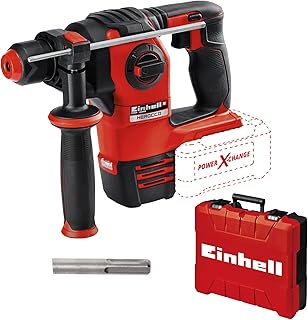


A rotary hammer is designed for demanding drilling and chiselling work in masonry, concrete, brick and other hard construction materials. Unlike a conventional hammer drill, a rotary hammer uses a dedicated impact mechanism to deliver a more forceful hammering action, making it particularly useful when ordinary drills struggle with dense concrete or repeated masonry work.
For UK buyers, choosing the right rotary hammer is not simply a matter of selecting the highest wattage or most powerful-looking model. The better choice depends on the material being drilled, the hole diameter required, how frequently the tool will be used, whether chiselling is important, the type of SDS chuck, power source, vibration control, tool weight and the availability of suitable accessories.
This expanded buying guide explains the differences between rotary hammer types, SDS systems, impact energy, motor power, operating modes, drill capacities, dust management, ergonomics and maintenance. It also explains what to look for when comparing models from established manufacturers such as Bosch, Makita, DeWalt, Milwaukee, Hikoki and Einhell.
A rotary hammer is a heavy-duty power tool that combines rotary drilling with a mechanical hammering action. It is primarily intended for drilling into hard materials such as concrete, reinforced masonry, stone and brick, while many models can also perform chiselling or light demolition work.
The major difference between a rotary hammer and a standard hammer drill is the mechanism used to create the impact. A hammer drill generally relies on smaller mechanical discs or gears to produce a rapid vibration, whereas a rotary hammer uses a more substantial pneumatic or electro-pneumatic hammer mechanism in many designs. This allows the tool to deliver considerably more impact energy with less reliance on downward pressure from the operator.
That distinction becomes important when drilling multiple holes in concrete. A conventional drill may require considerable force and time, while an appropriately sized rotary hammer can break through the material more efficiently.
A rotary hammer makes sense for anyone who regularly drills hard masonry or concrete and needs more capability than a conventional drill can provide. It can be particularly useful for tradespeople, renovation professionals, electricians, plumbers, installers, builders and serious DIY users.
If your work mainly involves timber, plastics, metal or occasional small masonry holes, a rotary hammer may be unnecessarily large. A conventional drill, combi drill or hammer drill can be more convenient for lighter applications.
These tools can look similar at first glance, but they are designed for different tasks.
A rotary hammer is the strongest choice of the three for drilling concrete and hard masonry. Its dedicated hammer mechanism produces a more powerful impact action, while an SDS chuck allows compatible drill bits to move axially within the chuck during hammer operation.
Many rotary hammers also offer different operating modes, allowing the user to select rotary drilling, rotary hammering or chiselling depending on the model.
A hammer drill is generally lighter and more versatile for everyday household drilling. Its hammering action helps when drilling brick, block and lighter masonry, but it is usually less suitable for extensive concrete drilling than a rotary hammer.
A hammer drill can be the better option if your work alternates between timber, metal, plastic and occasional masonry rather than focusing heavily on concrete.
An impact driver is primarily intended for driving screws, bolts and fasteners. Its impact mechanism works differently from the hammer action used by a rotary hammer. It is not a substitute for a rotary hammer when the main requirement is drilling concrete.
The chuck system is one of the most important specifications to understand before buying a rotary hammer. SDS tooling is designed to allow rapid accessory changes and controlled axial movement during hammering.
SDS Plus is widely used on compact and medium-sized rotary hammers. It is a practical choice for general drilling in concrete and masonry, particularly where hole sizes remain within the manufacturer's recommended range.
SDS Plus tools are usually easier to handle than larger SDS Max machines and can be a sensible option for installers, renovators and DIY users who need a versatile concrete drilling tool without moving into heavy demolition equipment.
SDS Max is designed for larger rotary hammers and more demanding drilling and chiselling applications. The accessories are larger and the machines are generally heavier, making them better suited to substantial construction work.
An SDS Max rotary hammer is not automatically the better purchase simply because it is more powerful. If your normal jobs involve relatively small fixing holes, a large SDS Max machine may add unnecessary weight, cost and handling effort.
Some manufacturers have used additional proprietary or less common SDS-related systems for particular applications. Always check the exact chuck and accessory compatibility before purchasing a tool or replacement bits.
Do not assume that every SDS accessory is interchangeable. SDS Plus and SDS Max accessories have different dimensions and are intended for different tool classes.
Mode selection can make a significant difference to the usefulness of a rotary hammer. Depending on the model, you may find two, three or more selectable functions.
Rotary-only mode allows the tool to rotate without the hammer action. This can be useful with compatible drilling accessories and materials where impact is unnecessary.
Hammer drilling combines rotation and impact. This is the principal operating mode for drilling concrete, brick and masonry with suitable SDS drill bits.
Chiselling mode disables the normal drilling rotation while retaining the hammer action. It can be useful for removing tiles, chasing channels, breaking small sections of masonry and carrying out other light demolition tasks when the tool is specifically designed for that application.
Some models allow the chisel to be positioned at different angles before use. This is useful when working with flat chisels because the operator can select a more convenient orientation for the job.
Impact energy is normally expressed in joules and indicates the energy delivered by the hammer mechanism during each impact. It is one of the most useful specifications when comparing rotary hammers intended for masonry and concrete work.
Higher impact energy can make a tool more capable of breaking hard material and handling larger accessories, but maximum joule figures should never be considered in isolation.
For commercial investigation, compare impact energy with the intended application rather than simply choosing the highest figure.
Corded rotary hammers are commonly specified by electrical input power, while cordless models are usually identified by their battery platform and voltage system. Motor wattage alone does not tell the complete story.
A well-designed hammer mechanism, efficient transmission, suitable impact system and appropriate gearing can be just as important as the nominal motor rating.
When comparing corded models, consider power alongside impact energy, drilling capacity, weight and duty cycle. When comparing cordless models, also consider battery capacity, battery availability, charging requirements and the overall weight of the tool with the battery fitted.
Corded machines can be attractive for prolonged work because they do not depend on battery charge. They can be particularly practical when working in a workshop, building site or renovation environment where mains power is readily available.
The main disadvantages are the power cable, dependence on a suitable electrical supply and reduced freedom of movement.
Cordless rotary hammers offer much greater mobility. They can be particularly useful for installation work, outdoor jobs, unfinished properties and locations where trailing cables are inconvenient.
The trade-off is the need to manage batteries, charging time, runtime and battery weight. For frequent professional use, the wider cordless platform can also influence the decision because users who already own compatible batteries may prefer to stay within that ecosystem.
When choosing a cordless rotary hammer, look beyond the tool itself. A battery platform can influence the long-term cost and convenience of ownership.
Manufacturers including Bosch, Makita, DeWalt, Milwaukee and Hikoki offer cordless systems covering multiple tools. If you already own compatible batteries and chargers, buying a bare tool from the same platform can reduce the need for additional charging equipment.
However, battery compatibility should always be checked carefully. Battery voltage, physical design, generation and platform specifications can differ even within a manufacturer's wider product range.
Manufacturers normally provide recommended maximum drilling diameters for materials such as concrete, masonry and sometimes wood or metal when compatible accessories are used.
The maximum capacity should be treated as a technical limit rather than the ideal diameter for everyday work.
If you mainly drill holes for wall plugs, fixings, cable clips or small anchors, a compact SDS Plus model may be more convenient. Larger holes for pipework, electrical routes or construction fixings require a tool and accessory combination rated for those diameters.
Always compare the drilling capacity of the complete tool with the accessories you intend to use.
A compact SDS Plus rotary hammer is usually the most sensible starting point for occasional concrete and masonry work. Look for manageable weight, straightforward controls and enough impact energy for your normal hole sizes.
Renovation work can involve a mixture of drilling, chiselling, tile removal and masonry preparation. A multi-mode SDS Plus model can therefore provide more versatility than a drill-only machine.
Electricians may value compact dimensions, good control and the ability to drill repeated fixing holes. Dust extraction compatibility can also be important when drilling indoors.
Plumbers may need a mixture of smaller fixing holes and larger penetrations. Consider the manufacturer's drilling range and whether the tool supports the accessories required for your typical installations.
Frequent professional users should pay close attention to impact energy, durability, vibration control, serviceability, accessory compatibility, ergonomics and the manufacturer's support arrangements.
If chiselling and material removal are significant parts of the job, look beyond drilling performance. A model with a dedicated chiselling function, appropriate impact energy and a suitable duty rating may be a better choice than a compact drill-focused rotary hammer.
A heavier rotary hammer can offer greater capability, but extra weight becomes noticeable during overhead drilling, ladder work and long installation sessions.
When comparing models, consider the complete working weight rather than the bare machine where applicable. For cordless tools, the battery can add substantial weight to the system.
Look for a comfortable main grip, a useful auxiliary handle and controls that can be operated without awkward hand positions. A well-positioned side handle can make a noticeable difference when controlling a tool during drilling or chiselling.
Rotary hammering generates substantial vibration, particularly during prolonged concrete drilling and chiselling. Some models incorporate anti-vibration systems designed to reduce vibration transmitted to the user's hands and arms.
Vibration control should be considered alongside the expected workload. A feature that seems unnecessary for occasional drilling can become much more valuable when the tool is used repeatedly throughout a working day.
Regardless of the tool's vibration-control system, users should follow the manufacturer's instructions, take appropriate breaks and use suitable personal protective equipment.
Concrete and masonry drilling can create considerable dust. This is especially important when working indoors, where airborne dust can spread through rooms and settle on furniture, equipment and surfaces.
Some rotary hammers are compatible with dedicated dust extraction attachments or drilling systems. These can help capture dust closer to the drilling point.
When comparing products, check whether the extraction system is integrated, optional or unavailable and whether the required attachment is compatible with the exact model.
Safety should be part of the buying decision rather than an afterthought.
Features vary significantly between models, so verify the manufacturer's specifications rather than assuming every rotary hammer includes all of these functions.
Variable-speed control gives the operator greater control over drilling. Although hammer drilling in concrete is generally performed within a suitable operating range rather than simply at the slowest or fastest possible setting, electronic speed control can make the tool easier to manage.
Soft-start functionality, where available, can also provide smoother initial operation. Electronic controls may help maintain more consistent performance under changing loads on certain models.
A reverse function can be useful for removing certain drill bits or clearing accessories from a hole, depending on the tool and accessory. It is a convenience feature rather than the primary reason to purchase a rotary hammer.
When evaluating a model, prioritise the features that directly relate to your work before secondary controls.
One of the practical advantages of SDS systems is the ability to change compatible accessories quickly. This is particularly useful when moving between different drill-bit sizes or switching from drilling to chiselling.
Before purchasing accessories, confirm the exact SDS system supported by the rotary hammer. Using the wrong accessory type can lead to compatibility problems or unsafe operation.
The accessory can be just as important as the power tool. Different jobs require different bit designs.
SDS masonry bits are intended for hammer drilling in materials such as concrete, brick and masonry. They are available in multiple diameters and lengths.
Long SDS drill bits are useful when greater drilling depth is required. However, longer accessories can be more difficult to control, so they should be matched carefully to the tool and application.
Flat chisels are commonly used for tile removal, surface preparation and cutting or breaking suitable masonry materials.
Point chisels concentrate the hammer action into a relatively small area, making them useful for breaking and penetrating suitable materials.
Scaling chisels are designed for specific surface-removal tasks. Their suitability depends on the material and the manufacturer's recommendations.
A powerful rotary hammer cannot compensate for a poor or unsuitable drill bit. Dull, damaged or incorrectly selected accessories can reduce drilling speed, increase heat and vibration, and place unnecessary load on the tool.
For demanding concrete work, compare carbide design, tip construction, flute design, accessory diameter and intended application. Follow the accessory manufacturer's instructions regarding suitable materials and operating conditions.
Concrete is significantly more demanding than soft brick or lightweight block. If concrete drilling is your main requirement, prioritise impact energy, suitable drilling capacity, hammer mechanism quality and vibration management.
Reinforced concrete can be particularly challenging because the drill may encounter embedded steel reinforcement. Do not assume that a higher-powered rotary hammer should simply be forced through every obstruction. Use appropriate procedures and accessories and follow the tool manufacturer's guidance.
Brickwork can vary considerably in hardness and construction. Some masonry is relatively easy to drill, while older or harder brick can require more capable equipment.
A compact SDS Plus model can be a practical choice when most work involves standard masonry holes. The additional hammer capability can make repeated drilling considerably more convenient than using a basic drill.
A rotary hammer with chiselling mode can be useful for removing tiles, adhesive and suitable surface materials. However, technique matters. Excessive impact energy can damage the underlying surface, so select a suitable chisel and use the lowest practical level of force for controlled removal.
For delicate renovation work, a smaller machine may provide better control than a large demolition-oriented hammer.
A rotary hammer is generally designed to combine drilling and chiselling. A demolition hammer is more specialised towards breaking, chipping and removing material and may not provide normal rotary drilling functionality.
If you need one tool for both drilling and moderate chiselling, a multi-mode rotary hammer can be more versatile. If your work is almost entirely demolition, a dedicated demolition hammer may be more appropriate.
A useful comparison should look beyond the headline power figure. Create a shortlist using the following specifications:
Two models may have similar-looking specifications while being intended for completely different workloads. A better comparison starts with the job and works backwards towards the tool.
The most powerful tool is not necessarily the most useful. If you mainly drill small fixing holes, carrying a large SDS Max machine can make everyday work unnecessarily tiring.
Before purchasing drill bits, chisels or the machine itself, confirm whether it uses SDS Plus, SDS Max or another system.
Cordless specifications sometimes focus heavily on the bare tool. Remember to consider the battery when evaluating handling and overall working weight.
Rotary speed is important, but a rotary hammer is fundamentally differentiated by its hammer mechanism and impact capability. RPM alone does not tell you how effectively the tool will perform in concrete.
If you expect to drill or chisel for extended periods, vibration and ergonomics deserve as much attention as headline performance figures.
A manufacturer's maximum drilling diameter should not automatically be interpreted as the ideal everyday working diameter. Select a machine based on the actual workload rather than an occasional maximum requirement.
Check the chuck system and accessory specifications before buying drill bits and chisels. Compatibility should never be assumed from the general appearance of the accessory.
There is no single joule rating that is best for every buyer. The appropriate level depends on the material, hole size, frequency of use and whether chiselling is involved.
Professional users should evaluate the tool as a working system rather than simply as a single purchase.
Durability, ergonomics, serviceability, accessory availability and compatibility with existing batteries can all affect the practical value of a machine. A professional may also benefit from investing in a platform where several tools share batteries, chargers and accessories.
Controls should be easy to operate while wearing suitable work gloves, and the auxiliary handle should provide secure control during demanding drilling and chiselling.
DIY users often benefit from choosing a smaller, versatile model rather than an industrially focused machine. A compact SDS Plus rotary hammer with rotary drilling, hammer drilling and chiselling functions can cover a broad range of household renovation tasks.
Look for a machine that is easy to store, comfortable to hold and compatible with commonly available accessories. There is little benefit in paying for professional-level capacity that will rarely be used.
Several established power-tool manufacturers produce rotary hammers across different performance categories. When comparing brands, assess the exact model rather than assuming every tool within a brand has the same quality or specification.
Bosch offers rotary hammers across DIY and professional-oriented ranges. Its Professional range includes SDS Plus and larger hammer-drilling equipment, making Bosch a brand worth considering when comparing different tool sizes and applications.
Makita produces corded and cordless rotary hammers across a broad range of applications. Its extensive cordless ecosystem can be particularly relevant to buyers who already own compatible Makita batteries and chargers.
DeWalt is well known for professional power tools and offers cordless and corded rotary hammer options. Buyers should compare the exact model's impact energy, drilling capacity, battery system and weight.
Milwaukee's rotary hammer range includes cordless options aimed at demanding professional applications. Its battery ecosystem can be an important consideration for existing users of compatible Milwaukee tools.
Hikoki produces rotary hammers and other construction tools, including cordless models. Compare its individual specifications and battery compatibility against competing systems before deciding.
Einhell offers cordless and corded tools aimed at DIY and home-improvement users. Its battery platform may be worth considering for buyers who already use compatible tools within the same system.
A recognised manufacturer can provide confidence in product support, engineering and platform compatibility, but the brand name should not replace model-level comparison.
Before buying, compare the exact tool's impact energy, weight, drilling capacity, operating modes, chuck system, battery requirements and included equipment. A compact model from one manufacturer may be more suitable for a particular job than a larger model from another.
A useful rotary hammer setup may include more than one drill bit and a basic case.
Accessory selection should always follow the specifications of both the rotary hammer and the material being worked.
Proper maintenance can help preserve performance and reduce avoidable wear.
Drill bits and chisels should also be treated as working components rather than disposable extras. Inspect the shank, cutting tip and overall condition before use.
A worn accessory may require more effort and can make drilling less efficient. Using the correct accessory for the material and diameter can help the rotary hammer operate closer to its intended performance.
Always read the manufacturer's instructions before operating a rotary hammer. Concrete drilling and chiselling can produce dust, flying debris, vibration and significant noise.
Drilling into a wall without considering concealed services can create serious risks. Before drilling, assess the location and construction of the surface and use an appropriate detection method where necessary.
Do not assume that a particular section of wall or floor is free from electrical cables or plumbing simply because nothing is visible. Planning the hole location is an essential part of safe rotary hammer use.
Rotary hammering can be disruptive in occupied homes, flats and shared buildings. If you are planning renovation work, consider the time of day, the surrounding environment and any applicable building or property rules.
Dust can also travel beyond the immediate drilling area. Suitable extraction, containment and cleaning procedures can make indoor work considerably more manageable.
The decision can be simplified by looking at your normal workload.
If you only occasionally encounter a demanding job, hiring a larger specialist machine may be more practical than buying one that spends most of its life in storage.
A cordless rotary hammer can be particularly useful for installers and tradespeople moving between locations. It eliminates the need to route a mains cable to every drilling position and can make work on unfinished sites more convenient.
However, battery runtime depends on the workload, accessory size, material, battery capacity and operating conditions. If your work involves long periods of continuous drilling, having suitable spare batteries can become an important part of the overall setup.
A corded rotary hammer remains a practical option where mains electricity is readily available and extended operation is expected.
For workshop-based renovation, construction environments with dependable power and long drilling sessions, eliminating battery management can be a meaningful advantage.
At the more affordable end of the market, concentrate on essential performance rather than a long list of premium features. Confirm that the machine has the appropriate SDS system, enough impact energy for your work and suitable drilling capacity.
Build quality, warranty terms supplied by the manufacturer or retailer, accessory compatibility and safety features should still be considered.
Mid-range buyers can look for a balance of performance, weight, ergonomics, vibration control and operating modes. This category can be particularly attractive for serious DIY users and professionals who do not need the largest available machine.
At the higher end, buyers should examine the complete working system. Advanced vibration control, electronic protection, brushless motors on applicable cordless models, battery platform integration, improved ergonomics and higher drilling capacity may become more important.
Premium pricing should still be justified by your actual workload. Features that you never use do not necessarily represent better value.
Product specifications can appear complicated because manufacturers use several different measurements to describe performance.
Rotary hammers are not conventional drills where maximum rotational speed is the primary performance indicator. Concrete drilling relies heavily on the hammering mechanism, appropriate accessory geometry and the interaction between rotation and impact.
When comparing two rotary hammers, impact energy and recommended drilling capacity are usually more informative for concrete work than simply choosing the machine with the highest no-load RPM.
A maximum drilling diameter can tell you whether a machine is capable of a particular task, but it does not tell you how frequently that diameter should be used.
Consider the hole sizes you actually drill most often. If your work consists mainly of small anchor holes, choosing a machine designed for very large holes can create unnecessary weight and bulk.
Customer reviews can be useful for identifying recurring practical observations, but they should not replace technical specification checks. When reading reviews, look for comments that relate specifically to your intended application.
For example, feedback about drilling large holes in concrete is more relevant to a construction user than comments about occasional household wall drilling. Similarly, a professional user may place greater importance on vibration, durability and battery runtime than someone using the tool twice a year.
When comparing reviews, pay attention to recurring patterns rather than isolated comments. Always distinguish between verified customer feedback and claims that cannot be independently confirmed.
Online product listings can contain different configurations of the same basic model. Check whether the listing is for the bare tool or a complete kit and verify exactly what is included.
Product configurations can change, so check the current specification and retailer listing before placing an order.
Cordless rotary hammers are often sold either as a bare tool or as a kit containing one or more batteries and a charger.
A bare tool can be economical when you already own compatible batteries and chargers. A complete kit can make more sense when starting a new cordless platform.
Do not compare the prices of a bare tool and a complete kit without accounting for the cost and usefulness of the included battery and charger.
If you want one tool for general household drilling, screwdriving and occasional masonry work, a combi drill may be more versatile. If your priority is drilling concrete efficiently, a rotary hammer is usually the more specialised choice.
The best decision depends on whether versatility or dedicated concrete performance is more important to you.
For most general-purpose concrete and masonry drilling, SDS Plus is a practical starting point because the machines and accessories are relatively manageable. SDS Max becomes more relevant when drilling larger holes or carrying out heavier chiselling and construction work.
Choose the system according to your workload rather than assuming that the larger system is always better.
Some rotary hammers can be used with suitable accessories or adapters for materials other than masonry, but this depends on the specific model and accessory system.
If wood and metal drilling make up most of your work, a conventional drill or combi drill is generally more convenient. A rotary hammer is primarily valuable because of its performance in hard masonry and concrete.
A rotary hammer is not designed to replace a dedicated drill driver or impact driver for routine screwdriving. Even where an appropriate accessory system exists, using a large rotary hammer for small fastening tasks is usually inefficient and unnecessarily cumbersome.
Store the machine in a dry environment and protect it from unnecessary dust and moisture. Keep SDS accessories organised so that damaged or worn bits can be identified before use.
For cordless models, follow the manufacturer's recommendations for battery storage, charging and temperature conditions. Do not store damaged batteries or continue using batteries that show signs of physical damage.
Good drilling technique can make a substantial difference. Select a suitable drill bit, mark the hole position accurately and keep the tool controlled throughout the operation.
Allow the hammer mechanism to perform the work rather than applying excessive body weight to the machine. Excessive force is not necessarily a substitute for an appropriately rated tool and accessory.
For deeper holes, periodically follow the manufacturer's recommended technique for clearing drilling debris. This can help maintain effective cutting and reduce unnecessary loading.
Dust control should begin before drilling. Where compatible, use suitable extraction equipment and attachments designed for the tool. Keep the work area controlled and consider protective coverings when working indoors.
Do not rely on household vacuum cleaners unless they are specifically suitable for the type of dust and application. Follow the recommendations of the tool and extraction-system manufacturers.
There is no universal lifespan because durability depends on tool quality, workload, operating conditions, maintenance, accessory choice and frequency of use.
A machine used occasionally for small DIY projects experiences a very different workload from one used daily for concrete drilling and chiselling. Rather than choosing based on an assumed number of years, compare the manufacturer's intended application, construction, service arrangements and user requirements.
If a tool develops a fault, stop using it and follow the manufacturer's inspection or service guidance.
Not every premium feature has equal value. Features are worth paying for when they solve a problem you regularly encounter.
It is equally important to identify features that do not contribute meaningfully to your normal work. If you only drill occasional small holes, paying substantially more for heavy-duty demolition capability may not provide useful value.
Likewise, a professional-sized SDS Max machine can be excessive for a homeowner who needs a few fixing holes each year.
The best rotary hammer for concrete depends on the hole diameter, frequency of use, required impact energy, tool weight and whether chiselling is required. A suitable SDS Plus machine is often appropriate for general concrete drilling, while larger applications may require SDS Max equipment.
Neither is universally better. SDS Plus is generally more suitable for compact and general-purpose drilling applications, while SDS Max is designed for larger and more demanding work.
The appropriate impact energy depends on the application. Smaller drilling tasks benefit from a manageable machine, while larger drilling and chiselling applications require greater impact capability. Compare joules with the manufacturer's recommended drilling capacities rather than using the number alone.
Yes, many modern cordless rotary hammers are designed specifically for concrete and masonry drilling. However, performance varies by model, battery system and application, so compare the manufacturer's impact energy and drilling specifications.
For repeated or demanding concrete drilling, a rotary hammer is generally the more specialised tool because its hammer mechanism is designed for harder materials. A hammer drill can remain useful for lighter masonry and mixed household drilling.
Only models with a dedicated chiselling function should be used for chiselling. Check the manufacturer's operating modes before using a chisel accessory.
Do not assume that standard drill bits fit directly into an SDS chuck. Use accessories specifically compatible with the machine or a manufacturer-approved adapter where appropriate.
Not necessarily. Wattage describes electrical input on corded models, but impact energy, hammer mechanism, drilling capacity, ergonomics and overall design also influence performance.
Yes. Rotary hammers can be highly effective for suitable brick and masonry drilling when used with the correct accessory and operating mode.
A rotary hammer with an appropriate chiselling mode and flat chisel can be useful for tile removal and related renovation work. Use suitable technique to minimise unnecessary damage to the underlying surface.
Not always. Occasional users may manage with one battery, while professionals performing extended drilling may benefit from additional compatible batteries to reduce interruptions.
All are established power-tool manufacturers with different product ranges and cordless ecosystems. The right choice depends on the exact model, impact energy, drilling capacity, weight, operating modes, battery compatibility and your intended workload.
It can be worthwhile when the additional durability, ergonomics, vibration control, performance or cordless-platform compatibility directly benefits your workload. For occasional DIY use, a simpler machine may provide better value.
Look for comments about the exact type of work you intend to perform, including concrete drilling, hole size, chiselling, vibration, handling, battery runtime and long-term usability. Combine customer feedback with the manufacturer's specifications.
The right rotary hammer is the one that matches the work you actually do, not necessarily the machine with the largest motor, highest impact energy or most expensive specification sheet.
For general household and renovation applications, a compact SDS Plus rotary hammer can provide a useful balance of concrete drilling capability, portability and versatility. For regular professional drilling, compare impact energy, drilling capacity, vibration control, ergonomics, durability and service considerations. For larger holes and demanding chiselling, investigate heavier SDS Max equipment or specialist demolition tools where appropriate.
Before purchasing, compare the exact model specifications, accessory compatibility, complete kit contents and current retailer information. Check verified customer reviews for experiences relevant to your own application, and consider whether corded operation or an established cordless battery platform makes more sense for the way you work.
A careful comparison of SDS system, impact energy, drilling capacity, operating modes, weight, vibration control, power source and accessories will usually produce a better buying decision than choosing solely by brand name or headline power.