

♥ Wishlist
Compare 15 verified DeWalt Cordless Vacuum products in United Kingdom. Reviews, ratings, pros, cons and buying advice updated for October 2026.


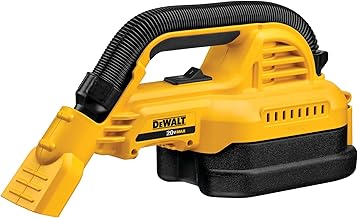


Choosing a DEWALT cordless vacuum is less about finding the most powerful-looking model and more about matching the vacuum's design to the type of debris, working environment and dust-control requirements you actually face. A compact portable vacuum can be ideal for quick clean-ups, vehicle interiors and smaller jobs, while a larger wet and dry model can be much more practical for construction debris, liquid spills and tool-connected extraction.
DEWALT's current UK vacuum range includes different formats and extraction classes, so buyers should compare more than battery voltage. The DCV501LN, for example, is an 18V XR L-Class stick vacuum designed for portable dry clean-up, while the DCV517N is an 18V XR wet and dry vacuum aimed at more general-purpose debris collection. The DCV584L adds mains operation alongside cordless power, whereas the 54V XR FLEXVOLT DCV586M is designed for substantially more demanding dust-extraction work.
For an independent buying comparison, the most useful approach is to consider suction and airflow together with filtration, capacity, portability, battery compatibility, wet-and-dry capability, hose and accessory options, and whether the vacuum is intended for general clean-up or connected dust extraction.
A good cordless vacuum should make cleaning faster rather than create another piece of equipment that is awkward to carry, empty or maintain. Before choosing a model, identify the jobs you expect it to perform most often.
DEWALT's 18V XR platform is particularly attractive to users who already own compatible cordless tools and batteries. The benefit is straightforward: the same battery ecosystem can potentially power several tools rather than requiring a separate battery platform for the vacuum.
Portable 18V models are well suited to tradespeople who need to move between rooms, vehicles, workshops and jobsites. They can also make sense for installers and maintenance workers who need to remove dust, swarf and general debris without carrying a large mains-powered extractor.
The DEWALT DCV501LN is a compact L-Class stick vacuum with an 18V XR power source. Its design is aimed at portable dry clean-up, with a form factor that makes it easier to reach floor-level debris, overhead areas and confined spaces.
DEWALT specifies maximum airflow of 15.9 l/s for this model and provides HEPA filtration, cyclonic action and several accessories. These features make the DCV501LN particularly relevant when portability and quick clean-up matter more than having a large collection tank.
A stick-style vacuum should not automatically be treated as a replacement for a larger dust extractor. Its compact format is its advantage, but that same design means buyers should consider the volume and type of material they expect to collect.
The DEWALT DCV517N is an example of a compact 18V XR wet and dry vacuum. Its 1.9-litre tank, flexible hose and wet/dry functionality make it more versatile than a dry-only portable vacuum for users who occasionally encounter liquids as well as dust and debris.
DEWALT lists a 5 kPa negative-pressure specification for the DCV517N. It also uses a HEPA wet/dry filter and provides both a front utility nozzle and an extendable hose arrangement.
This type of vacuum can be useful for general site clean-up, maintenance work, vehicle cleaning and smaller wet or dry spills. Buyers should nevertheless compare tank capacity carefully if they expect to collect substantial quantities of material.
The DEWALT DCV584L occupies a different position because it can operate from compatible batteries as well as a 240V mains supply. This hybrid approach is useful for users who want cordless mobility but also appreciate the option of mains operation when working close to a suitable power source.
The DCV584L has a 7.5-litre tank and L-Class extraction classification. DEWALT also lists a 2-metre hose and compatibility with its AIRLOCK system for connecting compatible power tools.
An AC/DC vacuum can be particularly attractive for workshops and trades where the working environment changes regularly. It can provide cordless flexibility when moving around a site while retaining mains-powered operation when a fixed work area is available.
The DEWALT DCV586M represents the higher-performance end of the cordless dust-extraction range. It uses the 54V XR FLEXVOLT platform and is designed as an M-Class wet and dry dust extractor.
Its purpose is different from that of a compact handheld or stick vacuum. It is intended for demanding dust-management applications where filtration, sustained extraction and compatibility with professional tools are important considerations.
The DCV586M uses a brushless motor, dual M-Class filters and an automatic filter-cleaning system. This makes it a much more specialised option for professional dust extraction rather than simply a convenient cordless cleaner.
One of the most important distinctions when comparing professional dust extractors is the extraction class. Buyers should not treat L-Class and M-Class as interchangeable marketing descriptions.
L-Class extraction is intended for lower-risk dust applications and provides controlled filtration for general professional use. M-Class extraction is designed for more demanding construction dust applications and has more stringent requirements.
The correct class depends on the material being handled and the requirements of the work environment. If a vacuum is being used with power tools that generate significant quantities of fine dust, the appropriate extraction classification should be considered before purchase.
Always follow the manufacturer's instructions and applicable UK workplace requirements for the material being collected. A vacuum's filtration classification does not mean every model is suitable for every hazardous material.
Vacuum performance is often reduced to a single headline figure, but suction and airflow describe different aspects of operation.
Airflow describes how much air the vacuum can move. It becomes particularly relevant when the machine needs to transport dust and debris through a hose or collect material over a larger working area.
Negative pressure, sometimes described as suction pressure, indicates how strongly the vacuum can create a pressure difference. This can influence the vacuum's ability to lift material and maintain extraction through a hose or attachment.
A high figure in one category does not automatically mean a vacuum will outperform another in every real-world situation. Hose diameter, hose length, filter condition, nozzle design, dust loading and the type of debris all influence practical performance.
For this reason, compare the complete extraction system rather than selecting a vacuum solely because one specification appears higher.
Filtration is one of the most important areas to investigate when buying a cordless vacuum for workshop or construction use. Fine dust can quickly affect airflow if the filter becomes loaded, so filter design and maintenance are directly connected to usable performance.
Several DEWALT cordless vacuum models use high-efficiency or HEPA filtration. The manufacturer specifies HEPA filtration on models such as the DCV501LN and DCV517N, while the DCV584L uses a high-efficiency washable HEPA filter.
A HEPA filter should not be interpreted as a universal guarantee that a vacuum is appropriate for every hazardous substance. The suitability of the complete machine, its classification and its intended application must always be considered.
A filter can gradually become loaded with dust during use. As the filter becomes obstructed, airflow can fall and the vacuum may feel less effective even though the motor itself has not changed.
Regular inspection and cleaning according to the manufacturer's instructions can therefore be more important than chasing small differences in headline power figures.
For demanding extraction work, an automatic filter-cleaning system can also be valuable. The DCV586M uses automatic filter cleaning to help maintain airflow during prolonged operation.
If you want a cordless vacuum that can handle both dry debris and liquids, check that the model is specifically designed for wet and dry operation. A conventional dry vacuum should not simply be assumed to be suitable for liquid collection.
Wet and dry models can be useful in workshops, construction environments, garages, vehicles and maintenance situations where dust and liquid spills may occur during the same working period.
Tank capacity can have a surprisingly large effect on convenience. A compact vacuum with a small collection chamber may be easier to carry but require more frequent emptying.
A larger tank is useful when collecting substantial quantities of sawdust, building debris or liquids, but increased capacity normally comes with a larger physical footprint and potentially greater weight.
The DCV517N has a 1.9-litre tank, while the DCV584L has a 7.5-litre tank. These differences illustrate why tank size should be compared against the intended workload rather than treated as an isolated specification.
For occasional spot cleaning, a smaller tank may be entirely adequate. For repeated workshop or site extraction, a larger capacity can reduce interruptions.
Battery compatibility can be one of the strongest reasons to choose a particular DEWALT cordless vacuum. Users already invested in the 18V XR ecosystem may find an 18V vacuum convenient because compatible batteries can potentially be shared with other tools.
The 54V XR FLEXVOLT platform is aimed at applications where higher cordless performance is required. The DCV586M uses this platform for demanding dust-extraction work.
Do not choose battery voltage solely on the assumption that a higher number is always better. A compact 18V vacuum can be the more sensible option when portability, lower carrying weight and compatibility with an existing battery collection are the priorities.
Many DEWALT cordless vacuums are sold as bare or tool-only units. This means the battery and charger may need to be purchased separately.
Before comparing prices between listings, check exactly what is included. A tool-only package and a battery kit may look like the same vacuum while representing very different overall purchase costs.
For buyers who already own compatible DEWALT batteries and chargers, a tool-only version can avoid unnecessary duplication. Someone entering the battery platform for the first time may need to account for the additional cost and charging requirements.
The hose is an important part of any dust extractor, yet it is often overlooked when comparing cordless vacuum specifications.
A longer hose can provide greater working reach without moving the vacuum, while a compact hose can be easier to store and transport. Diameter also matters because airflow through a hose depends on the complete extraction path.
The DCV584L uses a 2-metre hose with a 32 mm diameter, while other DEWALT models use different hose arrangements. Check the exact specification of the model you are considering rather than assuming accessories are interchangeable across the entire range.
If you plan to connect the vacuum to a drill, saw, sander, router or other power tool, check the required adaptor and connection system before purchasing.
For tool-connected extraction, compatibility can be more important than general vacuum capacity. DEWALT's AIRLOCK system is designed to provide a secure connection between compatible tools and dust extractors.
A connected extractor can help capture dust at or near the point where it is generated rather than relying on a vacuum to clean the surrounding area afterwards.
When comparing products, confirm that both the power tool and vacuum support the relevant connection method and that the required adaptor is included or available separately. Do not assume that every hose or accessory will fit every DEWALT vacuum.
Brushless motor technology is used in some higher-performance DEWALT cordless extraction equipment. The main benefit of a brushless motor is efficient electronic motor control without traditional brushes contacting the motor's commutator.
For buyers, however, the practical question is not simply whether a vacuum has a brushless motor. Consider the complete combination of motor output, airflow, filtration, battery, cooling, filter maintenance and intended application.
A brushless system can be an important feature, but it should not replace a proper comparison of extraction performance and usability.
A cordless vacuum is often purchased specifically because it is easier to move than a traditional corded extractor. That advantage can disappear if the machine is too heavy or awkward for the jobs you perform.
Consider where the vacuum will be carried and how often it will be moved. A compact model may be preferable for staircases, vehicles, overhead work and short maintenance visits. A larger extractor can make more sense when it remains beside a stationary tool for longer periods.
The usefulness of a cordless vacuum is influenced by the accessories supplied with it. A machine may have strong extraction performance but be inconvenient if the correct nozzle or adaptor is missing.
Common accessories to look for include crevice tools, wide nozzles, flexible hoses, dust-extraction adaptors and specialised attachments.
The DEWALT DCV517N, for example, is supplied with a flexible hose, crevice tool, wide nozzle and hose adaptor. The DCV501LN is supplied with multiple cleaning accessories intended for different cleaning positions and applications.
When comparing two similar models, check the complete included-accessory list rather than assuming a more expensive model automatically includes everything required.
For quick clean-up jobs where portability is the priority, an 18V XR compact vacuum can be more practical than a large dust extractor. The DCV501LN is particularly relevant to buyers who want an L-Class stick-style design for dry debris and fine dust.
Its compact format makes it easier to carry from one work area to another. The decision becomes less straightforward if you regularly collect liquids or large quantities of material, because a dedicated wet and dry vacuum with greater capacity may be more suitable.
For users who need one machine for both dry debris and liquid collection, the DCV517N and DCV584L are more relevant than a dry-only stick vacuum.
The choice between them depends on the balance between portability and capacity. The DCV517N is considerably more compact and uses a 1.9-litre tank, while the DCV584L provides a substantially larger 7.5-litre capacity and also supports mains operation.
If the vacuum will be carried frequently between small jobs, the compact design may be preferable. If it will spend more time in a workshop or beside a power tool, the larger hybrid design may offer greater flexibility.
For demanding construction and professional dust-management applications, a dedicated M-Class extractor deserves consideration rather than a compact portable vacuum.
The 54V XR FLEXVOLT DCV586M is specifically positioned as an M-Class wet and dry dust extractor. Its brushless motor, dual filters and automatic filter-cleaning system are designed around more demanding extraction requirements.
This is not simply a larger version of a handheld vacuum. It belongs to a different category of dust-management equipment and should be evaluated according to the materials, tools and working environment involved.
When comparing several models, use the following criteria instead of relying on a single review score or headline specification.
More power is not always the correct answer. A large extractor can be unnecessary for someone who primarily needs quick clean-ups around a vehicle, workshop bench or installation site.
For professional dust control, classification should be treated as a core buying requirement. Do not assume that every cordless vacuum is appropriate for every construction dust application.
A tool-only vacuum does not necessarily include a battery or charger. Always check the package contents before comparing the total cost of ownership.
If you intend to connect the vacuum to a power tool, verify the connection system and adaptor requirements first. A vacuum can be excellent for general cleaning but unsuitable for a particular tool-extraction setup.
A small tank can become frustrating if the vacuum is used for continuous workshop cleaning. Conversely, a large tank adds size and weight that may not be worthwhile for occasional spot cleaning.
Fine dust can load filters quickly. Ignoring maintenance can reduce airflow and compromise the practical performance of the vacuum.
Routine maintenance helps preserve extraction performance and makes the machine easier to use over time. Always follow the specific cleaning and maintenance instructions supplied for the model.
Battery runtime depends on the vacuum, battery capacity, operating conditions, filter condition, material being collected and how continuously the machine is operated.
A practical way to improve working time is to keep the filtration system properly maintained. A heavily loaded filter can make the machine work less effectively and may encourage longer operating periods for the same cleaning task.
Users who already operate several DEWALT 18V XR tools may also benefit from maintaining a suitable rotation of charged batteries. For high-demand 54V FLEXVOLT extraction work, battery selection becomes even more important because sustained extraction can place greater demands on the power source.
Higher-capacity batteries can provide longer operating periods, but they also add weight. The best battery is therefore dependent on the balance between runtime and portability.
For short cleaning tasks, a smaller compatible battery can keep the vacuum lighter. For longer extraction sessions, a higher-capacity battery can reduce interruptions caused by battery changes.
Consider how the vacuum will actually be carried. A battery that adds substantial weight may be less attractive for overhead or stair work even if it provides longer runtime.
Cordless vacuums offer obvious mobility advantages. There is no mains cable to trail through a work area, which can make movement between rooms and workstations easier.
A corded extractor can still be preferable for extended stationary use where mains power is readily available and continuous operation is more important than mobility.
Hybrid models such as the DCV584L provide an interesting compromise because they support both cordless battery operation and 240V mains power. This can be useful for tradespeople who move between mobile and fixed working environments.
A general shop vacuum may provide substantial collection capacity, but cordless DEWALT models can be considerably more convenient when mobility is a priority.
The better option depends on how the machine will be used. For occasional clean-up across multiple locations, cordless operation can be highly convenient. For a permanent workshop station, a larger mains-powered extractor may offer a more appropriate combination of capacity and continuous operation.
The distinction is mainly about intended use. A stick-style cordless vacuum prioritises portability and quick cleaning, whereas a workshop wet/dry vacuum generally prioritises collection capacity, hose flexibility and broader debris-handling capability.
If the majority of your work involves fine dry debris and quick clean-up, a stick format may be more convenient. If you routinely collect larger debris, liquids or material from power tools, a wet/dry extractor is usually the more logical category to investigate.
Once you have identified the appropriate DEWALT model, compare the complete listing rather than simply looking at the headline product name.
DEWALT model numbers can help distinguish between tool-only products, battery kits and regional package variations. The main model designation is particularly useful when comparing retailer listings that use slightly different product titles.
Do not assume that a similar-looking model number represents exactly the same package. Suffixes can indicate different market versions, battery configurations or packaging arrangements. Check the complete model code and specification before ordering.
DEWALT cordless vacuums can be particularly appealing to tradespeople, installers, maintenance workers, workshop users and DIY enthusiasts who value portability and compatibility with a broader DEWALT battery ecosystem.
They are especially useful when cleaning tasks occur away from convenient mains sockets or when the vacuum needs to move frequently between work areas.
The right model depends heavily on the application. A compact 18V vacuum is not intended to replace every professional dust extractor, just as a large M-Class extractor may be unnecessary for someone who only needs occasional spot cleaning.
A cordless vacuum may not be the ideal choice for every application. Users who require very large collection capacity, extended stationary operation or specialised hazardous-dust control should compare professional extractors designed specifically for those requirements.
Likewise, users looking primarily for domestic carpet cleaning should compare conventional household vacuum designs rather than assuming a construction-oriented DEWALT extractor is the best option.
Use this checklist when narrowing down the options:
There is no single best DEWALT cordless vacuum for every buyer. A compact 18V model can be preferable for portable clean-up, while an 18V wet/dry vacuum offers greater versatility and a 54V FLEXVOLT M-Class extractor is more appropriate for demanding professional dust extraction. The best choice depends on the material, environment, required filtration and workload.
Some DEWALT cordless vacuums use high-efficiency or HEPA filtration, and certain models carry specific extraction classifications. However, suitability depends on the exact model and material being collected. Always check the manufacturer's classification and application guidance rather than assuming every cordless vacuum is suitable for every type of fine or hazardous dust.
Selected DEWALT models are specifically designed for wet and dry operation. Models such as the DCV517N, DCV584L and DCV586M are examples of products in this category. Always check the exact model specification and operating instructions before collecting liquids.
Some DEWALT vacuums are designed for connection to compatible power tools and extraction systems. The DCV584L, for example, supports AIRLOCK connections for compatible applications. Always confirm compatibility between the specific vacuum, hose, adaptor and power tool.
No. DEWALT cordless vacuums can use different battery platforms depending on the model. Many compact models use the 18V XR system, while the DCV586M uses the 54V XR FLEXVOLT platform. Check the exact product specification before purchasing a battery or charger.
Some packages include batteries and chargers, while many DEWALT products are sold as tool-only units. Always check the complete package contents and exact model code before comparing prices.
No. A larger tank reduces the frequency of emptying but usually increases the overall size and weight of the vacuum. Smaller tanks can be preferable for portable spot cleaning, while larger capacities can be more practical for sustained workshop or site use.
The DCV501LN is an 18V XR L-Class stick vacuum intended for portable dry clean-up, whereas the DCV517N is an 18V XR wet/dry vacuum with a 1.9-litre tank. The choice depends on whether portability and dry cleaning or wet/dry versatility is the greater priority.
Both provide wet/dry functionality, but the DCV584L has a larger 7.5-litre tank, L-Class extraction and AC/DC operation. The DCV517N is smaller and more portable, with a 1.9-litre tank. Buyers should select between them based on capacity, portability and the need for mains operation.
The DCV586M is a 54V XR FLEXVOLT M-Class wet/dry dust extractor designed for demanding professional dust-extraction applications. It is a more specialised machine than a compact portable vacuum and should be evaluated according to the requirements of the work environment.
HEPA filtration can be an important feature when dealing with fine particles, but the filter should be considered alongside the vacuum's overall extraction classification, sealing, filter maintenance system and intended application. HEPA alone does not make a vacuum suitable for every hazardous material.
Choose according to the application rather than voltage alone. An 18V vacuum can offer excellent portability and battery-system convenience, while a 54V FLEXVOLT extractor is designed for more demanding professional extraction work. Consider the required extraction performance, runtime, weight and existing battery investment.
The strongest buying decision comes from matching the vacuum to the job rather than simply choosing the newest, largest or highest-powered model. Start with the debris you need to collect, then determine whether you require dry or wet/dry operation, which extraction classification is appropriate and whether the vacuum will be connected to power tools.
For highly portable dry clean-up, an 18V XR model such as the DCV501LN can be a sensible category to investigate. For compact wet and dry cleaning, the DCV517N offers a different balance of portability and versatility. If you want a larger wet/dry machine with both battery and mains operation, the DCV584L provides a broader working format. For demanding professional dust extraction, the 54V XR FLEXVOLT DCV586M belongs to a higher-performance M-Class category.
Before buying, compare the exact model number, filtration, extraction classification, tank capacity, airflow, suction, battery requirements, hose dimensions, accessories and package contents. Then check current specifications and verified customer feedback from trusted retailers before making the final decision.
Because DEWALT product ranges, package configurations and retailer pricing can change, the most reliable comparison is always based on the exact model code and the specification supplied for the current UK version rather than a generic product name.