

Best Rotary Hammer Products online UK (United Kingdom)
Explore our real-time updated product directory index curated for performance, verified star metrics, and historical consumer trust rankings.


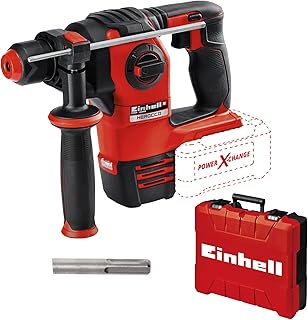


A rotary hammer is a specialist power tool designed for demanding drilling and chiselling applications. It uses a combination of rotational movement and a powerful hammering mechanism to work through hard materials such as concrete, brick, blockwork and masonry. This makes a rotary hammer particularly useful for construction, renovation, installation and heavy-duty DIY projects where a conventional drill may not provide enough impact performance.
When choosing a rotary hammer, it is important to consider the type of work you expect to carry out. Smaller models can be practical for lighter drilling and installation tasks, while larger machines are better suited to frequent work in dense concrete and other hard materials. The ideal choice depends on factors such as impact energy, motor power, tool weight, drilling capacity and the intended frequency of use.
Concrete drilling is one of the main applications for a rotary hammer. The impact mechanism helps the drill bit break through hard surfaces while rotation removes material from the hole. This can make drilling for fixings, anchors, cable routes and pipe installations considerably easier.
Rotary hammers can also be used on brick and masonry. Depending on the model and its operating modes, the same tool may support drilling only, rotary hammer drilling or hammer-only chiselling. Having different modes can make one machine suitable for a wider range of renovation and construction tasks.
Corded rotary hammers can be a practical option when extended operation and continuous mains power are important. They are well suited to workshop environments, building projects and tasks where access to a suitable power supply is convenient.
Cordless rotary hammers offer greater freedom of movement without a mains cable. They can be particularly useful for installation work, outdoor projects and locations where access to electrical sockets is limited. When comparing cordless models, consider battery voltage, battery capacity, charging arrangements and whether compatible batteries are already available for other tools.
Impact energy is an important specification because it indicates how effectively the hammer mechanism can transfer force into the material. Higher impact energy can be useful for demanding concrete drilling and chiselling, although a more powerful machine may also be heavier and less convenient for prolonged overhead work.
Chuck type is another key consideration. Many rotary hammers use specialised systems designed for hammer drilling, such as SDS-compatible arrangements. Check the manufacturer's specifications and make sure the bits and accessories you intend to use are compatible with the selected tool.
Operating modes can increase versatility. A drilling mode is useful when impact action is unnecessary, while rotary hammer mode combines rotation and impact for hard materials. A hammer-only mode can be useful for chiselling, removing tiles and carrying out light demolition work when supported by the model.
Weight, handle design and vibration control can make a significant difference when using a rotary hammer for longer periods. A compact model may be easier to manoeuvre in confined spaces, while a heavier machine can provide the performance required for demanding applications. Look for features such as auxiliary handles, variable speed control and vibration-reduction systems where they match your intended use.
UK shoppers should consider both the material and the type of work before selecting a rotary hammer. For occasional DIY jobs, a versatile and manageable model may be more practical than a large professional machine. For regular renovation, construction or installation work, prioritise suitable impact performance, durability, accessory compatibility and comfortable handling.
It is also worth considering the complete setup rather than focusing only on the tool itself. Suitable drill bits, chisels, batteries for cordless models and other compatible accessories can affect how useful the rotary hammer will be in practice. Always follow the manufacturer's instructions and use appropriate protective equipment when drilling or chiselling masonry.
A suitable rotary hammer can make difficult drilling and chiselling tasks more efficient while providing greater versatility than a basic drill. By comparing power, impact energy, operating modes, chuck compatibility, weight and power source, you can select a machine that matches your projects and working conditions.
Whether you are installing fixings in concrete, drilling through brickwork, removing tiles or carrying out renovation work, choosing the right rotary hammer helps ensure that the tool is matched to the material and application. Consider your typical workload, preferred power source and required accessories before making your choice.